Artwork
相模屋亭主|Actor as Master of Sagamiya (Sagamiya teishu)
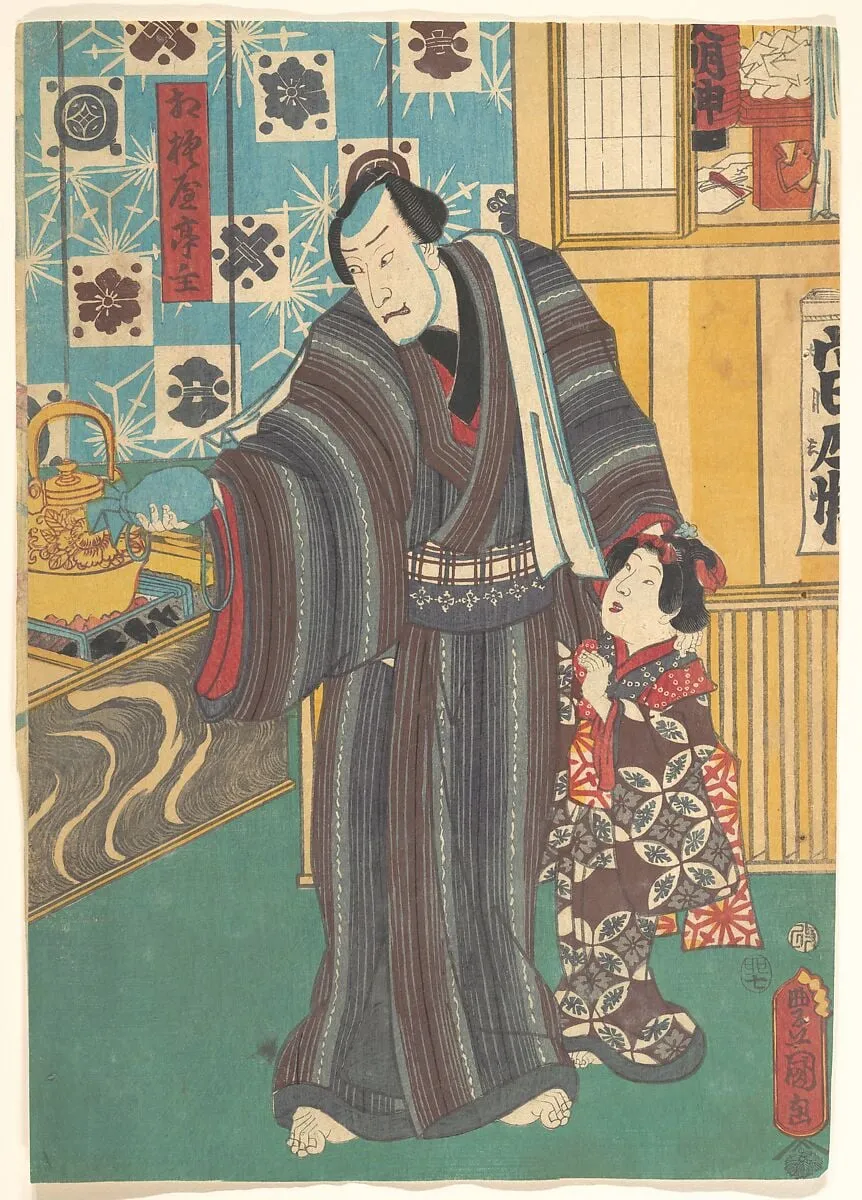
相模屋亭主|Actor as Master of Sagamiya (Sagamiya teishu) is an ink print by the Romanticist artist Utagawa Kunisada. It dates from 1832 and is held in the collection of the Metropolitan Museum of Art.
About this work
Overview
Utagawa Kunisada’s 1832 woodblock print, titled *Actor as Master of Sagamiya*, forms part of a three‑panel series.
Utagawa Kunisada’s 1832 woodblock print, titled *Actor as Master of Sagamiya*, forms part of a three‑panel series. Executed with ink and color on paper, the image portrays a domestic interior where a man in a striped kimono gestures toward a young girl in a patterned brown kimono. The composition includes a blue‑walled backdrop, a window, and a low table bearing a yellow teapot and a food box, all rendered in the vivid palette characteristic of early‑19th‑century ukiyo‑e.
Subject & Meaning
The scene suggests a moment of instruction or conversation, with the adult’s extended right arm and attentive expression indicating he is addressing the child, who looks up toward him. The inclusion of Japanese characters on the wall and the domestic setting points to a narrative drawn from contemporary theater or popular literature, where the figure of the Sagamiya master would have been recognizable to Edo‑period audiences.
Technique & Style
Kunisada employs the multicolored woodblock technique (nishiki-e), layering separate carved blocks for each hue to achieve a rich, saturated effect. The print’s bold outlines and flat areas of color are balanced by delicate line work that defines the textiles’ patterns and the interior’s decorative motifs. The use of a blue background with contrasting white and black designs highlights the figures and underscores the artist’s skill in compositional balance.
History & Provenance
Created in 1832, the work belongs to a triptych that circulated among the burgeoning market for actor portraits and genre scenes in Edo. It entered the collection of The Metropolitan Museum of Art, where it is preserved as an example of Kunisada’s prolific output during the late Edo period, reflecting both the commercial demand for such prints and the artist’s role in shaping popular visual culture.
Artist & collection

 二代目岩井粂三郎の肖像|Portrait of Iwai Kumesaburō II
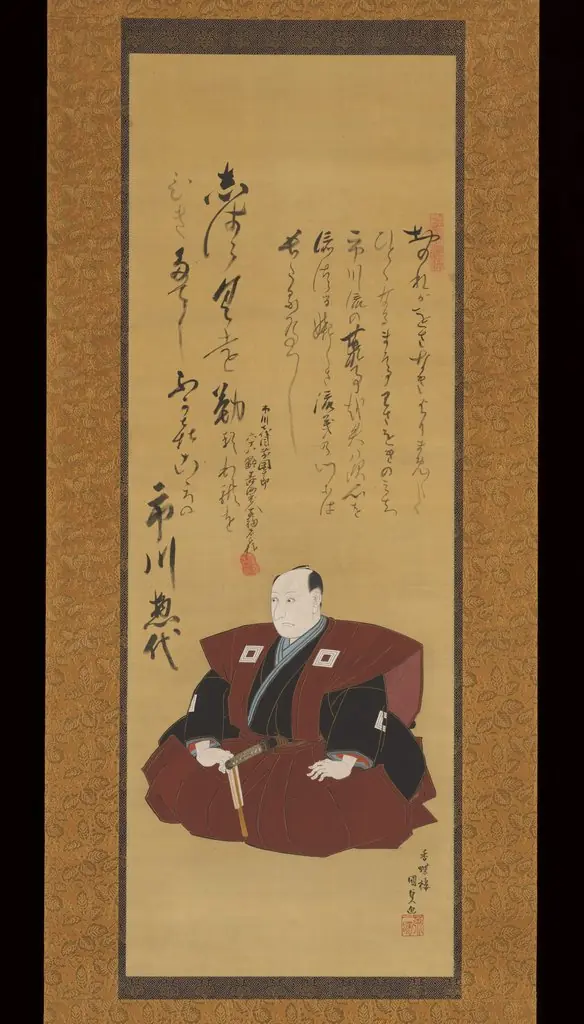 Memorial Portrait of the Actor Ichikawa Ōmezō I
 Untitled
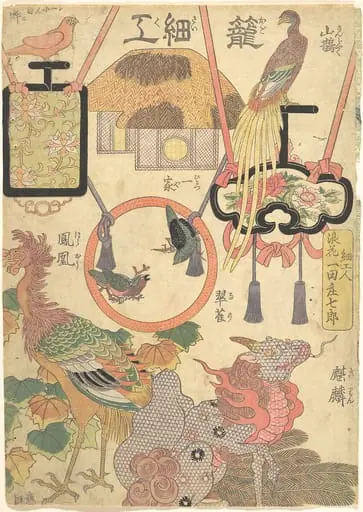 「籠細工 浪花細工人一田庄七郎」|Basketry Work: By the Craftsman Ichida Shōshichirō of Naniwa (Kagosaiku Naniwa saikujin Ichida Shōshichirō)
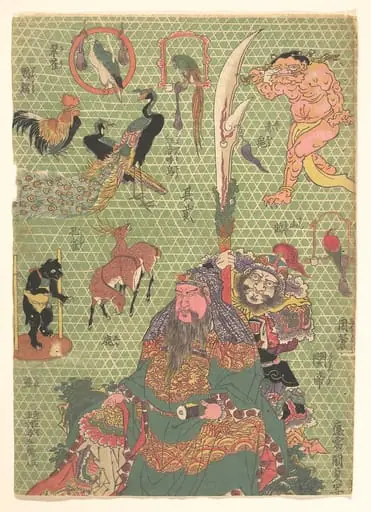 歌川国貞画 「籠細工 浪花細工人 一田庄七郎」|Basketry Work: By the Craftsman Ichida Shōshichirō of Naniwa (Kagozaiku Naniwa saikunin Ichida Shōshichirō)
 Untitled
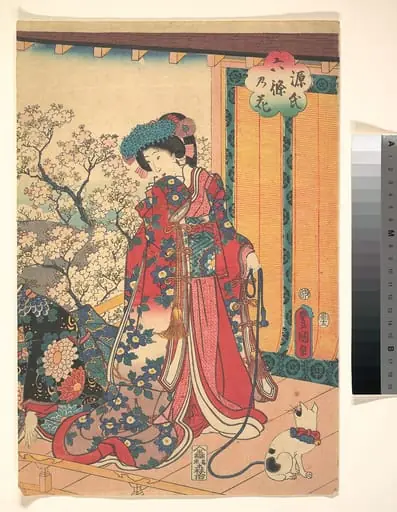 Untitled
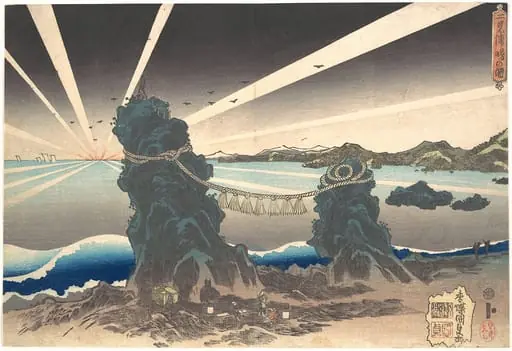 Futami-ga-ura akebono-no kuni|Futami-ga-ura Rocks at Ise, Land of Dawn
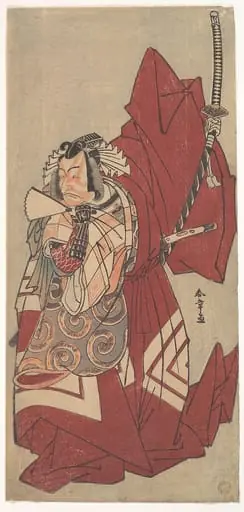 五代目市川団十郎|Kabuki Actor Ichikawa Danjūrō V in a Shibaraku (Stop Right There!) Role as Hannya no Gorō
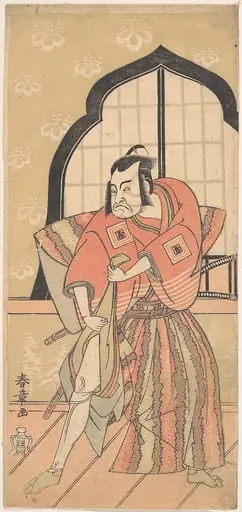 勝川春章画 三代目市川団蔵|Kabuki Actor Ichikawa Danzō III
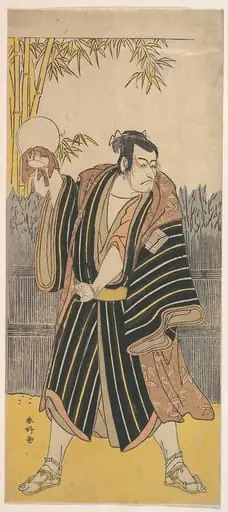 勝川春好画 七代目片岡仁左衛門 五代目市川團十郎|Kabuki Actor Ichikawa Danjūrō V
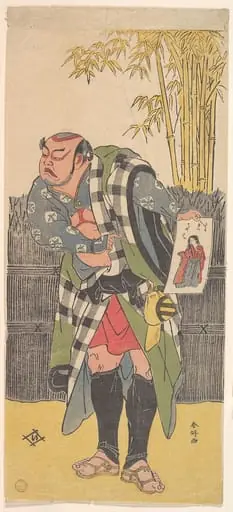 勝川春好画 七代目片岡仁左衛門 五代目市川團十郎|Kabuki Actor Kataoka Nizaemon VII
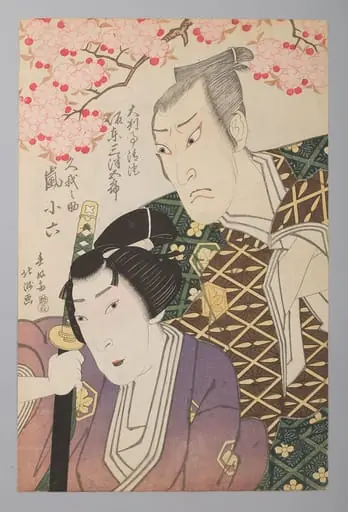 「大判事清澄 坂東三津五郎」(三代)・「久我之助 嵐小六」(四代)|Bandō Mitsugorō III as Daihanji Kiyozumi and Arashi Koroku IV as Koganosuke
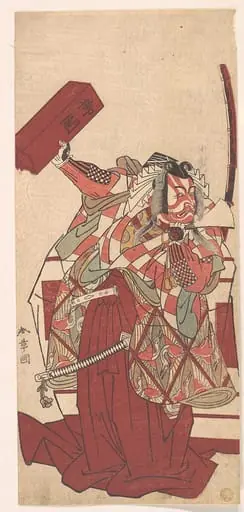 三代目市川海老蔵の篠塚伊賀守定綱|The Actor Ichikawa Ebizō III as Shinozuka Iga no kami Sadatsuna in a Shibaraku Scene