Artwork
Autumn Festival on a Mountain
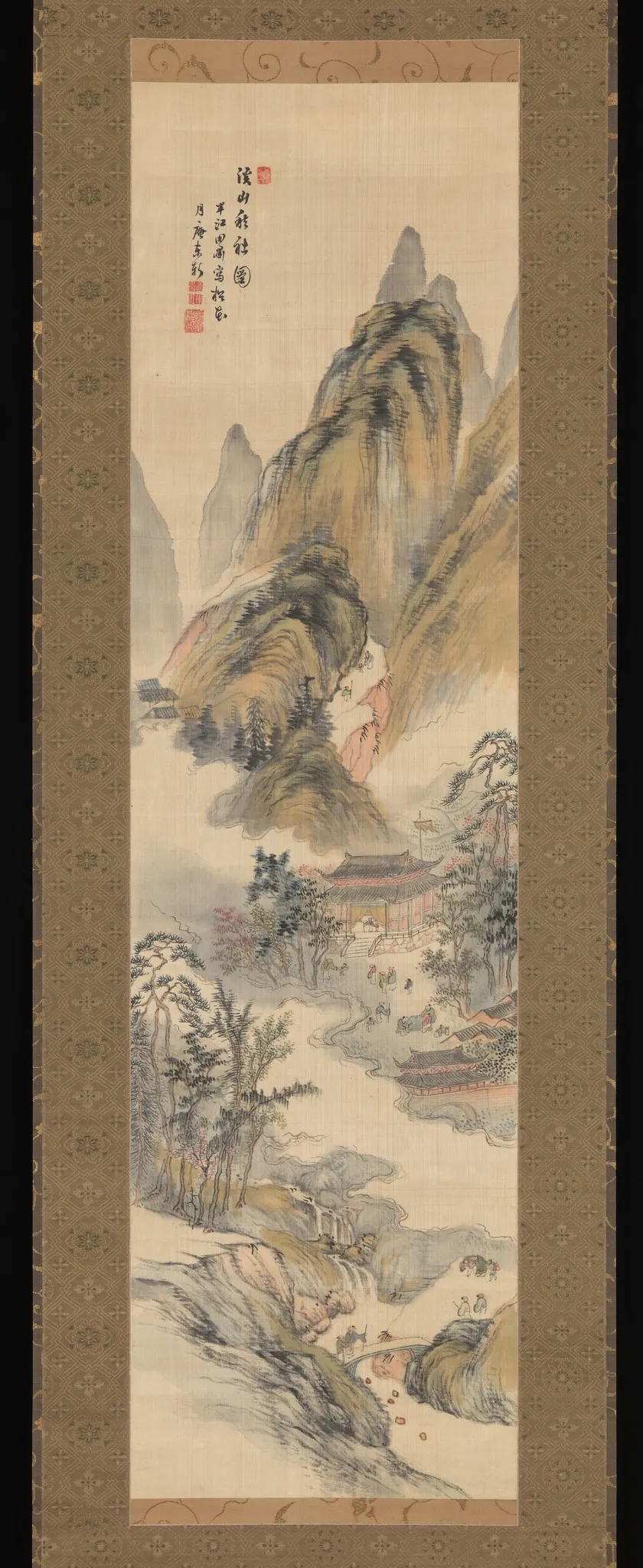
Autumn Festival on a Mountain is an unspecified painting by Okada Hankō. It dates from 1824 and is held in the collection of the Metropolitan Museum of Art.
About this work
Overview
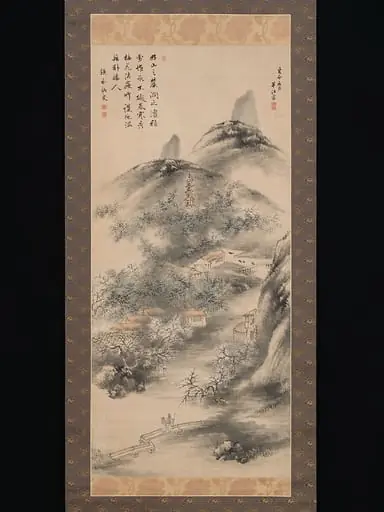
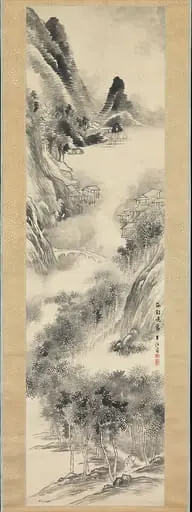
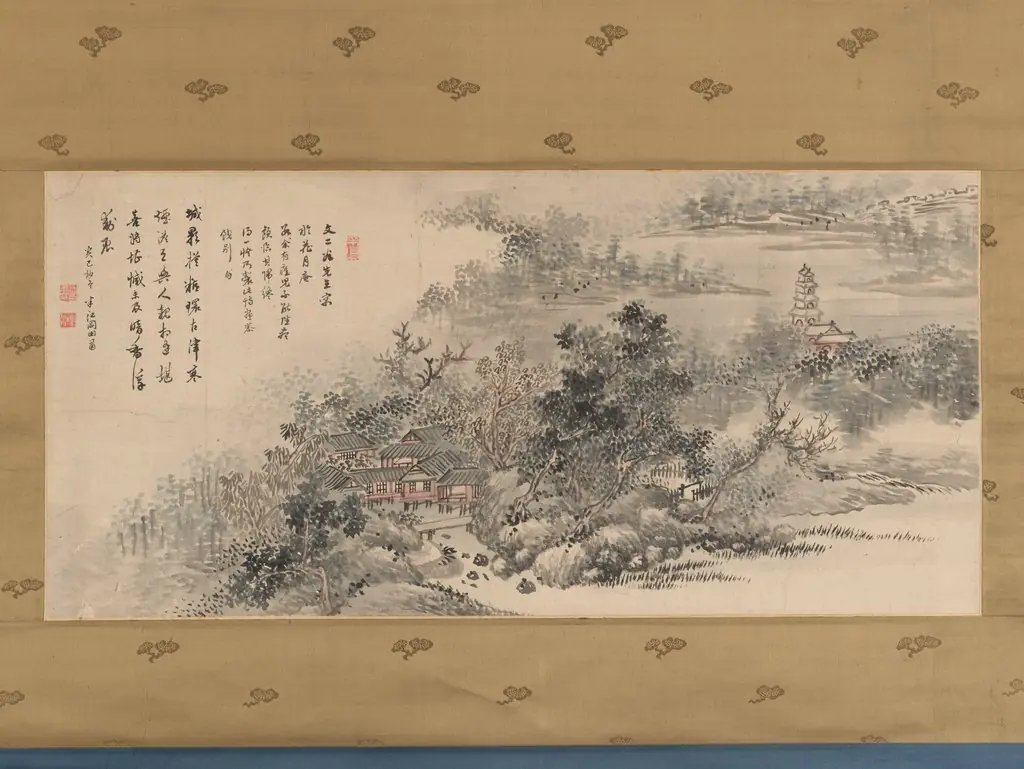
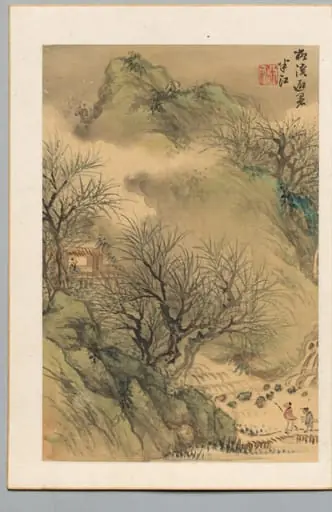
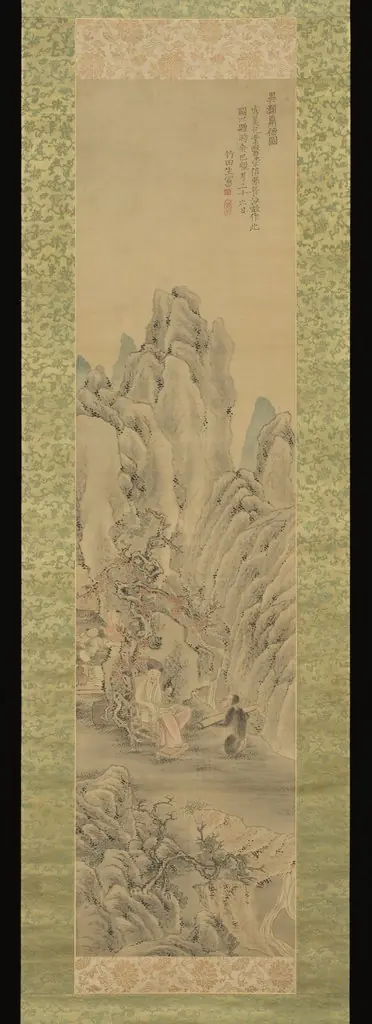
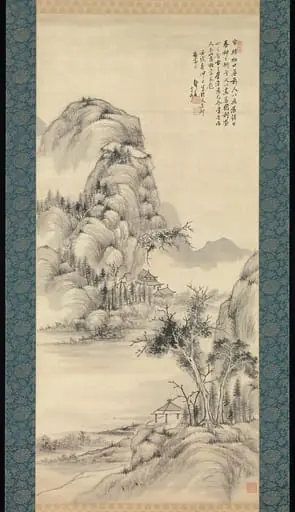
Created in 1824, *Autumn Festival on a Mountain* is a work by Okada Hankō, a Japanese painter active during the Edo period. Executed within the Nanga, or literati, tradition, the piece combines ink and subtle colour to portray a tranquil autumnal scene of mountains, a temple and gathering figures.
Subject & Meaning
The composition presents a distant mountain range behind a foreground temple, surrounded by trees turning red, orange and brown. Small groups of people are shown near the temple and dispersed across the landscape, suggesting a communal celebration or pilgrimage set against the season’s changing foliage.
Technique & Style
Hankō employs refined brushwork characteristic of the third‑generation Japanese literati, layering ink washes with muted pigments. Fine, controlled strokes render the texture of bark and rock, while broader washes suggest atmospheric depth. The palette balances warm autumn tones with cooler greys in the sky, creating a calm, measured atmosphere.
History & Provenance
As the son of Okada Beisanjin, a noted Nanga artist, Hankō inherited access to Chinese models that informed his practice. The painting reflects the increasing familiarity Japanese literati had with original Chinese works in the early nineteenth century, positioning it within a lineage of cross‑cultural artistic exchange.
Context
During the late Edo era, Nanga painters sought to emulate the scholarly ideals of Chinese literati, emphasizing personal expression over formal court styles. *Autumn Festival on a Mountain* illustrates this ethos through its poetic landscape, where natural scenery and human activity merge to convey a contemplative mood.
Legacy
The work exemplifies the maturation of Japanese Nanga in the early 1800s, demonstrating how artists like Hankō blended Chinese influences with native sensibilities. It remains a reference point for scholars studying the transmission of literati aesthetics to Japan and the evolution of landscape painting in the period.
Artist & collection