Artwork
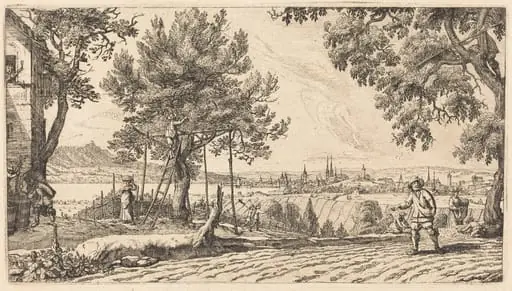
Freitag - Wiesenplan vor Aigen bey Salzburg (Meadow before Aigen near Salzburg)
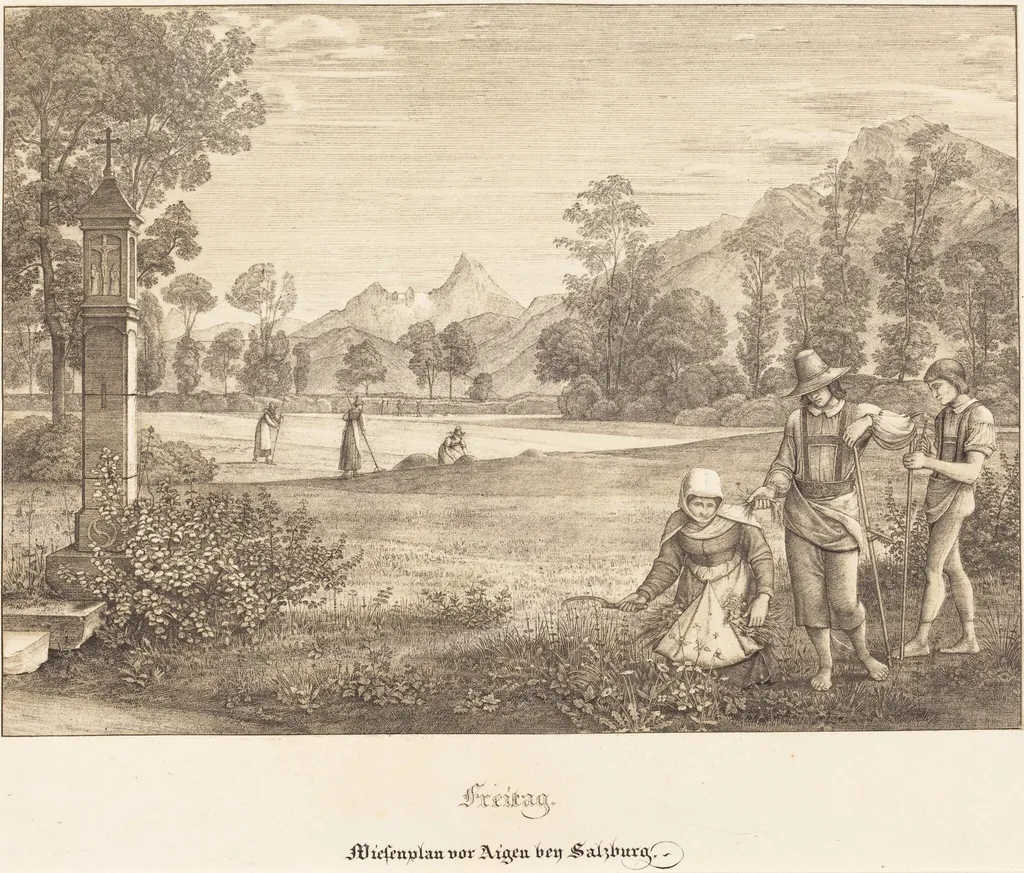
Freitag - Wiesenplan vor Aigen bey Salzburg (Meadow before Aigen near Salzburg) is an ink print by the Romanticist artist Ferdinand Olivier. It dates from 1823 and is held in the collection of the National Gallery of Art.
About this work
Overview
Rendered in monochrome, the print captures a moment of daily labor in a meadow, framed by modest architectural and natural elements.
Created in 1823, this lithograph by Ferdinand Olivier depicts a quiet rural scene near Aigen, just outside Salzburg. Rendered in monochrome, the print captures a moment of daily labor in a meadow, framed by modest architectural and natural elements. The title and location are inscribed at the base, grounding the image in a specific time and place, reflecting the 19th-century interest in documenting regional landscapes and peasant life.
Subject & Meaning
The scene portrays three figures engaged in quiet rural activity: a woman kneels among the grass, collecting herbs or wild plants, while two men stand nearby, one holding a hat and the other a walking stick. Their postures suggest pause rather than exertion, evoking a sense of routine rather than drama. The inclusion of a small chapel and distant mountains implies a spiritual and geographical context, subtly reinforcing the harmony between labor, faith, and landscape.
Technique & Style
Executed in lithography, the print uses fine linear detail and tonal gradations to suggest texture and depth without color. The composition is restrained, with horizontal bands of meadow, chapel, and mountains creating calm spatial order. The absence of dramatic lighting or exaggerated forms aligns with the documentary impulse of early 19th-century topographical prints, prioritizing clarity and observation over artistic embellishment.
History & Provenance
Ferdinand Olivier, a German painter and printmaker associated with the Nazarene movement, produced this work during a period of heightened interest in regional German and Austrian landscapes. The print likely originated as part of a series documenting sites around Salzburg, possibly commissioned or circulated among collectors of topographical art. Its survival in institutional collections suggests early recognition of its documentary value.
Context
In the early 1820s, European artists increasingly turned to local landscapes and everyday life as subjects, moving away from grand historical or mythological themes. Olivier’s work reflects this shift, aligning with broader cultural trends that valued authenticity and regional identity. The specificity of the title—naming both day and place—echoes contemporary scientific and ethnographic efforts to catalog the natural and social world with precision.
Legacy
Though not widely known today, this lithograph contributes to a body of work that helped shape the visual record of rural Austria in the early 19th century. Its quiet realism influenced later generations of regional artists and documentarians who sought to capture the rhythms of peasant life without romanticization. As a specimen of early lithographic practice, it also illustrates the medium’s growing role in accessible image-making beyond fine art circles.
Artist & collection

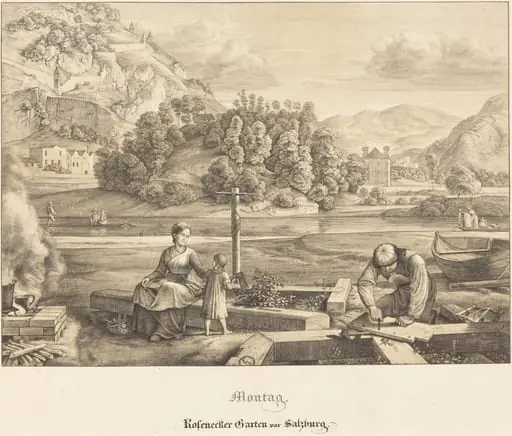 Montag - Rosenecker Garten vor Salzburg (Monday - Rosenecker Garden near Salzburg)
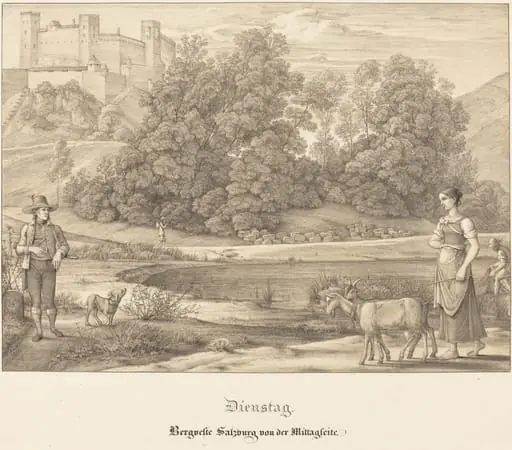 Dienstag - Bergveste Salzburg vor der Mittagseit (Tuesday - The Castle of Salzburg from the Noontime Side)
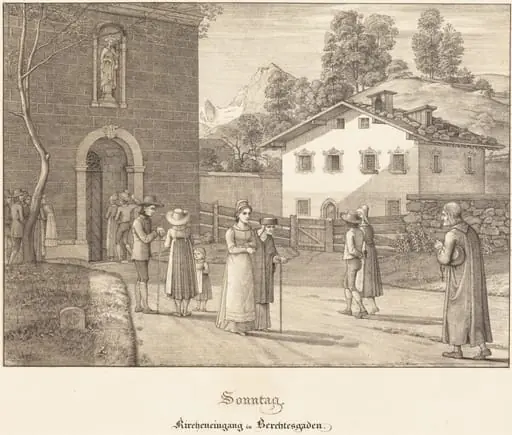 Sonntag - Kircheneingang in Berchtesgaden (Sunday - Going to Church near Berchtesgaden)
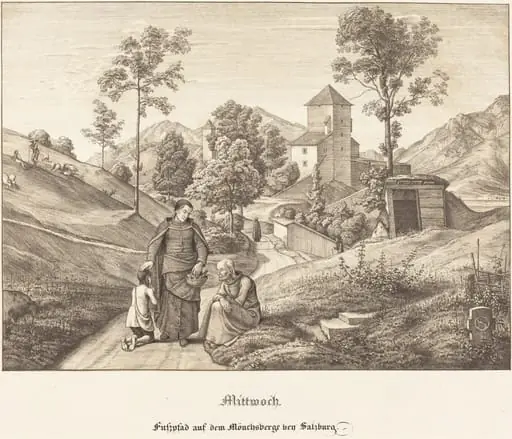 Mittwoch - Fusspfad auf dem Mönchsberge bey Salzburg (Wednesday - Footpath on the Mönchsberge near Salzburg)
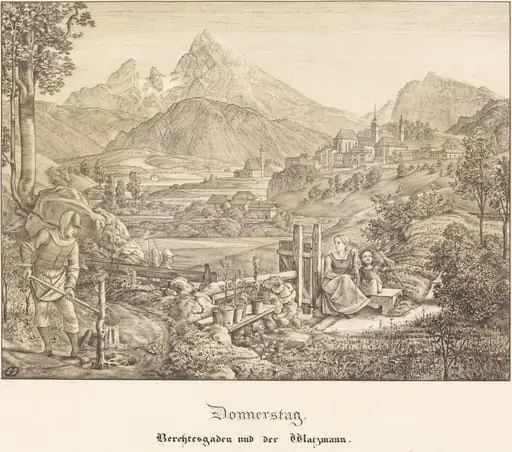 Donnerstag - Berchtesgaden und der Watzmann (Thursday - Berchtesgaden and the Watzmann Mountain)
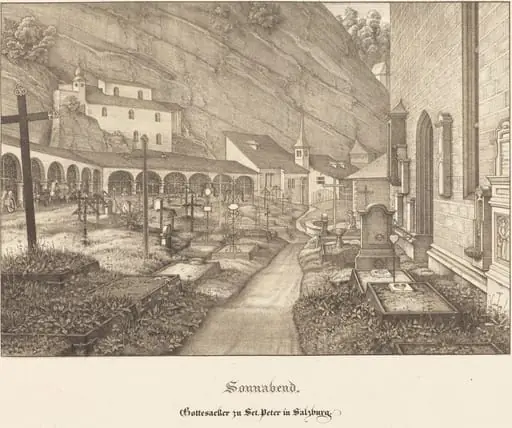 Sonnabend - Gottesacker zu St. Peter in Salzburg (Saturday - Graveyard of St. Peter's in Salzburg)
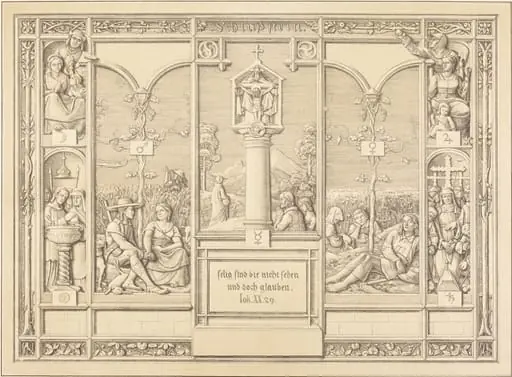 Tailpiece: Selig sind die nicht sehen und doch glauben (Blessed are those who do not
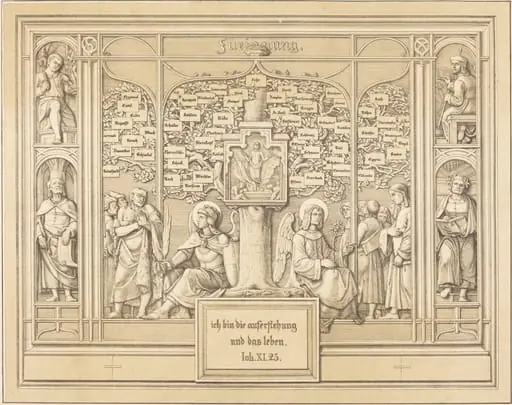 Dedication: Ich bin die Auferstehung und das Leben (I am the resurrection and the life)