Artwork
Tenby Castle, Pembrokeshire
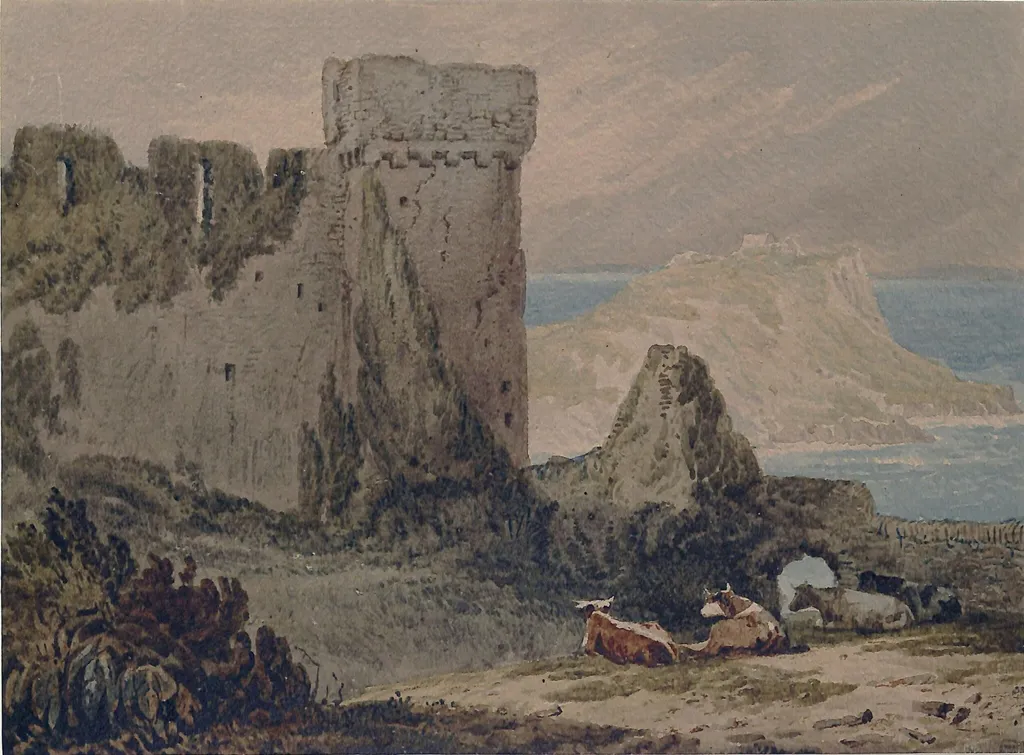
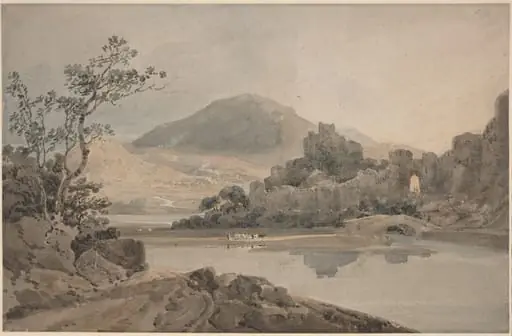
Tenby Castle, Pembrokeshire is a watercolor work on paper by the British Romanticist artist Samuel Prout. It dates from 1800 and is held in the collection of the Victoria and Albert Museum.
About this work
Overview
Tenby Castle, Pembrokeshire is a watercolour painting created by Samuel Prout circa 1800, capturing the scene of a weathered castle on a coastal cliff.
Subject & Meaning
The painting portrays Tenby Castle in a state of decay, set against the serene backdrop of the sea and sky. The inclusion of small figures and grazing sheep contrasts human presence with the overwhelming power of nature and the passage of time, reflecting themes common in Romanticism.
Technique & Style
Prout's execution emphasizes the textured, weathered quality of the castle's stone, leveraging the expressive potential of watercolour to convey the interplay of light on aged surfaces. The style aligns with Romanticist tendencies to highlight the mysterious and powerful aspects of nature and ruins.
History & Provenance
Created around 1800, the painting's provenance is not detailed here, though works by Samuel Prout are found in notable collections, suggesting its potential significance within his oeuvre.
Context
This work is contextualized within the broader Romantic movement, which often featured landscapes juxtaposing natural beauty with the decay of human-made structures, evoking emotions of melancholy and awe.
Legacy
While specific impact of 'Tenby Castle, Pembrokeshire' is not outlined, it contributes to the broader legacy of Samuel Prout's watercolours, which continue to be studied and admired, with similar works viewable at institutions like the Victoria and Albert Museum.
Own this work as a print
Artist & collection

Artist
Samuel Prout (; 17 September 1783 – 10 February 1852) was a British watercolourist, and one of the masters of watercolour architectural painting, who largely invented the genre of the grand steet scene in British…

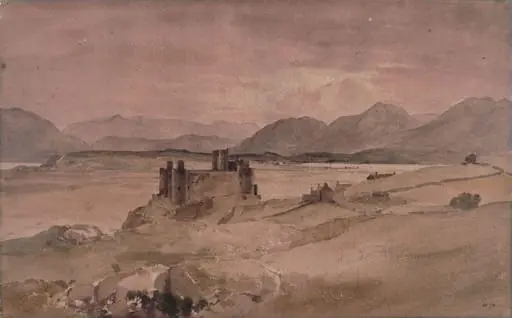 Harlech Castle, North Wales
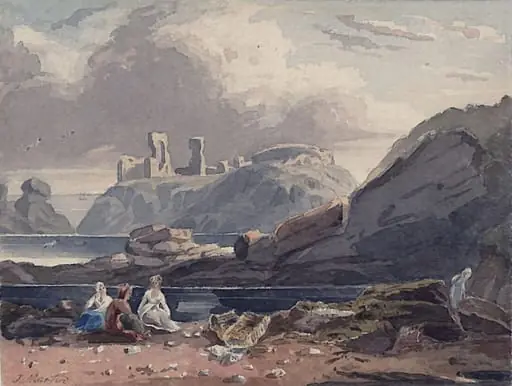 Whitby Abbey
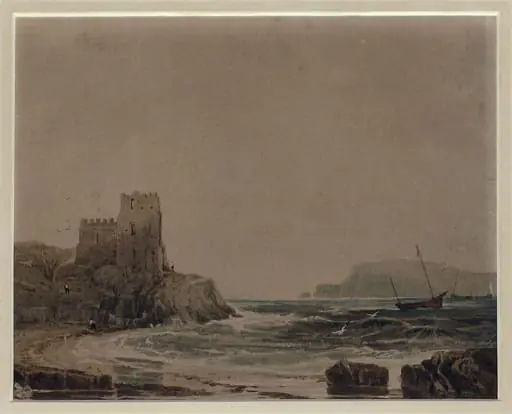 Castle on a Rocky Shore
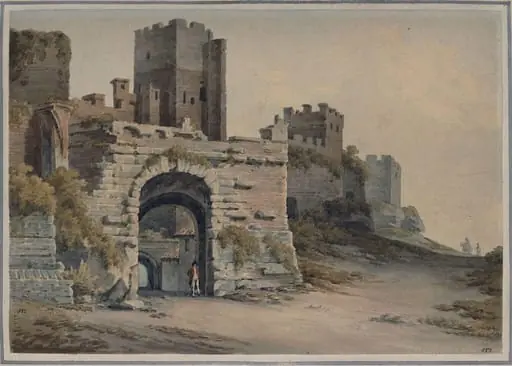 Porta Tiburtina, Rome, seen from the inside
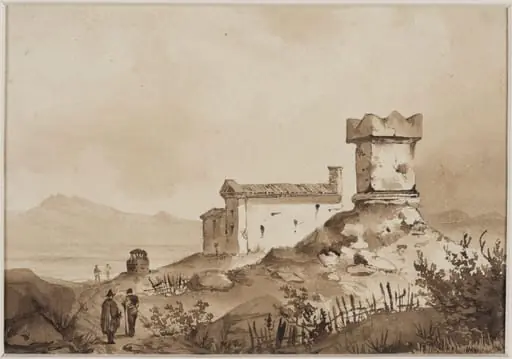 Italian landscape, with an ancient Roman sarcophagus
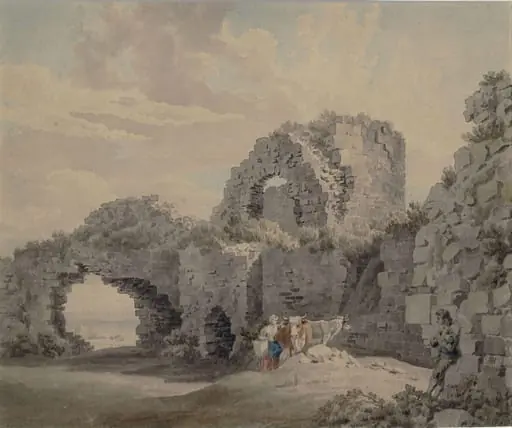 Ruins of Pevensey Castle
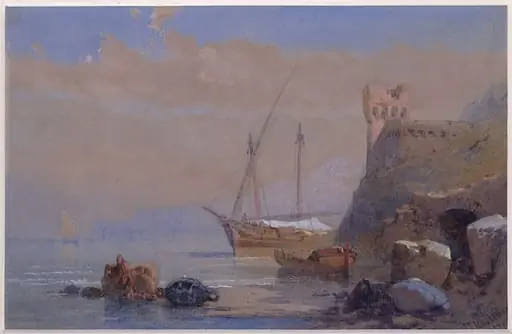 A Mediterranean coast scene with boats at anchor and a ruined castle
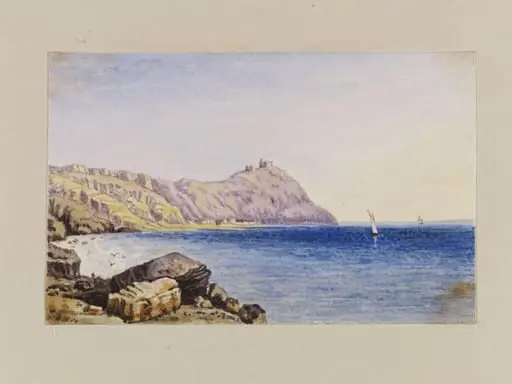 Carmel
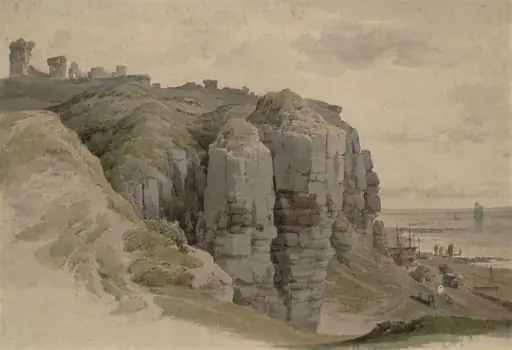 Hastings Castle
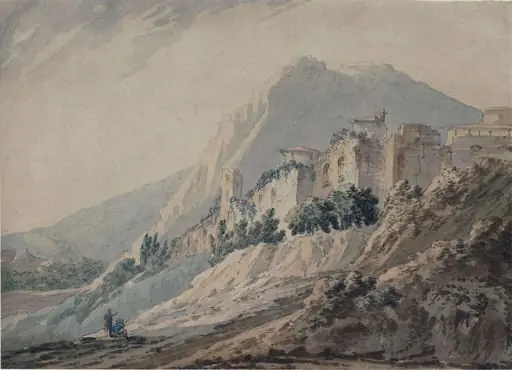 Mountainous landscape with ruined building
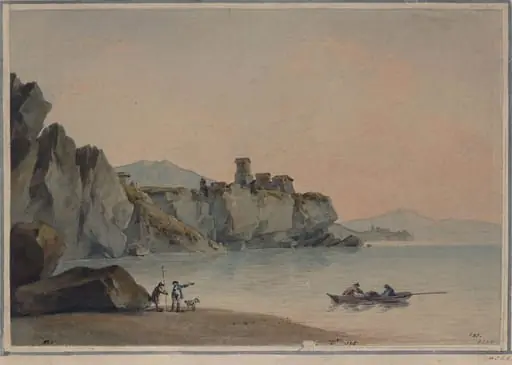 Coast near Castiglione
 Conwy Castle, North Wales