Artwork
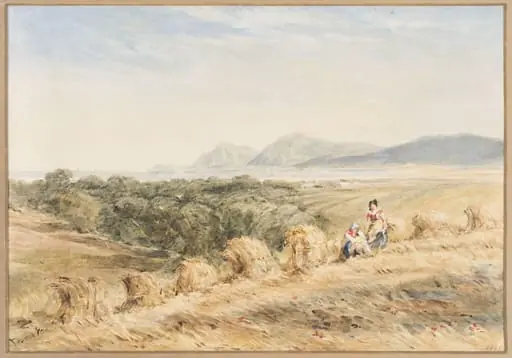
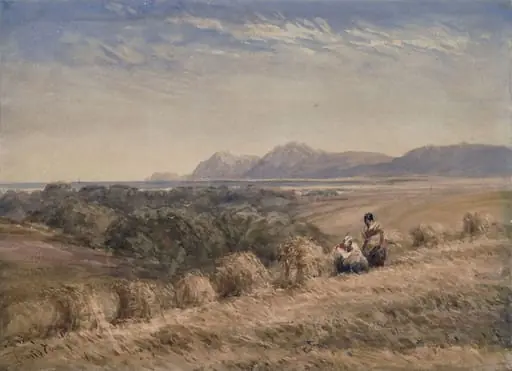
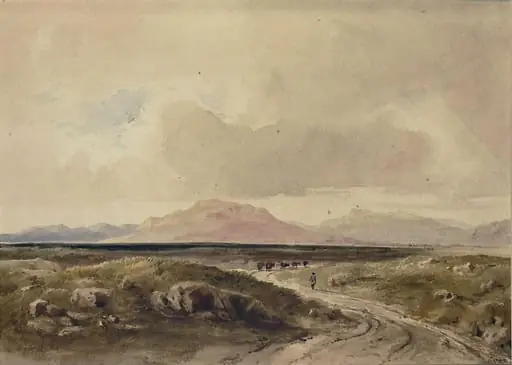
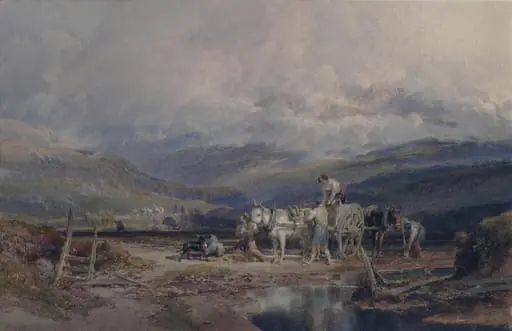
Harrowing--View near the Cross Fells
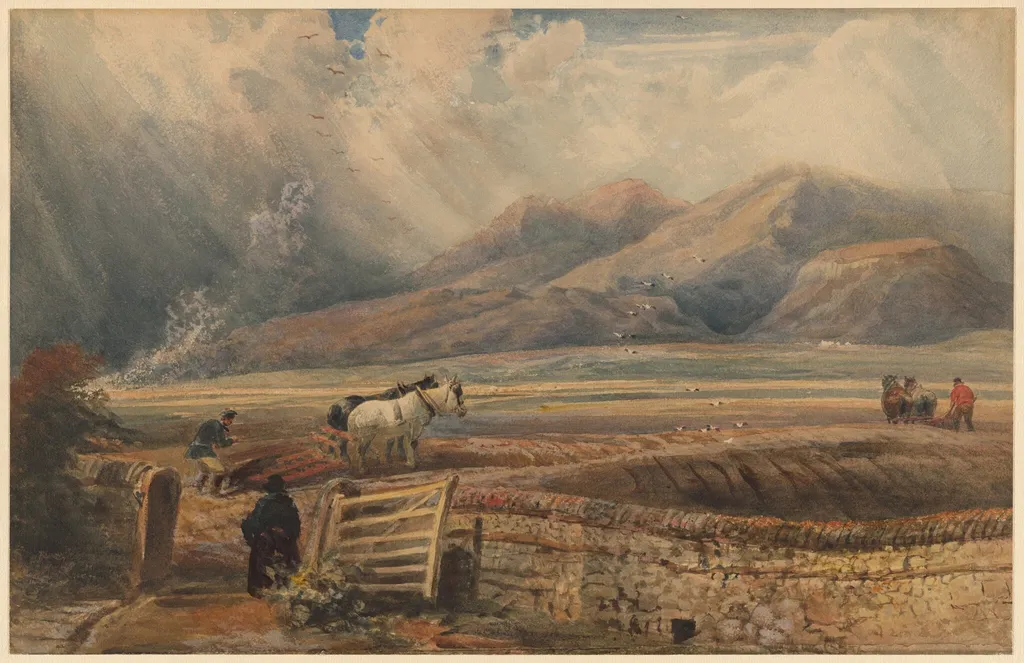
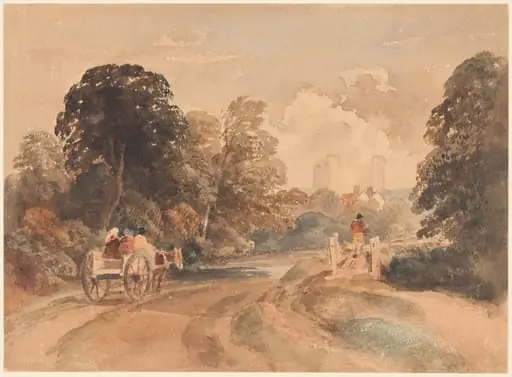
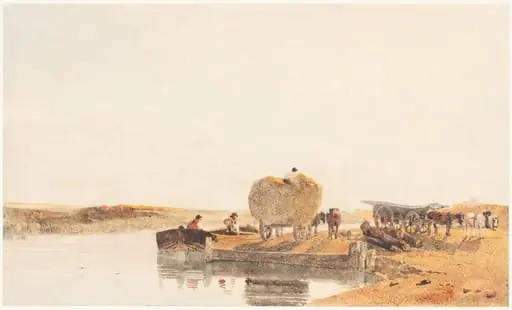
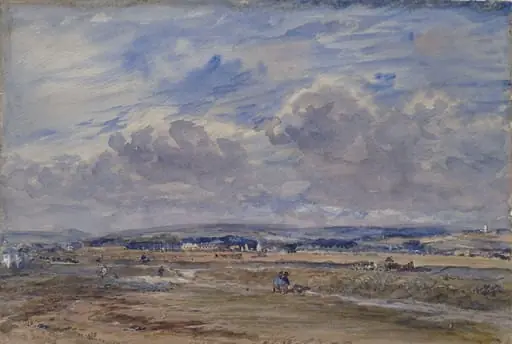
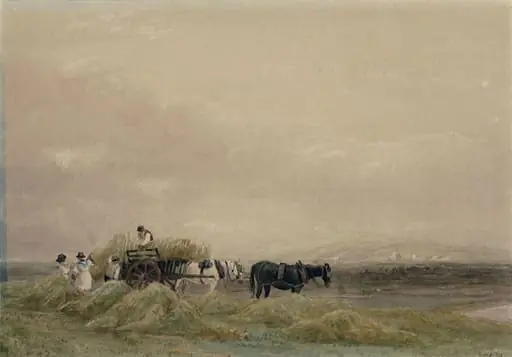
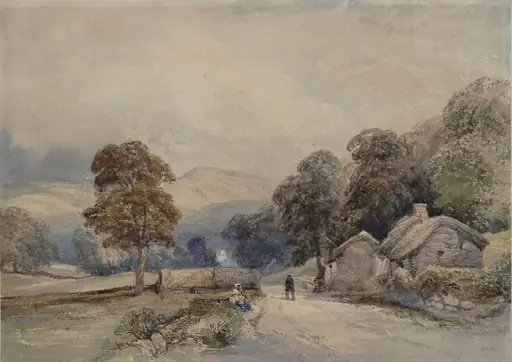
Harrowing--View near the Cross Fells is a watercolor drawing by the Romanticist artist Peter De Wint. It dates from 1840 and is held in the collection of the National Gallery of Art.
About this work
Overview
Created around 1840, this watercolor and gouache drawing by Peter De Wint depicts a rural scene near the Cross Fells in northern England. Executed on wove paper with selective scratching to enhance highlights, the work exemplifies the artist’s quiet observation of agricultural life. It resides in the National Gallery of Art, Washington, as part of its collection of 19th-century British drawings.
Subject & Meaning
The scene portrays two laborers tending horses as they plow a field, framed by a stone wall and wooden gate. No dramatic action is present; instead, the focus lies in the rhythm of daily toil and the stillness of the landscape. The misty distance and subdued sky suggest a contemplative mood, emphasizing harmony between human effort and the natural environment.
Technique & Style
De Wint employed loose, fluid brushwork and layered watercolor glazes to build subtle tonal transitions. Gouache added opacity for foreground elements, while scratching out the paper surface created highlights in the sky and stone. The technique prioritizes atmospheric effect over detail, aligning with contemporary British landscape traditions that valued mood over precision.
History & Provenance
The work entered the National Gallery of Art’s collection through the A. W. Mellon Bequest in 1937. Its origins prior to that are undocumented, though De Wint’s frequent travels in northern England suggest it was painted en plein air during one of his sketching trips. The paper’s wove texture and handling are consistent with his mid-career practice.
Context
In the 1830s–40s, British artists increasingly turned to rural subjects as industrialization reshaped the countryside. De Wint, influenced by Turner and the Norwich School, favored quiet, unidealized landscapes. This work reflects a broader cultural interest in documenting vanishing agrarian life, not as nostalgia, but as a record of place and labor.
Legacy
Though not widely exhibited, the drawing exemplifies De Wint’s contribution to British watercolor traditions. His restrained approach—emphasizing light, texture, and quiet composition—helped shape the medium’s evolution beyond topographical recording into a vehicle for poetic observation. Later artists drew from his sensitivity to atmospheric nuance.
Own this work as a print
Artist & collection