Artwork
Cottages near St. Micheal's Mount, Cornwall
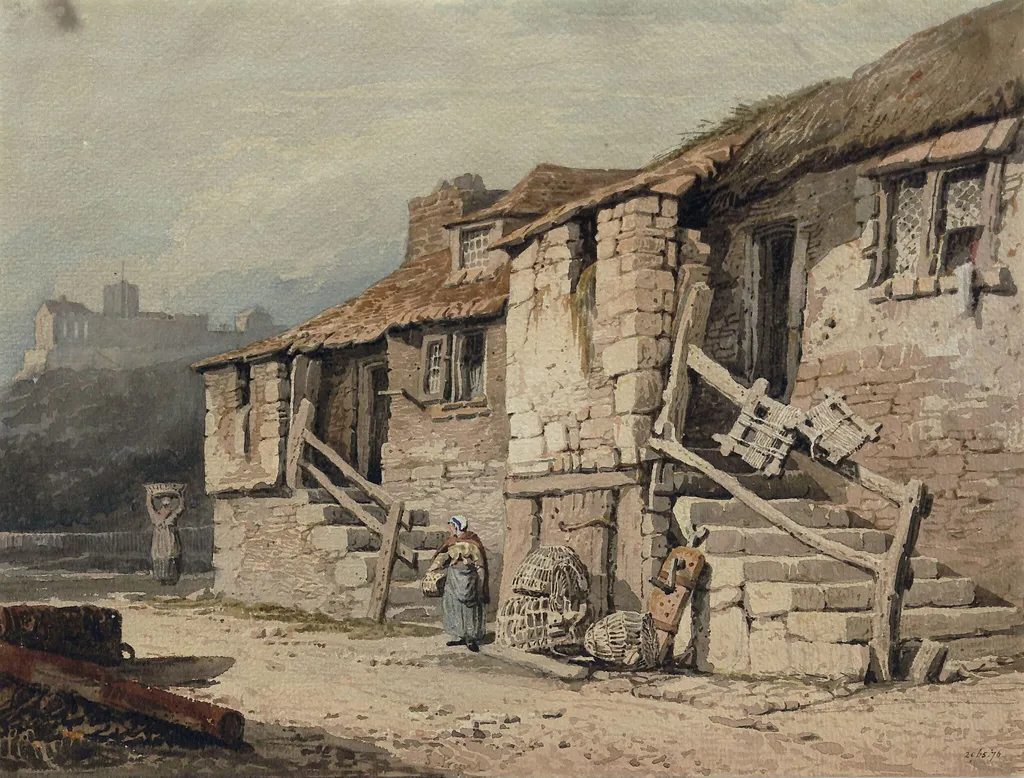
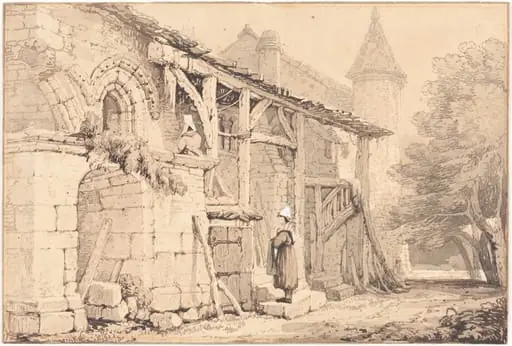
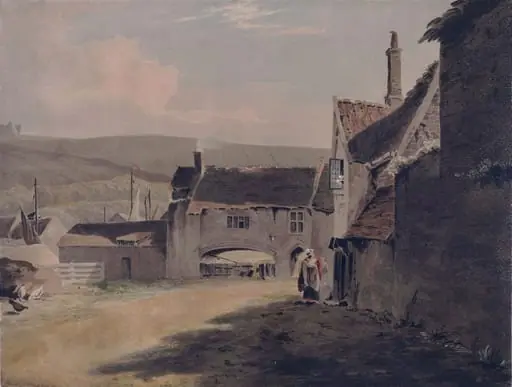
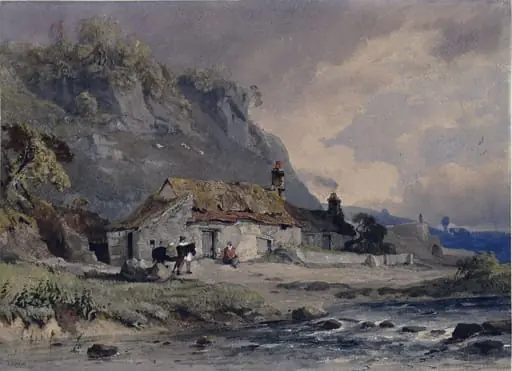
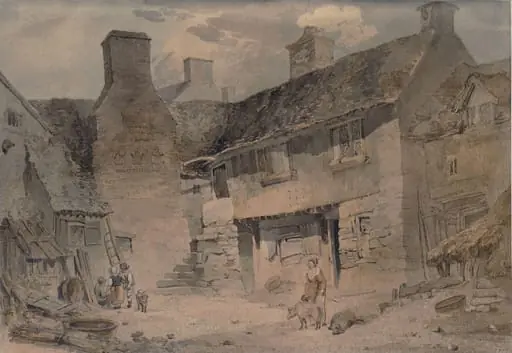
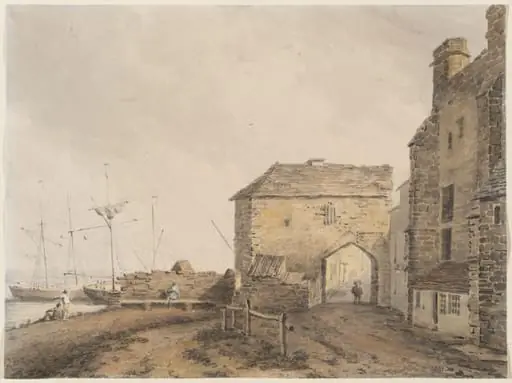
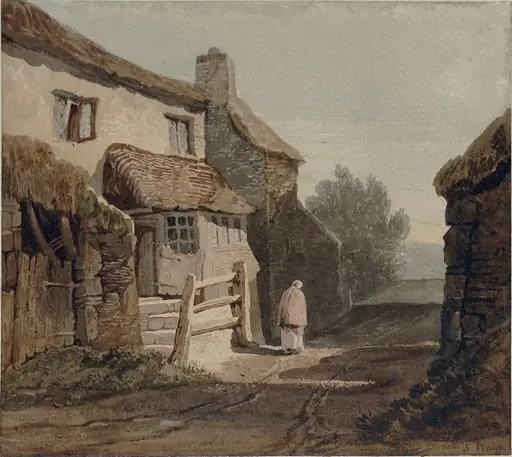
Cottages near St. Micheal's Mount, Cornwall is a watercolor work on paper by the British Romanticist artist Samuel Prout. It dates from 1800 and is held in the collection of the Victoria and Albert Museum.
About this work
Overview
Samuel Prout created this watercolour depicting modest dwellings adjacent to St Michael’s Mount in Cornwall. The work is signed by the artist and rendered in delicate washes, capturing the quiet decay of rural architecture. Its focus on weathered surfaces and humble structures reflects Prout’s interest in the poetic character of aging buildings, a recurring theme in his topographical studies.
Subject & Meaning
The scene centers on a dilapidated stone cottage with a sagging roof, its walls cracked and windows framed with simple cross patterns.
The scene centers on a dilapidated stone cottage with a sagging roof, its walls cracked and windows framed with simple cross patterns. A woman in dark clothing stands beside woven baskets and a wooden ladder, suggesting daily labor and domestic routine. The distant silhouette of the castle on the hill contrasts human fragility with enduring stone, evoking themes of time, resilience, and the quiet persistence of rural life.
Technique & Style
Prout employed transparent watercolour washes to convey the texture of weathered stone and aged timber. Fine brushwork defines cracks in the walls and the grain of the ladder, while muted tones ground the composition in realism. The delicate handling of light and shadow enhances the sense of atmospheric depth, aligning with the observational precision characteristic of early 19th-century topographical watercolours.
History & Provenance
Painted during Prout’s travels in Cornwall, this work belongs to a series of sketches and finished pieces he produced in the 1820s and 1830s. It was likely created for private collectors or as preparatory material for later engravings. The painting remained in private hands for much of its history, with no documented public exhibition until the 20th century.
Context
Prout’s focus on rustic architecture aligned with broader Romantic-era interests in the sublime and the picturesque. While not overtly dramatic, his scenes of humble dwellings resonated with contemporary audiences drawn to the emotional weight of decay and the dignity of everyday life. His work contributed to a growing appreciation for vernacular structures as subjects worthy of artistic attention.
Legacy
Prout’s watercolours influenced later generations of topographical artists and helped elevate watercolour from a sketching medium to a respected form of finished art. His attention to architectural detail and atmospheric mood laid groundwork for the Victorian interest in historical preservation and regional identity, though his work remains less widely known than that of his contemporaries.
Artist & collection
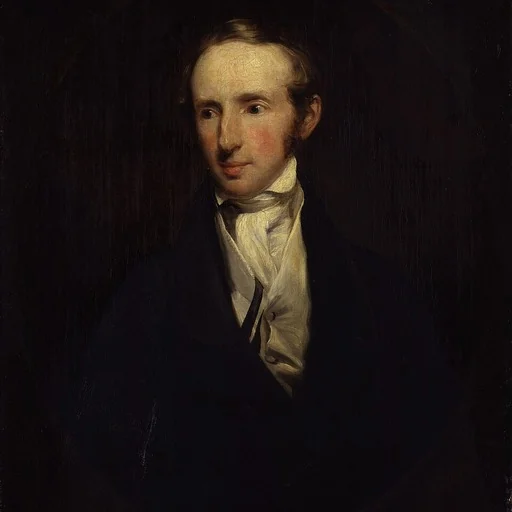
Artist
Samuel Prout (; 17 September 1783 – 10 February 1852) was a British watercolourist, and one of the masters of watercolour architectural painting, who largely invented the genre of the grand steet scene in British…