Artwork
Untitled
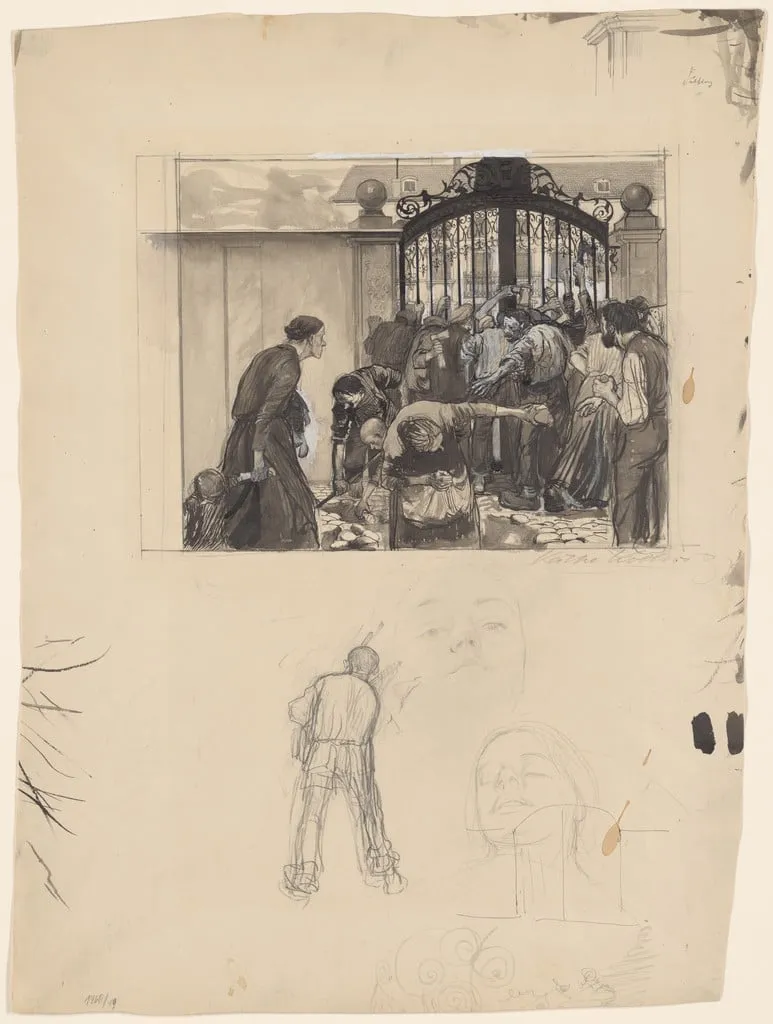
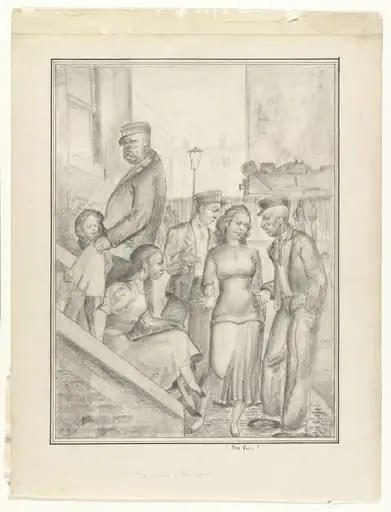
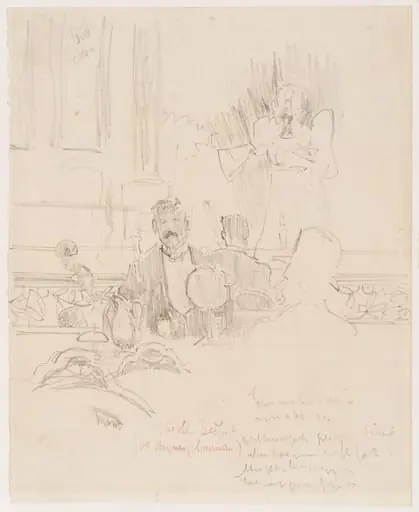
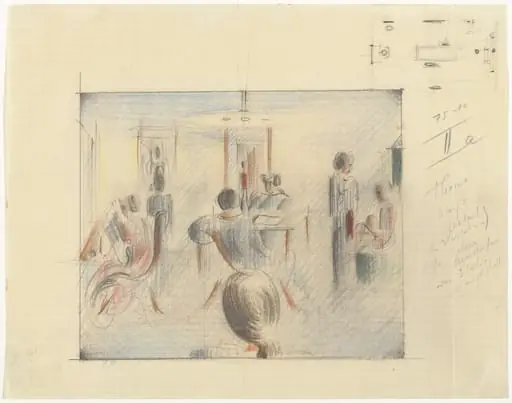
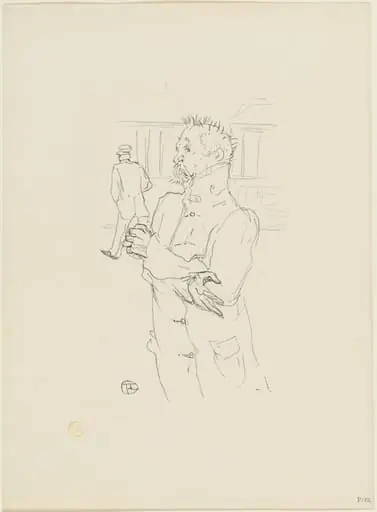
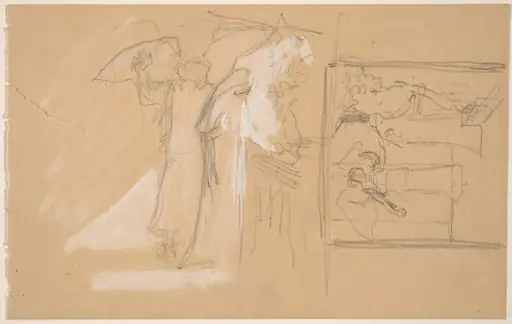
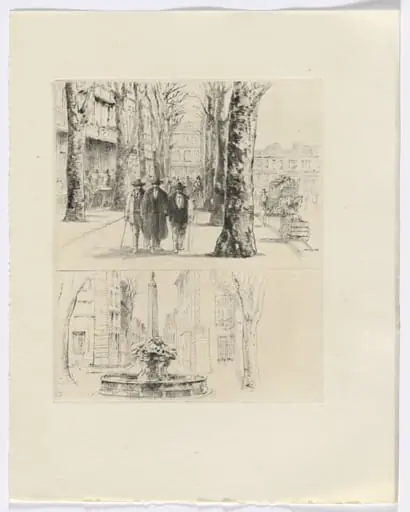
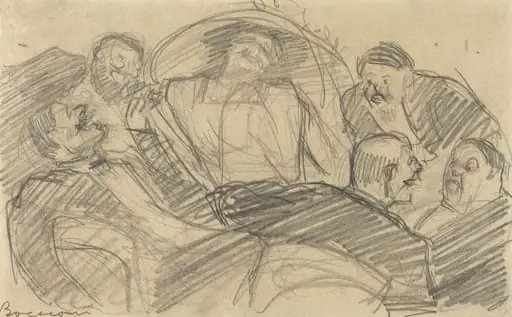
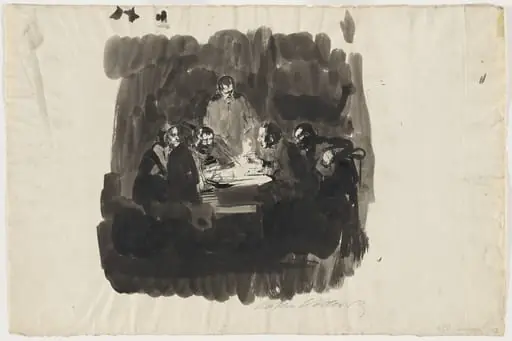
Untitled is a gouache drawing by the Impressionist artist Käthe Kollwitz. It dates from 1897 and is held in the collection of the Museum of Modern Art.
About this work
Overview
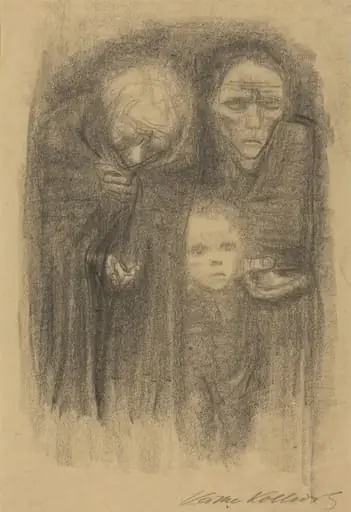
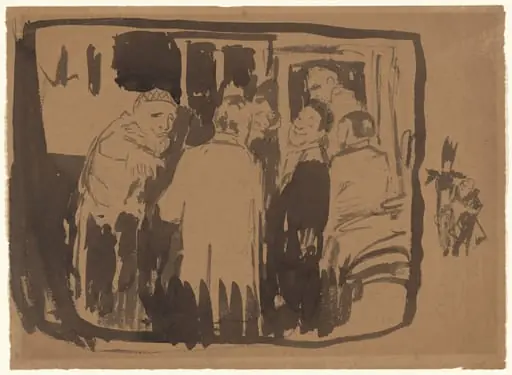
Created in 1897, this drawing by Käthe Kollwitz combines ink, pencil, and gouache on paper to depict a quiet, somber crowd gathered before a large gate.
Created in 1897, this drawing by Käthe Kollwitz combines ink, pencil, and gouache on paper to depict a quiet, somber crowd gathered before a large gate. The work belongs to MoMA’s collection and exemplifies Kollwitz’s early focus on everyday human conditions. Its restrained palette and layered media convey emotional weight without overt drama, reflecting the artist’s interest in social observation over narrative spectacle.
Subject & Meaning
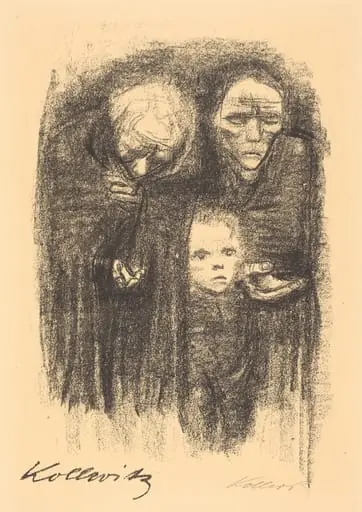
The scene portrays a group of figures in historical attire, standing in silent anticipation before an imposing structure. Their postures suggest resignation or weary expectation, possibly evoking themes of labor, exclusion, or communal waiting. In the foreground, a partially rendered man and woman hint at incomplete identities, reinforcing the anonymity of the masses and the artist’s emphasis on collective experience over individual portraiture.
Technique & Style
Kollwitz layered ink outlines with soft gouache washes and delicate pencil shading to build texture and depth. The muted tones—grays, browns, and muted ochres—enhance the somber mood. Her technique balances precision in facial fragments with loose, gestural forms in the crowd, creating a tension between individual presence and mass anonymity that defines her early graphic style.
History & Provenance
Executed in 1897, the work emerged during Kollwitz’s formative years as an artist, before her later, more widely recognized prints. It entered The Museum of Modern Art’s collection through documented acquisition, likely as part of a broader effort to preserve her drawings. Its survival in good condition reflects its significance within her oeuvre, though it remained less publicized than her etchings and lithographs.
Context
In late 19th-century Germany, Kollwitz was deeply engaged with the lives of working-class communities. This drawing aligns with her studies of urban poverty and social marginalization, influenced by her husband’s medical practice and her own observations in Berlin’s tenements. Unlike idealized genre scenes of the time, her work avoided sentimentality, instead presenting quiet, unvarnished moments of human endurance.
Legacy
Though less exhibited than her prints, this drawing reveals the foundations of Kollwitz’s lifelong commitment to depicting social reality with empathy. Its restrained technique and emotional nuance influenced later generations of figurative artists focused on human dignity amid hardship. The work stands as a quiet testament to her early development and enduring focus on the unseen lives of ordinary people.
Artist & collection
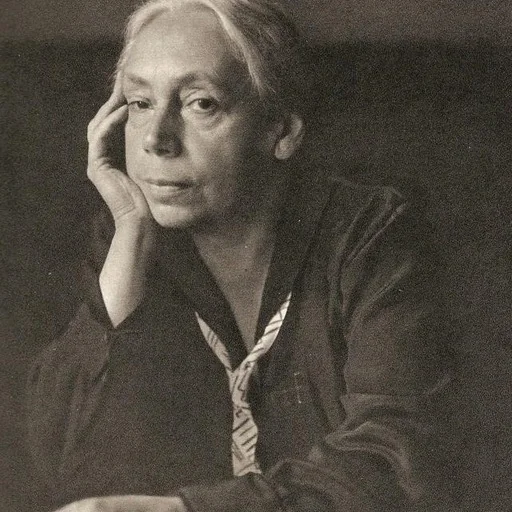
Artist
Käthe Kollwitz (German pronunciation: born Schmidt; 8 July 1867 – 22 April 1945) was a German artist who worked with painting, printmaking (including etching, lithography and woodcuts) and sculpture.