Artwork
The Partridge Saves Her Young
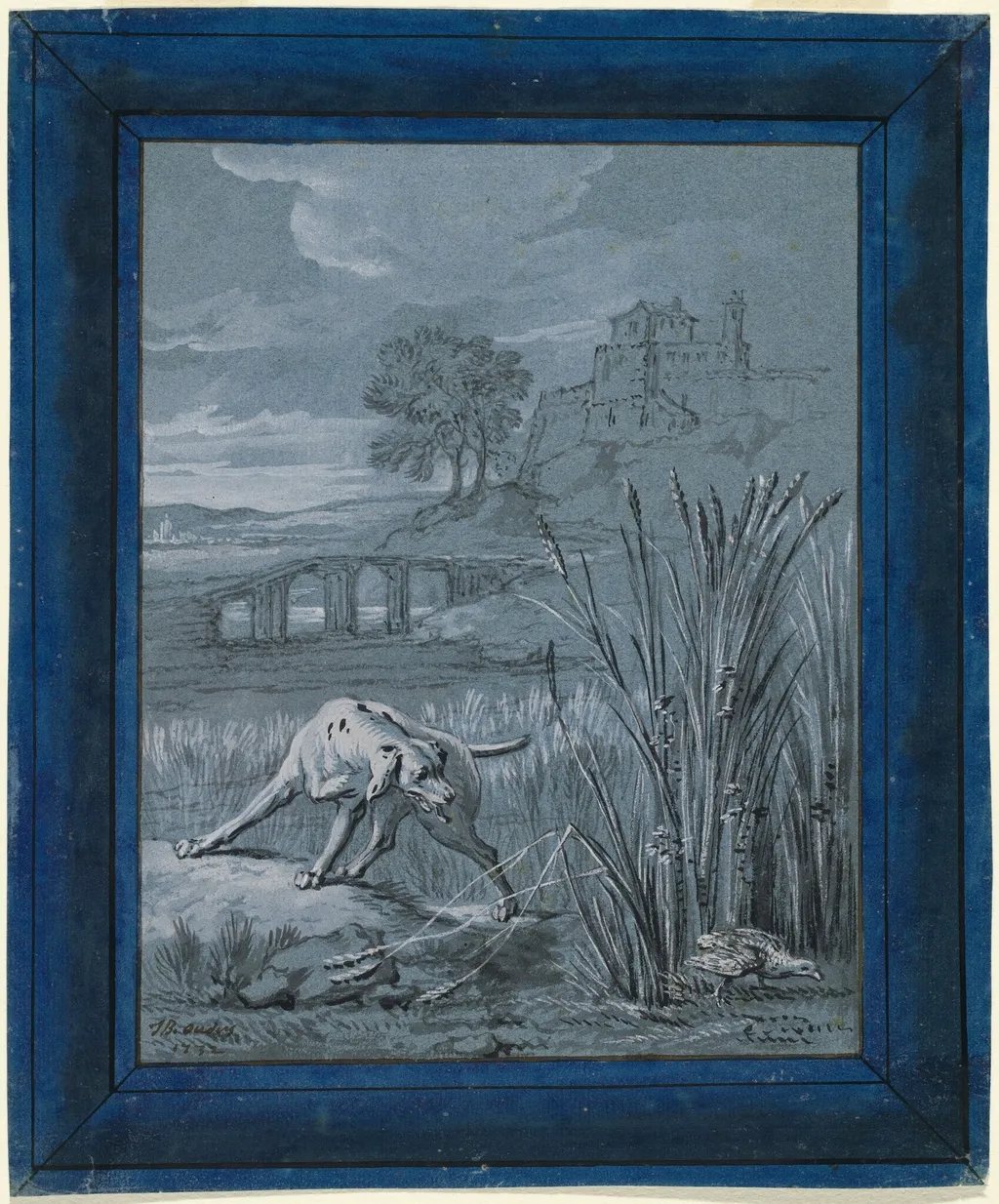
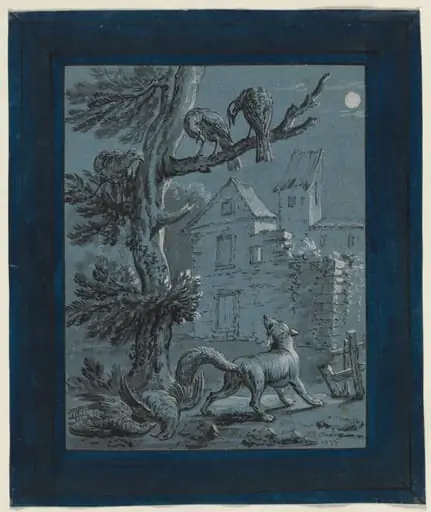
The Partridge Saves Her Young is an ink drawing by the Baroque artist Jean-Baptiste Oudry. It dates from 1732 and is held in the collection of the National Gallery of Art.
About this work
Overview
Executed in brush, ink, gouache, and wash on blue laid paper, it mimics the appearance of a framed composition through simulated borders in blue and gray wash.
Created in 1732 by Jean-Baptiste Oudry, this drawing depicts a moment of animal drama with restrained elegance. Executed in brush, ink, gouache, and wash on blue laid paper, it mimics the appearance of a framed composition through simulated borders in blue and gray wash. The work exemplifies Oudry’s focus on naturalistic animal behavior, blending observation with delicate tonal modulation to evoke motion and tension within a quiet landscape.
Subject & Meaning
The scene captures a partridge shielding her chicks as a dog lunges toward her, a moment of maternal defense against predation. The scattered chicks and swaying reeds suggest urgency and vulnerability, while the distant castle and bridge imply a human presence just beyond the frame. The composition avoids overt sentimentality, instead presenting nature’s conflict with quiet realism, reflecting Enlightenment-era interest in animal behavior and the natural world.
Technique & Style
Oudry employed layered brushwork: black ink for definition, gray wash for atmospheric depth, and white gouache to highlight the partridge and dog against the muted blue paper. The simulated mount in blue and brown ink frames the image as if it were a finished painting, enhancing its illusion of completeness. The soft, sketchy texture suggests spontaneity, yet every stroke serves precise observation, balancing immediacy with controlled composition.
History & Provenance
Commissioned during Oudry’s tenure as a painter to the French royal court, the work aligns with his documented interest in game animals and hunting scenes. Though not part of a larger series, it reflects his broader practice of documenting wildlife with scientific precision. The drawing remained within French collections, later entering public holdings where its technical ingenuity and thematic subtlety gained scholarly attention.
Context
In early 18th-century France, natural history and animal portraiture gained prominence among aristocratic patrons. Oudry’s work responded to this trend, merging artistic skill with emerging empirical interest in animal life. Unlike mythological or allegorical scenes common in the Rococo, this drawing presents nature without human intervention, aligning with broader intellectual currents that valued direct observation over idealization.
Legacy
Oudry’s approach influenced later naturalist illustrators and animal painters through his fusion of artistic refinement with biological accuracy. Though less celebrated than his large-scale hunting canvases, this drawing reveals his mastery of economy and nuance. Its preservation and study underscore the significance of small-scale works in advancing the depiction of wildlife as a subject worthy of serious artistic attention.
Artist & collection

Artist
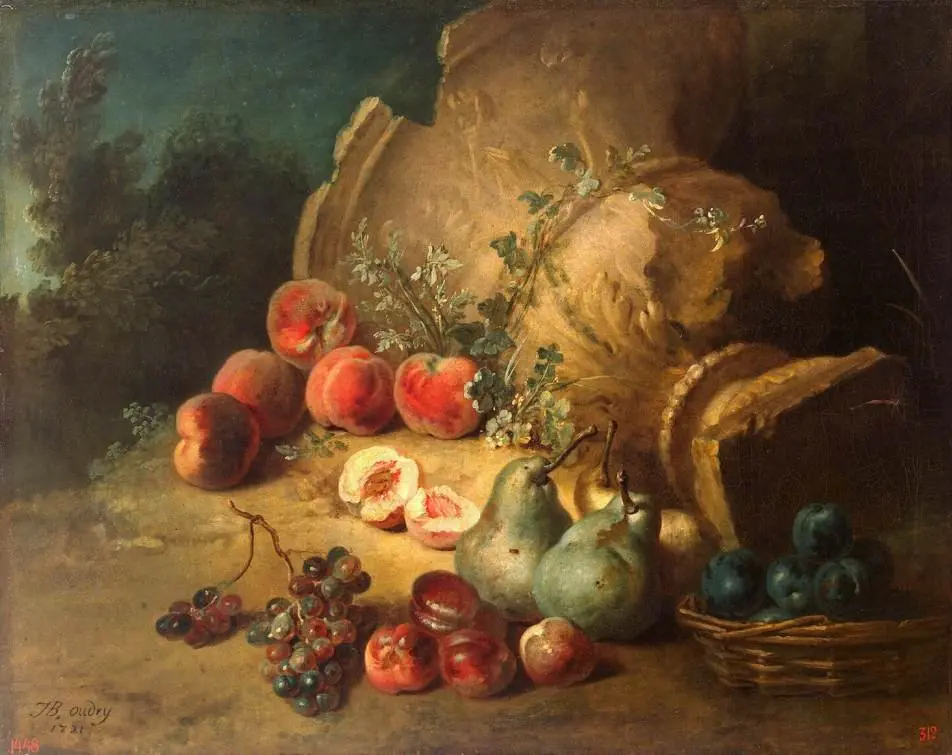
Jean-Baptiste Oudry was a French Rococo painter, engraver, and tapestry designer. He is particularly well known for his naturalistic pictures of animals and his hunt pieces depicting game. His son, Jacques-Charles Oudry, was also a painter.

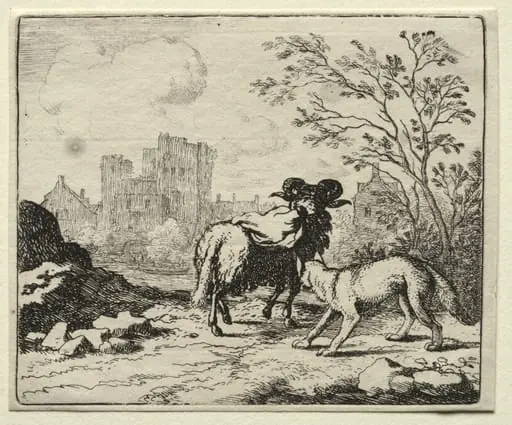 Reynard the Fox: Reynard Sends a Packet to the Lion
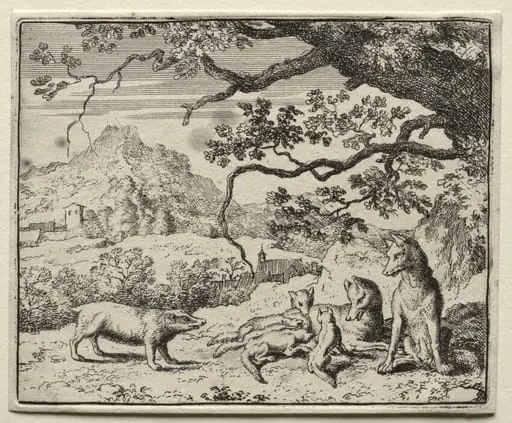 Reynard the Fox: The Badger Calls Reynard to Court
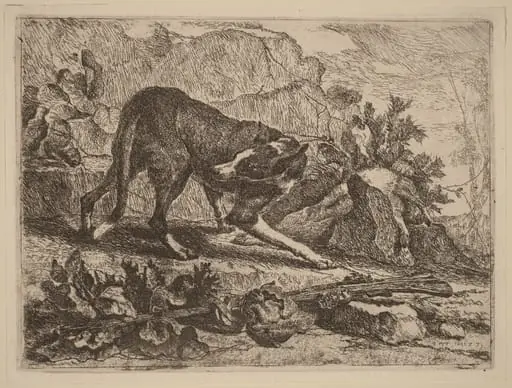 Landscape with Greyhound and Rifle
 Liber Veritatis: No. 50, A River Scene with Tobias and the Angel
 Le vieux chat et la jeune Souris (The Old Catand the Young Mouse)
 Landscape with Clump of Trees
 L'ane et le chien (The Donkey and the Dog)
 Liber Veritatis: No. 42, A River Landscape with a Shepherd and Shepherdess and a Herd of Cattle
 Le loup et le renard (The Wolf and the Fox)
 Reynard Blinds the Wolf in One Eye
 The Partridge and the Cocks
 The Fox and the Turkey Hens