Artwork
Studies for Small Bronzes with Classical Motifs
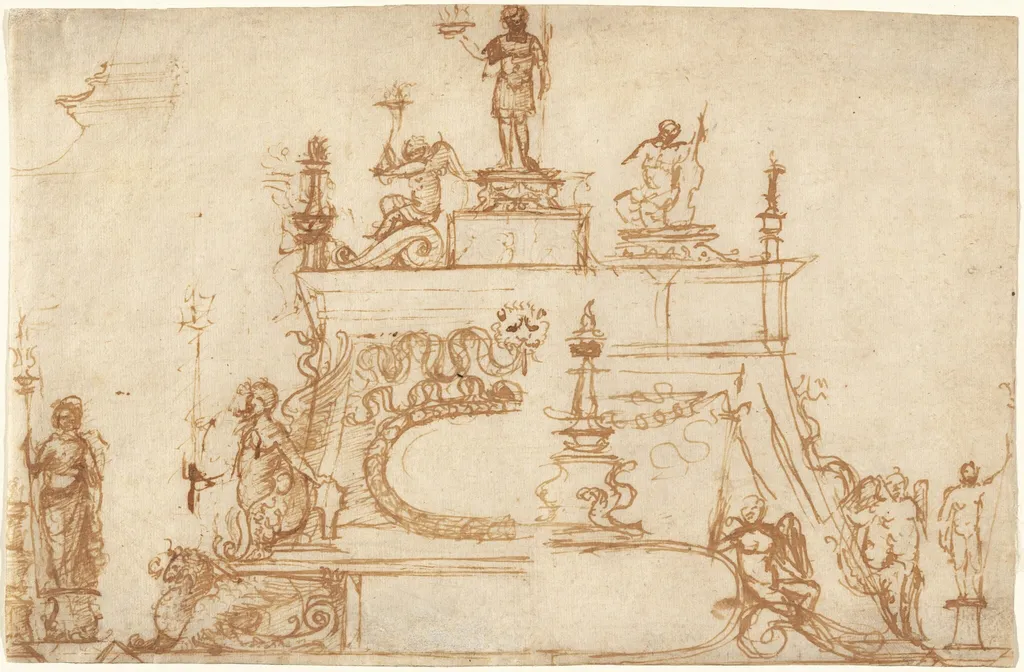
Studies for Small Bronzes with Classical Motifs is an ink drawing by the Renaissance artist Paduan 15th Century. It dates from 1494 and is held in the collection of the National Gallery of Art.
About this work
Overview
The work titled “Studies for Small Bronzes with Classical Motifs” is a pen-and-brown‑ink drawing on laid paper. Executed as a preparatory study, it records a series of diminutive figures intended for bronze casting, each positioned on elaborately patterned pedestals.
Subject & Meaning
The composition presents a collection of miniature statues, some standing, others seated or reclining, all clothed in garments reminiscent of antiquity. Each figure holds an attribute such as a torch, scroll, or tool, suggesting a range of mythological or allegorical identities that the artist was exploring for later sculptural realization.
Technique & Style
Rendered in swift, confident brown ink lines, the drawing emphasizes precise contouring of forms and decorative base motifs. The artist employs fine hatching to suggest volume while the swirling, flame‑like ornamentation on the bases demonstrates a keen interest in integrating classical ornament with a personal decorative vocabulary.
Context
Such studies were typical of Renaissance workshops, where designers produced multiple sketches to resolve composition, posture, and decorative detail before committing to costly bronze casting. The drawing reflects the period’s fascination with reviving classical motifs and adapting them to contemporary artistic practice.
Artist & collection

Artist
This sculptor left no name, just fingers that lingered in metal. They shaped the dead Christ with a tenderness that turns hollow bronze into skin you almost expect to warm under your touch. A friend once pointed out the…

 A View of Rome from Santa Maria del Priorato
 Study for the 'Essequie' Conducted in San Lorenzo, Florence, in 1637 in Honour of Holy Roman Emperor Ferdinand II
 Altarpiece of the Madonna and Child with Saints, in Its Architectural Setting
 Design for Decorative Hinges (recto)
![Palatial Mantelpiece with a Scene of Ancient Sacrifice [recto], by Austrian 16th Century](https://artifactworldgallery.com/img/austrian-16th-century--palatial-mantelpiece-with-a-scene-of-ancient-sacrifice-recto--6818e7e0eb258b13-w320.webp) Palatial Mantelpiece with a Scene of Ancient Sacrifice [recto]
Palatial Mantelpiece with a Scene of Ancient Sacrifice [recto] Design for a Wall Decoration with Pasted-in Sketches after Raphael (verso)
 A Reliquary of Saint Sigismondo
 Two Kings and a Woman Leaving an Elaborate Palace
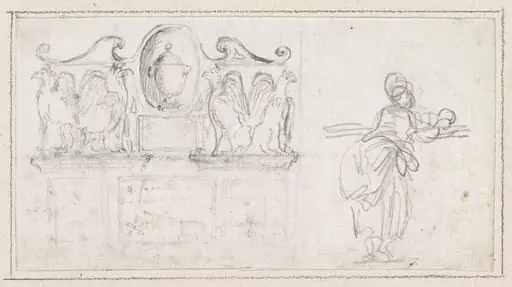 A Decorative Sculpture with a Woman Seen from Behind
![Studies for the Façade of Santa Cristina [recto], by Filippo Juvarra](https://artifactworldgallery.com/img/filippo-juvarra--studies-for-the-facade-of-santa-cristina-recto--3ded5144bd068ef0-w320.webp) Studies for the Façade of Santa Cristina [recto]
Studies for the Façade of Santa Cristina [recto]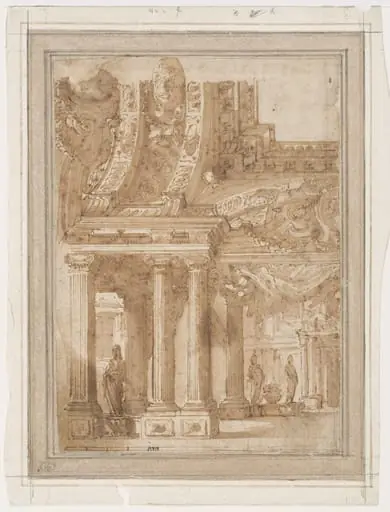 Untitled
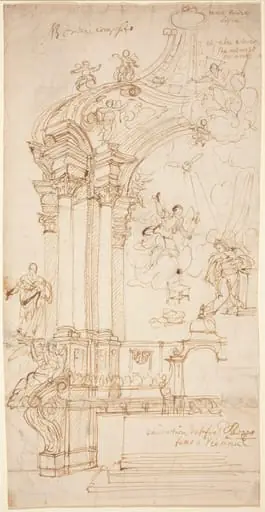 A Baldachin with a Painting of the Annunciation