Artwork
Design for Decorative Hinges (recto)
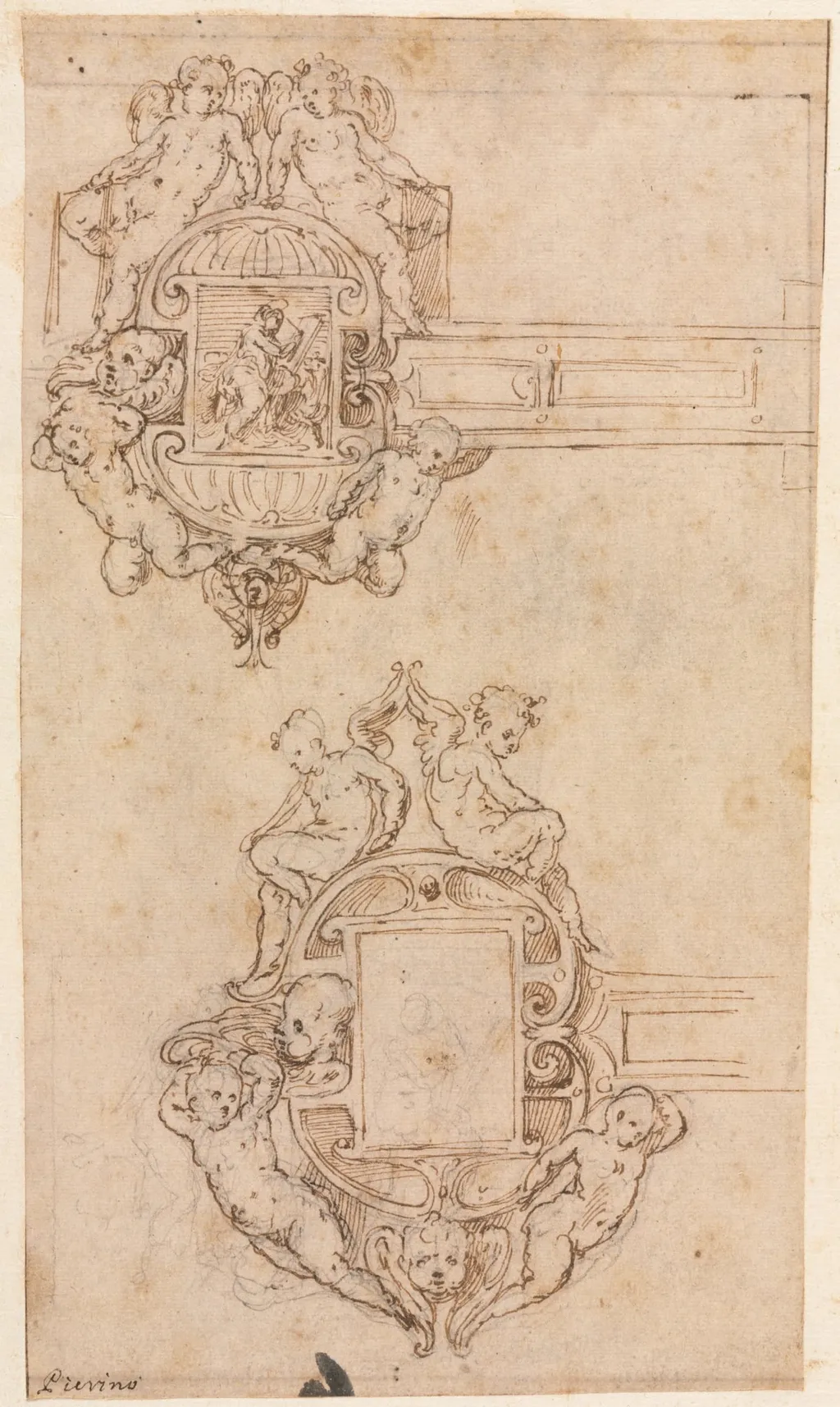
Design for Decorative Hinges (recto) is a drawing by the Renaissance artist Luzio Romano. It dates from 1504 and is held in the collection of the Cleveland Museum of Art.
About this work
Overview
Design for Decorative Hinges is a drawing by Luzio Romano, created circa 1504, exemplifying the intersection of artistic expression and functional design during the High Renaissance.
Subject & Meaning
The drawing depicts two ornate hinges adorned with swirling scrolls, tiny faces, shields with miniature scenes, and mythological elements (cherubs, a dome with a figure). These motifs reflect the decorative tastes of wealthy Renaissance households.
Technique & Style
Rendered in light, sketchy lines suggestive of a preliminary study, the work showcases Romano's Mannerist leanings within the High Renaissance, emphasizing intricate composition and ornamental detail.
History & Provenance
Created by Luzio Romano around 1504, the drawing's provenance details are not provided in the available information.
Context
This work embodies the Renaissance practice of elevating everyday objects through elaborate design, influenced by the era's stylistic experimentation and luxury aesthetic.
Legacy
While specific legacy details of this piece are not provided, it contributes to the broader understanding of how High Renaissance and Mannerist styles influenced decorative arts for the elite.
Artist & collection
Artist
Luzio Luzi (sometimes Luzzi or Luci), also known as Luzio Luzi da Todi and Luzio Romano (died late 16th century), was an Italian painter, stuccoist, and draftsman of the High Renaissance era favoring the Mannerist style.

 Border Lines (verso)
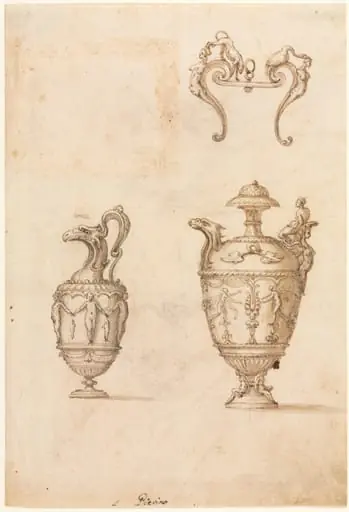 Design for Two Vases and an Ornament (recto)
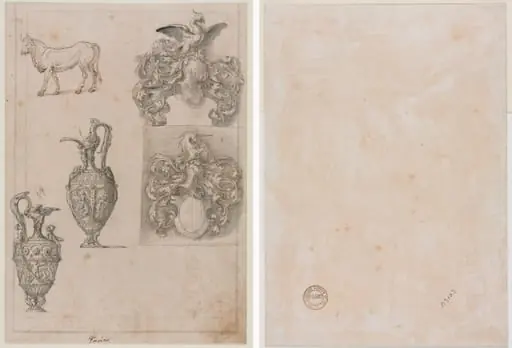 Design for Two Vases, Two Coats of Arms, and a Bull (recto) Several Line Borders (verso)
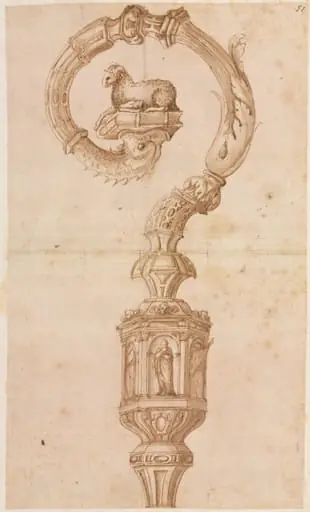 Design for a Crozier
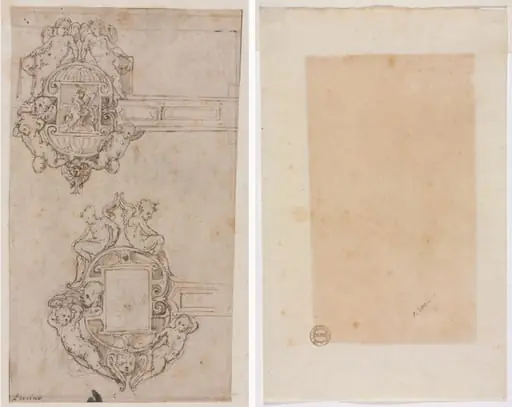 Design for Decorative Hinges (recto) Border Lines (verso)
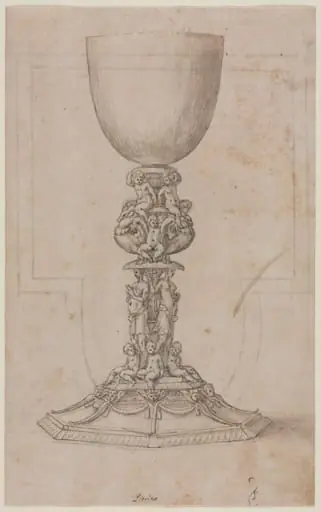 Design for a Chalice (recto)
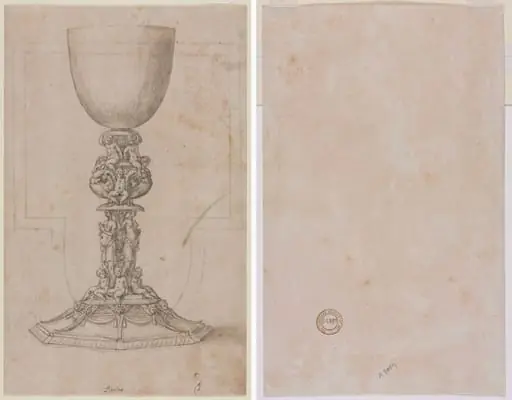 Design for a Chalice (recto) Architectural Plan (verso)
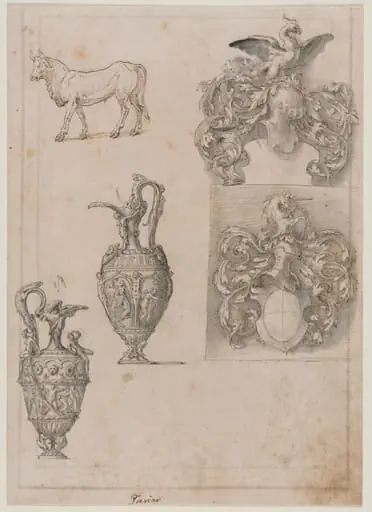 Design for Two Vases, Two Coats of Arms, and a Bull (recto)
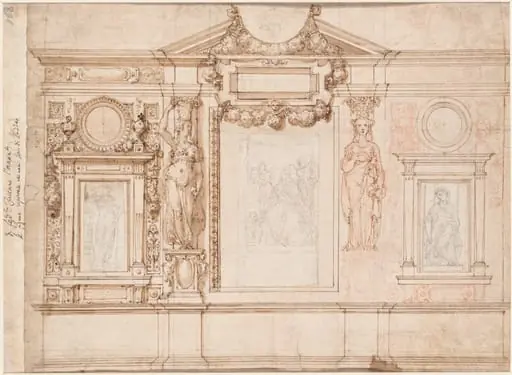 Design for a Wall Decoration with Pasted-in Sketches after Raphael (verso)
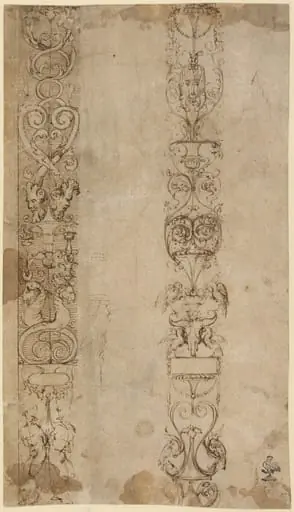 Grotteschi
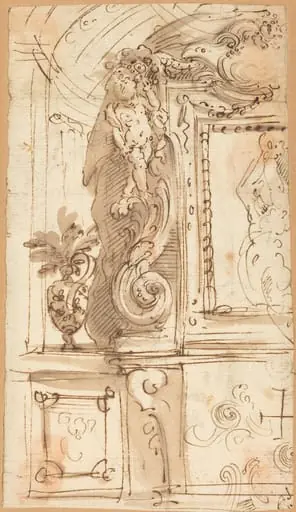 An Elaborately Sculpted Frame
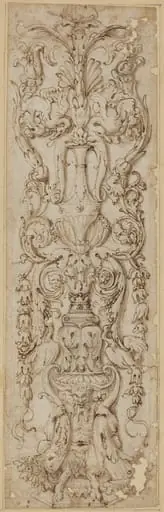 Grotesque with a Satyr
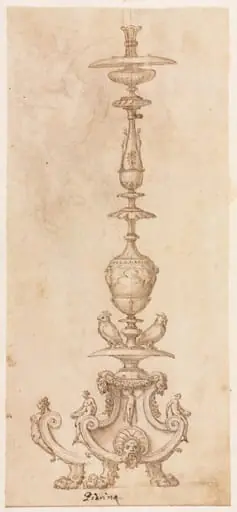 Design for a Candlestick
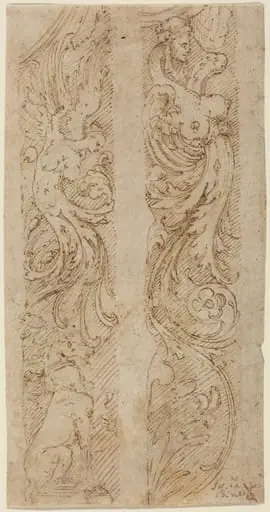 Grotesque Decorations for Wall Panels
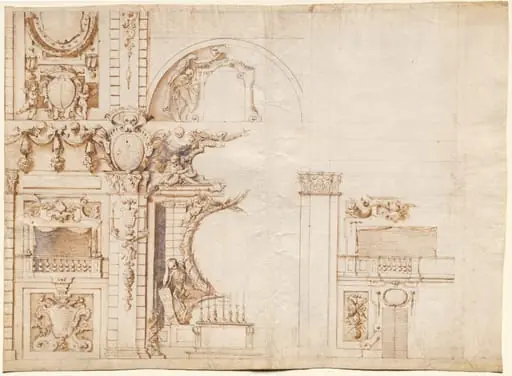 Study for the 'Essequie' Conducted in San Lorenzo, Florence, in 1637 in Honour of Holy Roman Emperor Ferdinand II
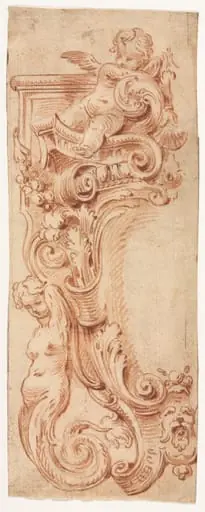 Design for a Cartouche
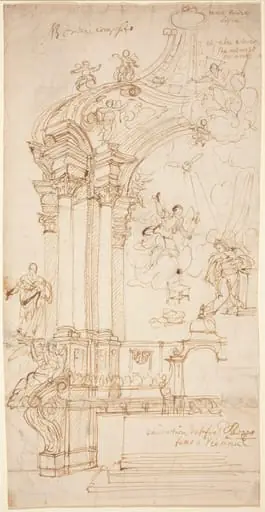 A Baldachin with a Painting of the Annunciation
![Palatial Mantelpiece with a Scene of Ancient Sacrifice [recto], by Austrian 16th Century](https://artifactworldgallery.com/img/austrian-16th-century--palatial-mantelpiece-with-a-scene-of-ancient-sacrifice-recto--6818e7e0eb258b13-w320.webp) Palatial Mantelpiece with a Scene of Ancient Sacrifice [recto]
Palatial Mantelpiece with a Scene of Ancient Sacrifice [recto]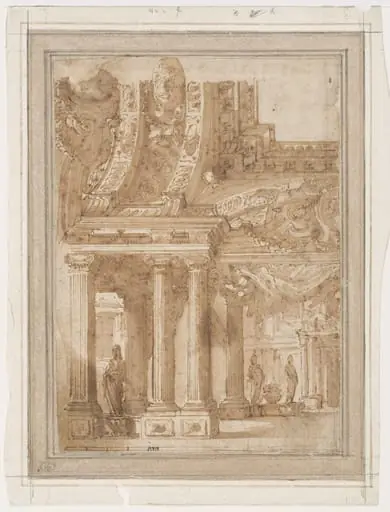 Untitled