Artwork
Malling Abbey
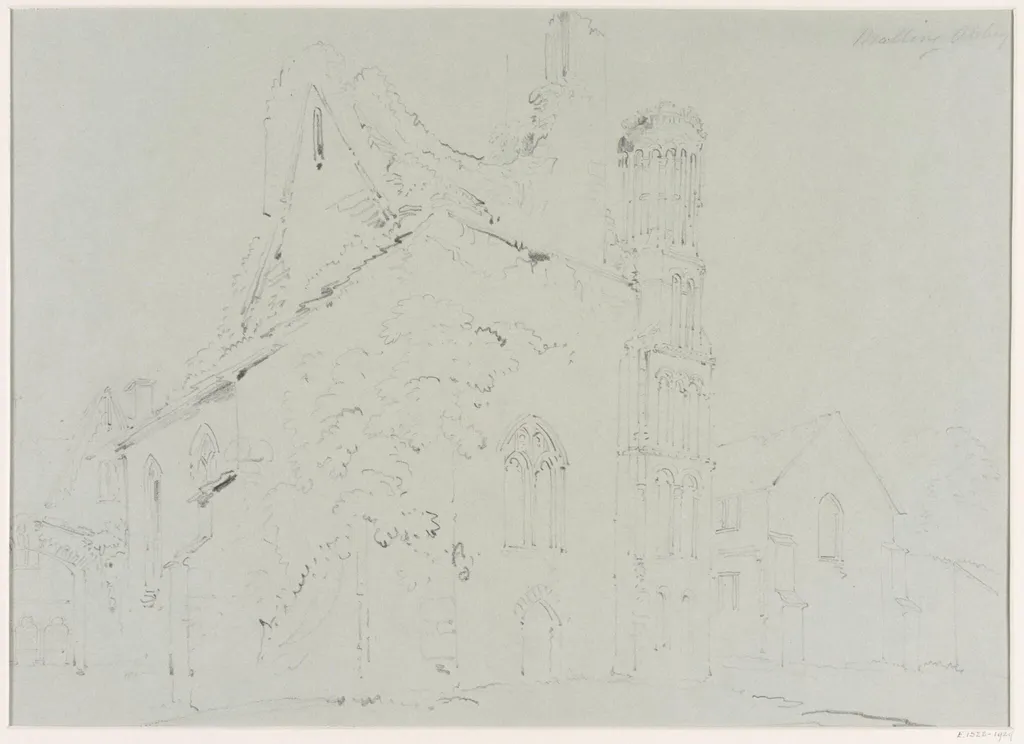
Malling Abbey is a drawing by the Romanticist artist William Page. It dates from 1816 and is held in the collection of the Victoria and Albert Museum.
About this work
Overview
William Page’s 1816 drawing titled Malling Abbey records the façade of a substantial, historic church, distinguished by a soaring tower. Rendered from a lateral perspective, the composition includes a solitary tree positioned before the structure, emphasizing its verticality. The work is part of the Victoria and Albert Museum’s collection and exemplifies early‑19th‑century architectural drawing.
Subject & Meaning
The image captures an ecclesiastical building that appears aged and imposing, suggesting a site of long‑standing religious significance.
The image captures an ecclesiastical building that appears aged and imposing, suggesting a site of long‑standing religious significance. Architectural elements such as numerous windows and a prominent entrance convey both functional and ceremonial aspects of the church, while the solitary tree introduces a natural counterpoint, hinting at the relationship between built heritage and its surrounding landscape.
Technique & Style
Executed with fine linear marks and subtle shading, the drawing likely employs graphite or pen, allowing for precise delineation of architectural detail. Page’s meticulous line work conveys texture and depth, particularly in the tower’s vertical lines and the stonework of the walls, reflecting a disciplined approach to rendering structural form.
History & Provenance
Created in 1816, the drawing entered the Victoria and Albert Museum’s holdings, where it remains accessible to scholars and the public. Its acquisition reflects the museum’s broader interest in documenting British architectural heritage during the Romantic period, a time when artists frequently recorded historic sites with an eye toward preservation.
Own this work as a print
Artist & collection



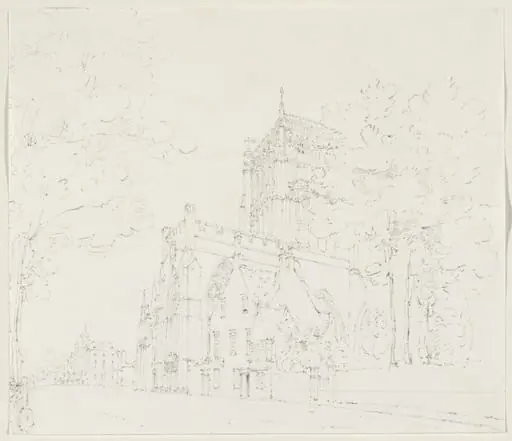 Bristol Cathedral from College Green
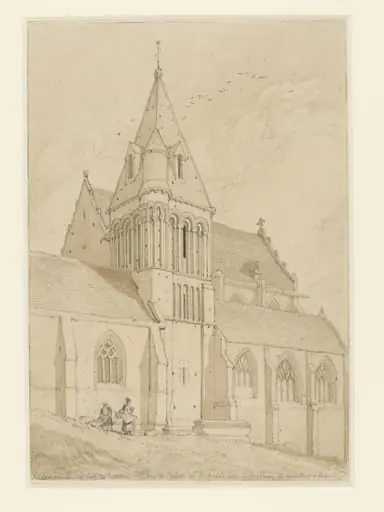 Church of St Michel, Vaucelles, near Bayeux
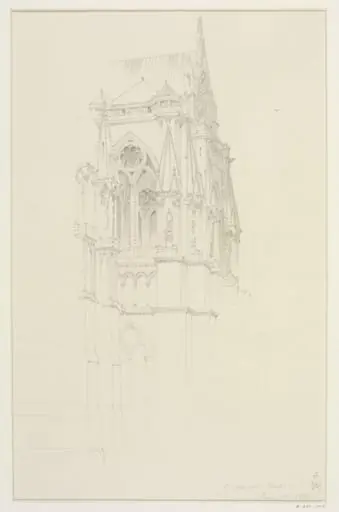 Architectural drawing
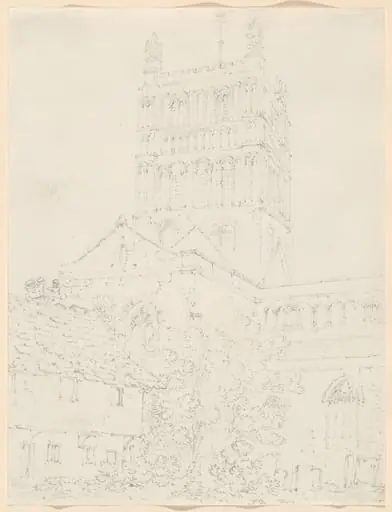 Tewkesbury Abbey No. 2
 Untitled
 A Gothic Ruin
 W. tower of the church, Lisseweghe
 The Founder's Tomb, Church of Saint Bartholomew the Great
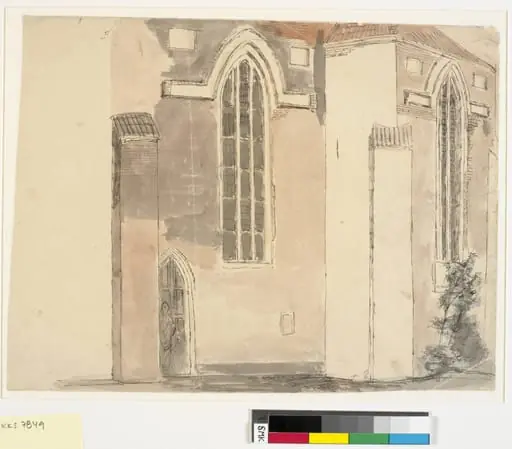 Parti af St. Hans' kirke i Odense
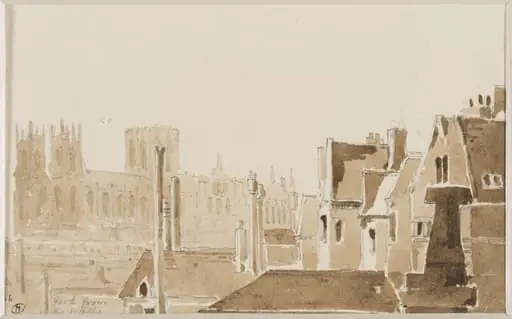 York from the Walls
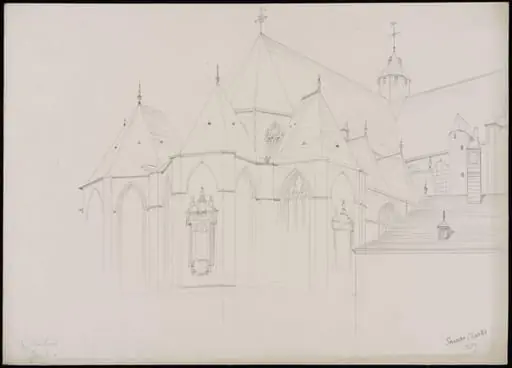 View of the Church of St. Michael, Ghent, from N.E.
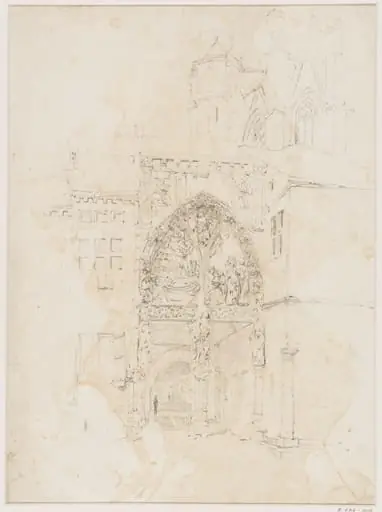 Church of St. Maternus at Huy