Artwork
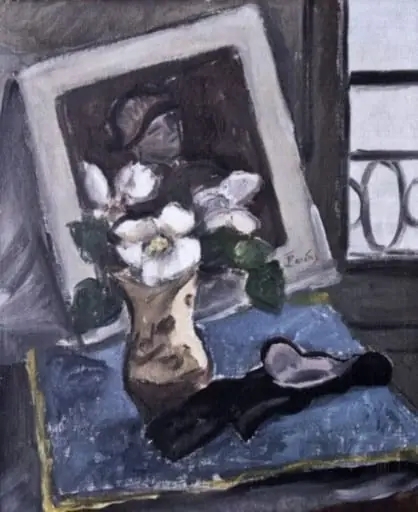
Natură moartă cu flori de castan, ceașcă și ochelari
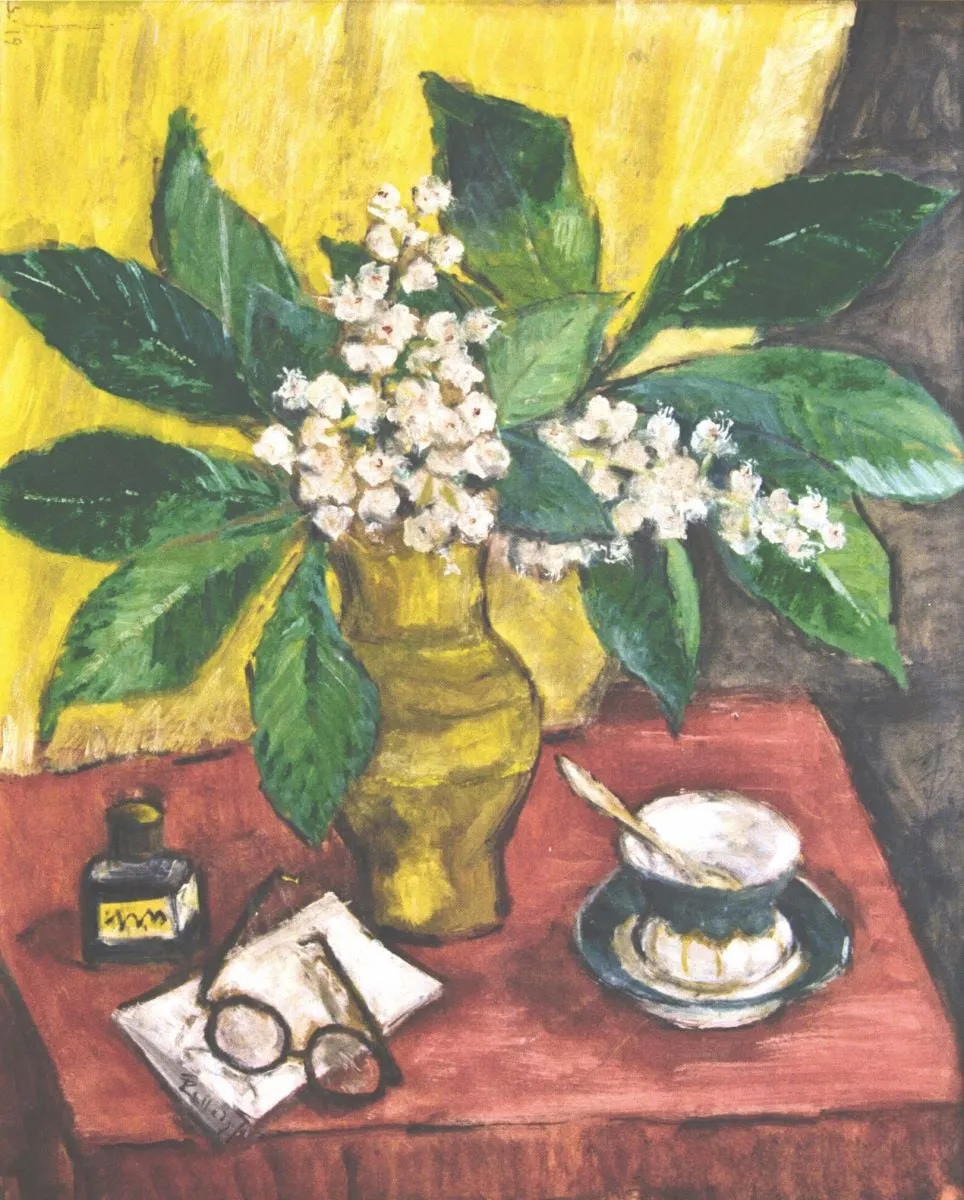
Natură moartă cu flori de castan, ceașcă și ochelari is an unspecified painting by Theodor Pallady. It dates from 1941 and is held in the collection of the National Museum of Art of Romania.
About this work
Overview
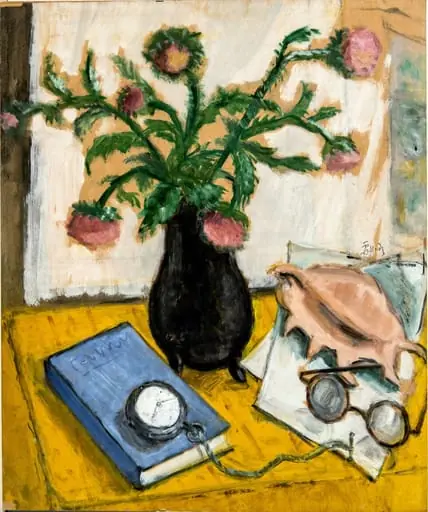
Painted around 1941 by Theodor Pallady, this still life presents a modest arrangement of domestic objects on a wooden surface. The composition is unadorned, focusing on a vase of flowers, a cup with a spoon, folded fabric, spectacles, and a dark bottle. The warm yellow backdrop grounds the scene in quiet intimacy, avoiding theatricality in favor of observed simplicity.
Subject & Meaning
The objects—flowers, eyeglasses, a cup—suggest the quiet residue of daily life. The folded cloth and spectacles imply a recent absence, as if the viewer has entered a space just vacated. The chestnut blossoms, transient and delicate, reinforce themes of ephemerality. No overt symbolism is present; meaning arises from the stillness and ordinary presence of these items.
Technique & Style
Pallady employs thick, tactile brushwork, particularly in the foliage and fabric, creating a textured surface through impasto. Colors are vivid but deliberately unrefined—edges blur slightly, and paint is laid with visible urgency. The lack of polish enhances the sense of immediacy, as if the scene was captured in a single, attentive moment rather than constructed over time.
History & Provenance
Created during Pallady’s later years in Romania, the work reflects his mature style after decades of exposure to European modernism. It was likely painted in his Bucharest studio, where he often turned to intimate domestic subjects. The painting remained in private hands until entering a public collection in the late 20th century, though its exact early ownership remains undocumented.
Context
Painted during wartime Romania, the still life offers no direct reference to political turmoil. Instead, it aligns with a broader interwar trend among Eastern European artists who turned inward, valuing quiet observation over grand narrative. Pallady’s focus on humble objects echoes both French post-impressionism and the Romanian tradition of lyrical realism.
Legacy
This work exemplifies Pallady’s ability to infuse simplicity with emotional resonance. While not widely exhibited during his lifetime, it has since become a touchstone in Romanian modernist collections for its restrained palette and tactile honesty. It continues to be studied for its quiet defiance of spectacle, favoring presence over pronouncement.
Artist & collection

 Natură moartă (Flori de soc și gălbenele)
 Flori de castan
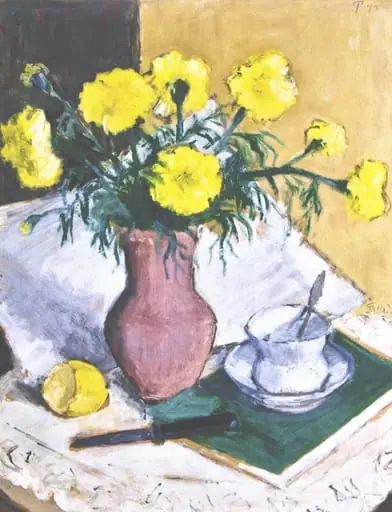 Natură statică cu vas cu flori, cană și cuțit
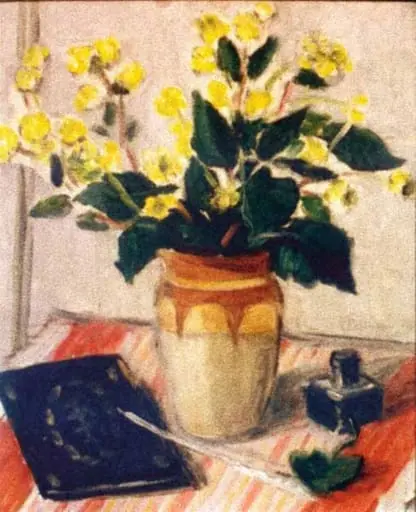 Flori gabene
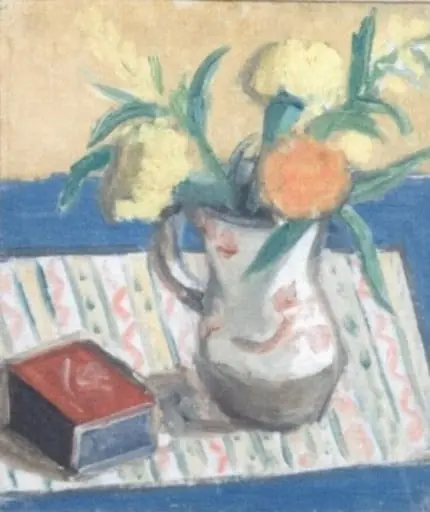 Natură moartă (Ulcică cu flori și chibrituri)
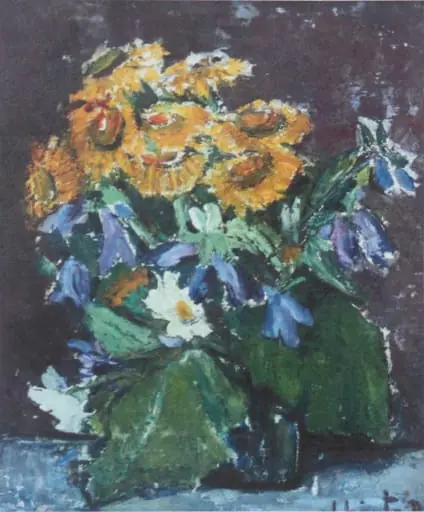 Flori de munte
 Vas cu flori de scaieți
 Natură statică (Ceainicul negru)
 Flori de mac
 Natură statică cu ulcică
 Natură statică cu plantă ornamentală
 Natură statică (cu flori de castan)