Artwork
The Early Ploughman
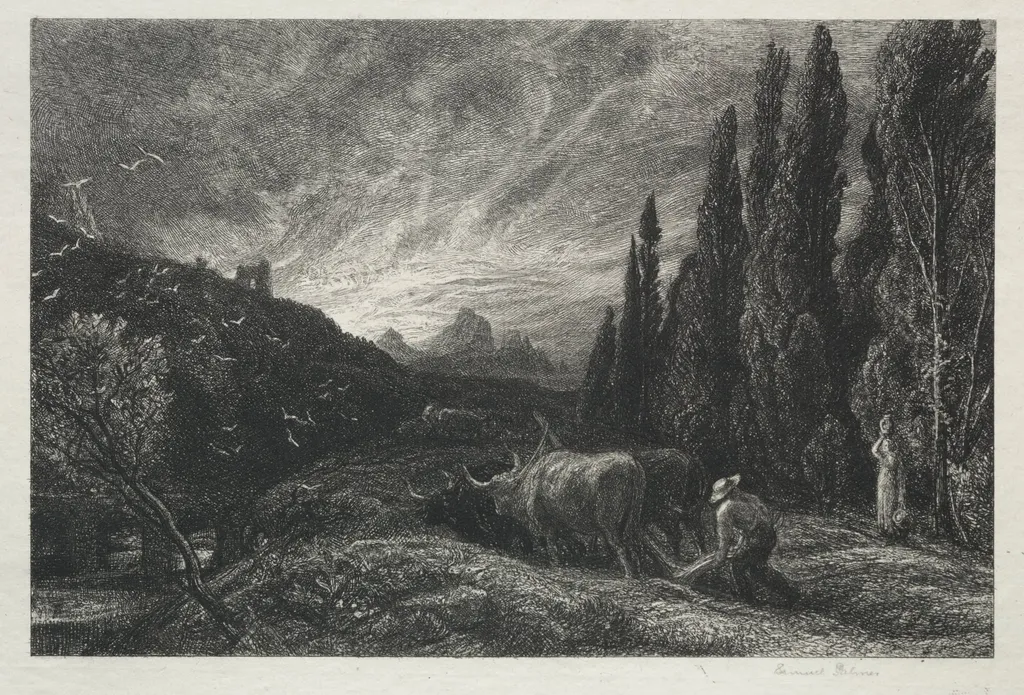
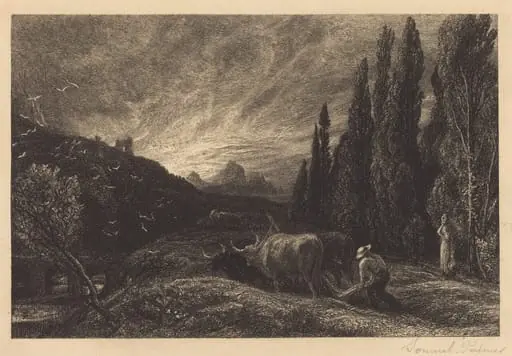
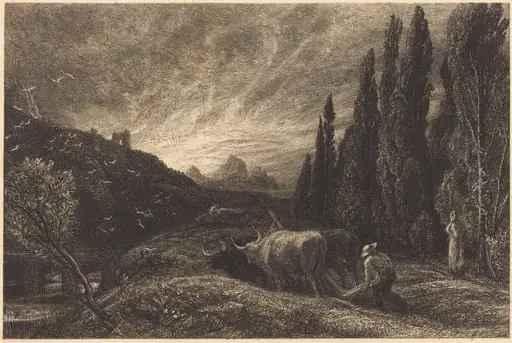
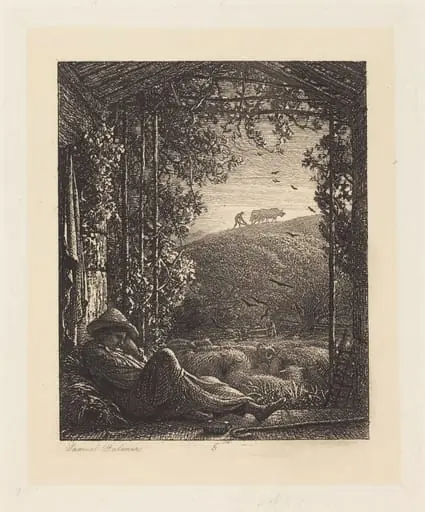
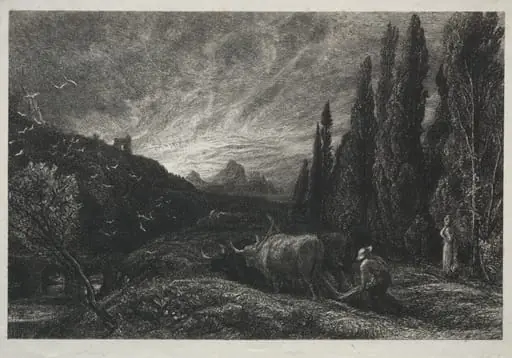
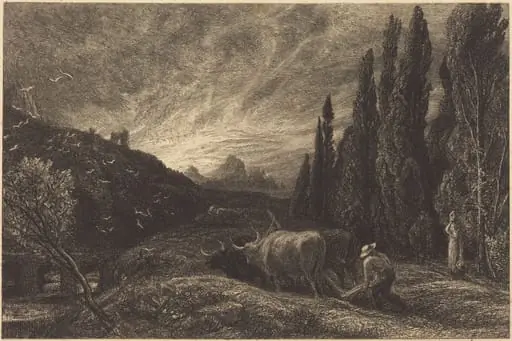
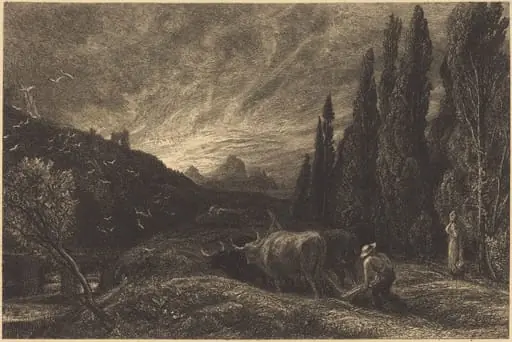
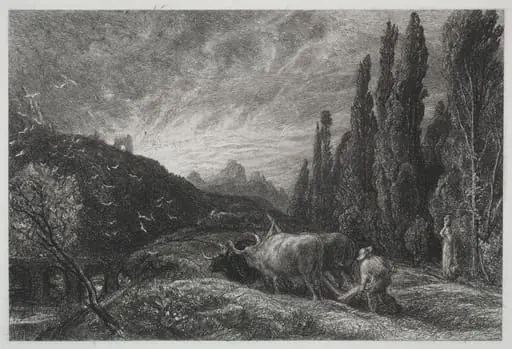
The Early Ploughman is a print by the Impressionist artist Samuel Palmer. It dates from 1861 and is held in the collection of the Cleveland Museum of Art.
About this work
Overview
Unlike his earlier, more mystical visions, this piece presents a subdued, quiet moment in the agricultural day.
Created in 1861, *The Early Ploughman* is a black-and-white etching by Samuel Palmer, belonging to a series of late works that reflect his enduring fascination with rural life. Unlike his earlier, more mystical visions, this piece presents a subdued, quiet moment in the agricultural day. The composition centers on labor and landscape, rendered with delicate tonal gradations rather than dramatic contrast, suggesting a contemplative rather than supernatural atmosphere.
Subject & Meaning
The print portrays a single ploughman guiding two oxen across a field at daybreak, a scene stripped of narrative or symbolism. There is no indication of divine presence or allegory; instead, the figure embodies quiet endurance. The absence of other people or structures emphasizes solitude and continuity, aligning with Palmer’s later interest in the dignity of ordinary rural existence, free from romantic embellishment.
Technique & Style
Palmer employed fine, controlled lines and subtle hatching to build depth and atmosphere. The ploughman and oxen are rendered with slightly heavier shading, distinguishing them from the softly blurred background of trees and hills. The sky’s faint luminosity is achieved through minimal ink washes, allowing the paper’s white to suggest dawn light. This restrained use of chiaroscuro enhances the scene’s stillness without invoking theatricality.
History & Provenance
The print was made during Palmer’s later years, after he had moved away from the visionary style of his Shoreham period. It was likely produced for private circulation rather than public exhibition, reflecting his diminished engagement with the art market. Few impressions were made, and surviving examples are held in major British collections, including the British Museum and the Victoria and Albert Museum.
Context
In the 1860s, England’s rural landscape was rapidly changing due to industrialization and agricultural reform. Palmer’s focus on a solitary ploughman can be read as a quiet counterpoint to these transformations. His work, though not overtly political, preserves a vision of agrarian life that was becoming increasingly nostalgic, rooted in personal memory rather than contemporary reality.
Legacy
Though overshadowed by his earlier visionary works, *The Early Ploughman* is recognized for its emotional restraint and technical refinement. It influenced later British printmakers interested in quiet, observational landscapes. The print’s understated tone helped redefine pastoral imagery in the 19th century, moving away from idealization toward a more introspective, human-centered depiction of the land.
Artist & collection
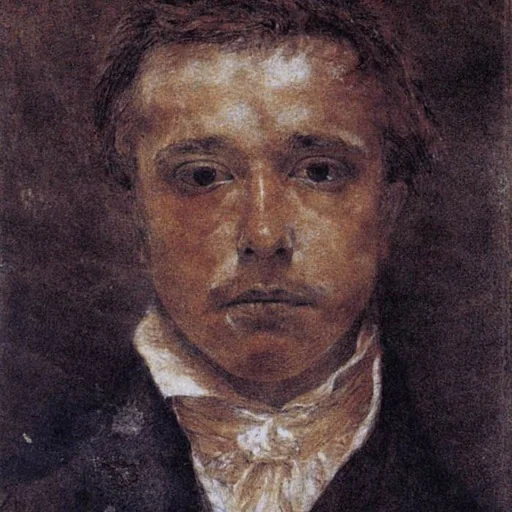
Artist
Samuel Palmer Hon.RE (Hon. Fellow of the Society of Painter-Etchers) (27 January 1805 – 24 May 1881) was a British landscape painter, etcher and printmaker. He was also a prolific writer. Palmer was a key figure in…