Artwork
Portrait of Carolus Niëllius, Remonstrant minister
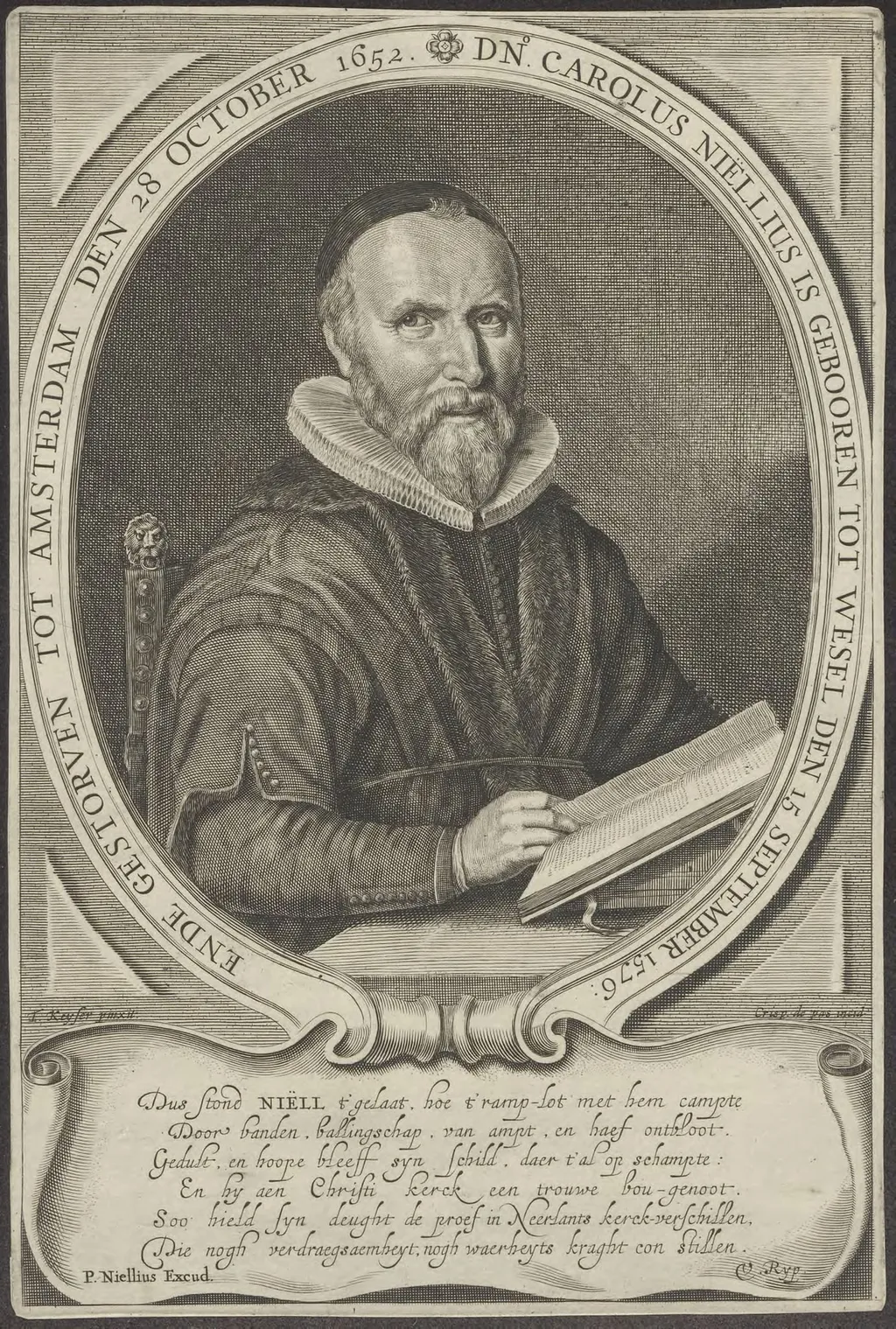
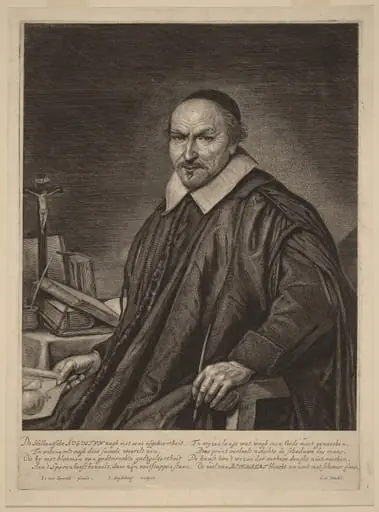
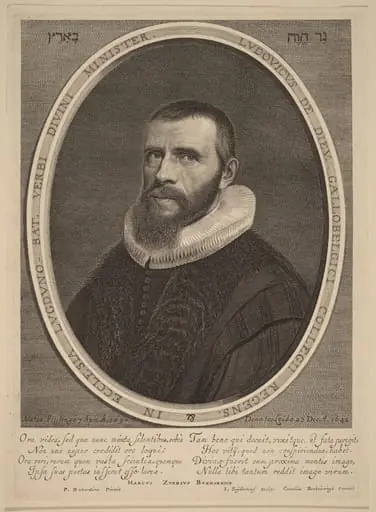
Portrait of Carolus Niëllius, Remonstrant minister is an unspecified painting by the Dutch Golden Age artist Crispijn van de (II), Passe. It dates from 1650 and is held in the collection of the Leiden University Libraries. This engraved portrait depicts Carolus Niëllius, a minister of the Remonstrant faith, based on a painted original by Thomas Keyser.
About this work
Overview
This engraved portrait depicts Carolus Niëllius, a minister of the Remonstrant faith, based on a painted original by Thomas Keyser.
This engraved portrait depicts Carolus Niëllius, a minister of the Remonstrant faith, based on a painted original by Thomas Keyser. The image is accompanied by a Dutch poem authored by V. Ryp, integrated directly beneath the likeness. The composition reflects a 17th-century Dutch tradition of combining visual portraiture with literary text, often used to convey moral or spiritual reflection alongside the subject’s identity.
Subject & Meaning
Carolus Niëllius is portrayed as a quiet, contemplative figure, holding a book that signals his scholarly and pastoral role. His plain attire underscores the Remonstrant emphasis on humility and doctrinal sincerity over ecclesiastical display. The accompanying poem likely reinforces his theological stance or personal virtues, aligning the visual with textual tribute to reinforce his identity within a community that valued intellectual and spiritual integrity.
Technique & Style
The engraving employs fine linear detail to render texture and form, with subtle tonal gradations suggesting chiaroscuro effects. Though not painted, the print mimics the lighting contrasts of its oil painting source, using cross-hatching and stippling to model the face and fabric. The integration of text within the image frame reflects a Northern European print culture where poetry and portraiture were often paired to deepen interpretive resonance.
History & Provenance
The image derives from a lost painting by Thomas Keyser, executed around the 1630s. The engraving likely circulated as a reproductive print, common in the Dutch Republic for disseminating likenesses of religious figures. V. Ryp’s poem was added to the plate, indicating a collaborative effort between artist, poet, and publisher—possibly for private devotion or commemorative distribution among Remonstrant circles.
Context
Produced during a period of religious tension in the Netherlands, the portrait reflects the Remonstrants’ struggle for recognition after their doctrinal conflict with the Calvinist mainstream. Portraits of their ministers, especially when paired with poetry, served as quiet assertions of identity and legitimacy. Such images were circulated within sympathetic networks, preserving the visibility of a marginalized theological tradition.
Legacy
This print exemplifies how religious identity in early modern Holland was preserved through hybrid visual-literary forms. While the original painting by Keyser is no longer extant, the engraved version with Ryp’s poem survives as evidence of a cultural practice that elevated the minister not merely as a clergyman, but as a figure of moral and intellectual authority within a literate, devotional community.