Artwork
Anne Bill
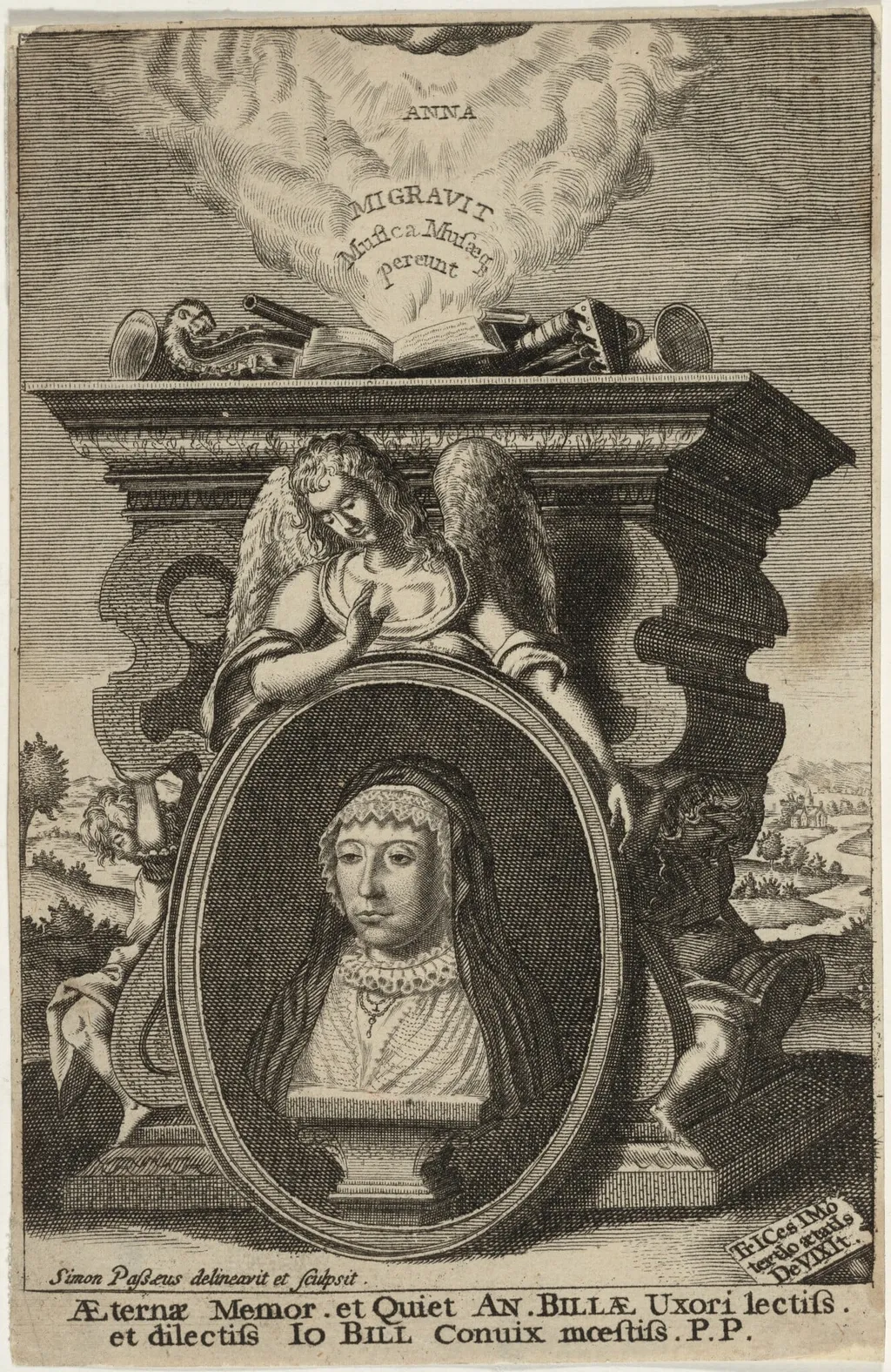
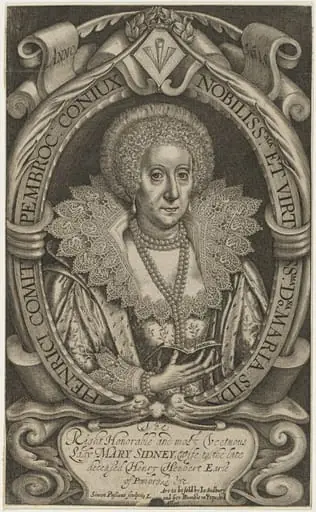
Anne Bill is an ink print by the Renaissance artist Simon van de Passe. It dates from 1621 and is held in the collection of the National Gallery of Art.
About this work
Overview
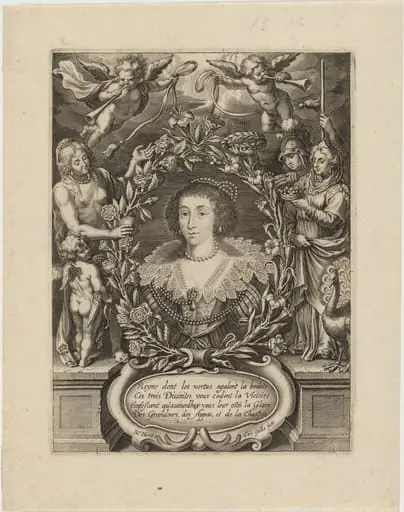
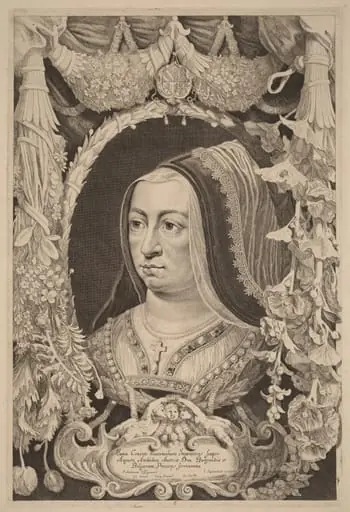
The composition centers on her bust, adorned with a pearl necklace and neatly coiffed hair, surrounded by allegorical figures and inscriptions.
Created in 1621 by Simon van de Passe, this engraving depicts Anne Bill as a commemorative portrait framed like a funerary monument. The composition centers on her bust, adorned with a pearl necklace and neatly coiffed hair, surrounded by allegorical figures and inscriptions. The image blends naturalistic detail with symbolic elements, characteristic of early 17th-century memorial prints. Its structured layout and Latin text suggest a purpose beyond mere likeness—to honor and memorialize.
Subject & Meaning
Anne Bill is portrayed as a dignified woman, her identity confirmed by the inscription above the wreath held by a cherub. The winged figures beside her—holding a scroll and a book—likely symbolize learning and legacy. The cherub’s wreath evokes honor, while the surrounding vignettes of architecture and figures may reference her social sphere or familial ties. The overall design functions as a visual epitaph, merging personal remembrance with moral and intellectual ideals common in Protestant memorial culture.
Technique & Style
Executed in fine-line engraving, the portrait demonstrates precise control of line and tone. Van de Passe used delicate hatching to model the bust and texture the fabric, while the background elements are rendered with crisp, linear clarity. The framing device mimics stone carving, enhancing the monumentality. Symbolic figures are stylized yet integrated naturally into the architectural setting, reflecting a Northern European tradition of combining portraiture with allegory in print form.
History & Provenance
The engraving was produced shortly after Anne Bill’s death, likely commissioned by family or associates to preserve her memory. Simon van de Passe, a Dutch engraver known for portrait prints, was active in England during this period and frequently worked for elite patrons. While the exact provenance of this print is undocumented, its style and subject align with other commemorative engravings circulating among Protestant elites in early Jacobean England.
Context
In early 17th-century England, engraved portraits served as accessible memorials, especially for those who could not afford stone monuments. The fusion of realism with symbolic figures reflected humanist values and Protestant emphasis on virtuous living. Such prints circulated among families and networks of the educated middle class, functioning as both personal keepsakes and public declarations of status and piety.
Legacy
This engraving exemplifies the role of print in shaping posthumous identity during the early modern period. Though Anne Bill herself left no known written record, her image endured through van de Passe’s work, preserving her presence in visual culture. Similar memorial prints by the van de Passe family influenced later generations of portrait engravers, embedding the tradition of symbolic commemoration into European printmaking.
Artist & collection