Artwork
Sir Walter Raleigh
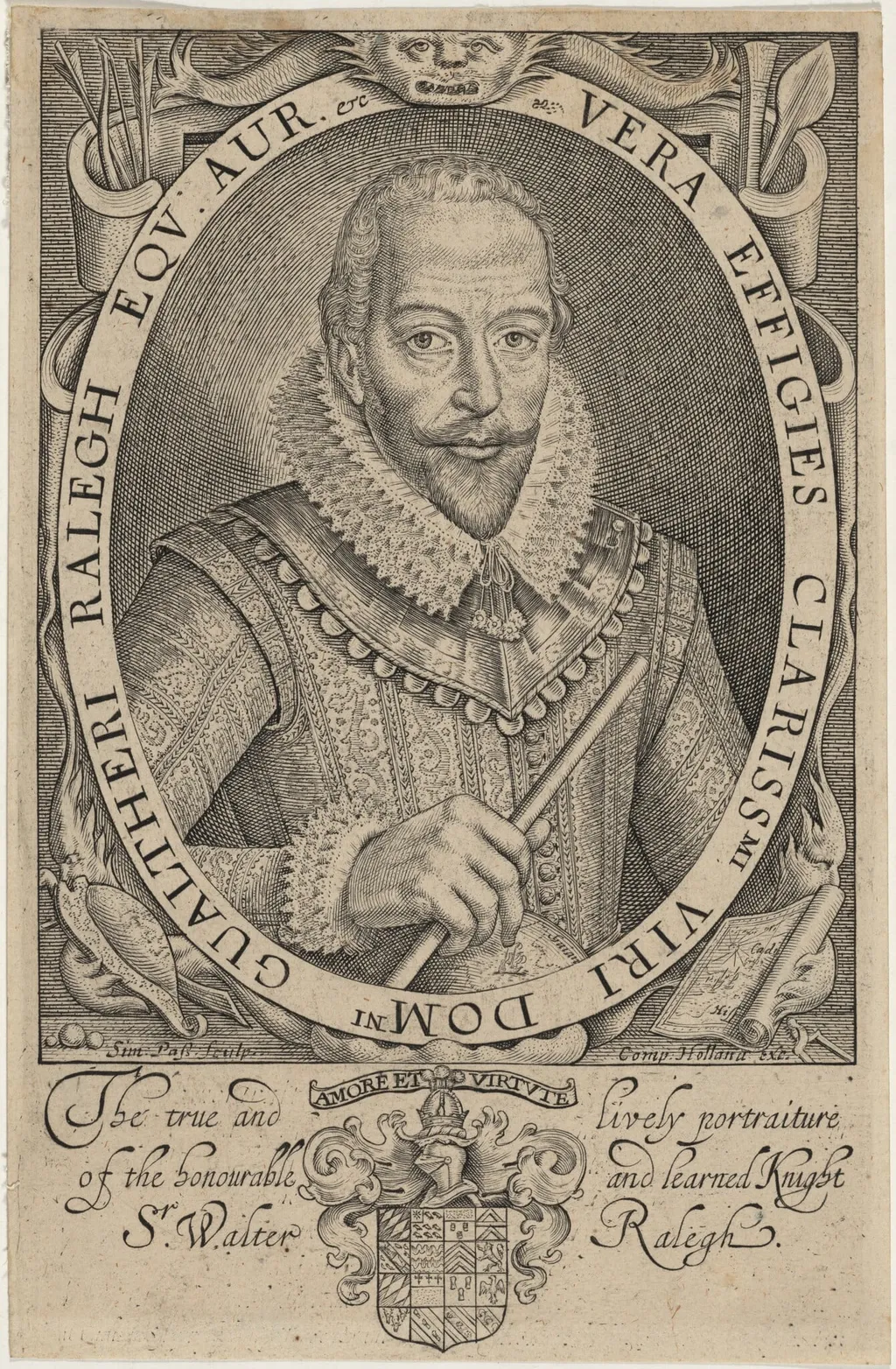
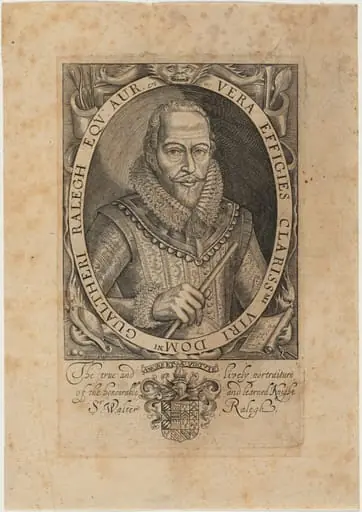
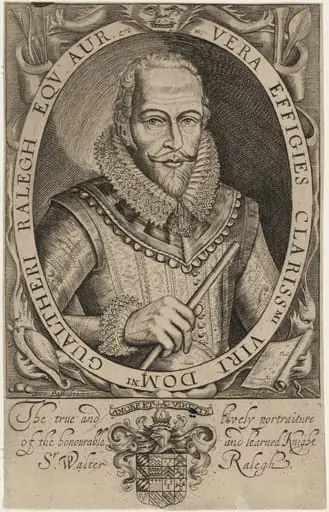
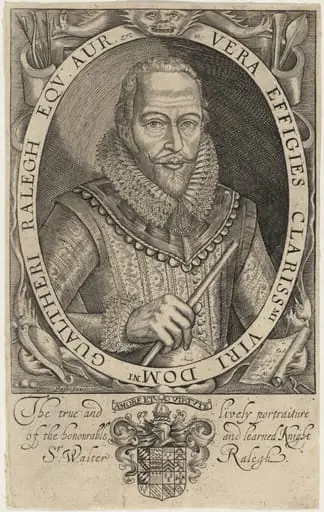
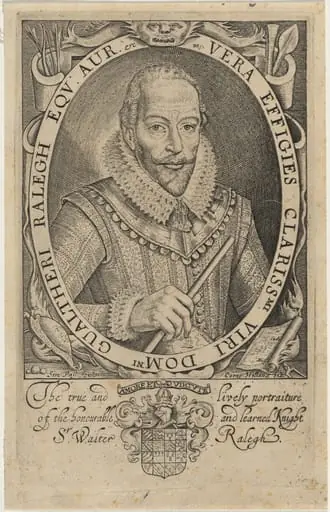
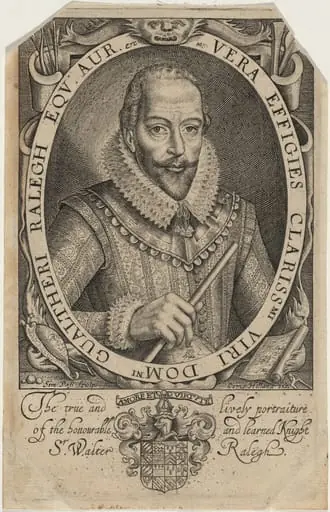
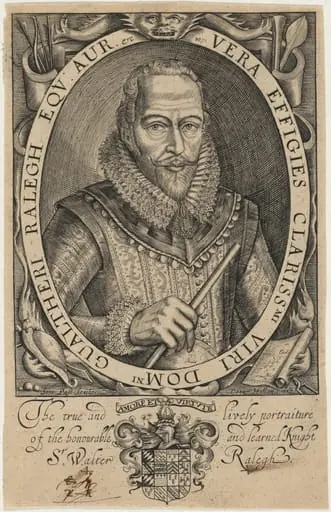
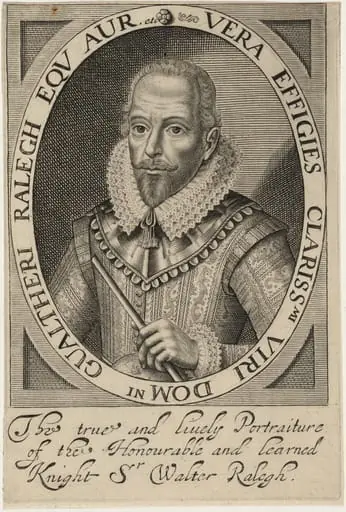
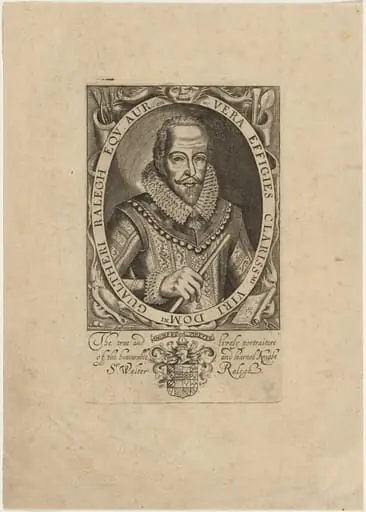
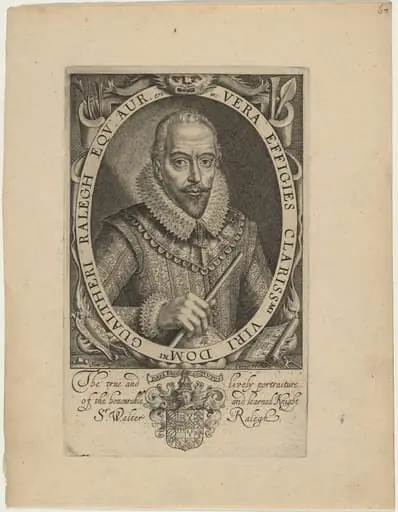
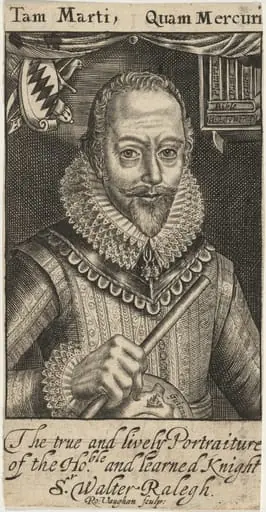
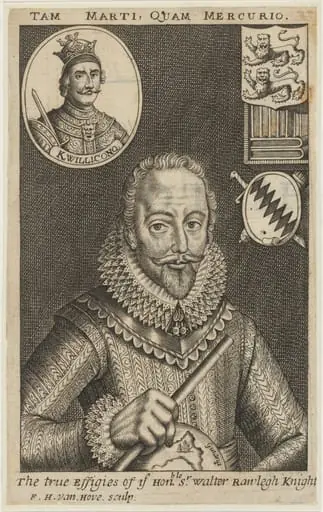
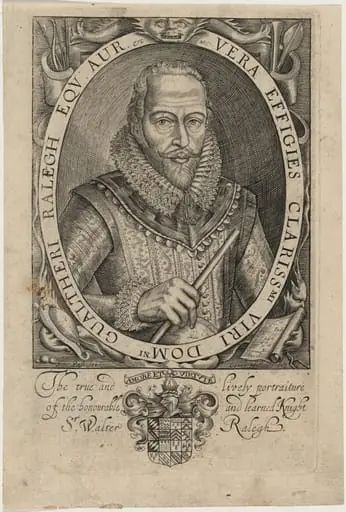
Sir Walter Raleigh is an ink print by the Renaissance artist Simon van de Passe. It dates from 1621 and is held in the collection of the National Gallery of Art.
About this work
Overview
The composition is framed by ornamental scrollwork and inscribed with Latin text, emphasizing the sitter’s identity and reputation.
This black-and-white engraving, produced in 1621 by Simon van de Passe, depicts Sir Walter Raleigh as a formal portrait. Rendered in fine linear detail, the image presents him facing slightly to the viewer’s left, with a restrained expression. The composition is framed by ornamental scrollwork and inscribed with Latin text, emphasizing the sitter’s identity and reputation. A small heraldic emblem at the base reinforces his noble standing.
Subject & Meaning
The portrait captures Raleigh shortly after his execution in 1618, likely intended to preserve his public image during a period of political turmoil. The inclusion of a ruffled collar and gold chain signifies his former status at court, while the Latin inscription declares the likeness as 'true,' suggesting a desire to assert his dignity and legacy despite his fall from favor. The image functions as both memorial and assertion of identity.
Technique & Style
Van de Passe employed fine-line engraving on copper to achieve precise tonal gradations and intricate textures, particularly in the lace of the collar and the chain’s links. The background is deliberately minimal, directing focus to the face and attire. Decorative borders with scrolling motifs and Latin inscriptions reflect Northern European print traditions, where textual and visual elements combined to convey authority and erudition.
History & Provenance
Created in 1621, the engraving was made during a period of renewed interest in Raleigh’s life following his execution. Van de Passe, a Dutch artist known for portraiture prints, likely worked from earlier drawings or paintings. The print circulated among collectors and scholars, contributing to Raleigh’s posthumous reputation. Its survival in multiple institutional collections indicates its early and sustained circulation in elite circles.
Context
In early 17th-century England, engraved portraits served as tools of memory and political messaging, especially for figures who had fallen from grace. Raleigh’s image, circulated after his death, aligned with broader efforts to shape historical narratives. The Latin text and heraldic symbols reflect the Renaissance practice of using classical and genealogical references to legitimize status, even for those politically disgraced.
Legacy
This engraving became one of the most widely reproduced images of Raleigh, influencing later depictions in books and manuscripts. Its formal composition and textual framing set a standard for posthumous portraits of Elizabethan figures. Though not commissioned by Raleigh himself, it endured as a visual reference, anchoring his public persona in the collective memory of British history.
Artist & collection