Artwork
Sir Walter Raleigh
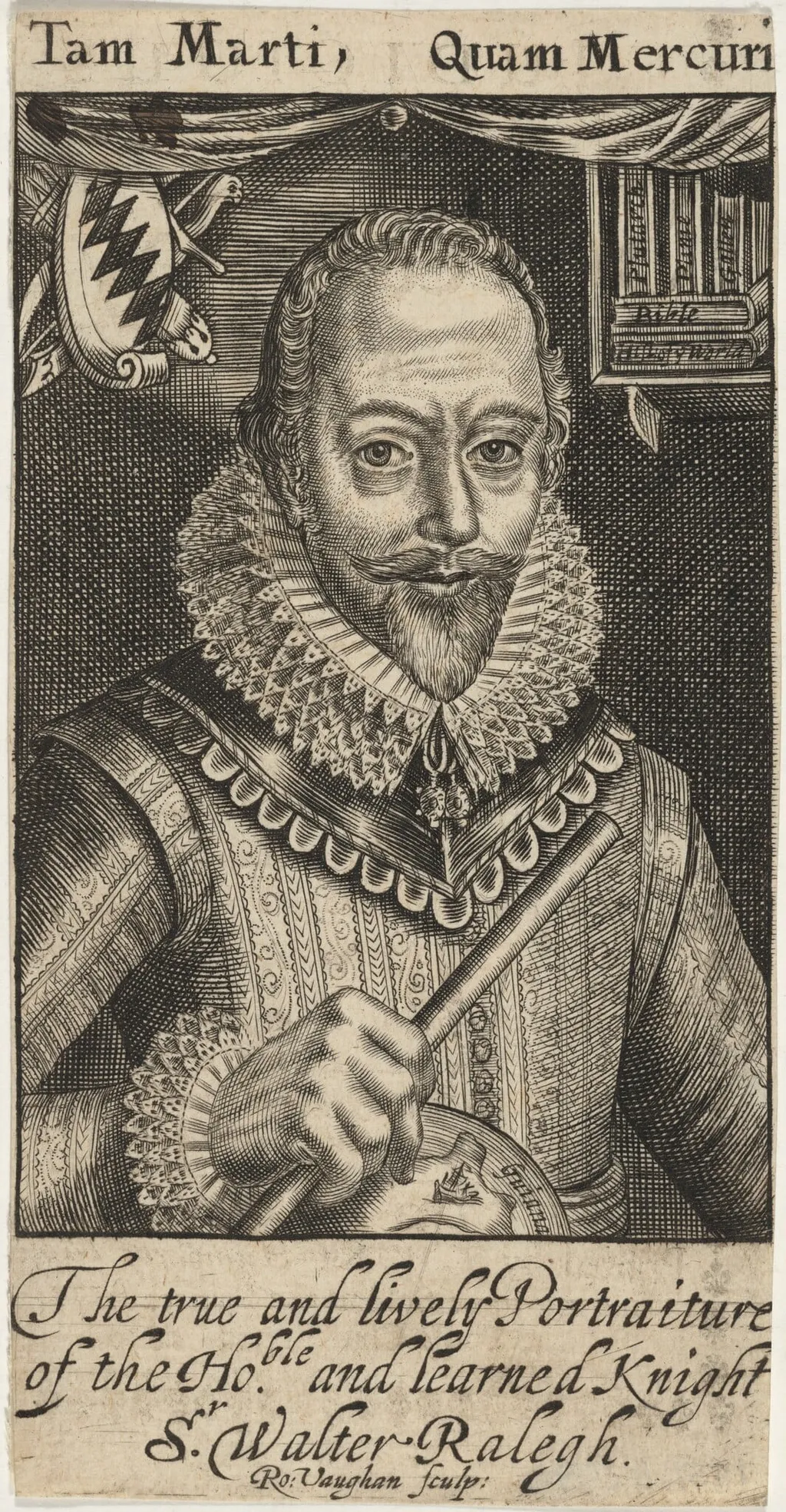
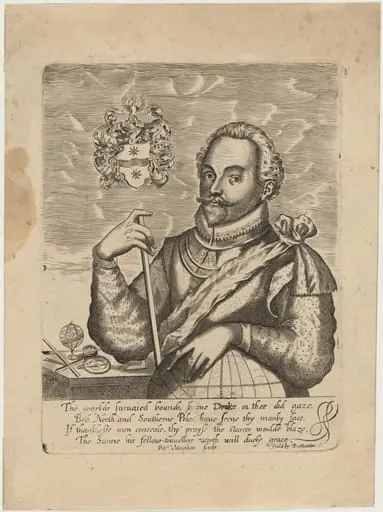
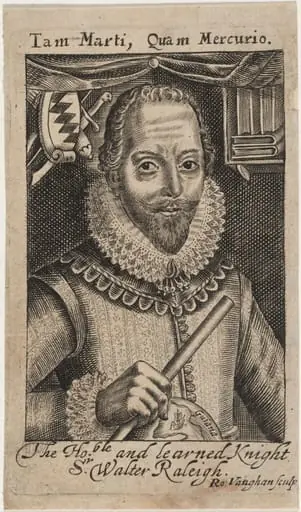
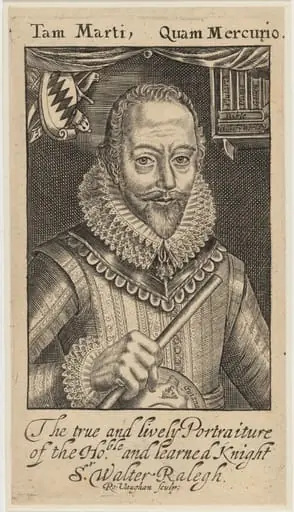
Sir Walter Raleigh is an ink print by the Baroque artist Robert Vaughan. It dates from 1630 and is held in the collection of the National Gallery of Art.
About this work
Overview
Executed in black ink on paper, the image captures the explorer’s dignified bearing, complete with a full beard, ruffled collar, and richly detailed attire.
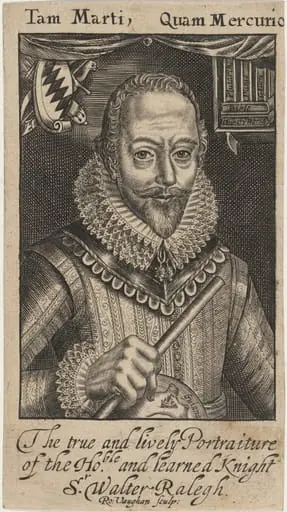
Robert Vaughan’s 1630 engraving presents Sir Walter Raleigh in a formal portrait. Executed in black ink on paper, the image captures the explorer’s dignified bearing, complete with a full beard, ruffled collar, and richly detailed attire. A scroll rests in his hand, while a modest interior scene—a small window and a bird enclosed in a circular frame— occupies the background. The print bears the inscription “Sir Walter Raleigh, a learned Knight” and Vaughan’s signature.
Subject & Meaning
The portrait identifies Raleigh as a “learned Knight,” emphasizing his reputation as a scholar, courtier, and adventurer. The inclusion of a scroll suggests intellectual pursuits or official duties, while the bird within a circular motif may allude to exploration and the natural world, themes associated with Raleigh’s voyages and scientific interests.
Technique & Style
Vaughan employs the traditional line engraving technique, using fine, controlled incisions to render intricate clothing textures and facial features. The composition balances precise detailing with a slightly archaic aesthetic, reflecting early‑17th‑century print conventions. The contrast between the dense foreground and the simplified background elements demonstrates the artist’s skill in creating depth on a flat surface.
History & Provenance
Created in 1630, the print emerged shortly after Raleigh’s execution in 1618, indicating continued public interest in his legacy. The work bears Vaughan’s signature, confirming authorship, and has circulated among collectors of early modern English portraiture, appearing in several 18th‑century catalogues of engraved portraits.
Context
Engravings of notable figures were a common means of disseminating images in the early modern period, serving both commemorative and informational purposes. Vaughan’s portrait fits within this tradition, providing a visual record of Raleigh’s status and appearance for an audience that could not access painted portraits.
Legacy
While not as widely reproduced as later portraits of Raleigh, Vaughan’s engraving remains a valuable reference for scholars studying the visual representation of Elizabethan and Jacobean personalities, illustrating how print media contributed to the construction of historical memory.
Artist & collection