Artwork
Sir Walter Raleigh
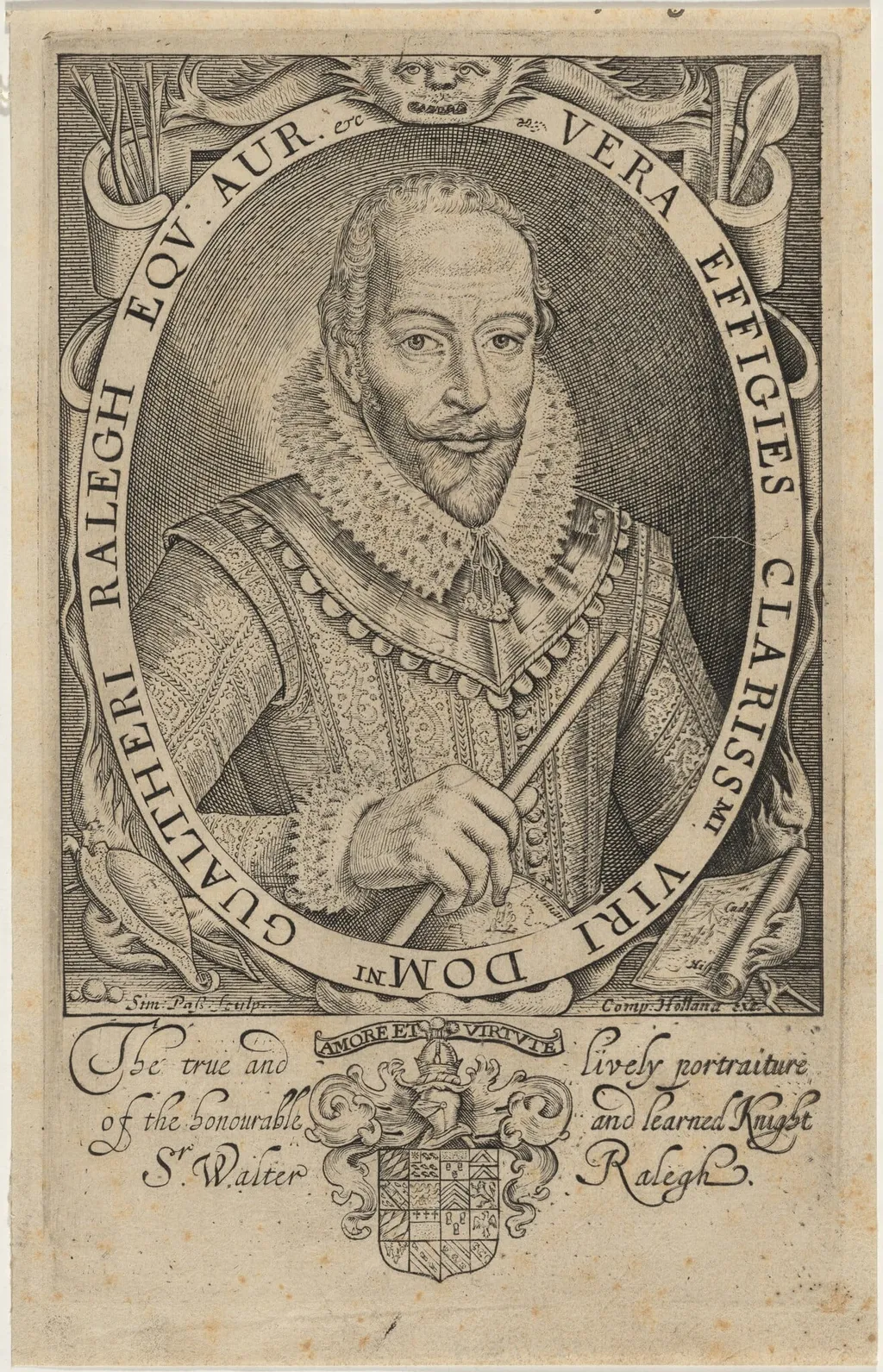
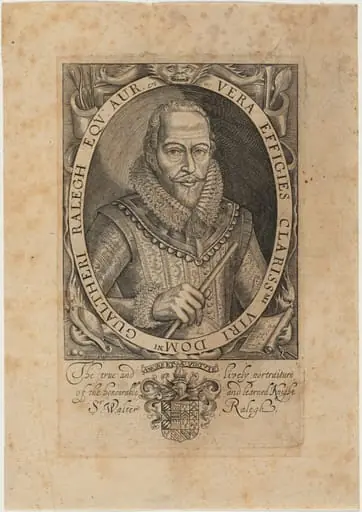
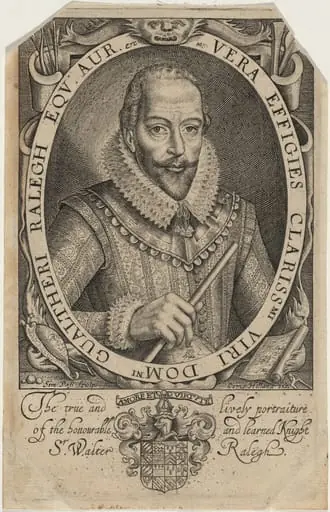
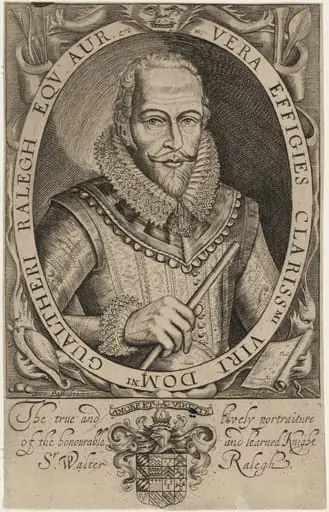
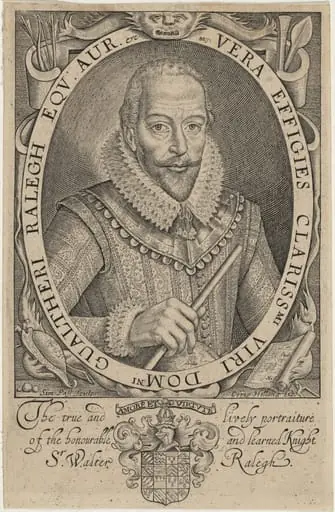
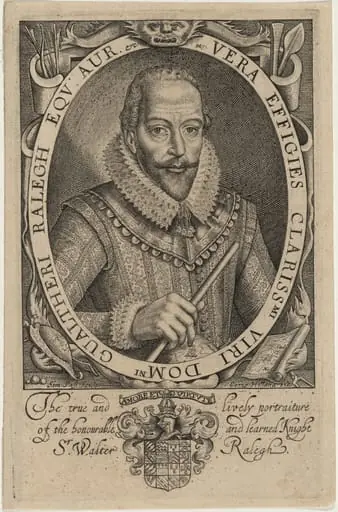
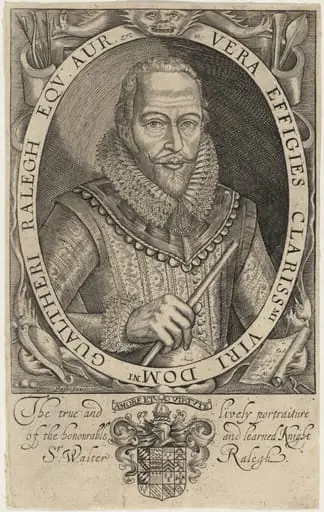
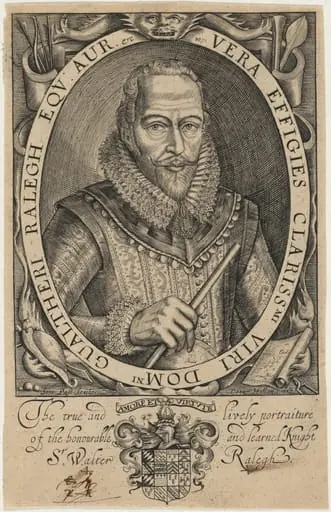
Sir Walter Raleigh is an ink print by the Baroque artist Simon van de Passe. It dates from 1628 and is held in the collection of the National Gallery of Art.
About this work
Overview
The dark, unmodeled background isolates the figure, emphasizing his presence through costume and expression rather than environmental context.
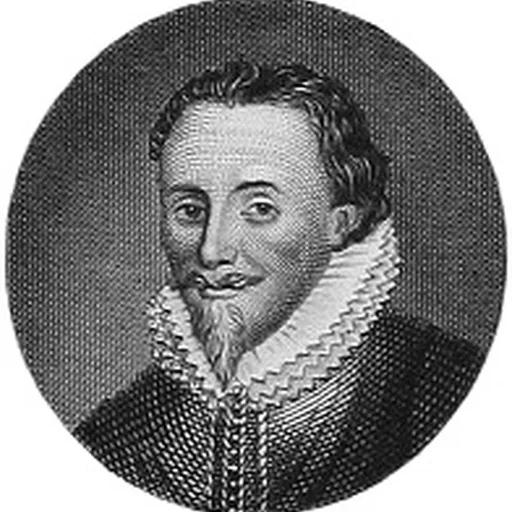
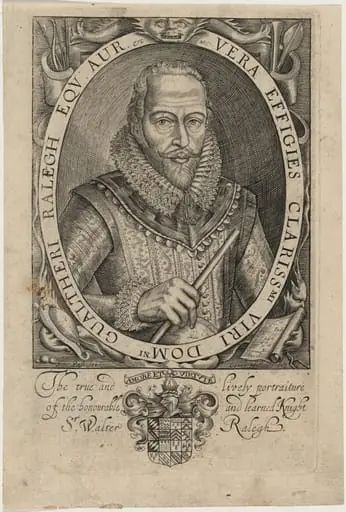
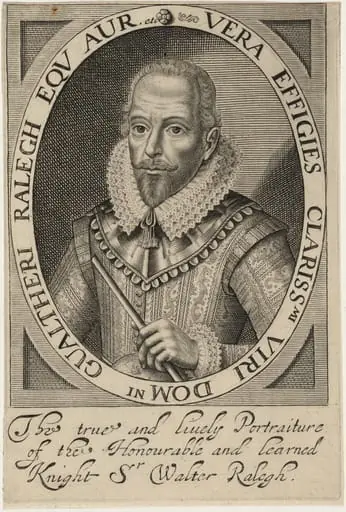
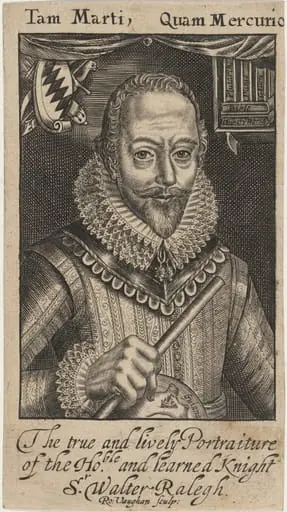
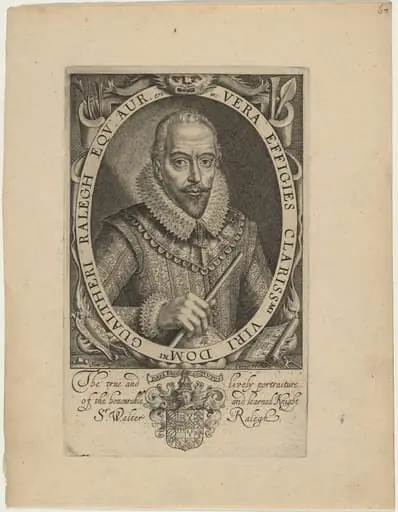
This 1628 engraving by Simon van de Passe depicts Sir Walter Raleigh, the English explorer and courtier, in formal attire. Rendered in fine linear detail, the portrait is framed within an oval border inscribed with text. The dark, unmodeled background isolates the figure, emphasizing his presence through costume and expression rather than environmental context. The work belongs to a tradition of commemorative portraiture common in early 17th-century print culture.
Subject & Meaning
Raleigh is portrayed as a man of authority and intellect, his serious expression and neatly trimmed beard conveying gravitas. The elaborate ruffled collar and patterned jacket signify his status as a nobleman and former favorite of Queen Elizabeth I. The staff he holds may allude to leadership or scholarly pursuit, reinforcing his identity beyond mere military or colonial exploits. The inscription around the frame likely identifies him and possibly includes a motto or date of death.
Technique & Style
Van de Passe employed fine, controlled lines to render texture in fabric, hair, and lace, typical of Northern European engraving practices. The contrast between the detailed figure and the flat, dark background heightens the portrait’s formal presence. The oval composition and decorative border reflect Baroque conventions of framing, designed to elevate the subject’s dignity. No shading or atmospheric perspective is used, maintaining a crisp, linear aesthetic.
History & Provenance
Created four years after Raleigh’s execution in 1618, the engraving was likely produced to commemorate his legacy during a period of renewed interest in Elizabethan figures. Van de Passe, a Dutch engraver active in England, specialized in portrait prints of notable individuals. This work may have circulated among collectors or been used in published biographies, serving as a visual reference for Raleigh’s public image in the decades following his death.
Context
In the early 1600s, engraved portraits were widely distributed as affordable likenesses of prominent figures, bridging the gap between painting and print. Raleigh’s image, though posthumous, aligned with a growing trend of memorializing political and literary figures through print. The style reflects the influence of Flemish and Dutch engraving traditions, which dominated the production of such portraits across Protestant Europe.
Legacy
Van de Passe’s engraving became one of the most reproduced images of Raleigh, shaping how later generations visualized him. It was reprinted in historical texts and anthologies, anchoring his appearance in the public imagination. While not a lifelike portrait, its formal precision and symbolic elements ensured its endurance as a standard representation of the explorer in printed media throughout the 17th and 18th centuries.
Artist & collection