Artwork
Sir Walter Raleigh
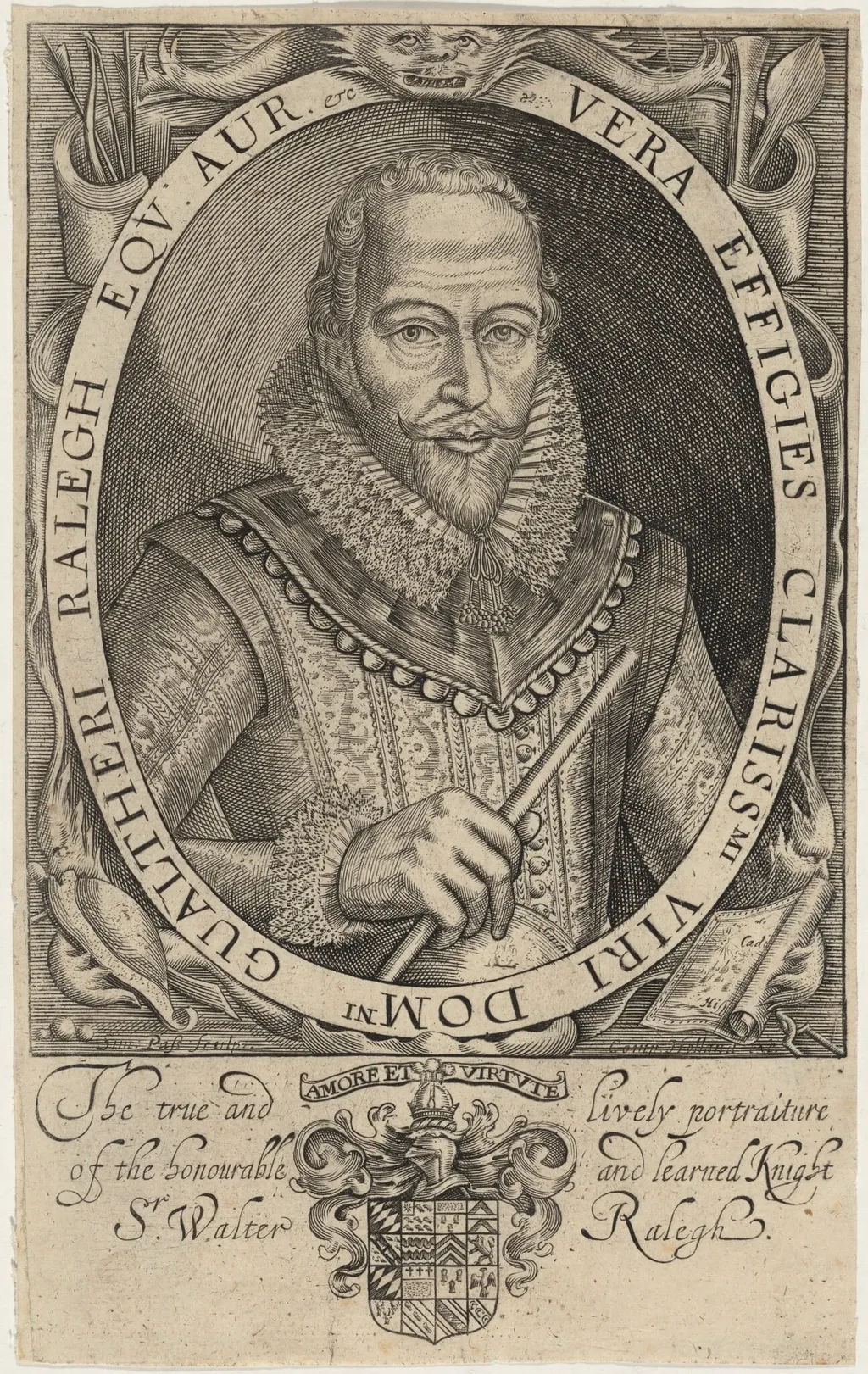
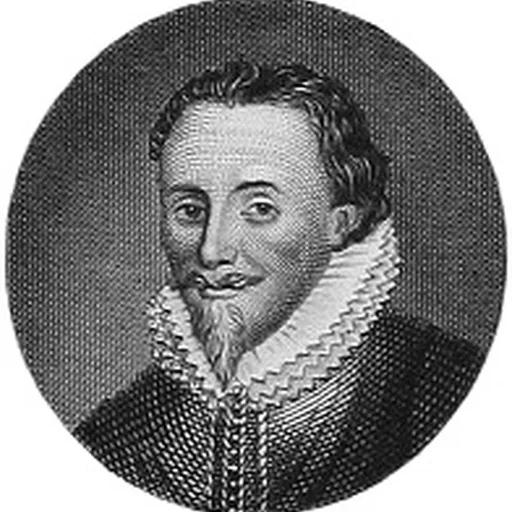
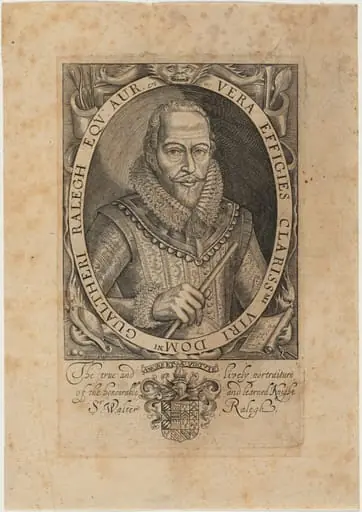
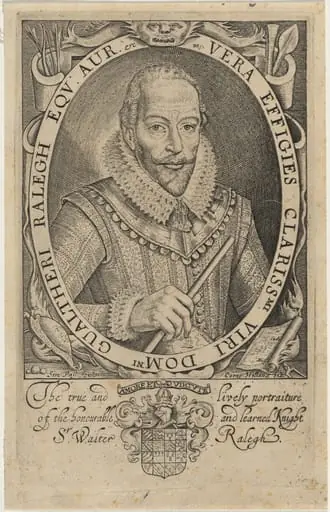
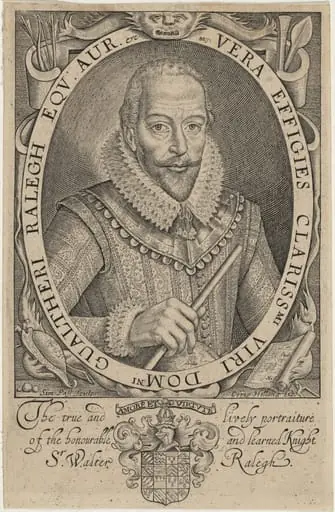
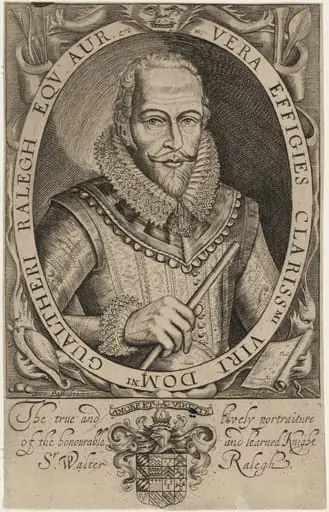
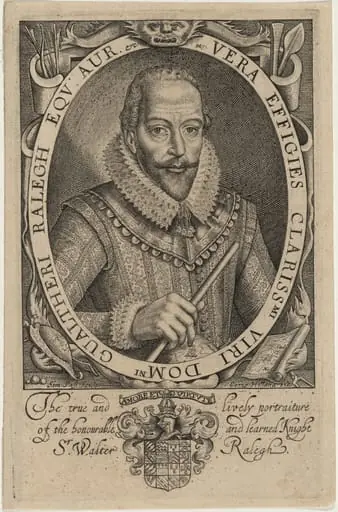
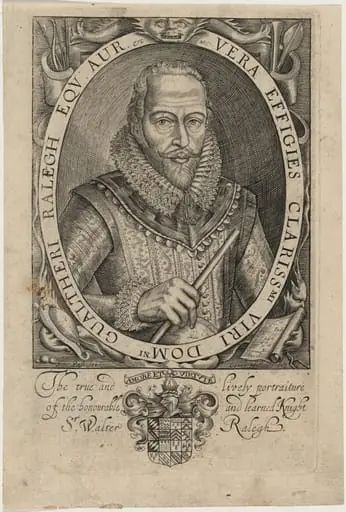
Sir Walter Raleigh is an ink print by the Baroque artist Simon van de Passe. It is held in the collection of the National Gallery of Art.
About this work
Overview
The composition emphasizes his stern expression and dignified posture, characteristic of posthumous commemorative portraiture of the period.
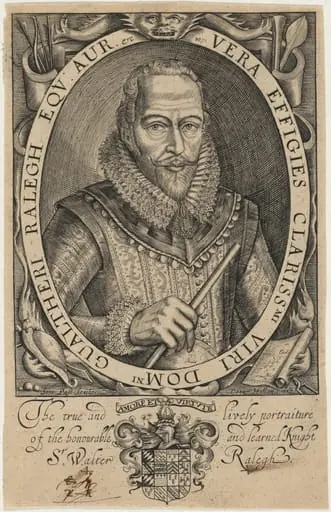
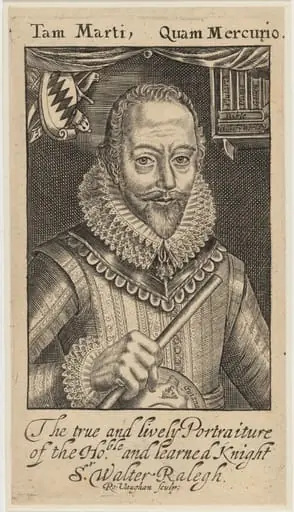
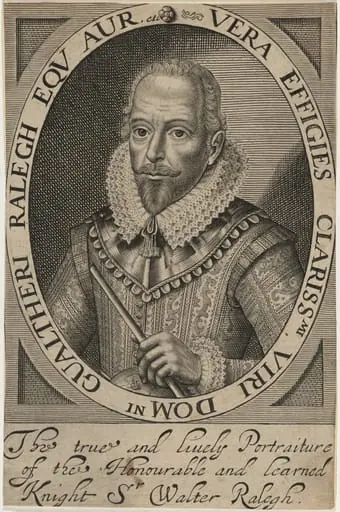
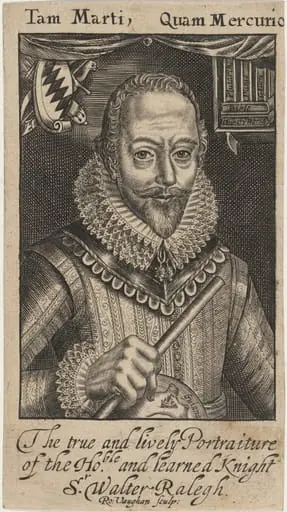
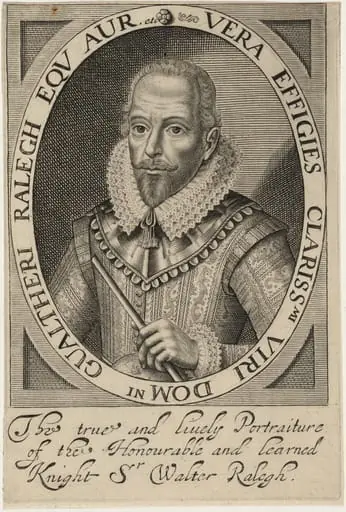
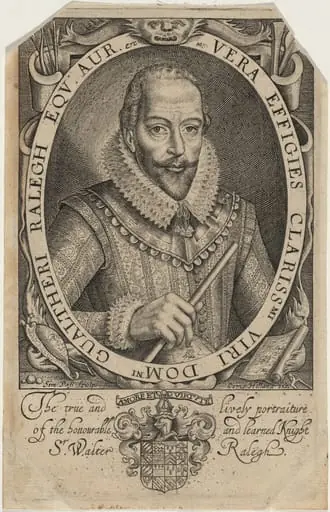
This 1652 engraving by Simon van de Passe depicts Sir Walter Raleigh, the English explorer and courtier, in formal attire. Rendered in fine linear detail, the portrait presents him in three-quarter view against a dark, unbroken background. The composition emphasizes his stern expression and dignified posture, characteristic of posthumous commemorative portraiture of the period. A decorative border encloses the image, inscribed with text that identifies the subject and artist.
Subject & Meaning
Sir Walter Raleigh, executed in 1618, was a controversial figure whose legacy as explorer, poet, and courtier endured into the mid-seventeenth century. This portrait, made over thirty years after his death, serves as a commemorative image rather than a likeness from life. His direct gaze and restrained gesture suggest authority and resolve, reinforcing his public persona as a man of intellect and determination amid political turmoil.
Technique & Style
Simon van de Passe employed fine, controlled lines to render texture and form, particularly in the ruffled collar, curly hair, and draped cloak. The engraving’s precision highlights the contrast between the detailed foreground and the flat, dark background, enhancing the figure’s presence. The decorative border, with its engraved lettering, reflects the conventions of early modern printmaking, where textual and visual elements combined to convey status and identity.
History & Provenance
Created in 1652, the engraving was produced during a period of renewed interest in Elizabethan figures following the Restoration. Van de Passe, a Dutch engraver known for his portraits of European elites, likely based this image on earlier depictions or written descriptions, as no verified contemporary portrait of Raleigh survived. The print circulated among collectors and scholars, preserving Raleigh’s image in printed form across Europe.
Context
In mid-seventeenth-century England, engraved portraits of historical figures served both as historical records and political symbols. Raleigh’s image, once associated with courtly ambition and colonial enterprise, was reinterpreted in the wake of civil war and monarchy’s return. Van de Passe’s work fits within a broader trend of producing commemorative prints that linked past figures to contemporary ideals of leadership and national identity.
Legacy
This engraving became one of the most widely reproduced images of Raleigh in the centuries following his death. Its formal composition and clarity made it a standard reference in biographies and historical texts. Though not a lifelike portrait, it shaped the visual memory of Raleigh for generations, influencing later artistic and literary representations of the Elizabethan era.
Artist & collection