Artwork
Sir Walter Raleigh
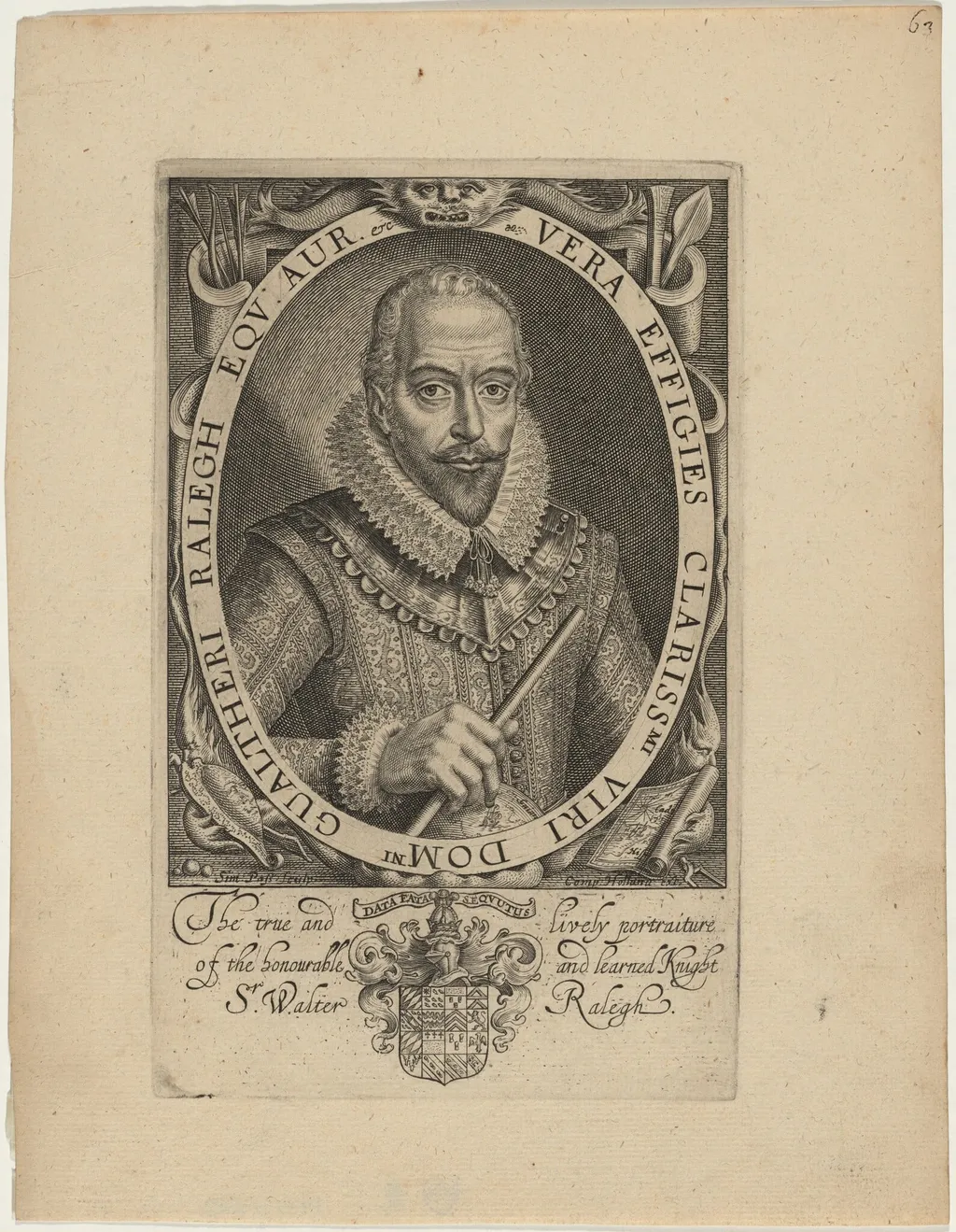
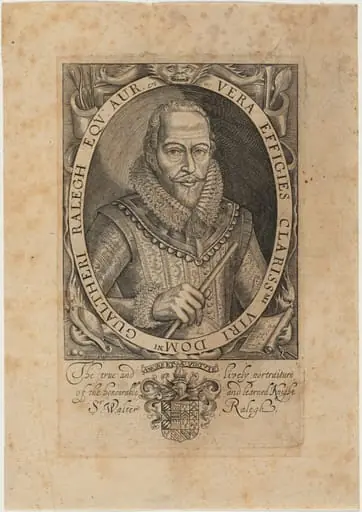
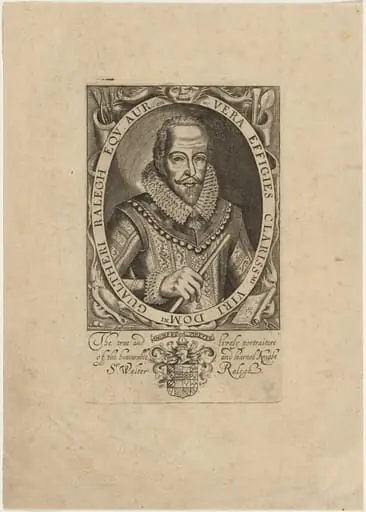
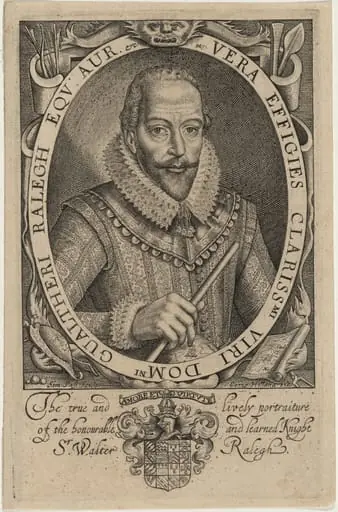
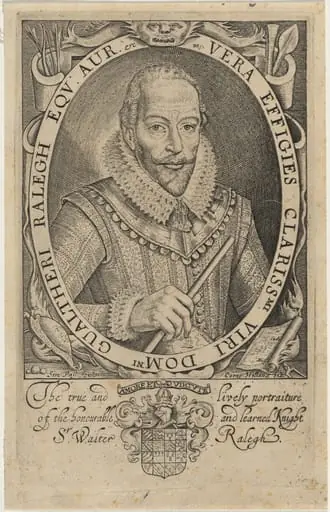
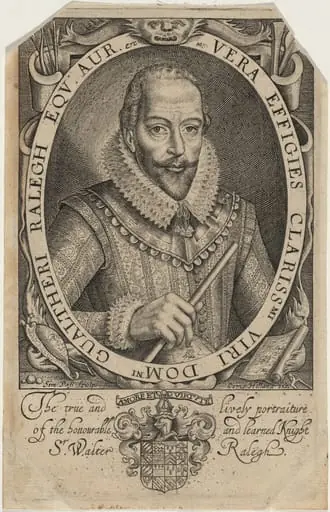
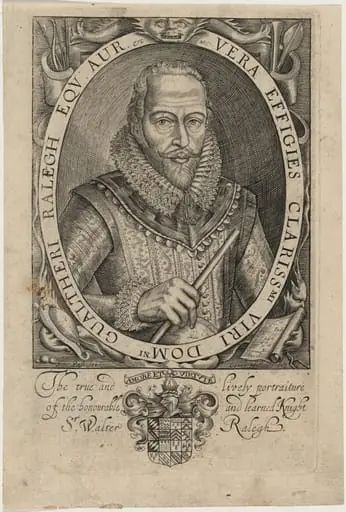
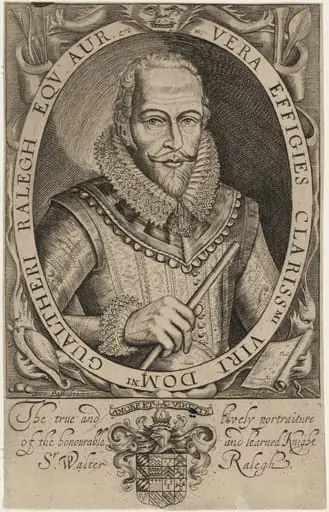
Sir Walter Raleigh is an ink print by the Renaissance artist Simon van de Passe. It dates from 1621 and is held in the collection of the National Gallery of Art.
About this work
Overview
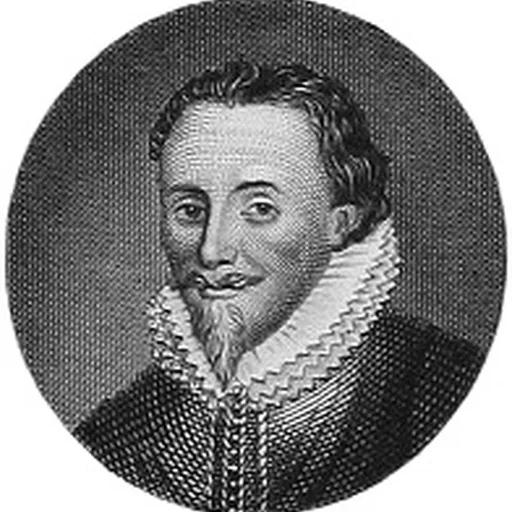
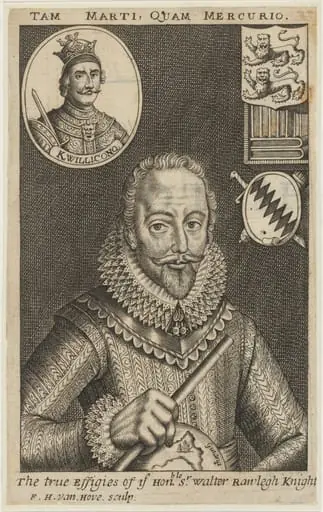
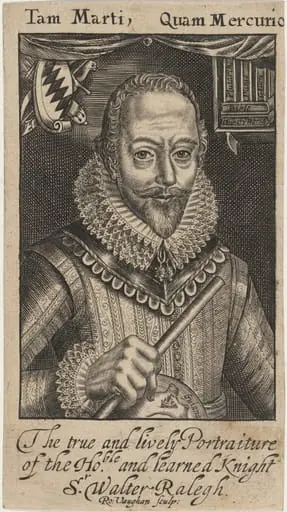
This 1621 engraving by Simon van de Passe depicts Sir Walter Raleigh, an English explorer and courtier. Rendered in monochrome, the portrait follows the tradition of printed likenesses used to disseminate the image of prominent figures. The composition is formal, emphasizing Raleigh’s status through precise linework and inscribed text, typical of early 17th-century printmaking in the Netherlands.
Subject & Meaning
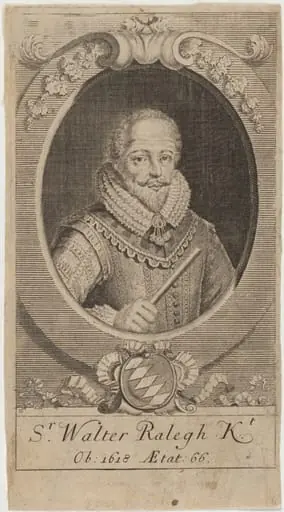
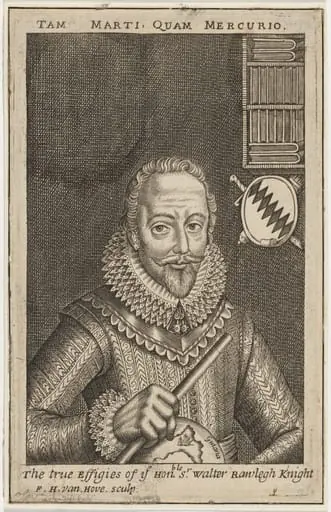
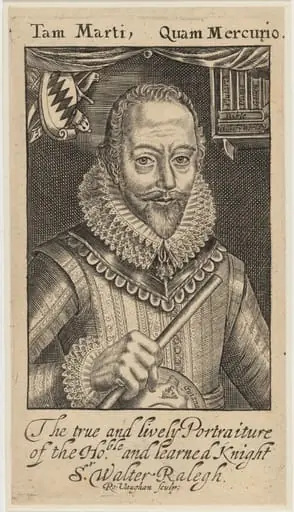
Raleigh is portrayed in ceremonial attire, including a high ruff and a chain of office, signaling his rank as a knight and former favorite of Queen Elizabeth I.
Raleigh is portrayed in ceremonial attire, including a high ruff and a chain of office, signaling his rank as a knight and former favorite of Queen Elizabeth I. The Latin inscriptions above—'Vera Effigies' and 'Clarissimi Viri'—assert the image as a true and noble representation. The portrait functions not as a personal likeness but as a public statement of his legacy, crafted after his execution in 1618.
Technique & Style
Van de Passe employed fine, controlled engraving lines to model texture and volume. The lace of the ruff, the fur trim, and the metallic chain are rendered with meticulous cross-hatching and stippling, creating a sense of realism within the constraints of black-and-white print. The precision reflects the Dutch engravers’ mastery in translating detail into reproducible form for wide circulation.
History & Provenance
Created in 1621, the engraving was produced shortly after Raleigh’s execution, during a period of renewed interest in his life and writings. It likely served as a commemorative piece for his supporters and was circulated among collectors and scholars. Van de Passe, a prominent printmaker in Utrecht, specialized in portraits of European elites, making this work part of a broader network of elite image-making.
Context
In early 17th-century Europe, engraved portraits were key tools for shaping public memory, especially for figures who could not be photographed. Raleigh’s image, though created posthumously, aligned with efforts to preserve the reputations of controversial statesmen. The use of Latin and formal dress reflects the humanist ideals of the time, linking personal identity to classical notions of virtue and legacy.
Legacy
This engraving became one of the most widely reproduced images of Raleigh, influencing later depictions in books and historical texts. Its clarity and detail ensured its longevity as a reference for his appearance. Though not a personal portrait, it solidified a visual archetype of Raleigh as a learned, dignified figure, enduring in historical memory through the medium of print.
Artist & collection