Artwork
Gervase Babington, Bishop of Worcester
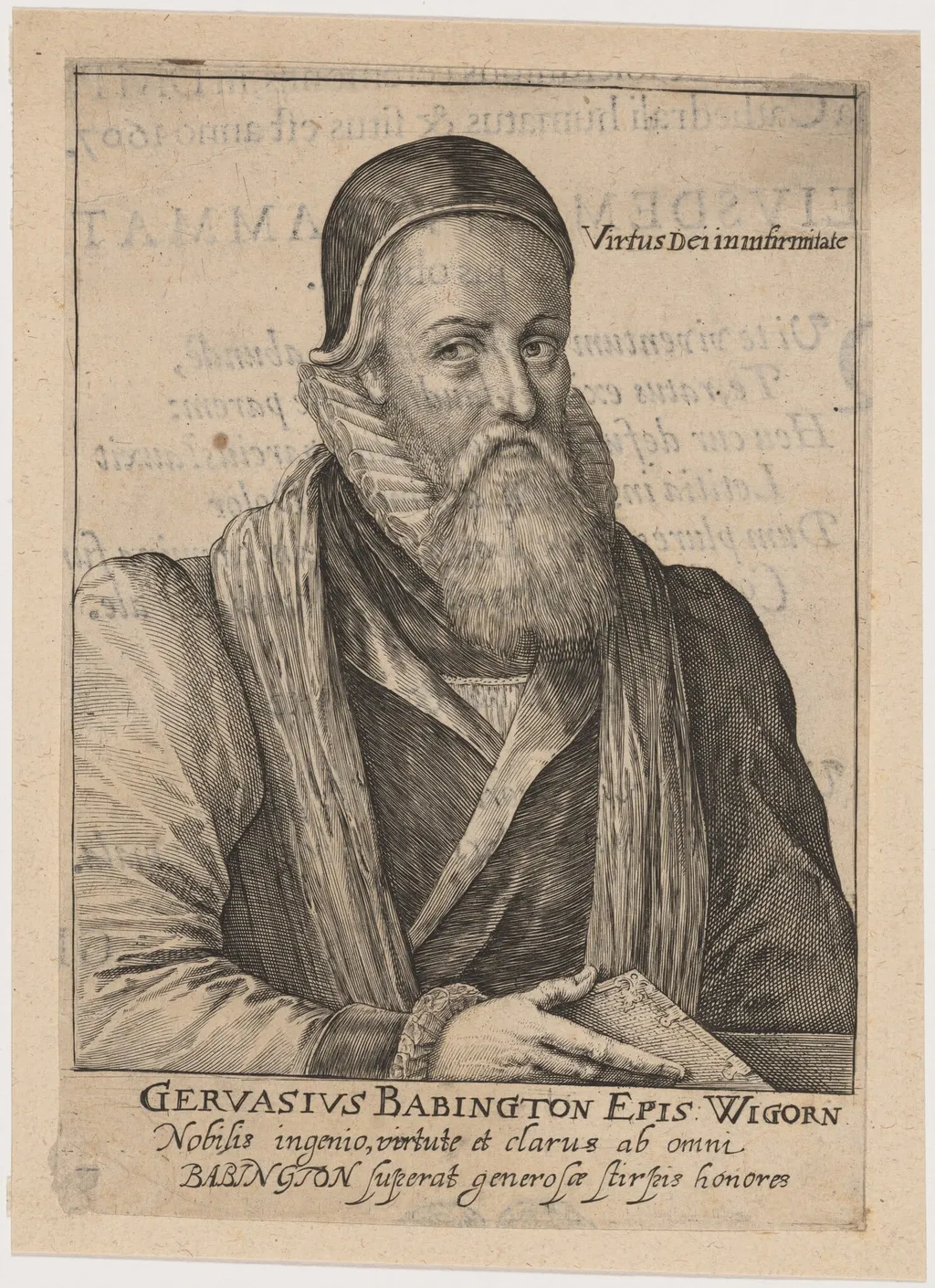
Gervase Babington, Bishop of Worcester is an ink print by the Baroque artist Willem de Passe. It dates from 1620 and is held in the collection of the National Gallery of Art.
About this work
Overview
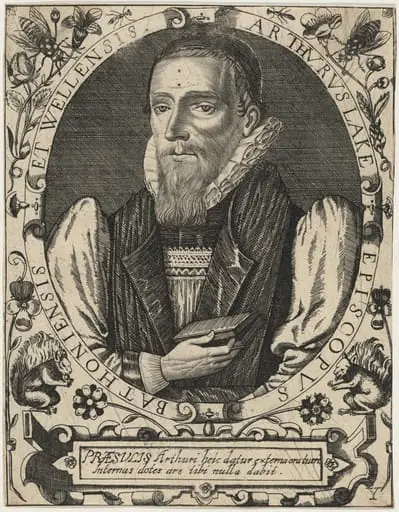
Rendered in fine line work, the portrait captures the bishop in a static, contemplative pose, facing the viewer directly.
This 1620 engraving by Willem de Passe depicts Gervase Babington, Bishop of Worcester, in formal ecclesiastical attire. Rendered in fine line work, the portrait captures the bishop in a static, contemplative pose, facing the viewer directly. The composition emphasizes dignity and scholarly authority, typical of early 17th-century ecclesiastical portraiture. The medium is a printed intaglio, likely produced for distribution among religious or academic circles.
Subject & Meaning
Babington is shown holding a book, symbolizing his role as a learned churchman and custodian of scripture. His clasped hands suggest prayer or devotion, reinforcing his spiritual vocation. The long white beard and head covering align with traditional depictions of senior clergy, conveying age, wisdom, and moral gravitas. The image functions as both a likeness and a statement of ecclesiastical identity, intended to affirm his status within the Church of England.
Technique & Style
De Passe employed fine cross-hatching and delicate line work to model form and texture, characteristic of Northern European engraving traditions. The subtle gradations in the bishop’s robe and the soft rendering of his beard demonstrate mastery of tonal control. The faint blue script in the background, resembling manuscript text, adds a layer of symbolic depth without distracting from the central figure. The precision of the lines reflects the high standards of printmaking in the early Baroque period.
History & Provenance
Created in 1620, the engraving was likely commissioned to commemorate Babington’s tenure as Bishop of Worcester, a position he held from 1614 until his death in 1610—suggesting the work may have been posthumous. De Passe, a Dutch engraver active in England, produced numerous portraits of English clergy and nobility during this period. The print would have circulated among church officials and collectors, serving as a visual record of ecclesiastical leadership.
Context
In early 17th-century England, engraved portraits of bishops were used to reinforce institutional authority and personal legacy amid religious tensions following the Reformation. De Passe’s work reflects the broader trend of using print to disseminate images of religious figures, bridging the gap between manuscript culture and the emerging print economy. The inclusion of textual elements in the background nods to the centrality of scripture in Anglican identity.
Legacy
The engraving remains a documented example of how ecclesiastical authority was visually codified in print. While not widely known today, it contributes to the corpus of early modern portraiture that shaped public perception of clergy. De Passe’s technique influenced later engravers, and this work stands as a quiet testament to the role of print in preserving the likenesses of religious figures during a period of profound theological change.
Artist & collection