Artwork
Henry Rich, First Earl of Holland
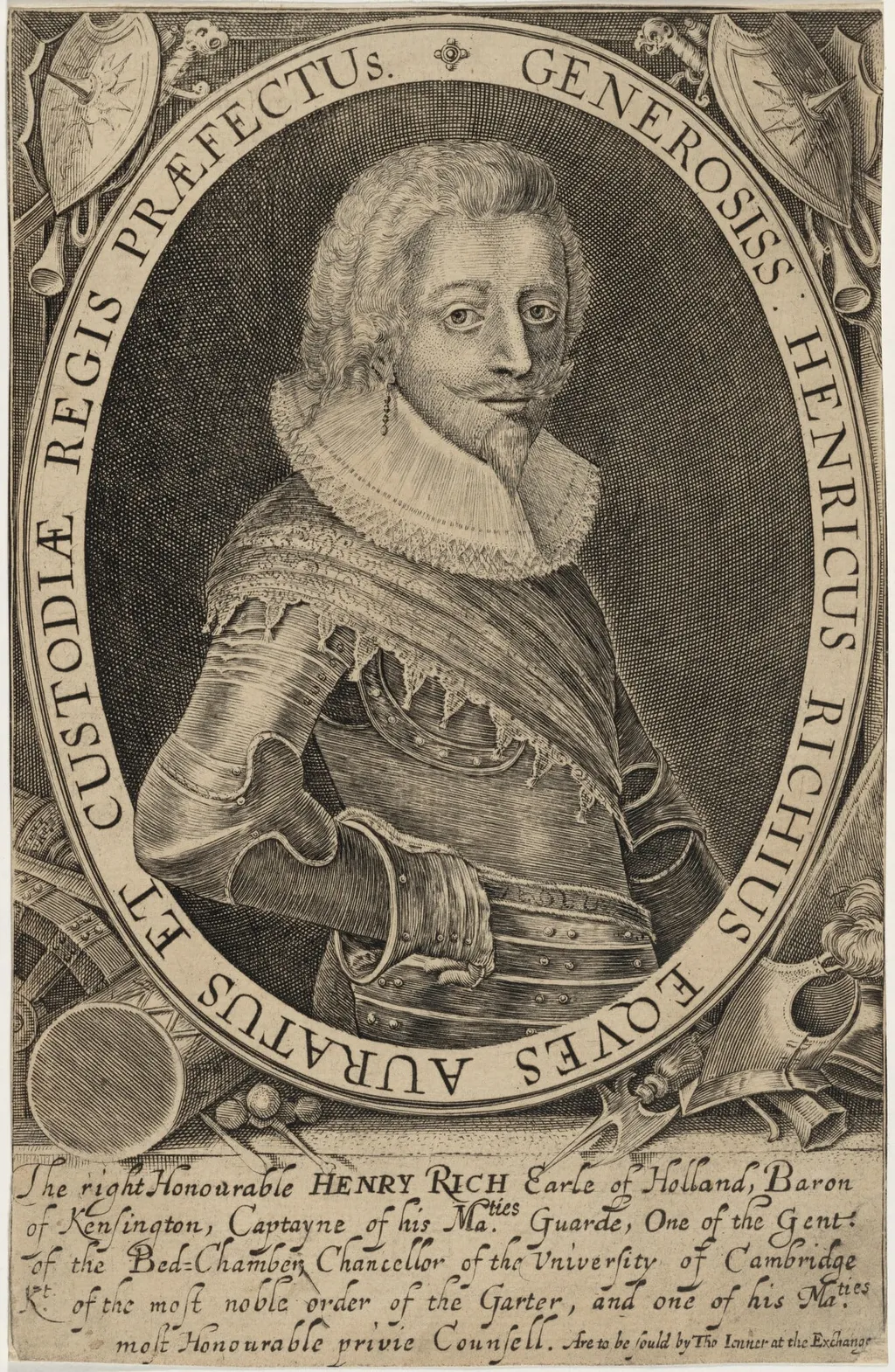
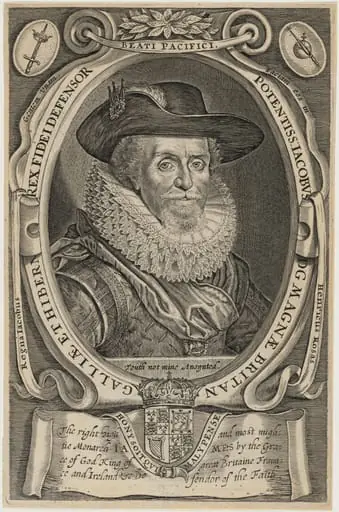
Henry Rich, First Earl of Holland is an ink print by the Renaissance artist Willem de Passe. It dates from 1618 and is held in the collection of the National Gallery of Art.
About this work
Overview
The composition functions as a visual record of status and honor, typical of early‑seventeenth‑century portrait prints.
Willem de Passe’s 1618 engraving portrays Henry Rich, the first Earl of Holland, in a formal, martial pose. Rendered in stark black-and-white, the image presents the nobleman in elaborate armor, a ruff collar, and a sword, accompanied by a flowing banner inscribed with Latin commendations. The composition functions as a visual record of status and honor, typical of early‑seventeenth‑century portrait prints.
Subject & Meaning
The sitter, Henry Rich, is depicted as a dignified figure of the English aristocracy, his sharp facial features and steady gaze suggesting resolve. The Latin terms on the banner—such as *Generosus* (noble) and *Auratis* (golden)—serve to extol his virtues and lineage, reinforcing the social ideals of generosity, bravery, and noble birth associated with his rank.
Technique & Style
De Passe employed copper‑plate engraving, using fine, intersecting lines to model the texture of armor, fabric folds, and facial details. The precise hatching creates a sense of depth and materiality, while the contrast between dark ink and the white paper accentuates the intricate ornamentation of the armor and the flowing script of the banner. The overall effect is restrained yet meticulously crafted.
History & Provenance
Created in 1618, the print belongs to a period when de Passe, a prominent Dutch engraver working in England, produced portrait series for the court. The work likely circulated among patrons and collectors as a means of disseminating the Earl’s likeness. Surviving copies are found in several European print collections, reflecting the print’s role in early modern portraiture and its continued scholarly interest.
Artist & collection

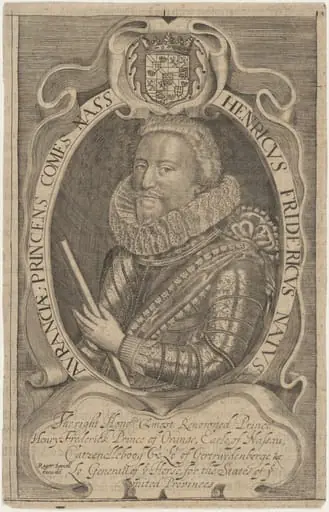 Frederick Henry, Prince of Orange
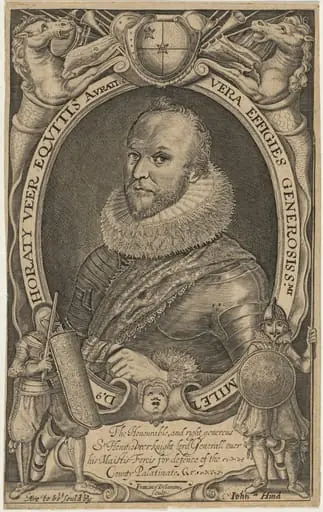 Horaty Veer, Equitus (Horace Vere, Lord Vere of Telbury)
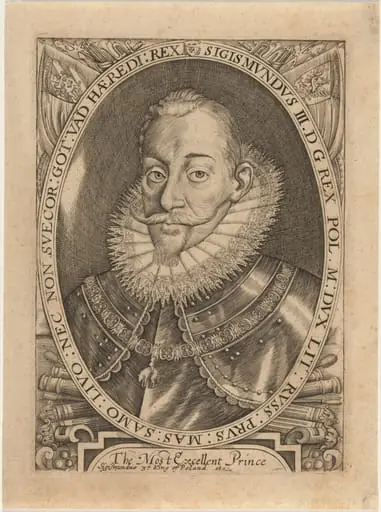 Sigismund III, King of Poland and Sweden
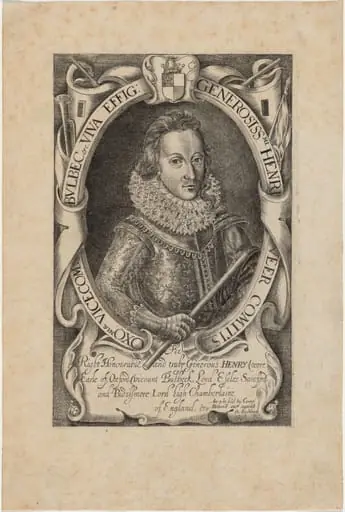 Henry de Vere, Eighteenth Earl of Oxford
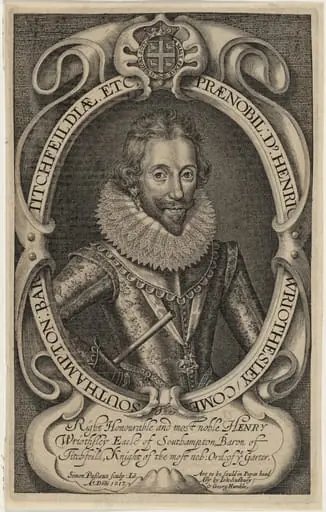 Henry Wriothersley, Third Earl of Southampton
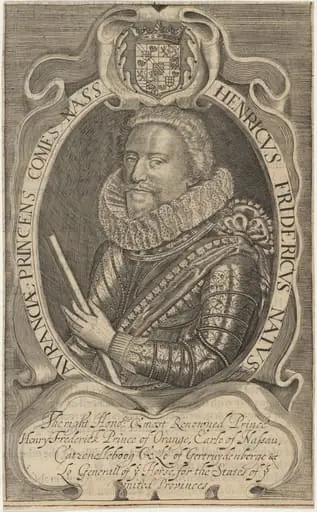 Frederick Henry, Prince of Orange
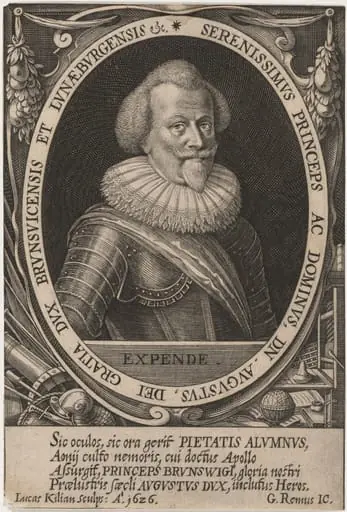 Augustus II, Duke of Brunswick
 James I, King of England