Artwork
Six Etchings
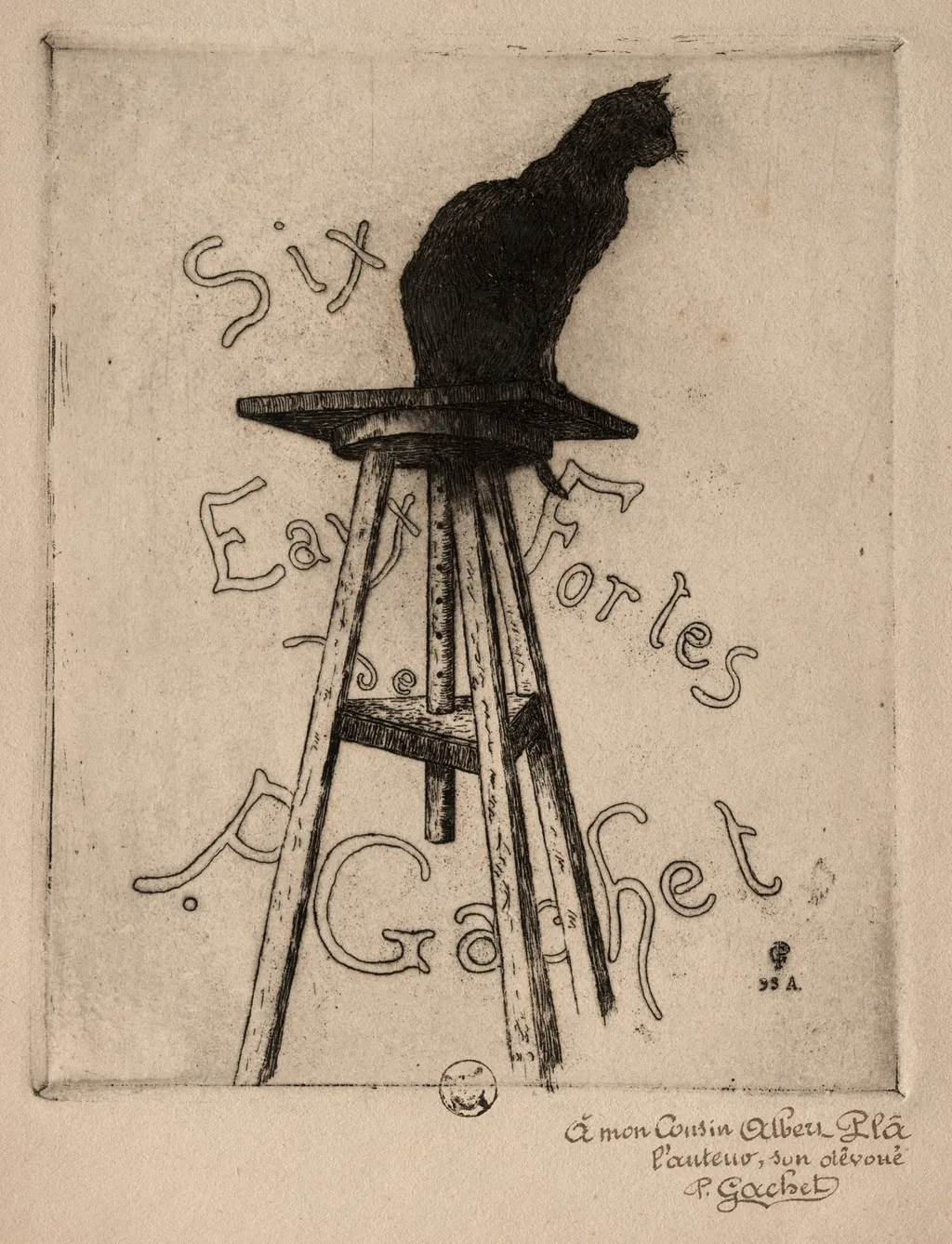
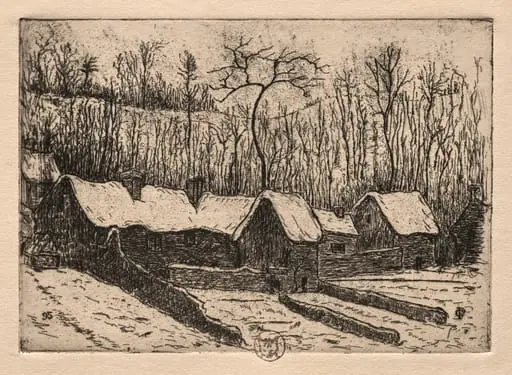
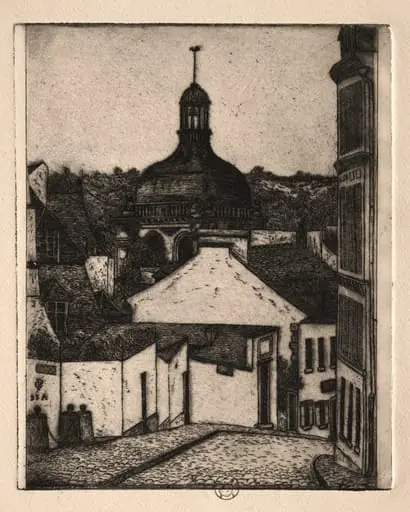
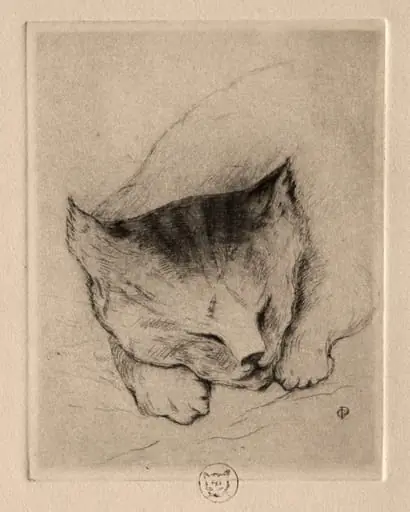
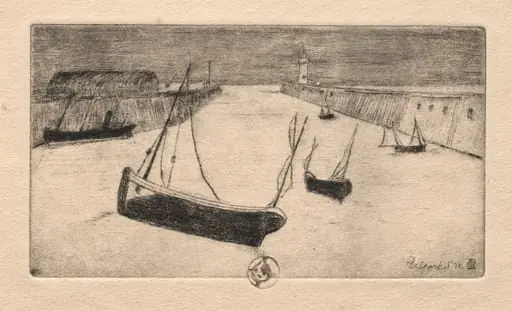
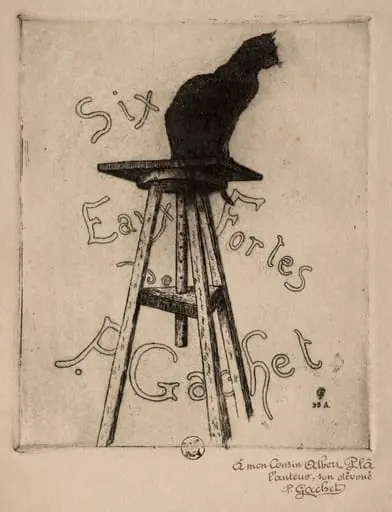
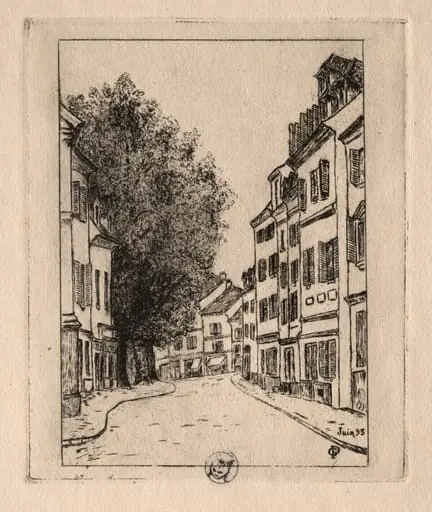
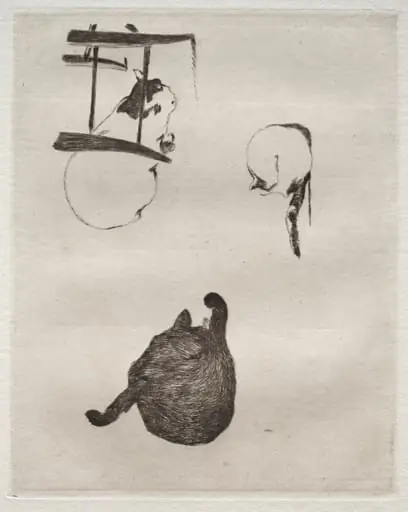
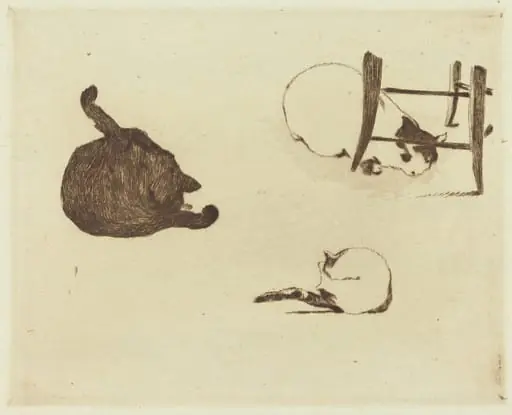
Six Etchings is a print by the Impressionist artist Paul Gachet. It dates from 1895 and is held in the collection of the Cleveland Museum of Art.
About this work
Overview
The series reflects his personal interest in informal, spontaneous imagery rather than formal artistic conventions.
Created in 1895, *Six Etchings* is a set of six small etchings by Paul Gachet, a French physician and printmaker. Though trained in medicine, Gachet engaged deeply with the artistic circles of his time. He produced these works under the pseudonym Paul van Ryssel, a nod to his Lille origins. The series reflects his personal interest in informal, spontaneous imagery rather than formal artistic conventions.
Subject & Meaning
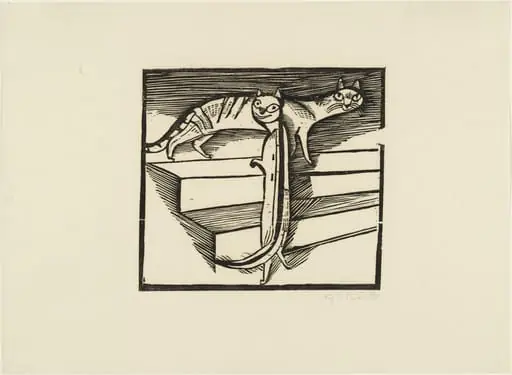
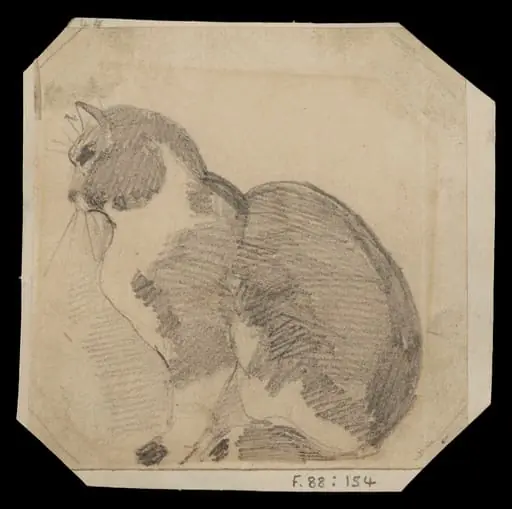
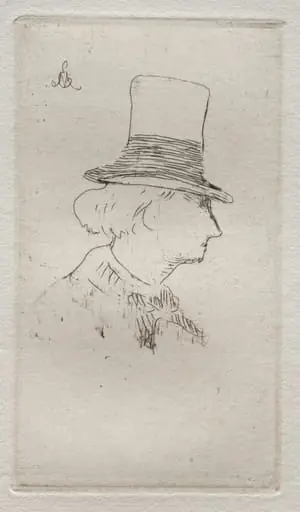
One plate in the series depicts a cat seated calmly atop a top hat balanced on a tall stool. The composition suggests quiet absurdity, blending domestic familiarity with surreal stillness. Inscriptions—'Six Etchings,' 'Gachet,' and 'Cat'—are rendered in loose script, reinforcing the work’s informal character. The image avoids narrative or symbolism, instead offering a gentle, whimsical observation of everyday objects and creatures.
Technique & Style
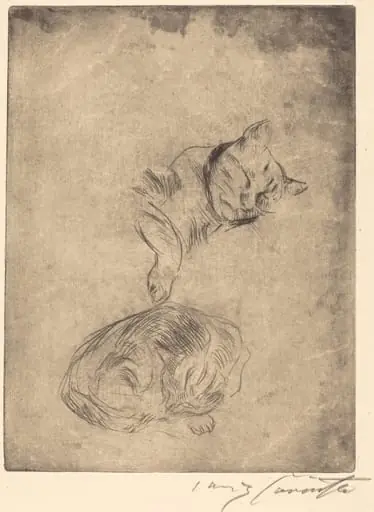
Gachet employed light, fluid etching lines that resemble quick pencil sketches. The marks are deliberate yet unpolished, emphasizing spontaneity over precision. The absence of heavy shading or intricate detail gives the image an intimate, almost improvised quality. His approach aligns with the sketch-like aesthetic favored by some Impressionist printmakers, prioritizing immediacy over technical finish.
History & Provenance
The etchings were produced in 1895, near the end of Gachet’s life, and remained largely private during his lifetime. They entered public collections decades later, with one plate now held by The Cleveland Museum of Art. The work’s modest scale and personal nature likely contributed to its limited circulation, preserving its character as a private artistic experiment rather than a commercial endeavor.
Context
Gachet was closely associated with Post-Impressionist artists, notably Vincent van Gogh, whom he treated in 1890. Though not a professional artist, he participated in the era’s artistic discourse, collecting works and making prints as a personal pursuit. His etchings reflect the broader late 19th-century interest in amateur printmaking as a form of expressive, non-institutional art.
Legacy
Gachet’s *Six Etchings* remain a quiet footnote in art history, valued for their unpretentious charm and insight into a physician’s artistic side. They illustrate how non-professionals contributed to the visual culture of their time. The works are studied today not for technical innovation, but for their human scale and the glimpse they offer into Gachet’s personal world.
Artist & collection
Artist
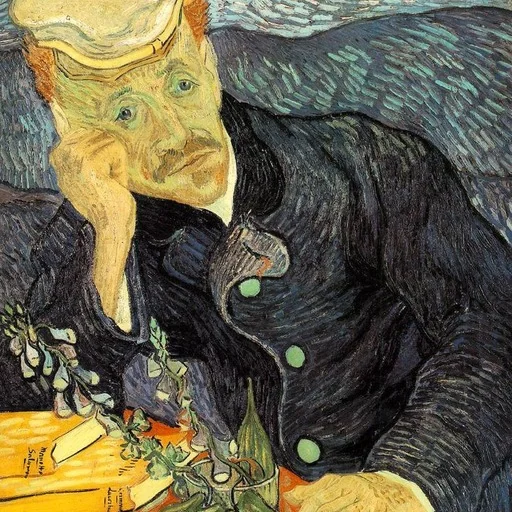
Paul-Ferdinand Gachet (30 July 1828 – 9 January 1909) was a French physician most famous for treating the painter Vincent van Gogh during his last weeks in Auvers-sur-Oise.