Artwork
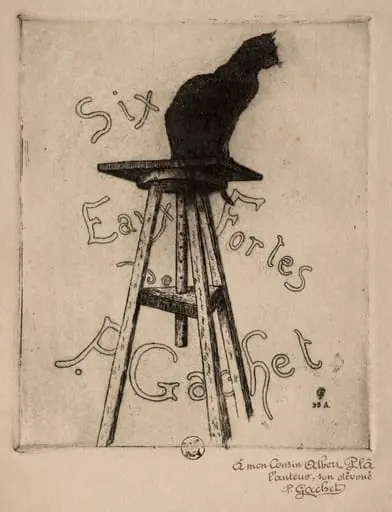
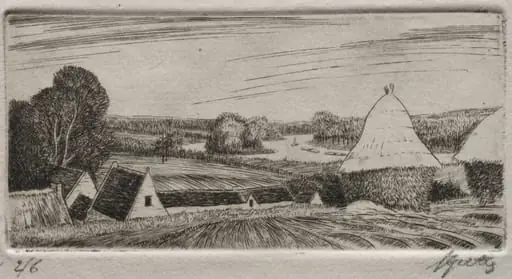
Six Etchings: The Thatched Bakery, Auvers
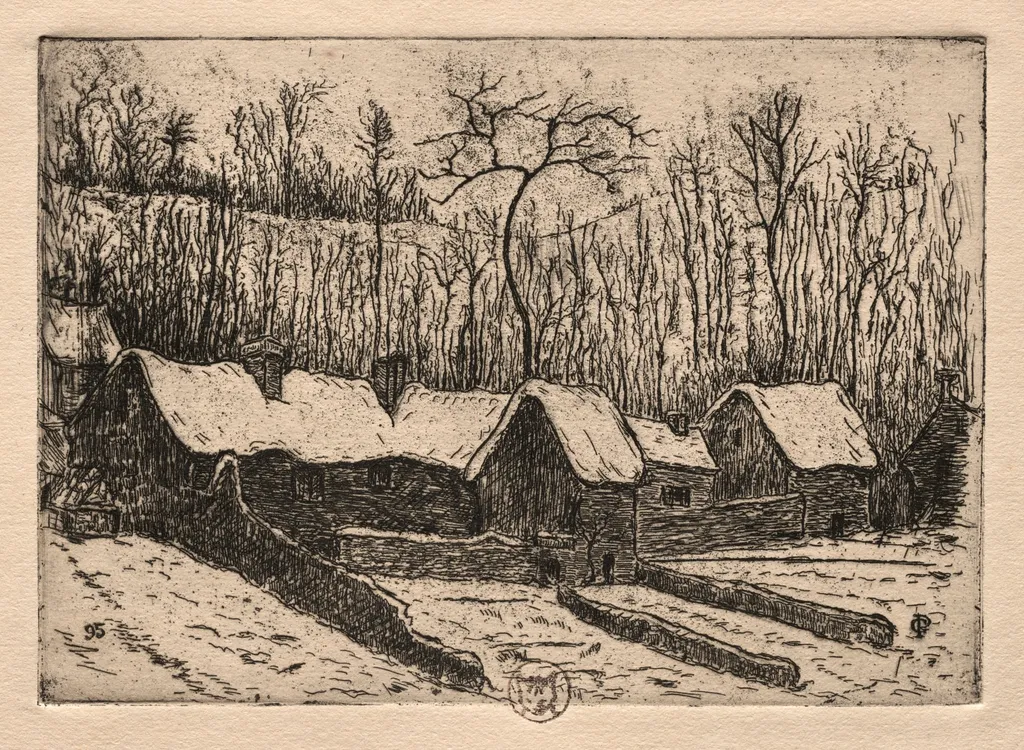
Six Etchings: The Thatched Bakery, Auvers is a print by the Impressionist artist Paul Gachet. It dates from 1895 and is held in the collection of the Cleveland Museum of Art.
About this work
This was made in 1895, when artists often experimented with etching to capture light and shadow.
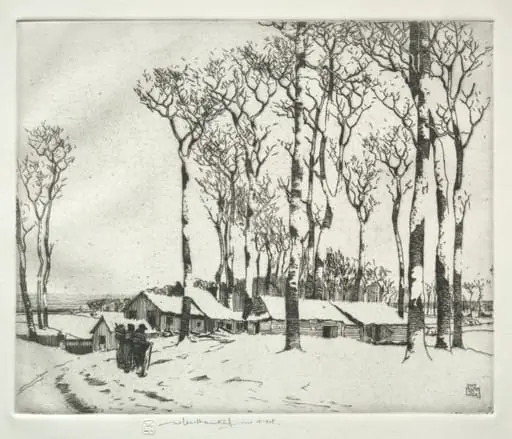
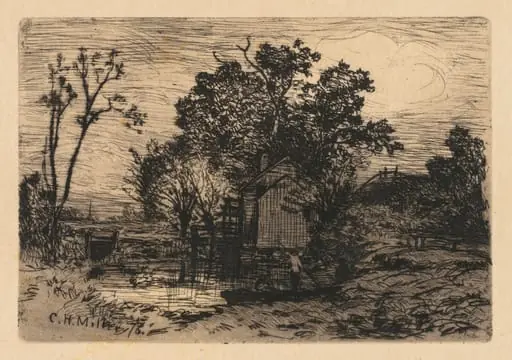
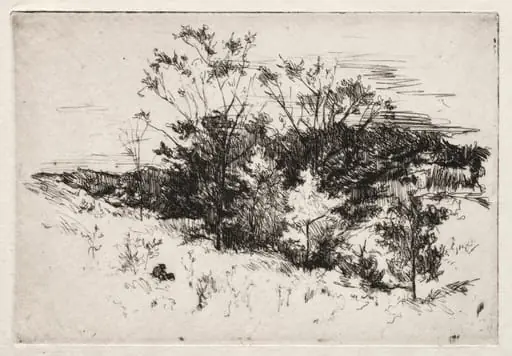
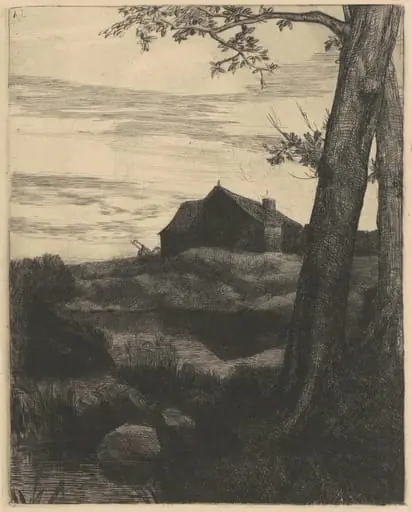
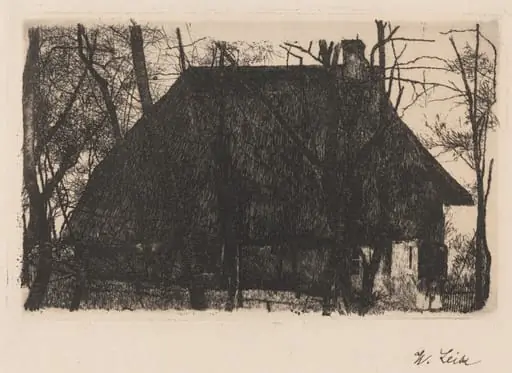
This black-and-white print shows three small thatched-roof houses in a snowy village. Bare trees line the background, their branches tangled against a pale sky. In the foreground, a dirt path curves past a split log lying on the ground.
The artist used fine lines to show texture—every thatch blade and snowflake is drawn by hand. This was made in 1895, when artists often experimented with etching to capture light and shadow.
Look up etching next to see how artists carve images into metal plates.
Overview
Paul Gachet, a French physician who cared for Vincent van Gogh during the artist’s final weeks, produced a series of six etchings titled *Six Etchings: The Thatched Bakery, Auvers* in 1895. The prints portray a modest, snow‑covered village scene from Au‑vers‑sur‑Oise, where Gachet lived, and illustrate his personal involvement in the visual arts alongside his medical practice.
Subject & Meaning
The central image captures three thatched‑roof cottages nestled in a winter landscape, their roofs and surrounding ground blanketed in snow. Bare, tangled trees rise against a pale sky, while a winding dirt path and a split log in the foreground suggest everyday rural life and the quiet rhythms of a small French village.
Technique & Style
Gachet employed traditional intaglio etching, incising fine lines into a metal plate to render texture. The hand‑drawn marks delineate individual thatch blades, snowflakes, and bark, creating a delicate interplay of light and shadow characteristic of late‑19th‑century experimental printmaking.
History & Provenance
Created in 1895, the series reflects Gachet’s engagement with the Impressionist milieu, a movement he supported as a patron. Though primarily known as a physician, he also painted under the pseudonym "Paul van Ryssel," and these prints represent a rare example of his own artistic output.
Context
During the 1890s, many artists turned to etching to explore atmospheric effects and tonal nuance. Gachet’s choice of a snowy, thatched‑roofed village aligns with contemporary interests in rural subject matter and the fleeting qualities of light, echoing the broader Impressionist fascination with everyday scenes.
Artist & collection
Artist
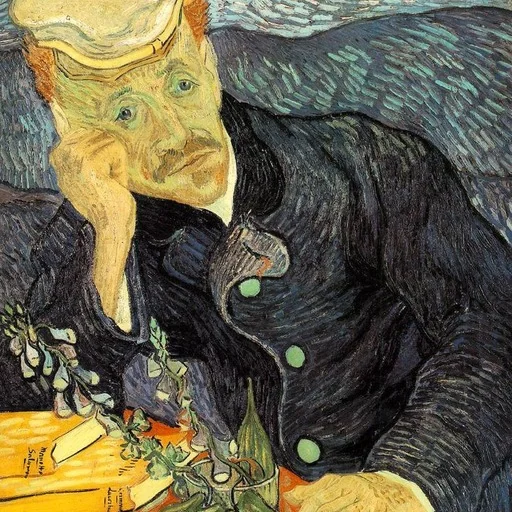
Paul-Ferdinand Gachet (30 July 1828 – 9 January 1909) was a French physician most famous for treating the painter Vincent van Gogh during his last weeks in Auvers-sur-Oise.