Artwork
The Shepherd
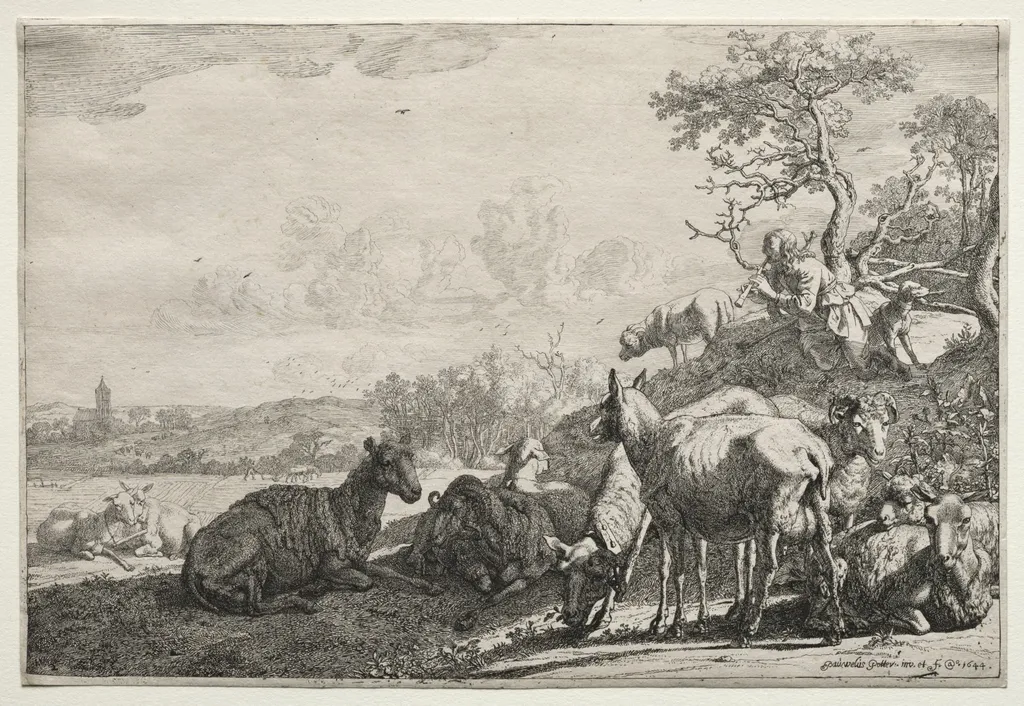
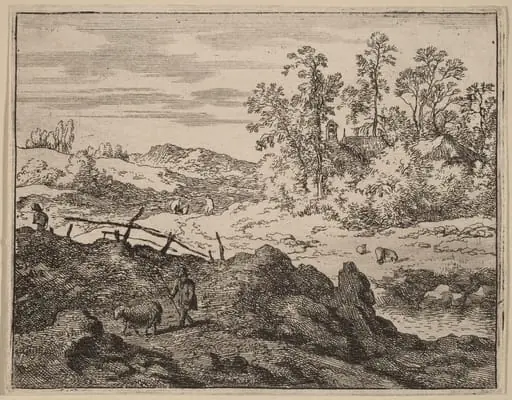
The Shepherd is a print by the Baroque artist Paulus Potter. It dates from 1644 and is held in the collection of the Cleveland Museum of Art.
About this work
Overview
The Shepherd is a 1644 etching by Dutch Golden Age artist Paulus Potter, depicting a serene rural scene with a shepherd, livestock, and a distant village.
Subject & Meaning
The print focuses on a shepherd tending to sheep and a donkey on a rocky hill, with a tree behind and a village by a river in the distance, emphasizing rural life and livestock.
Technique & Style
Potter employed precise lines to capture the three-dimensional appearance of the animals' fur and the landscape's details, characteristic of his attention to texture and form.
History & Provenance
Created in 1644, The Shepherd is now part of the Cleveland Museum of Art's collection, one of approximately 100 works by Potter before his death at 28.
Context
Part of Potter's oeuvre specializing in animal-focused landscapes from a low viewpoint, The Shepherd reflects his contribution to Dutch Golden Age art's emphasis on rural themes.
Legacy
As one of Potter's notable works, The Shepherd contributes to the enduring interest in Dutch Golden Age prints, though specific legacy details are not highlighted in available information.
Own this work as a print
Artist & collection
Artist
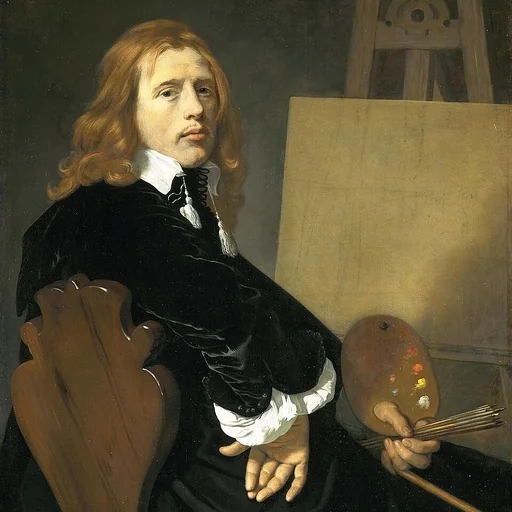
Paulus Potter (Dutch pronunciation: ; 20 November 1625 (baptised) – 17 January 1654 (buried)) was a Dutch painter who specialized in landscapes featuring animals, often from a low vantage point.

 Shepherd with Lamb
 Reynard the Fox: The Chase of the Stag
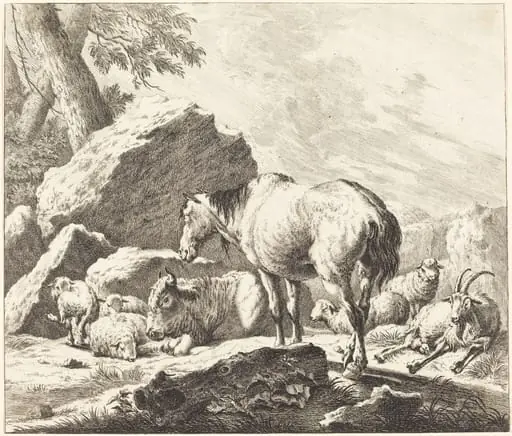 A Horse, Buffalo, Sheep, and Goat in an Italian Landscape
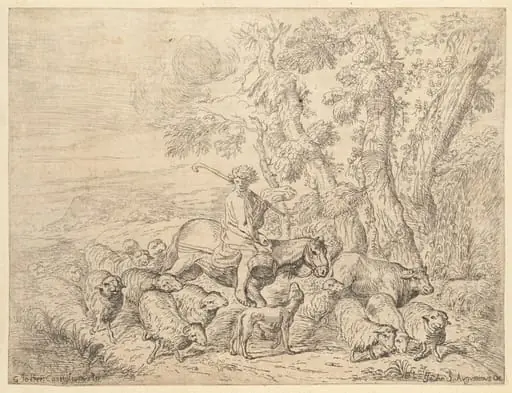 Shepherd on Horseback
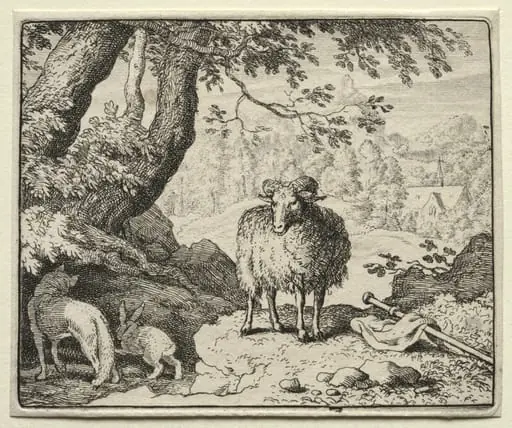 Reynard the Fox: Reynard Returns Home
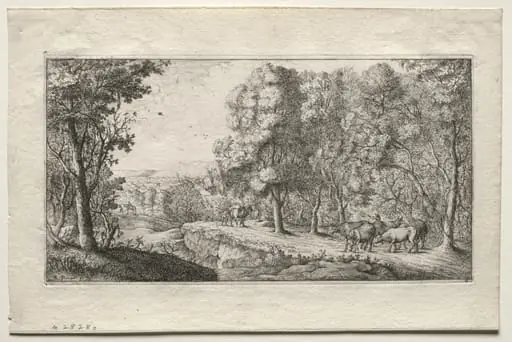 The Road at the Border of the Woods
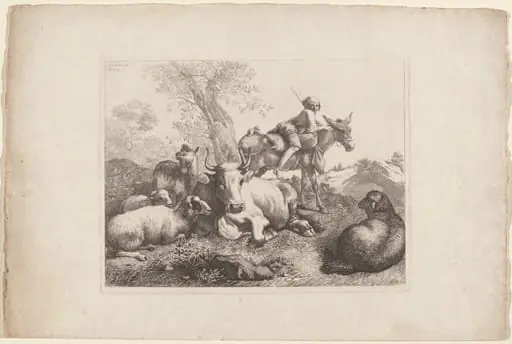 Boy on a Donkey Watching over a Group of Animals
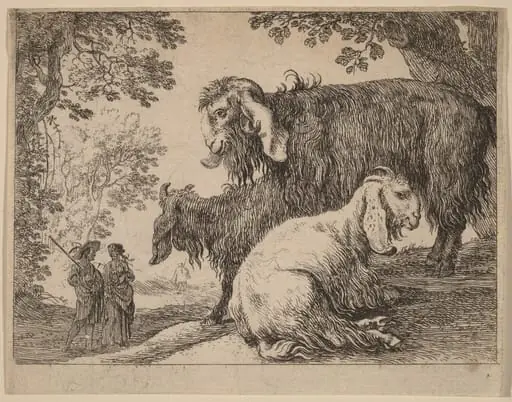 Angora Sheep
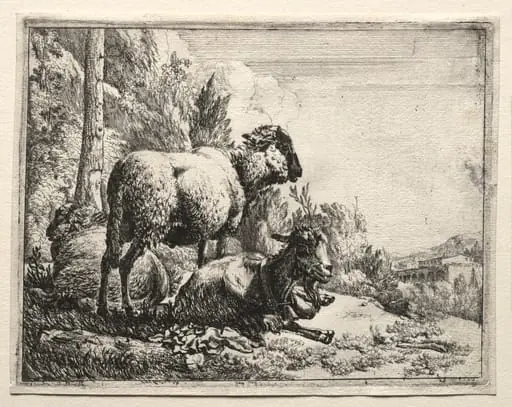 Goat with Bell
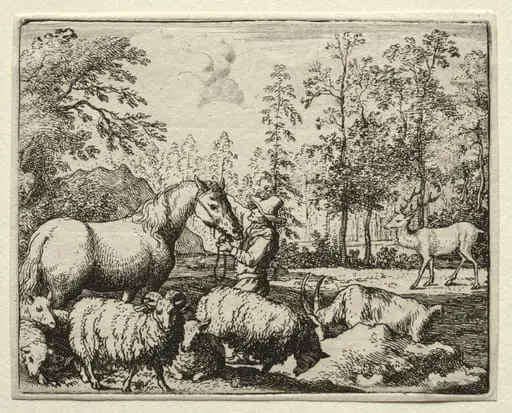 Reynard the Fox: The Jealous Horse
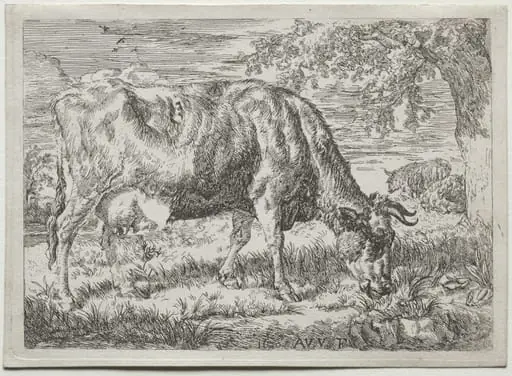 Cow and Two Sheep at the Foot of a Tree
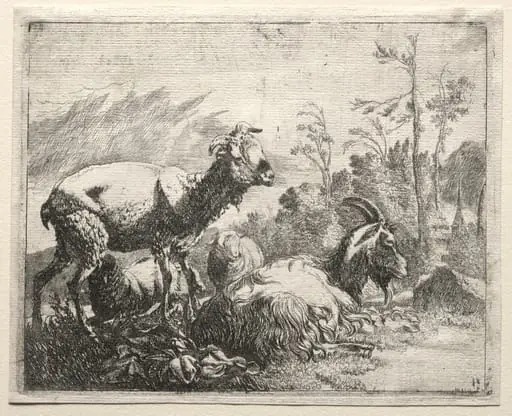 Goats
Goats