Artwork
Sir Benjamin Rudyerd
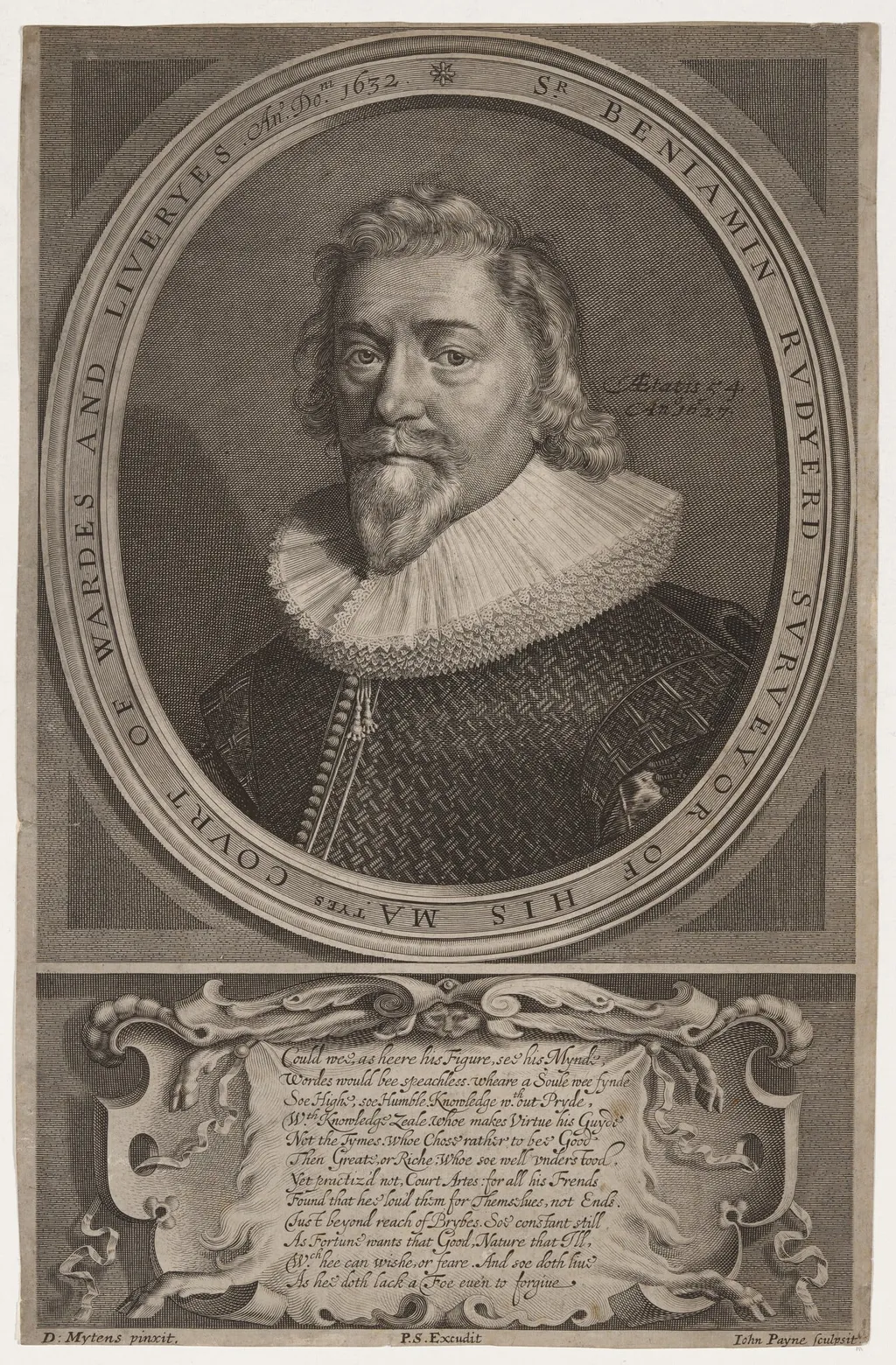
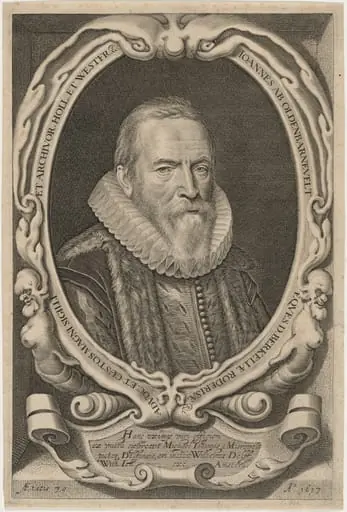
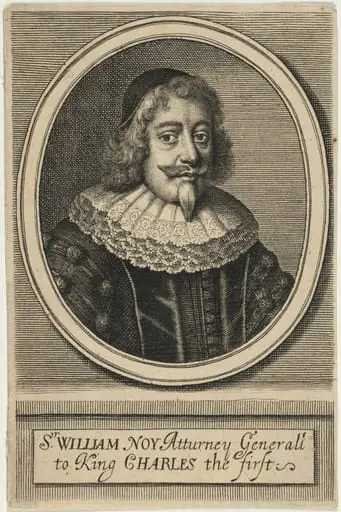
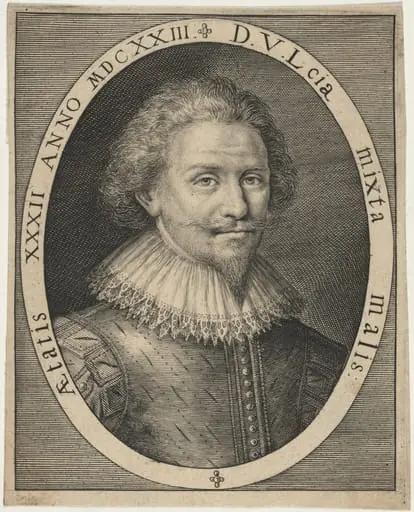
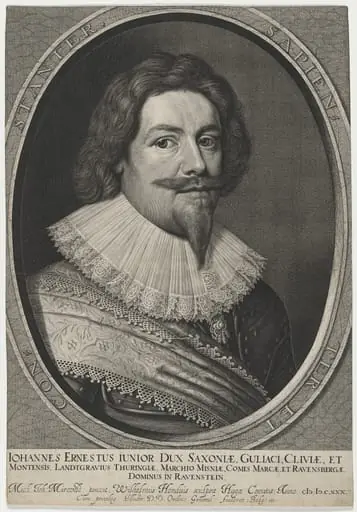
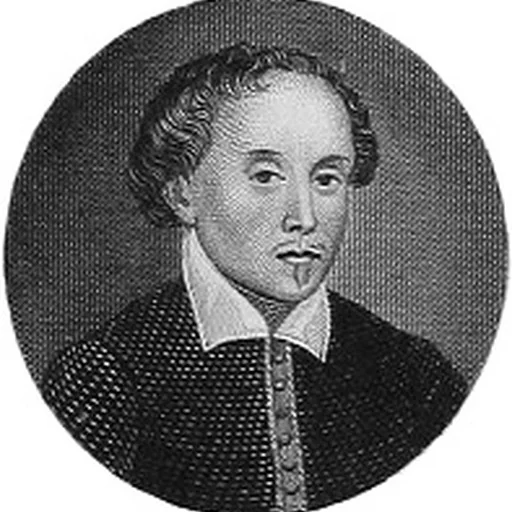
Sir Benjamin Rudyerd is an ink print by the Baroque artist John Payne. It dates from 1627 and is held in the collection of the National Gallery of Art.
About this work
Overview
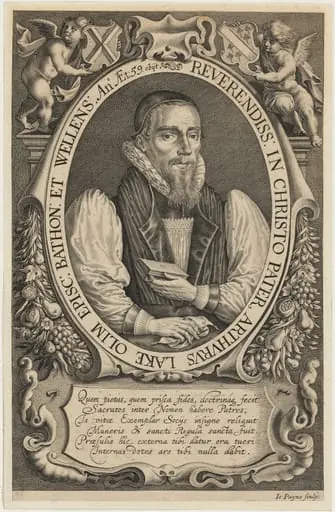
This 1627 engraving by John Payne depicts Sir Benjamin Rudyerd, an English parliamentarian and poet, in a formal portrait.
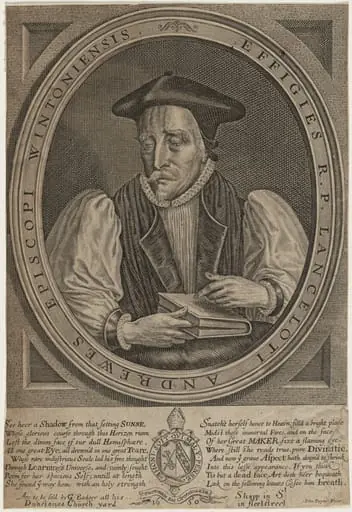
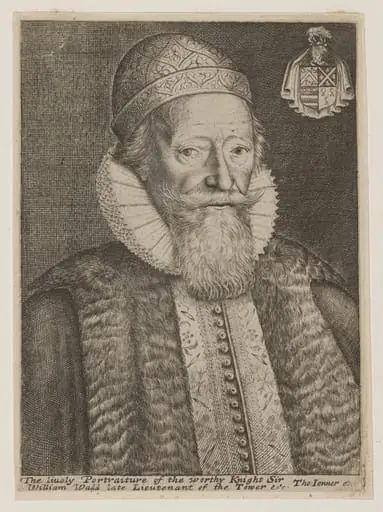
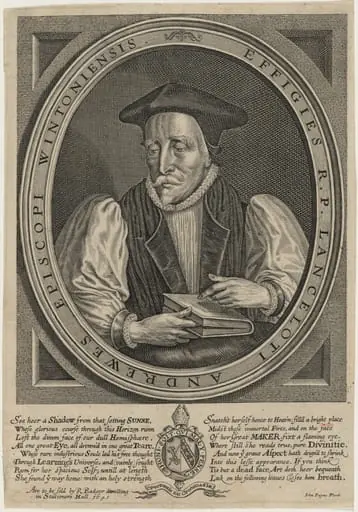
This 1627 engraving by John Payne depicts Sir Benjamin Rudyerd, an English parliamentarian and poet, in a formal portrait. Executed in black ink on paper, the work is a fine example of early 17th-century English printmaking. Payne, among the first native-born engravers to gain prominence, used fine lines to render texture and detail with precision, reflecting the period’s emphasis on scholarly and political portraiture.
Subject & Meaning
Rudyerd is shown seated, dressed in dark formal attire with a white lace ruff and a chain bearing a pendant, suggesting status and office. His full beard and composed expression convey gravitas, aligning with contemporary ideals of civic virtue. Surrounding Latin inscriptions and a dedicatory poem elevate the image beyond likeness, framing Rudyerd as a man of intellect and moral authority within the political sphere of Charles I’s reign.
Technique & Style
Payne employed burin engraving on copper, carving fine, controlled lines to define fabric, hair, and facial features. The contrast between the dark coat and luminous ruff demonstrates mastery of tonal gradation. The ornate border with swirling motifs and Latin text frames the portrait like a scholarly medal, a convention borrowed from continental portraiture but adapted to English tastes of the time.
History & Provenance
Created in 1627, the engraving was likely commissioned to commemorate Rudyerd’s role in Parliament and his literary reputation. It circulated among educated circles as a printed likeness, common before photography. The work survives in several institutional collections, indicating its early recognition and preservation as a significant example of domestic print culture under Charles I.
Context
In the 1620s, England saw a rise in engraved portraits as tools of personal and political identity. With limited access to painted likenesses, engravings offered a reproducible medium for elites to assert presence. Payne’s work emerged alongside other native engravers seeking to rival imported Dutch and Flemish prints, contributing to a growing domestic print industry.
Legacy
Payne’s engraving of Rudyerd stands as an early benchmark in English printmaking, demonstrating technical skill and cultural ambition. It influenced later portrait engravers and remains a reference for studying how political figures were visually constructed in pre-Civil War England. The work’s survival underscores the value placed on printed portraiture as both art and historical record.
Artist & collection
Artist
John Payne (1607–1647) was an English engraver, who was one of the earliest exponents of the art of engraving in England. His best work was the finest produced by a native-born engraver working during the reign of Charles I.