Artwork
Le Puy
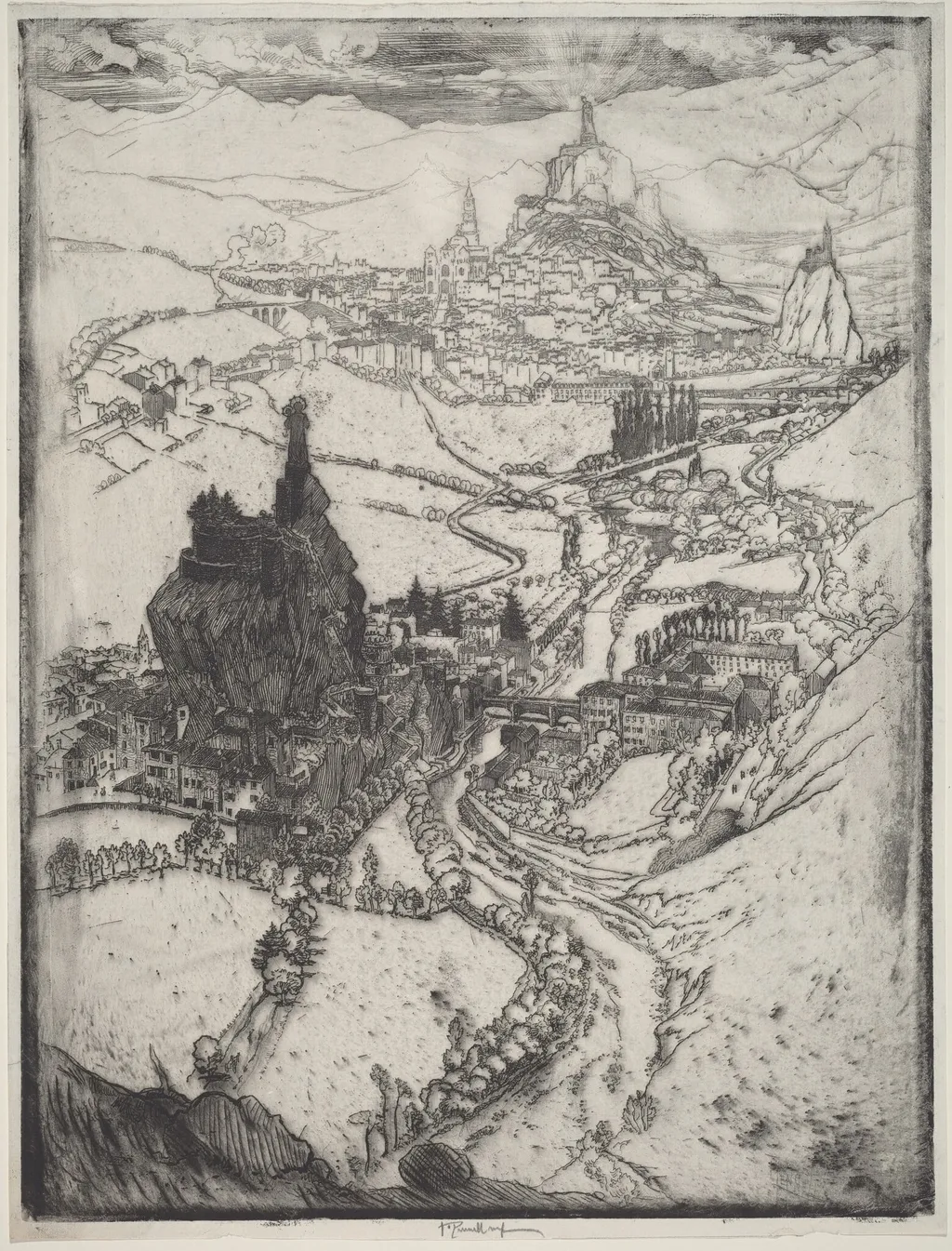
Le Puy is an ink print by the Impressionist artist Joseph Pennell. It dates from 1894 and is held in the collection of the National Gallery of Art.
About this work
Overview
Le Puy is an 1894 etching by American printmaker Joseph Pennell. The work presents a panoramic view of the volcanic terrain that frames the town of Le Puy‑en‑Velay in south‑central France, rendered in the characteristic tonal range of the medium.
Subject & Meaning
The composition captures the town nestled in a valley, its streets winding toward the viewer amid surrounding hills and distant peaks. By emphasizing the natural landscape over architectural detail, Pennell highlights the region’s rugged geography and the quiet presence of human settlement within it.
Technique & Style
Pennell employed traditional copper‑plate etching, using fine lines to model the terrain’s contours and a limited palette of browns, greens, and grays to convey atmospheric depth. The handling of light and shadow, achieved through varied line density, creates a sense of volume and distance across the scene.
History & Provenance
Trained under James Lambdin and Thomas Eakins, Pennell later absorbed influences from James McNeill Whistler, which informed his approach to tonal subtlety. He produced Le Puy during an extended period of European travel, a time when he documented numerous landmarks, industrial sites, and landscapes through print.
Context
Created at a time when American artists were increasingly exploring European locales, the etching reflects Pennell’s broader interest in recording the character of places he visited. Le Puy‑en‑Velay, known for its volcanic origins, offered a striking subject that aligned with his fascination for dramatic natural settings.
Artist & collection
Artist
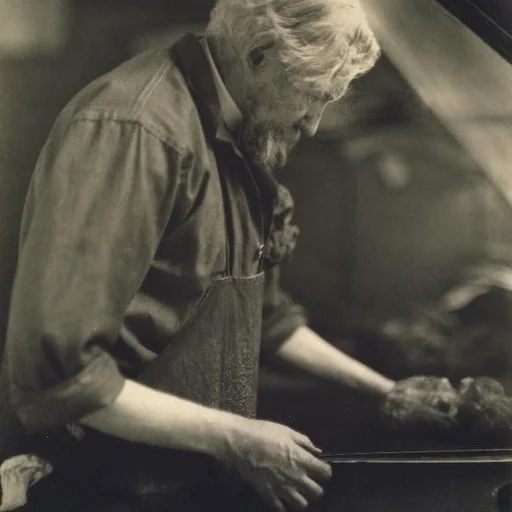
Joseph Pennell (July 4, 1857 – April 23, 1926) was an American draftsman, etcher, lithographer, and illustrator for books and magazines.

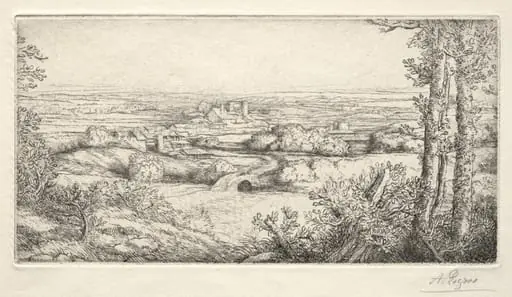 A Valley in Burgundy (Une Vallée en Bourgogne)
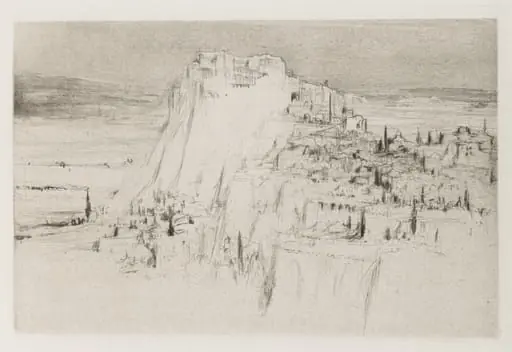 Herodias: Page 3, The citadel of Machaerus rose from the eastern side of the Dead Sea, on a peak of basalt, having the shape of a cone
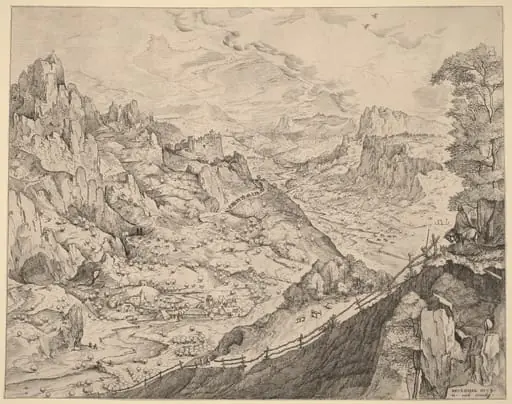 Large Alpine Landscape
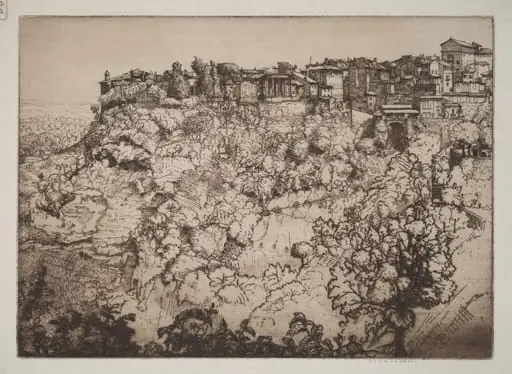 Tivoli
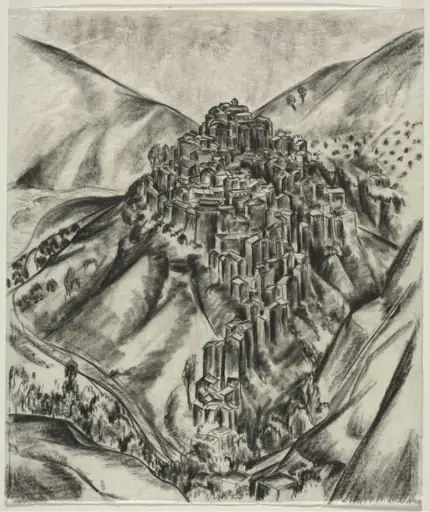 An Italian Hilltown, Anticoli, Italy
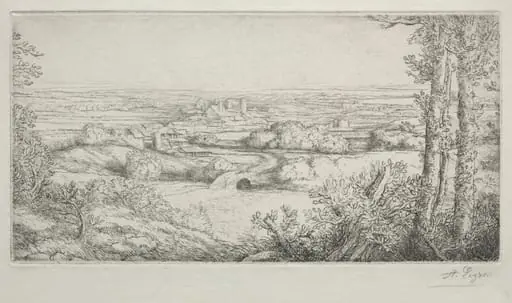 A Valley in Burgundy
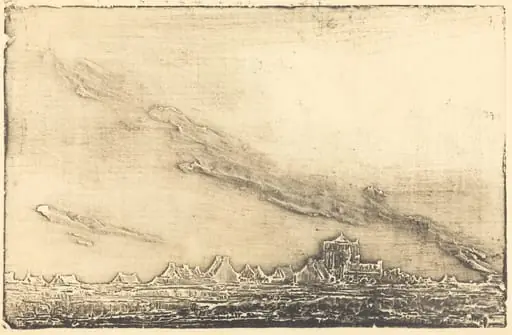 Saint Guenole
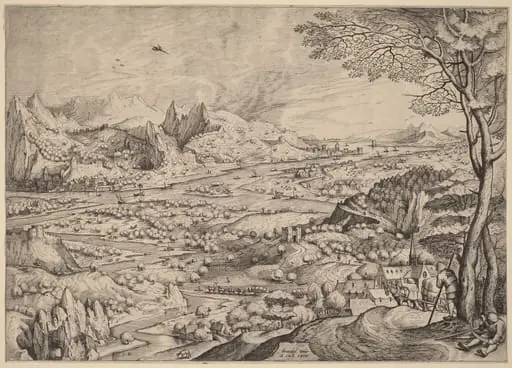 Solicitudo Rustica (Rustic Concerns)
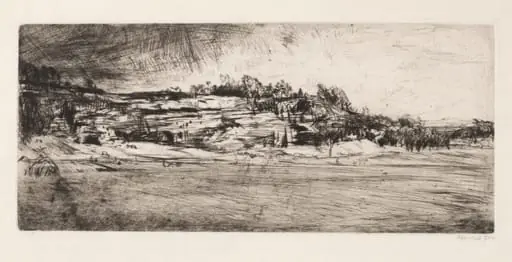 Spring at Cardross
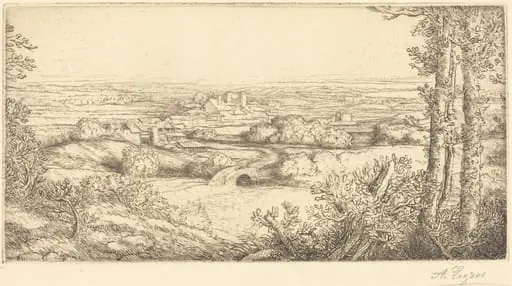 Valley in Bourgogne (Une vallee en Bourgogne)
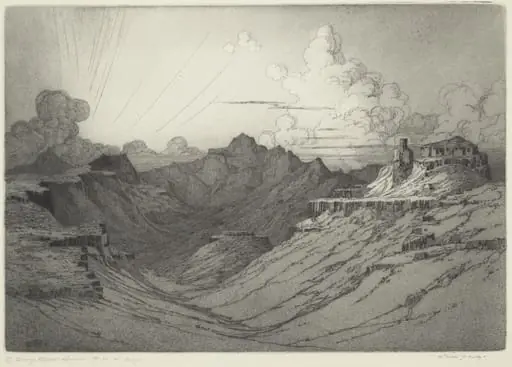 Desert Sunset
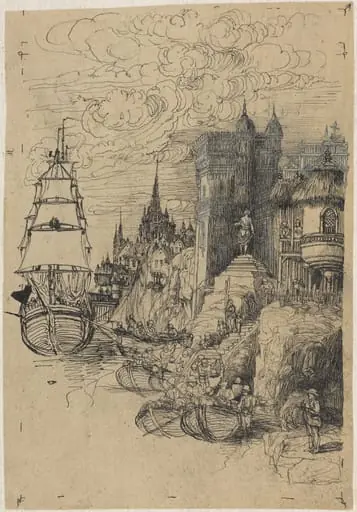 Seascape