Artwork
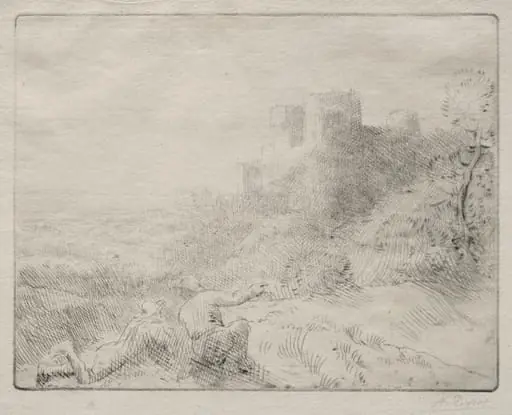
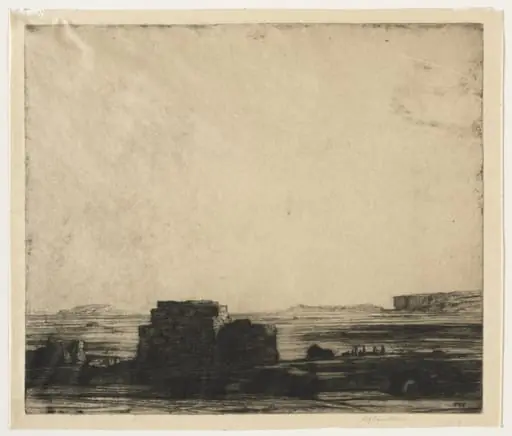
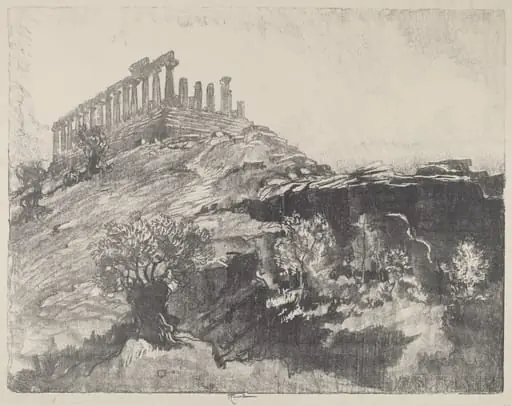
Herodias: Page 3, The citadel of Machaerus rose from the eastern side of the Dead Sea, on a peak of basalt, having the shape of a cone
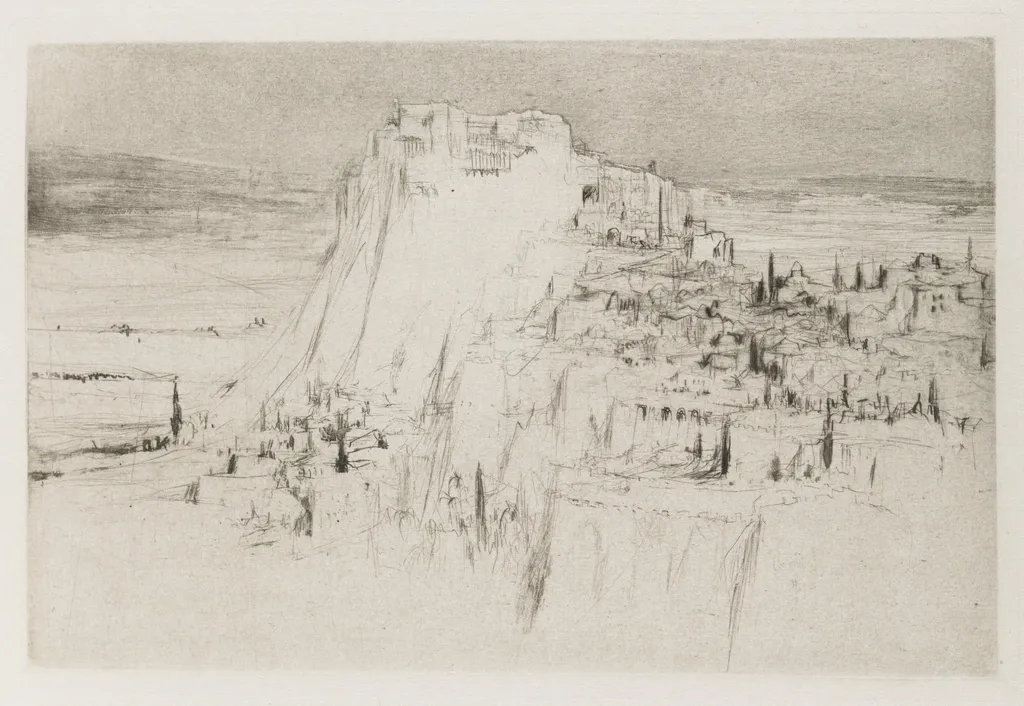
Herodias: Page 3, The citadel of Machaerus rose from the eastern side of the Dead Sea, on a peak of basalt, having the shape of a cone is a print by William Walcot. It dates from 1928 and is held in the collection of the Cleveland Museum of Art.
About this work
Overview
Herodias: Page 3 is a 1928 print by William Walcot, currently in the collection of The Cleveland Museum of Art. The work depicts a landscape with architectural elements.
Subject & Meaning
The print illustrates the citadel of Machaerus, situated on a basalt peak near the eastern shore of the Dead Sea. While the title references a specific historical location, the rendering suggests a more impressionistic, possibly remembered, interpretation rather than a precise topographical representation.
Technique & Style
Characterized by loose, quick lines, the piece conveys a sense of spontaneity, akin to informal sketchbook notation. The composition features jagged buildings on a rocky hillside, with trees on the lower slopes, all set against a softly smudged, pale background.
History & Provenance
Created in 1928 by William Walcot, the print is part of The Cleveland Museum of Art's collection, though specific details on its creation context or previous ownership are not provided here.
Context
Given its informal style, Herodias: Page 3 might reflect early 20th-century artistic tendencies towards expressive, less formal representations of historical and geographical subjects.
Legacy
Information on the direct influence or notable recognition of Herodias: Page 3 within Walcot's oeuvre or broader artistic movements is not specified in the provided details.
Own this work as a print
Artist & collection

Artist
William Walcot RE was a Russian-Scottish architect, graphic artist and etcher, notable as a architect of refined Art Nouveau in Moscow, Russia.

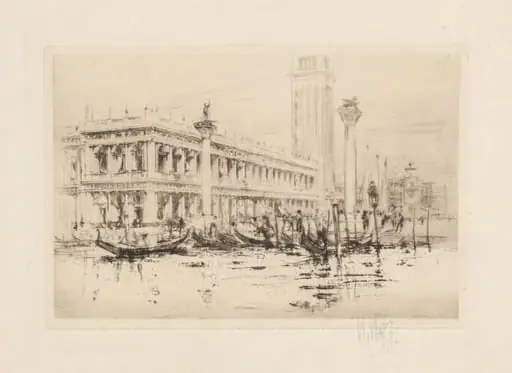 The Venice Set: The Library of St. Mark’s
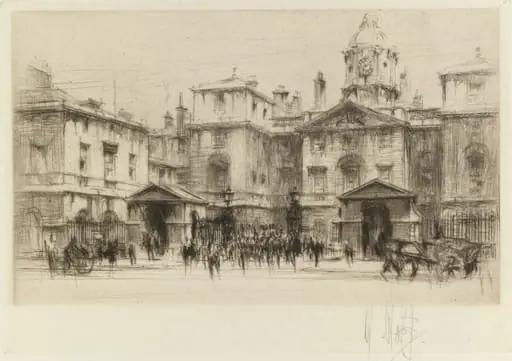 London Set: Horseguards
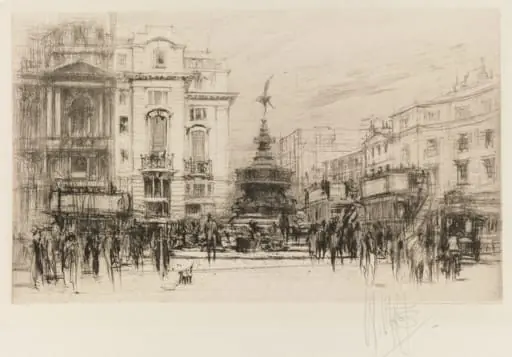 London Set: Piccadilly Circus (with Criterion Theatre)
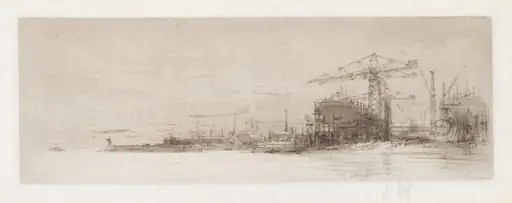 The Clyde from the series The Arteries of Great Britain
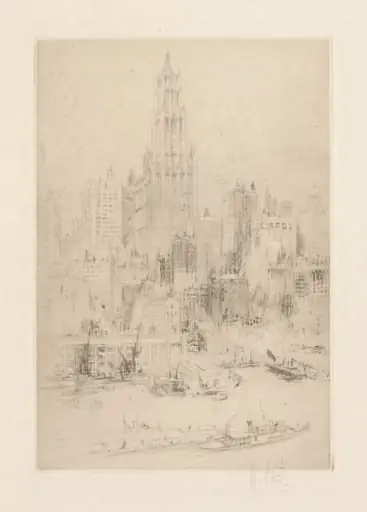 Downtown Manhattan from the East River, with the Woolworth Building
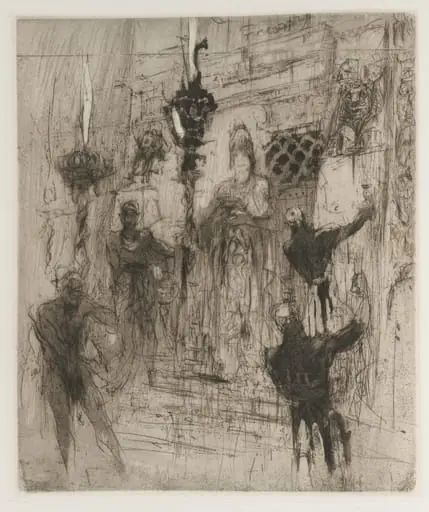 Herodias
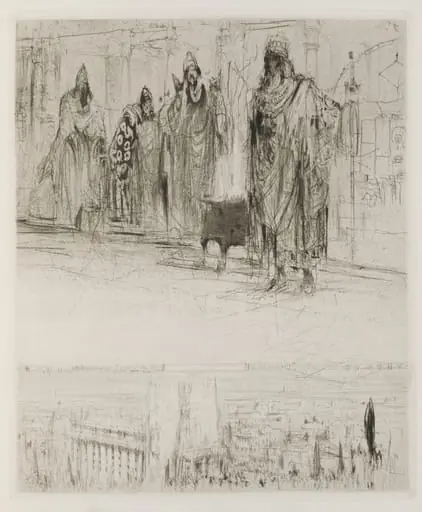 Herodias: Page 13, The tetrarch was awaited by several Galileans, the master of scribes, the chief of the land steward, the manager of the salt mines, and a Jew from Babylon commanding his troops on horse
 Forty-second Street NY