Artwork
The Cut from Culebra
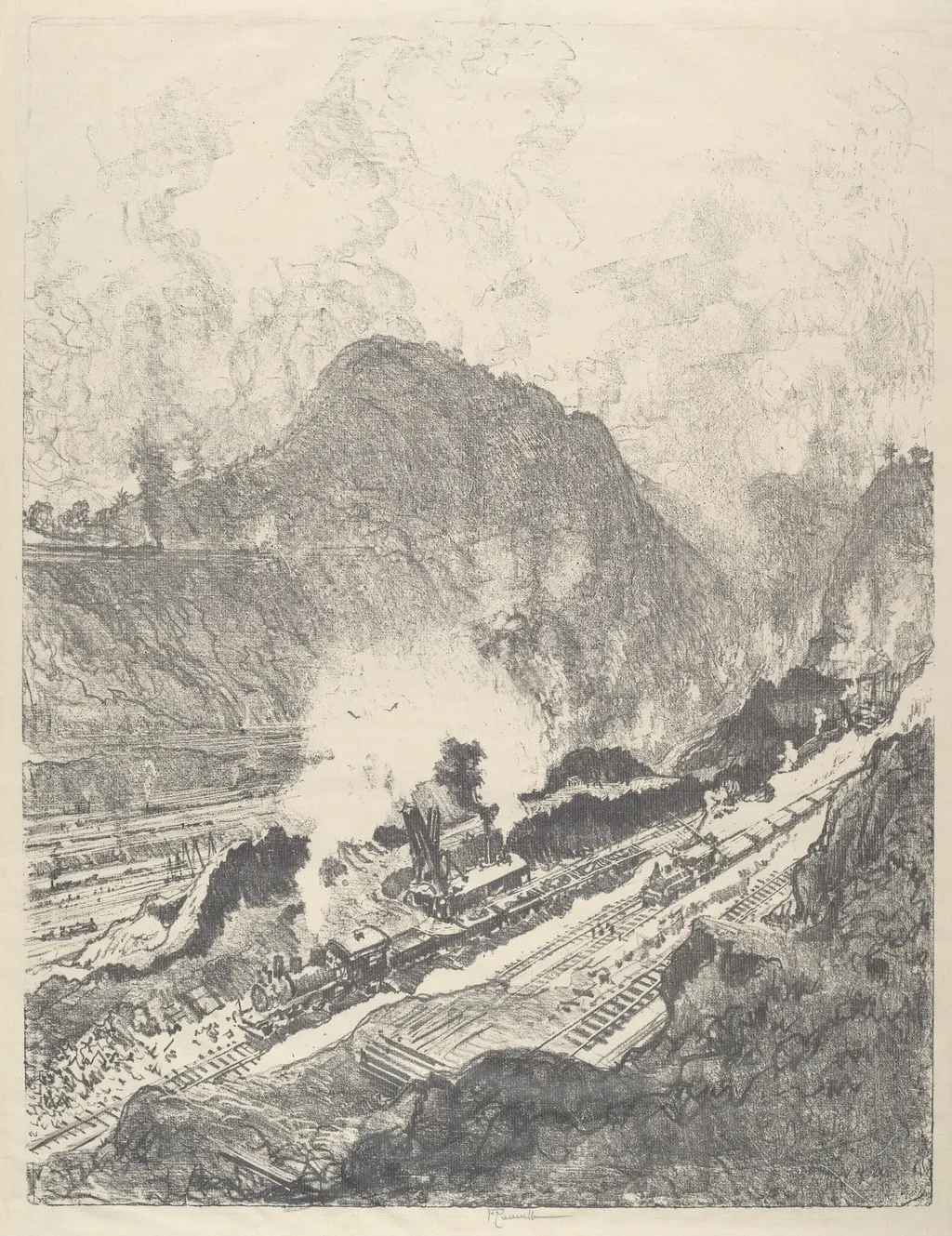
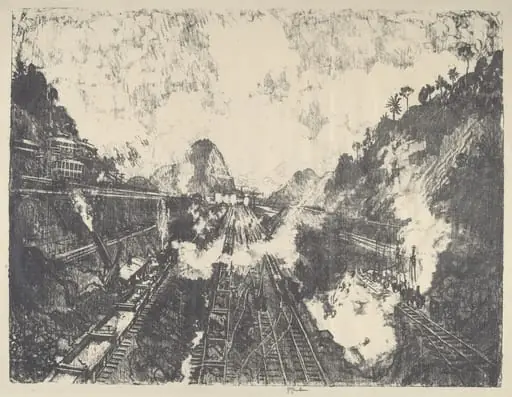
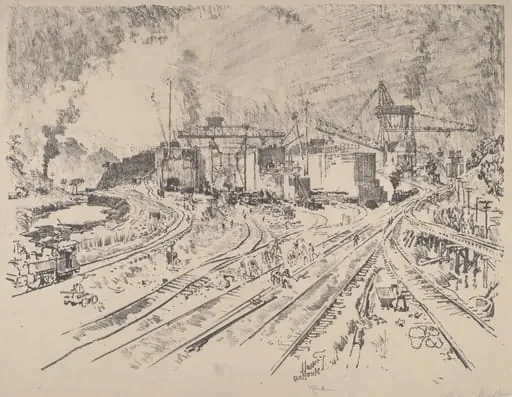
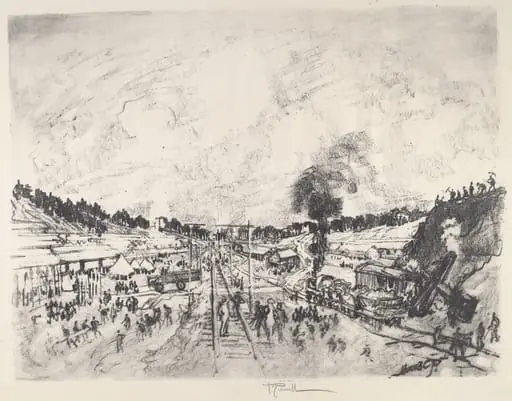
The Cut from Culebra is an ink print by Joseph Pennell. It dates from 1912 and is held in the collection of the National Gallery of Art.
About this work
Overview
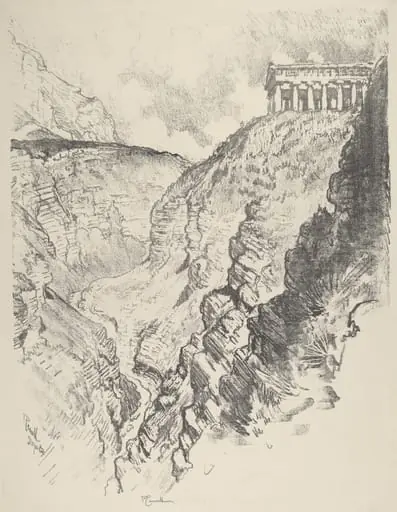
Joseph Pennell produced *The Cut from Culebra* in 1912 as a black lithograph, capturing a section of the Panama Canal construction site.
Joseph Pennell produced *The Cut from Culebra* in 1912 as a black lithograph, capturing a section of the Panama Canal construction site. Known for his precise draftsmanship and interest in industrial landscapes, Pennell rendered the scene with minimal tonal variation, relying on line and contrast to convey scale and structure. The work reflects his broader focus on human intervention in natural terrain, a recurring theme in his oeuvre.
Subject & Meaning
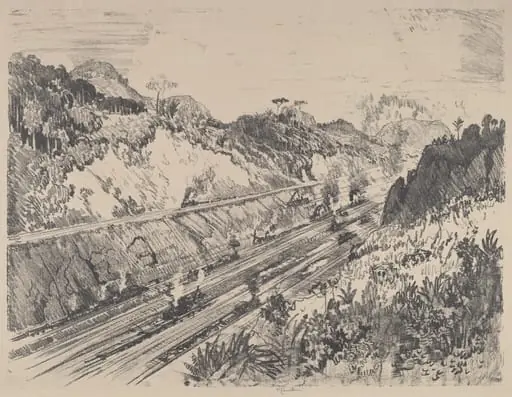
The image portrays a deep, narrow excavation carved through rugged terrain, with railway tracks threading through the canyon. The tiny train emphasizes the monumental scale of the earthmoving effort. Rather than celebrating technological triumph, the print conveys the raw confrontation between human labor and geological force, suggesting awe rather than conquest.
Technique & Style
Pennell employed lithography to achieve sharp, energetic lines that mimic sketchbook drawings. The monochromatic palette heightens the contrast between the dark rock faces and the thin, winding tracks. His loose, rapid strokes suggest movement and immediacy, avoiding polished finish in favor of expressive urgency, a technique influenced by Whistler’s tonal sensitivity and Eakins’ observational rigor.
History & Provenance
Created during Pennell’s travels in Central America, the print documents the Panama Canal’s construction phase. Though not commissioned, it aligns with his practice of recording major engineering projects firsthand. The work entered public collections shortly after its production, valued for its documentary clarity and artistic execution within early 20th-century American printmaking.
Context
At the time, the Panama Canal represented a global engineering milestone, drawing international attention. Pennell, already known for his industrial subjects, joined a wave of artists and photographers documenting the project. His approach differed from official imagery by emphasizing topography and labor over machinery, offering a more visceral, less celebratory perspective.
Legacy
The print remains a significant example of American lithography’s capacity to merge reportage with aesthetic restraint. Pennell’s depiction of infrastructure as a sculptural intervention in nature influenced later generations of printmakers interested in the relationship between industry and landscape, though his work remains less widely known than his European contemporaries.
Artist & collection
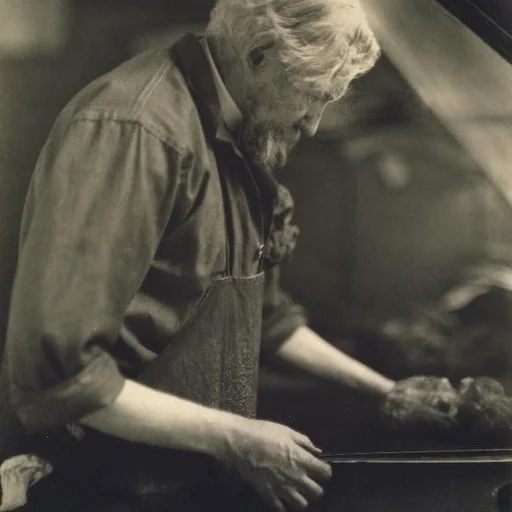
Artist
Joseph Pennell (July 4, 1857 – April 23, 1926) was an American draftsman, etcher, lithographer, and illustrator for books and magazines.