Artwork
The Temple
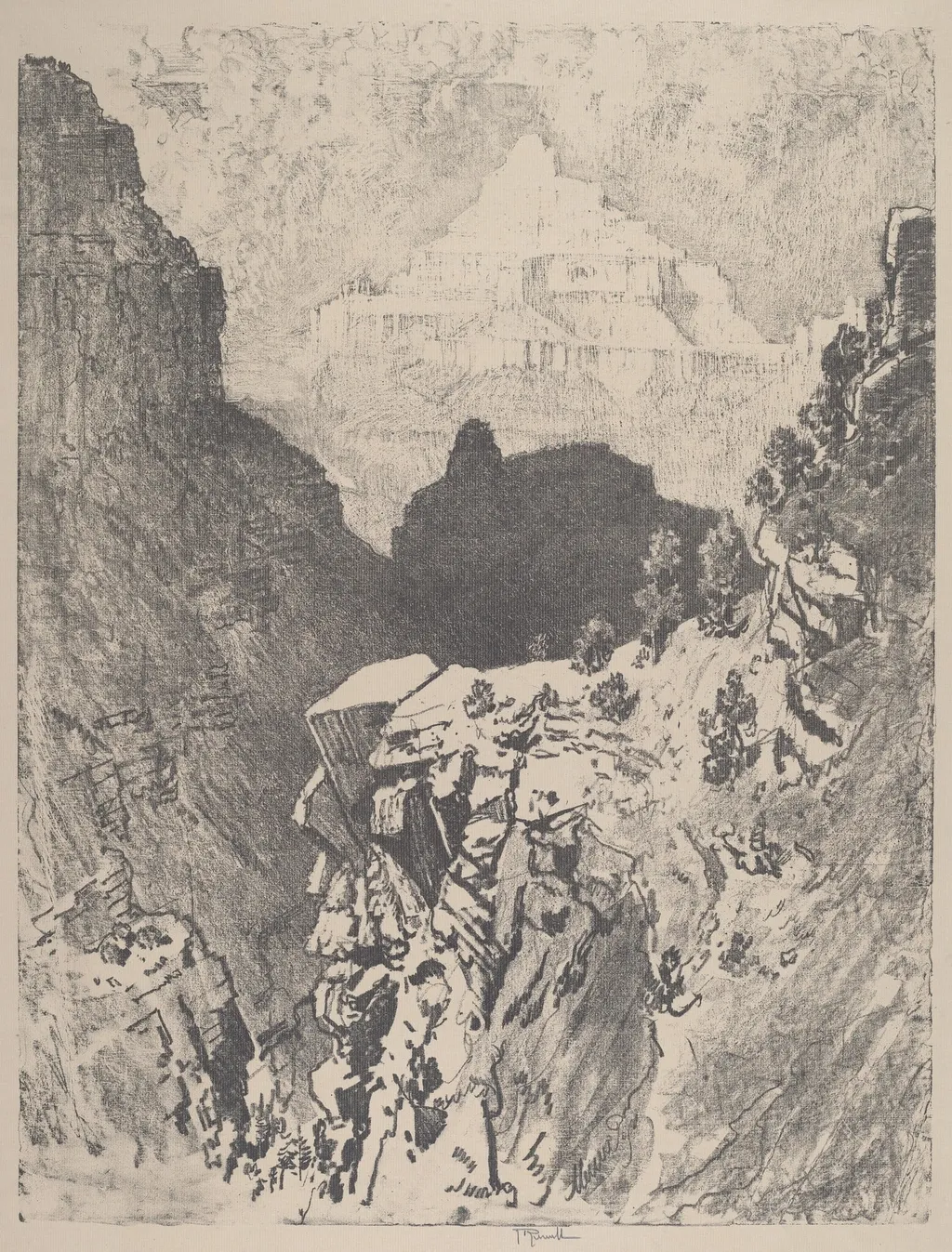
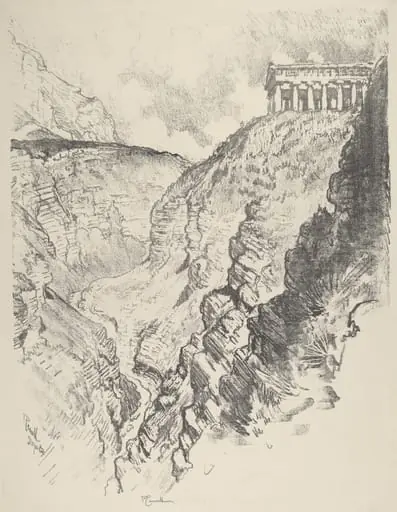
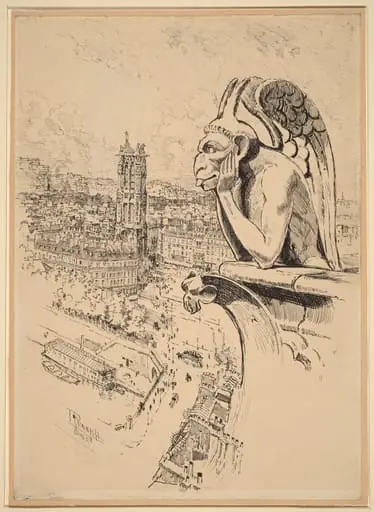
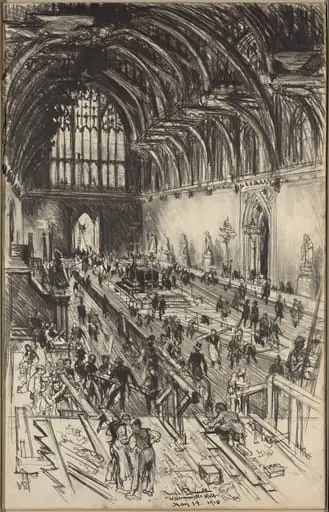
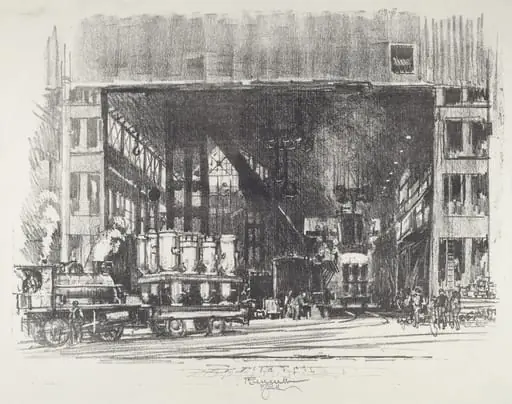
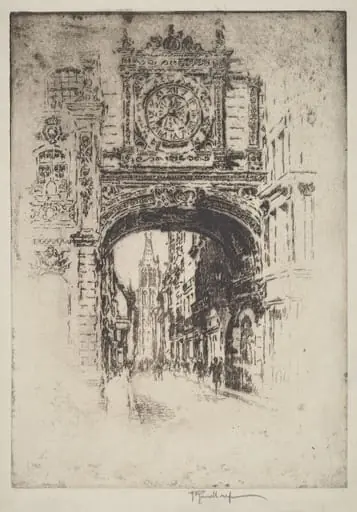
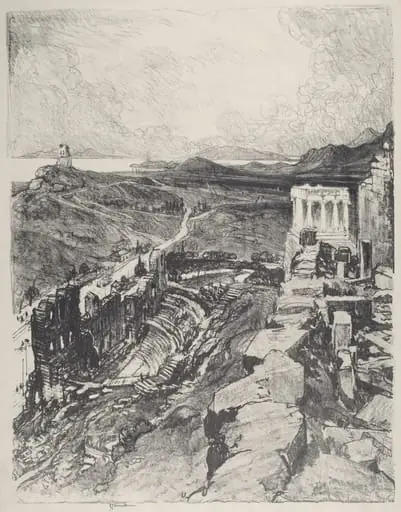
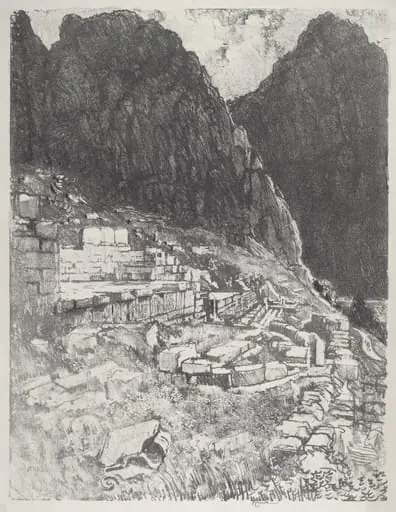
The Temple is an ink print by Joseph Pennell. It dates from 1912 and is held in the collection of the National Gallery of Art.
About this work
Overview
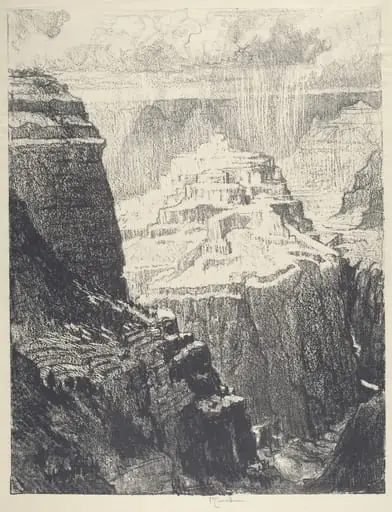
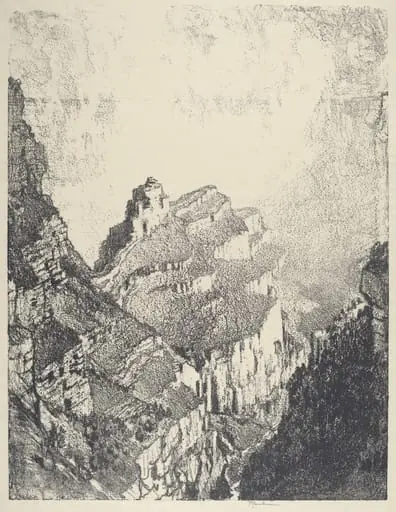
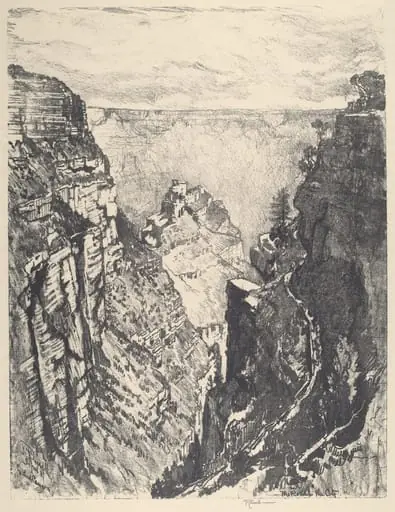
Created in 1912, *The Temple* is a lithographic print by American artist Joseph Pennell. Known for his precise draftsmanship, Pennell employed the medium to capture architectural forms, rendering the composition with a stark, linear quality that emphasizes structural contrast and spatial depth.
Subject & Meaning
The image presents a rugged, mountainous terrain marked by steep cliffs and isolated trees. The stark lines and deep shadows convey a sense of dramatic isolation, inviting viewers to contemplate the interplay between natural ruggedness and the human impulse to delineate and record such scenes.
Technique & Style
Pennell executed the work using traditional lithography, drawing directly onto a flat stone surface. This process preserves the immediacy of his handwork, allowing the uneven, sketch‑like strokes and textured shadows to remain visible in the final print, reinforcing the work’s raw, observational character.
History & Provenance
Pennell, a former student of James Lambdin and Thomas Eakins, produced *The Temple* during a period when he was traveling extensively in Europe. The piece reflects his ongoing interest in architectural and urban subjects, a focus that defined much of his output throughout his career.
Context
The lithograph aligns with early twentieth‑century trends that favored direct, documentary approaches to landscape and architecture. Influenced by James McNeill Whistler’s tonal sensibilities, Pennell’s work bridges the precision of academic training with a more expressive, atmospheric treatment of place.
Artist & collection

Artist
Joseph Pennell (July 4, 1857 – April 23, 1926) was an American draftsman, etcher, lithographer, and illustrator for books and magazines.