Artwork
Intermezzo: Moonlit Night (Opus IV, 5)
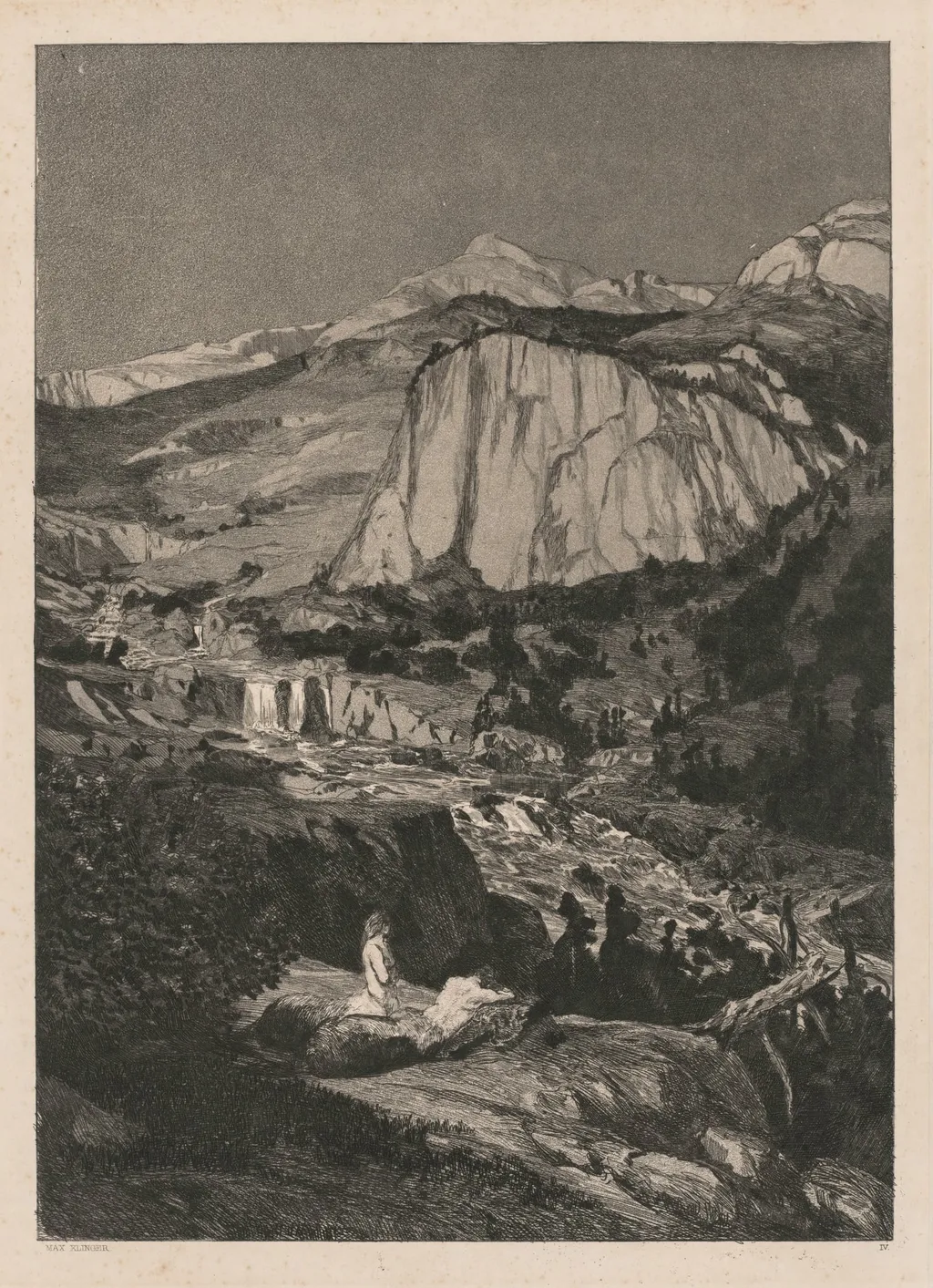
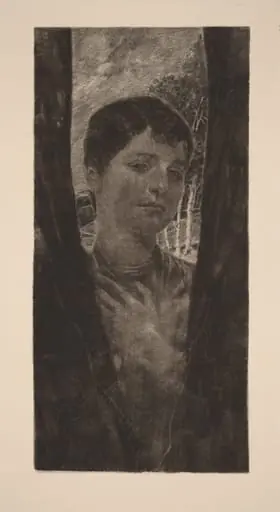
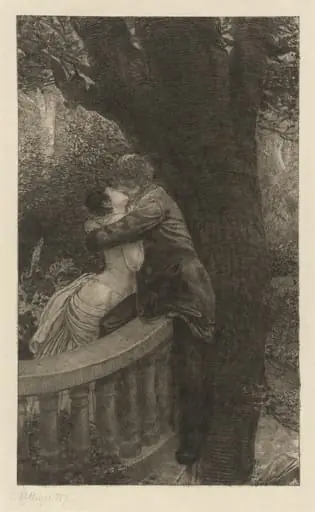
Intermezzo: Moonlit Night (Opus IV, 5) is a print by the Impressionist artist Max Klinger. It dates from 1881 and is held in the collection of the Cleveland Museum of Art.
About this work
Overview
Executed in etching and aquatint, it belongs to Klinger’s broader engagement with printmaking as a medium for introspective narrative.
Created in 1881 by German artist Max Klinger, *Intermezzo: Moonlit Night (Opus IV, 5)* is a print from a series exploring emotional and psychological states through symbolic imagery. Executed in etching and aquatint, it belongs to Klinger’s broader engagement with printmaking as a medium for introspective narrative. The work reflects his interest in blending visual art with literary and musical structures, positioning the image as a visual interlude rather than a literal scene.
Subject & Meaning
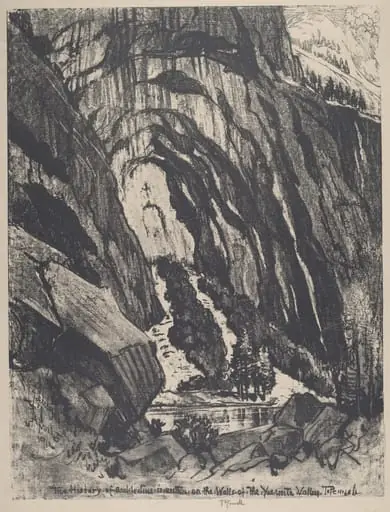
A solitary woman sits by a river beneath an imposing cliff, her posture suggesting contemplation or melancholy. Her small scale against the vast, dark landscape emphasizes isolation and inner stillness. The moonlit water and textured rocks evoke a mood beyond the literal—neither narrative nor allegorical, but atmospheric. Klinger invites interpretation through emotional resonance rather than clear symbolism, aligning with Symbolist ideals that favored suggestion over declaration.
Technique & Style
Klinger employed etching and aquatint to achieve deep, velvety shadows and subtle gradations of light. The rough, incised lines of the cliff face contrast with the smooth, reflective sheen of the water, enhancing the sense of natural grandeur. Chiaroscuro is used not for dramatic contrast but to sustain a quiet, nocturnal tension. The woman’s form is rendered with minimal detail, reinforcing her integration into the landscape rather than standing apart from it.
History & Provenance
The print was produced as part of Klinger’s *Opus IV*, a suite of prints published in 1881 that explored themes of solitude, dreams, and the sublime. It was circulated among collectors and artists in Germany and Austria, influencing later Symbolist and Jugendstil practitioners. While specific early ownership records are sparse, the work entered major museum collections in the 20th century as interest in Klinger’s graphic work grew beyond his sculptural reputation.
Context
Emerging in the early 1880s, the print coincided with a broader European shift away from realism toward introspective, mood-driven art. Klinger’s engagement with Symbolism intersected with contemporaneous movements like the Vienna Secession and Jugendstil, which valued emotional depth and decorative form. His prints were often discussed alongside literature and music, reflecting a belief in the unity of the arts—a concept central to fin-de-siècle aesthetic theory.
Legacy
Klinger’s *Intermezzo* contributed to the legitimization of printmaking as a vehicle for complex psychological expression. Its influence extended to artists exploring inner states through tonal landscapes, particularly in Central Europe. Though less widely known than his sculptures, this print remains a touchstone in studies of late 19th-century graphic art, exemplifying how quiet, atmospheric imagery could convey profound emotional weight without narrative clarity.
Artist & collection
Artist
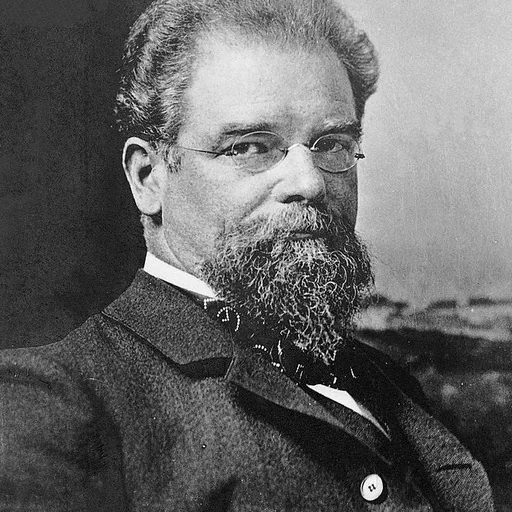
Max Klinger (18 February 1857 – 5 July 1920) was a German artist who produced significant work in painting, sculpture, prints and graphics, as well as writing a treatise articulating his ideas on art and the role of…