Artwork
Man Polishing a Boot
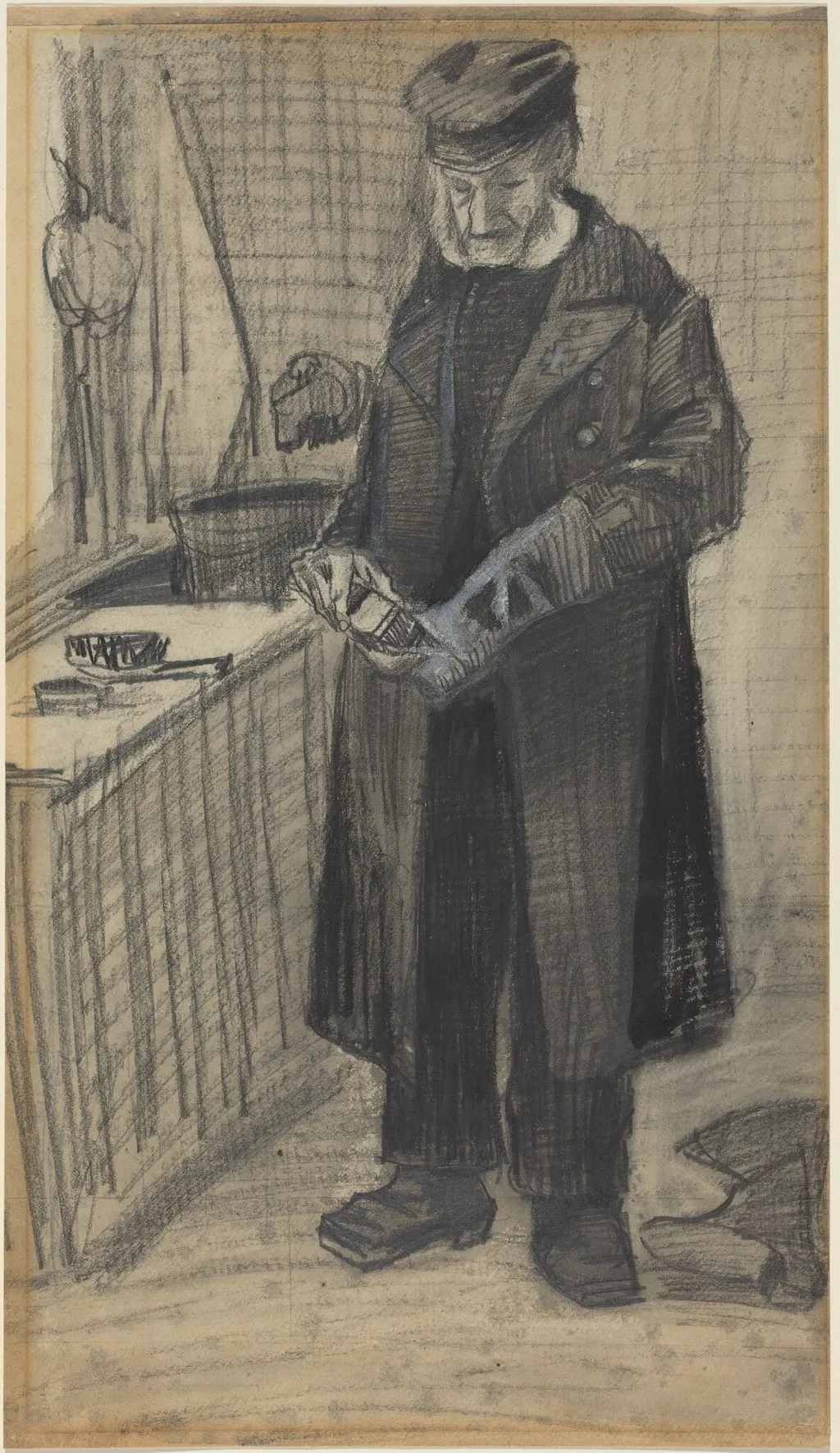
Man Polishing a Boot is a chalk drawing by the Impressionist artist Vincent van Gogh. It dates from 1882 and is held in the collection of the National Gallery of Art.
About this work
Overview
Created in 1882, this drawing by Vincent van Gogh records a solitary figure polishing a boot. Executed on wove paper, the work combines graphite, gray and black wash, and touches of white watercolor. It belongs to the artist’s early period, when he was exploring drawing as a means of study before turning to oil.
Subject & Meaning
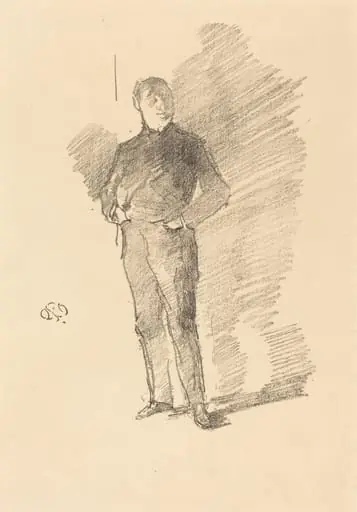
The composition shows a man in dark clothing—a long coat and hat—standing before a window in an interior that resembles a workshop or studio. He is absorbed in the mundane task of shining a boot, a scene that reflects van Gogh’s interest in ordinary labor and the quiet dignity of everyday work.
Technique & Style
Van Gogh employed a light graphite grid to square the paper, providing structural guidance for the drawing. The gray and black washes model form and volume, while selective white watercolor highlights the polished surface of the boot, creating contrast and a sense of material texture.
History & Provenance
The piece is part of van Gogh’s early Dutch oeuvre, produced during his formative years of study and experimentation. It predates his later, more celebrated oil paintings and illustrates the artist’s developing approach to realism and the observation of daily life.
Artist & collection
Artist
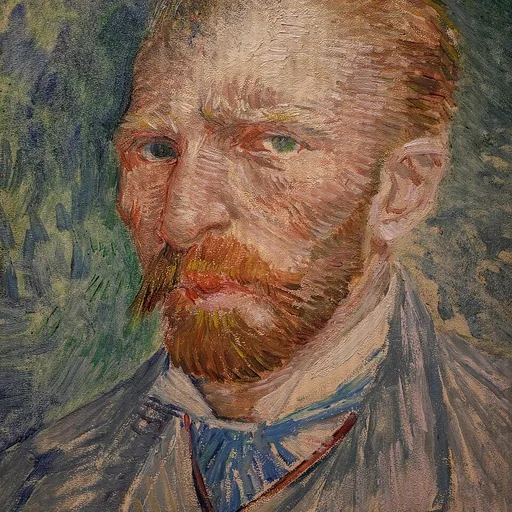
Vincent Willem van Gogh was a Dutch Post-Impressionist painter who is among the most famous and influential figures in the history of Western art.