Artwork
Portfolio IX, Plate 317: The Clam Digger
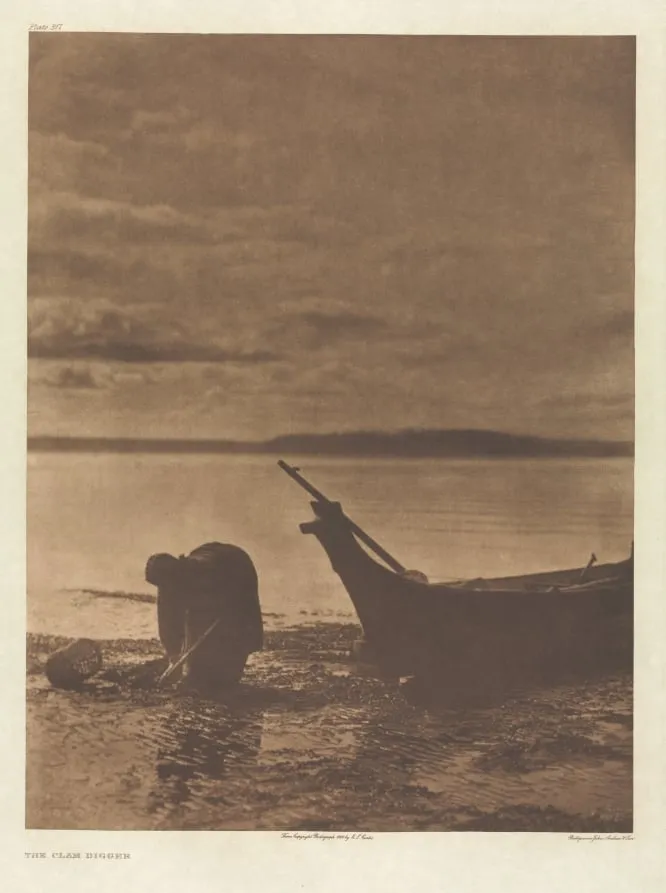
Portfolio IX, Plate 317: The Clam Digger is a work on paper by Edward S. Curtis. It dates from 1900 and is held in the collection of the Cleveland Museum of Art. Created in 1900 by photographer Edward S.
About this work
Overview
Created in 1900 by photographer Edward S. Curtis, this image is catalogued as Plate 317 in his Portfolio IX series. The work is part of the Cleveland Museum of Art’s collection and depicts a solitary figure engaged in a shoreline activity, rendered in muted brown tones that give the scene a quiet, atmospheric quality.
Subject & Meaning
The central figure, bent over the wet sand at the water’s edge, is shown extracting clams, a task that suggests a modest, labor‑intensive livelihood. The presence of a small boat on the shore and a hazy horizon underscores the remote, coastal environment in which such work occurs, inviting reflection on everyday subsistence in a maritime setting.
Technique & Style
Curtis employed a black‑and‑white photographic process, later printed with a sepia tonality that softens contrasts and unifies the composition in earth tones. The composition balances the figure’s forward motion with the expansive background, using depth of field to keep both foreground activity and distant landscape in clear view.
History & Provenance
The photograph was produced as part of Curtis’s extensive early‑twentieth‑century portfolio series, intended to document varied aspects of American life. It entered the Cleveland Museum of Art’s holdings through acquisition (date unspecified), where it remains an example of Curtis’s documentary approach to ordinary scenes.
Context
At the turn of the twentieth century, coastal economies relied heavily on shellfishing, and images like this provide visual evidence of such work practices. Curtis’s broader oeuvre often focused on indigenous peoples, making this depiction of a non‑tribal labor scene a notable departure within his body of work.
Artist & collection

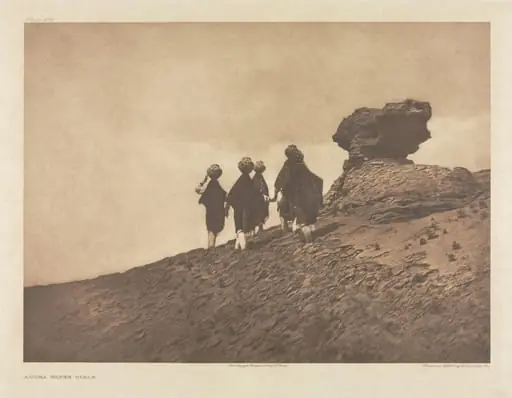 Portfolio XVI, Plate 573: Acoma Water Girls
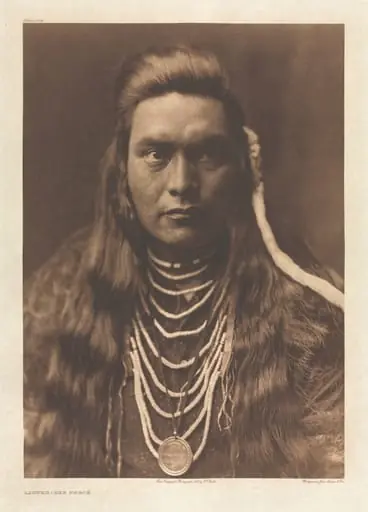 Portfolio VIII, Plate 264: Lawyer - Nez Percé
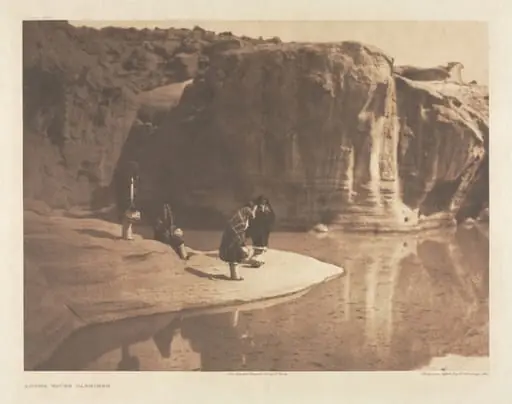 Portfolio XVI, Plate 568: Acoma Water Carriers
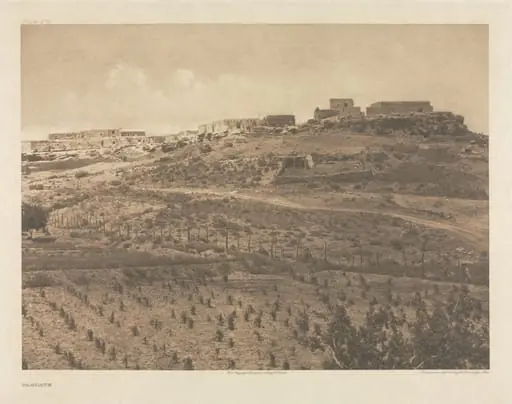 Portfolio XVI, Plate 574: Paguate
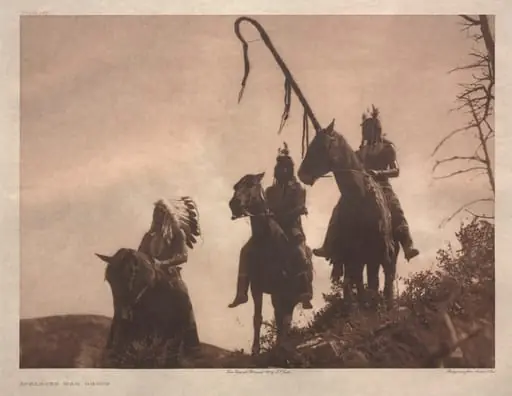 Portfolio IV, Plate 147: Apsaroke War Group
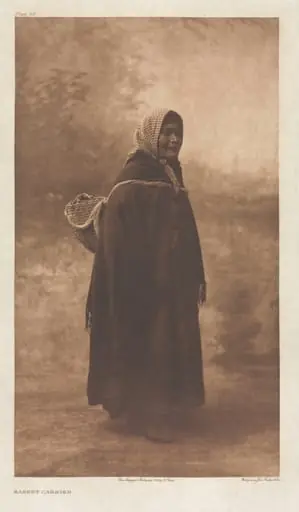 Portfolio IX, Plate 311: Basket Carrier
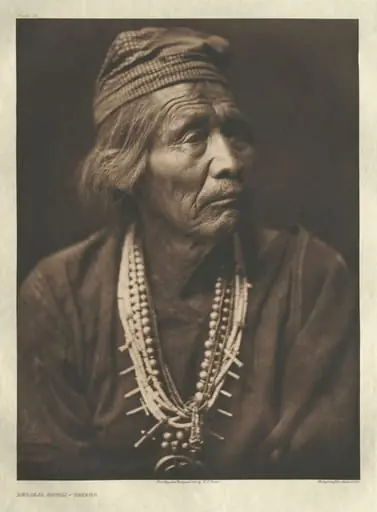 Portfolio I, Plate 31: Nesjája Hatáli-Navaho
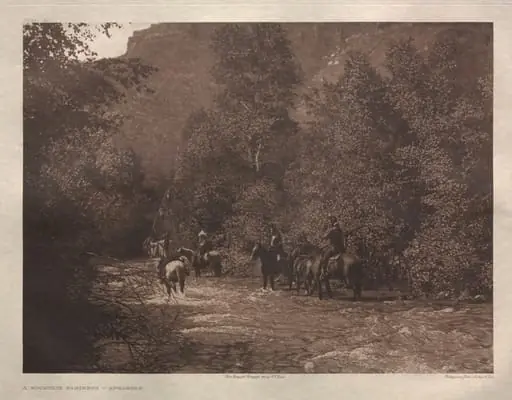 Portfolio IV, Plate 140: A Mountain Fastness--Apsaroke
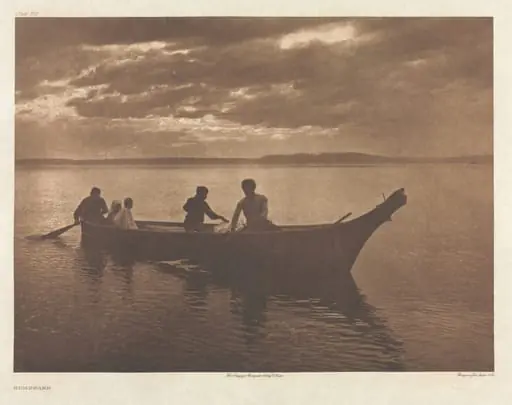 Portfolio IX, Plate 318: Homeward
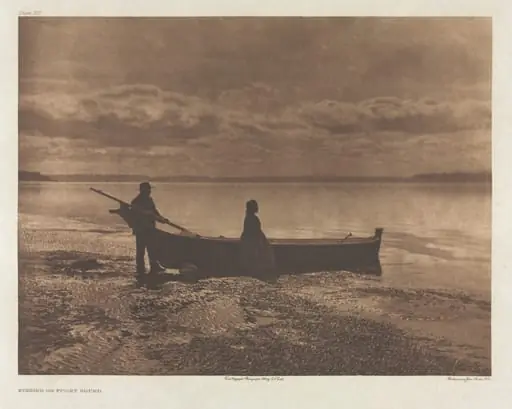 Portfolio IX, Plate 312: Evening on Puget Sound
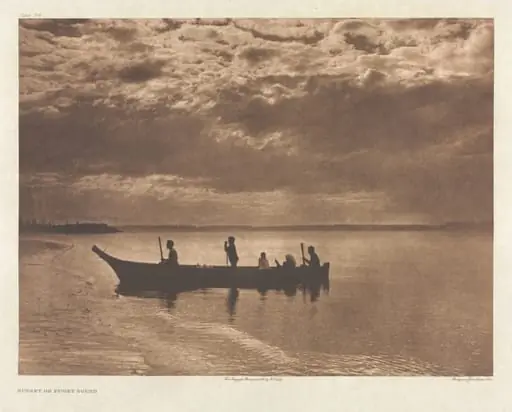 Portfolio IX, Plate 316: Sunset on Puget Sound
 Portfolio XVII, Plate 583: On the Rio Grande - San Ildefonso
 Rowing Home the Schoof-Stuff
 Portfolio II, Plate 75: Getting Water-Havasupai
 Taking Up the Eel Net
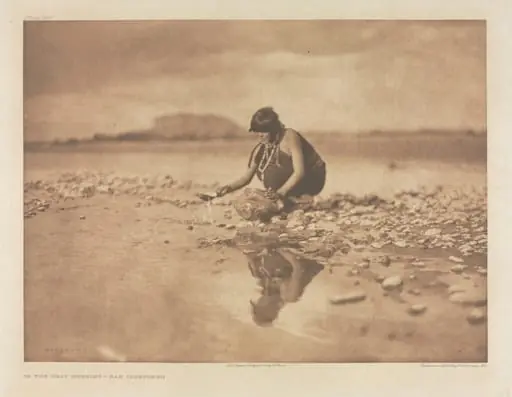 Portfolio XVII, Plate 591: In the Gray Morning - San Ildefonso
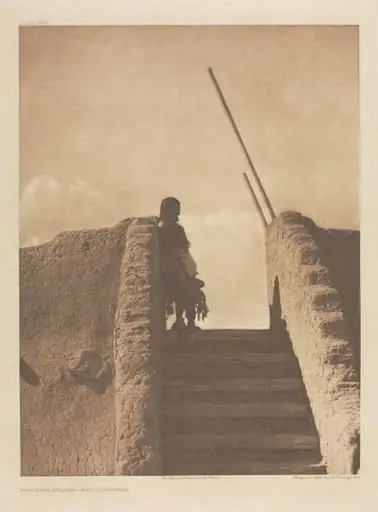 Portfolio XVII, Plate 585: The Fruit Gatherer - San Ildefonso
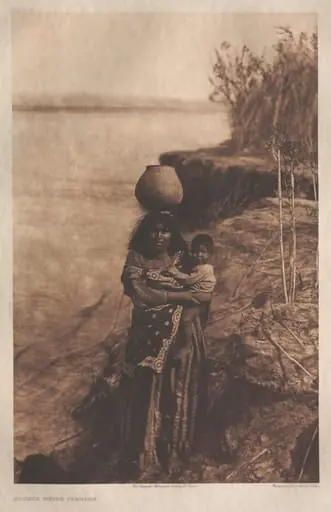 Portfolio II, Plate 58: Mohave Water Carrier