Artwork
Mercury Departing from Antwerp. Fragment of a larger painting
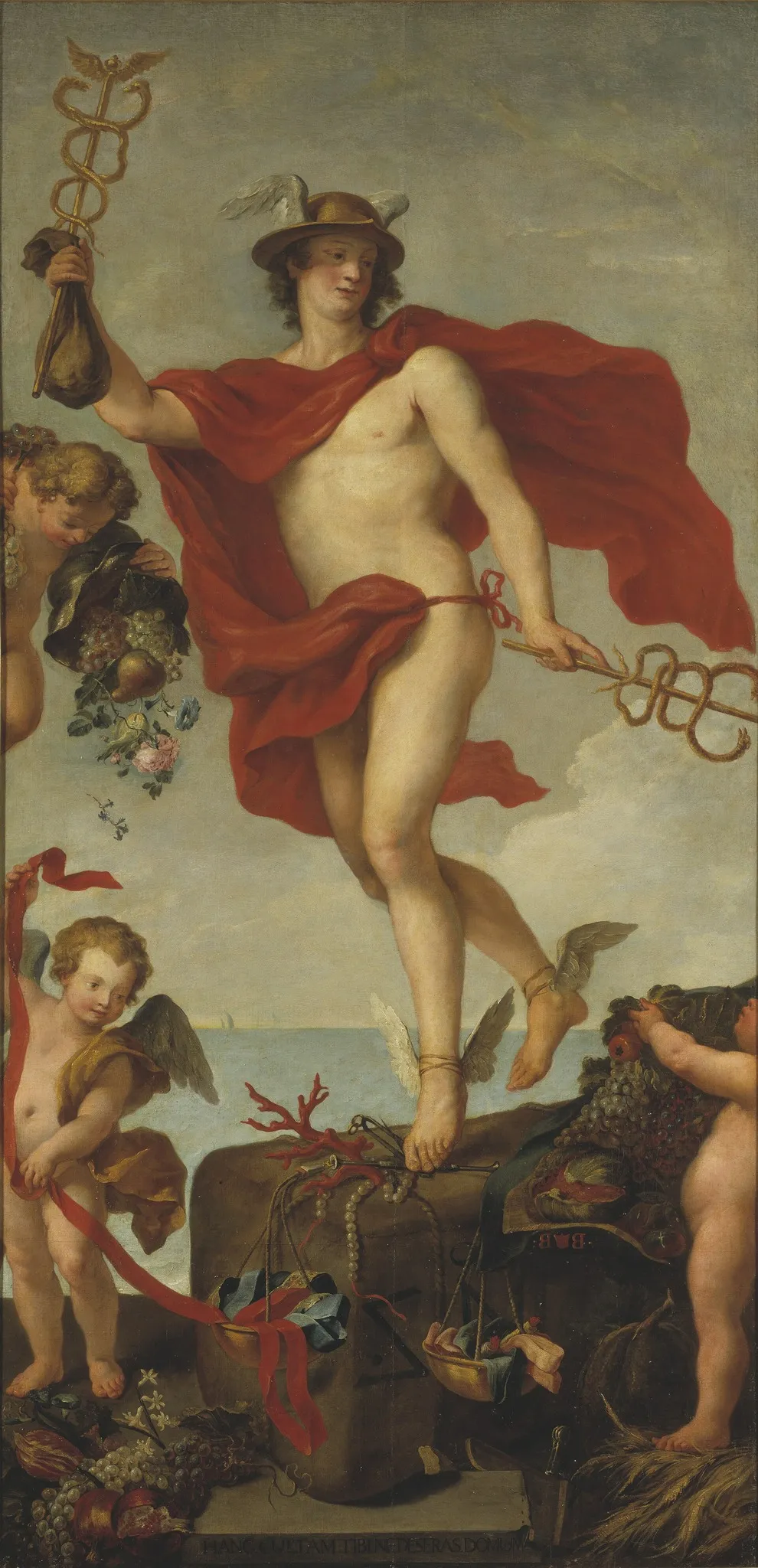
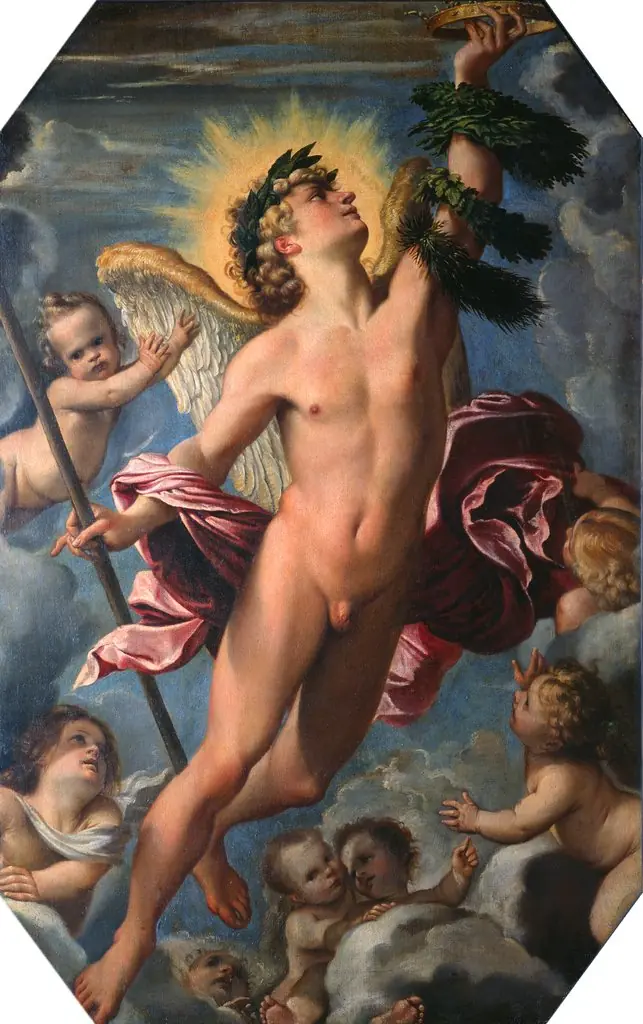
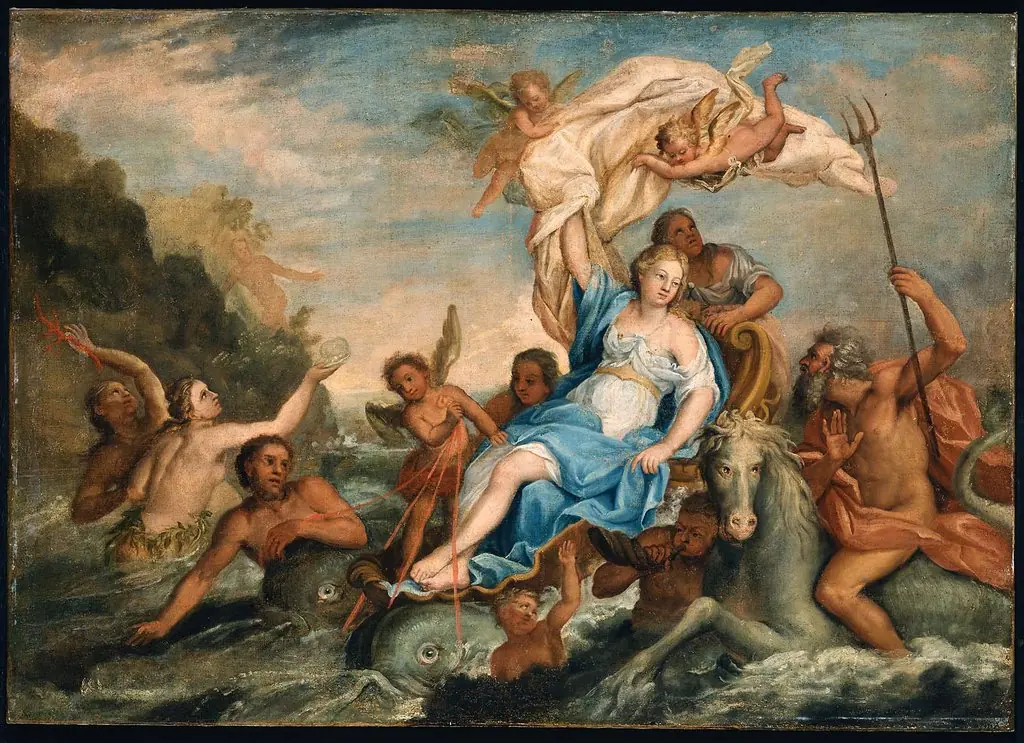
Mercury Departing from Antwerp. Fragment of a larger painting is an oil painting by the Flemish Baroque painting artist Peter Paul Rubens. It is held in the collection of the Nationalmuseum.
About this work
Overview
Though only a portion survives, it retains the dynamism and rich detail characteristic of Rubens’s mature style.
This fragment comes from a larger composition by Peter Paul Rubens, painted around 1617, not 1667. It depicts Mercury, the Roman messenger god, in motion as he prepares to depart. The scene is part of a series commissioned to honor Antwerp’s civic identity and commercial prosperity. Though only a portion survives, it retains the dynamism and rich detail characteristic of Rubens’s mature style. The work is now held in the Nationalmuseum in Stockholm.
Subject & Meaning
Mercury, identified by his winged hat and caduceus, symbolizes communication, trade, and divine guidance. Surrounding him are allegorical elements—cherubs, fruit, and flowers—that evoke abundance and the flourishing of Antwerp’s economy. The red ribbon may allude to civic pride or the flow of commerce. The scene functions as a civic allegory, linking mythological imagery to the city’s identity as a thriving commercial hub during the early 17th century.
Technique & Style
Rubens employs vigorous brushwork and layered glazes to render texture and movement, particularly in the flowing cape and drapery. Chiaroscuro enhances the three-dimensionality of the figure, casting strong contrasts between light and shadow to heighten drama. The composition is diagonally dynamic, with figures and objects arranged to guide the eye toward Mercury’s upward motion. His palette is rich but restrained, emphasizing warm reds, earth tones, and soft sky hues.
History & Provenance
The painting was originally part of a larger decorative cycle commissioned for Antwerp’s town hall, celebrating the city’s role in global trade. Over time, the full work was dismantled, and this fragment was separated. It entered the Nationalmuseum’s collection in the 19th century, having passed through private European collections. Its survival as a standalone piece offers insight into the original scale and intent of Rubens’s civic commissions.
Context
Created during the height of the Counter-Reformation, the work reflects how Catholic cities like Antwerp used art to assert cultural and economic authority. Rubens, deeply engaged in both diplomacy and art, fused classical mythology with contemporary civic pride. His ability to merge religious, mythological, and commercial themes made his work uniquely suited to the political and spiritual ambitions of the period.
Legacy
Though only a fragment remains, this work exemplifies Rubens’s influence on Baroque allegorical painting across Europe. His synthesis of classical form, emotional intensity, and civic symbolism became a model for later artists. The survival of this piece allows scholars to reconstruct the broader narrative of his Antwerp commissions and understand how art functioned as public propaganda in early modern Europe.
Artist & collection
Artist
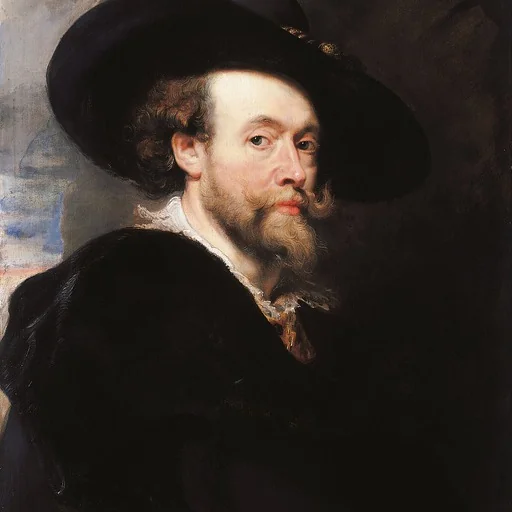
Sir Peter Paul Rubens ( ROO-bənz; Dutch: ; 28 June 1577 – 30 May 1640) was a Flemish artist and diplomat.