Artwork
The River Wye at Tintern Abbey
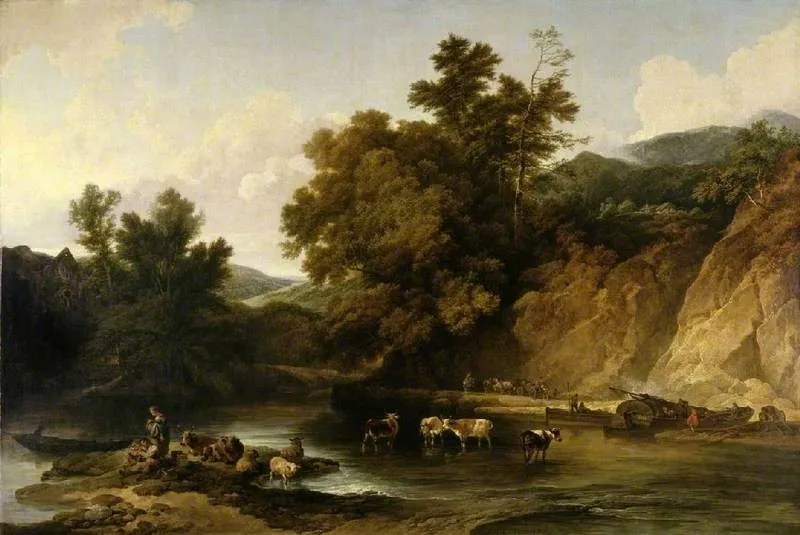
The River Wye at Tintern Abbey is an oil painting by Philip James de Loutherbourg. It dates from 1805 and is held in the collection of the Fitzwilliam Museum.
About this work
Overview
Painted in 1805 by Philip James de Loutherbourg, this oil on canvas depicts a quiet stretch of the River Wye near Tintern Abbey in Monmouthshire.
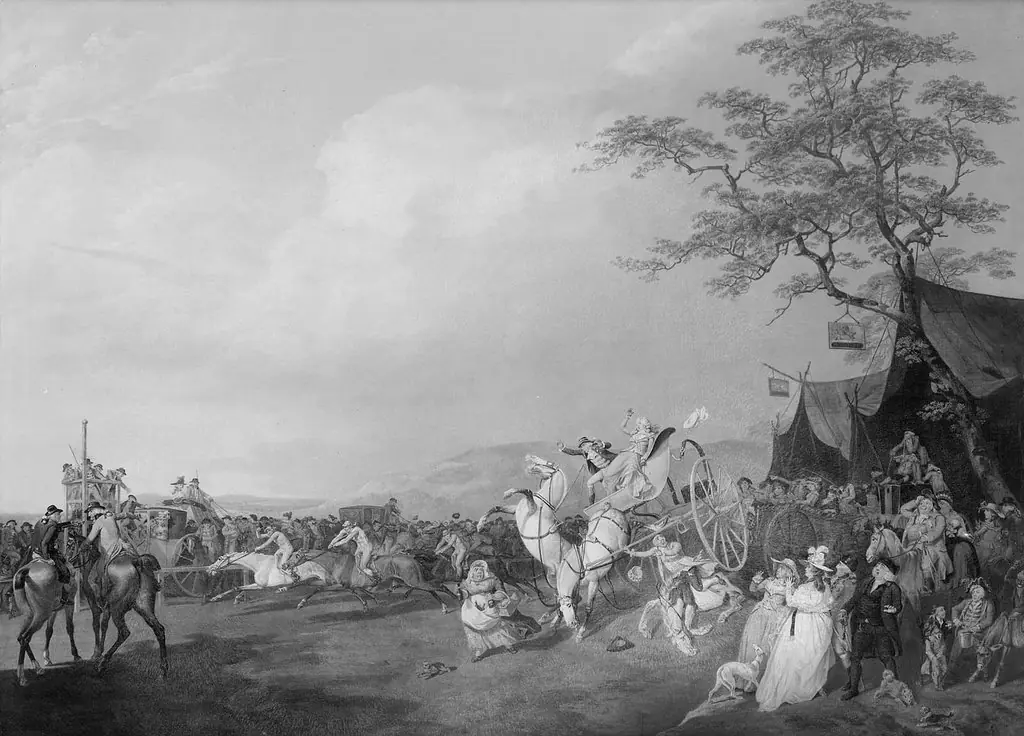
Painted in 1805 by Philip James de Loutherbourg, this oil on canvas depicts a quiet stretch of the River Wye near Tintern Abbey in Monmouthshire. The work was exhibited at the Royal Academy’s Summer Exhibition in 1806 alongside another landscape, The Evening Coach. It entered the Fitzwilliam Museum’s collection in 1958 and remains part of its permanent holdings, offering a quiet testament to early 19th-century British landscape sensibilities.
Subject & Meaning
The scene captures the River Wye in a tranquil moment, with livestock grazing along its banks and distant figures suggesting human presence without intrusion. The ruined abbey, though not central, anchors the composition in historical memory. The setting aligns with Romantic-era fascination with nature and decay, echoing the contemplative tone of Wordsworth’s poetry, though the painting avoids direct narrative in favor of atmospheric stillness.
Technique & Style
De Loutherbourg employs chiaroscuro to model the landscape with subtle gradations of light and shadow, lending depth to the rolling hills and dense foliage. His brushwork is precise yet unobtrusive, favoring naturalistic rendering over dramatic flourish. The composition is carefully balanced, with the river guiding the eye through the scene, while the placement of animals and figures introduces scale and quiet life without disrupting the serenity.
History & Provenance
The painting was first shown publicly in 1806 at Somerset House during the Royal Academy’s annual exhibition. After remaining in private hands for over a century, it was acquired by the Fitzwilliam Museum in Cambridge in 1958. Its journey from exhibition to institutional collection reflects shifting attitudes toward landscape painting, from fashionable display to scholarly preservation in the 20th century.
Context
Tintern Abbey was a well-known destination for Romantic travelers drawn to its ruins and surrounding countryside. De Loutherbourg’s depiction aligns with a broader cultural interest in the Wye Valley, popularized by poets like Wordsworth and artists such as Turner. Yet unlike more overtly emotional interpretations, this work presents the landscape with restraint, emphasizing observation over sentiment.
Legacy
While not among de Loutherbourg’s most widely recognized works, the painting contributes to understanding his later landscape output and his role in British art beyond his theatrical designs. Its quiet precision and sensitivity to natural light distinguish it within the context of early 19th-century British painting, offering a measured counterpoint to more dramatic Romantic visions.
Artist & collection
Artist
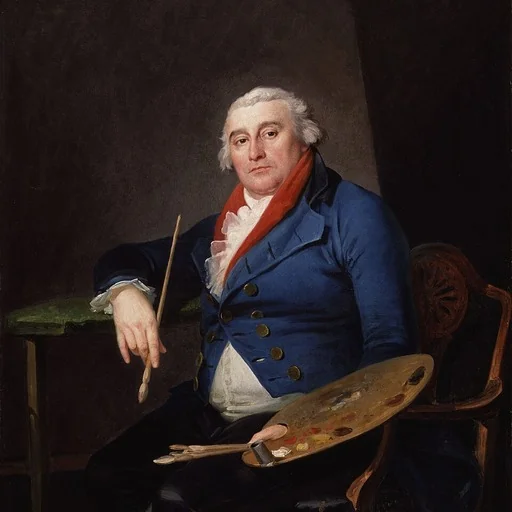
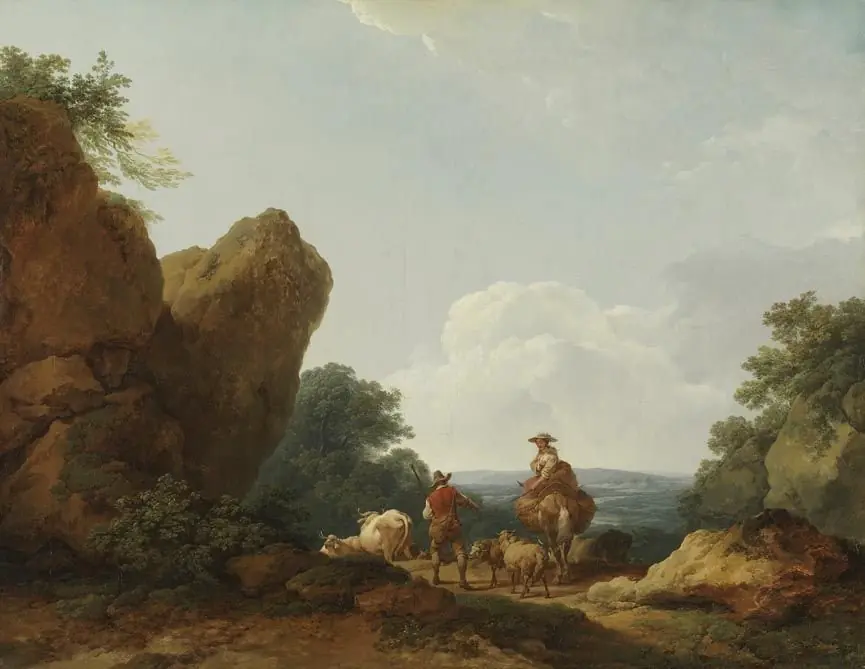
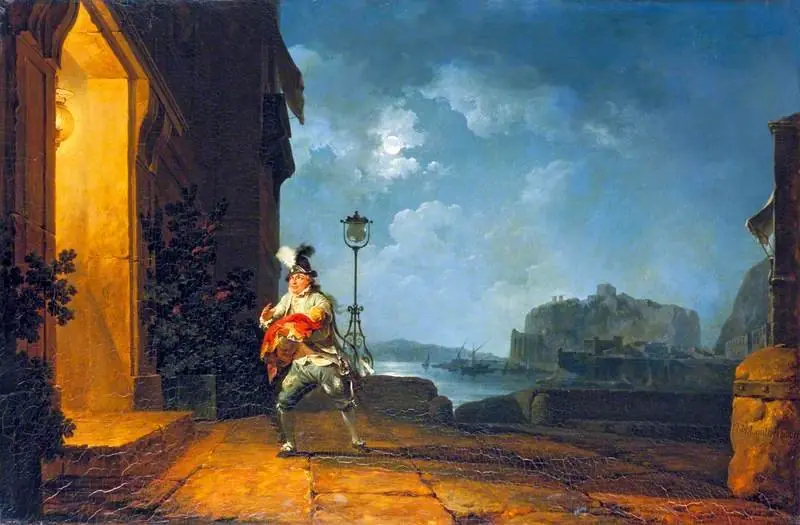
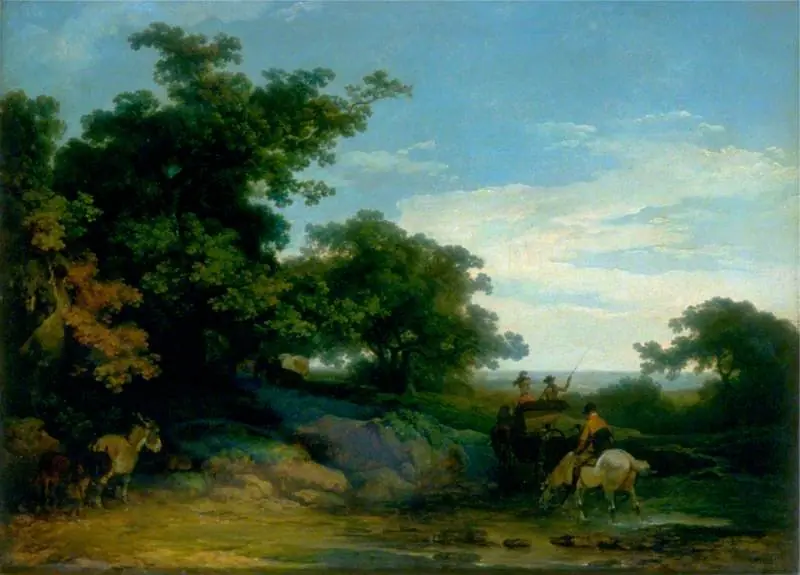
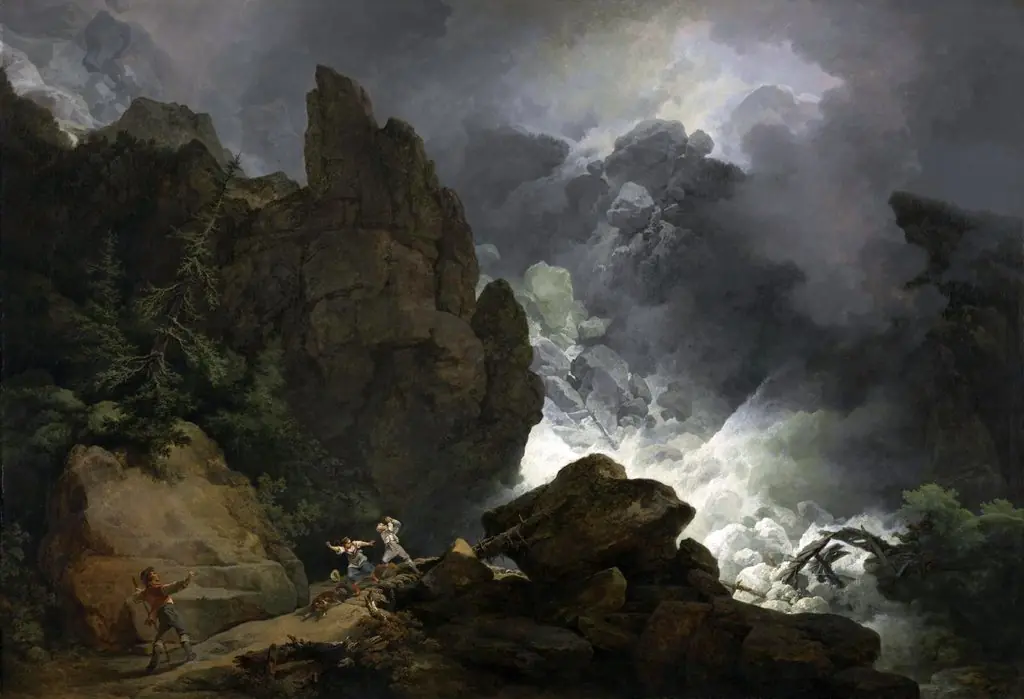
Philip James de Loutherbourg, RA (born Philippe Jacques de Loutherbourg; 31 October 1740 – 11 March 1812) was a French-born British painter who became known for his large naval works, his elaborate set designs for…

 Wooded Glen
 Landscape with cattle
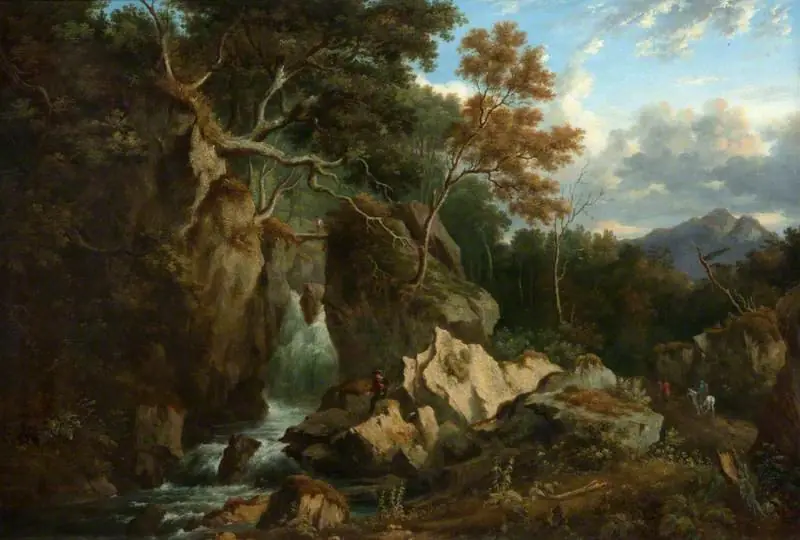 Glenshira
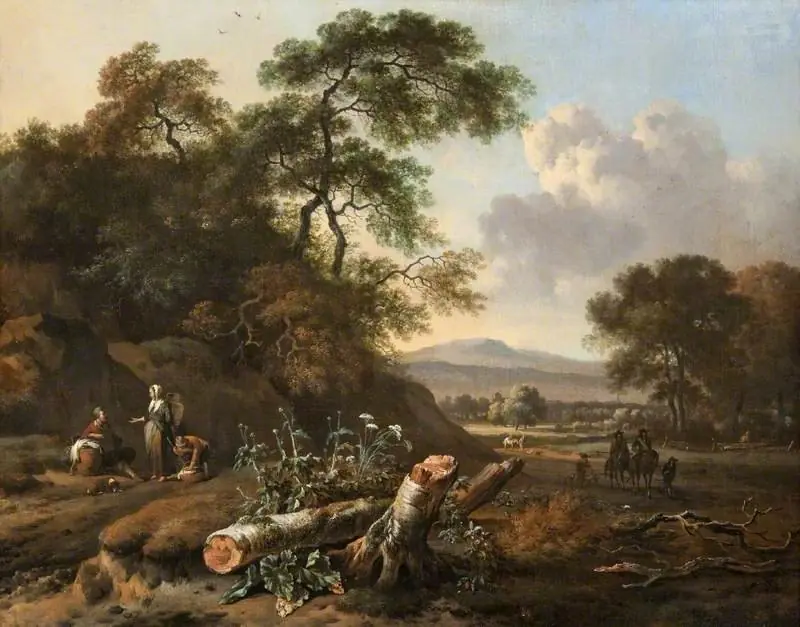 Landscape with a Fallen Tree, Peasants and Huntsmen
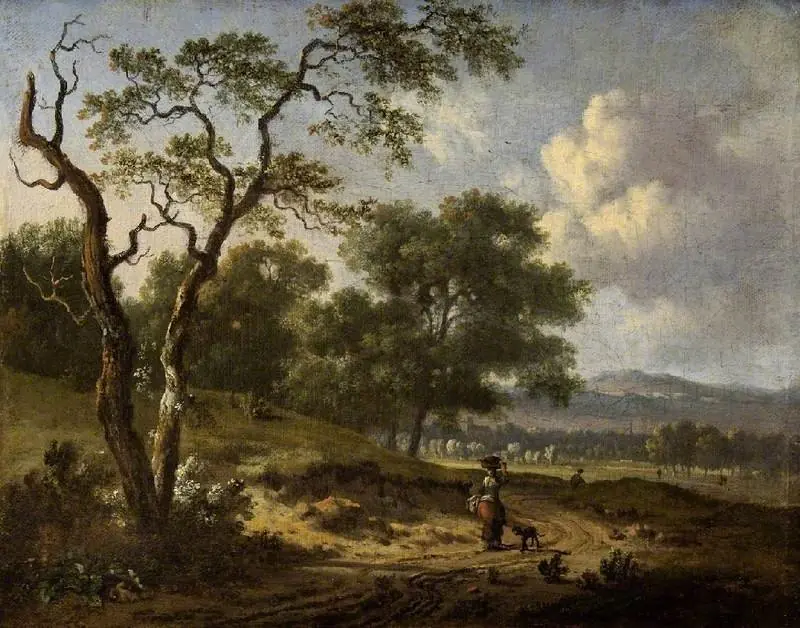 Landscape with a woman and a dog
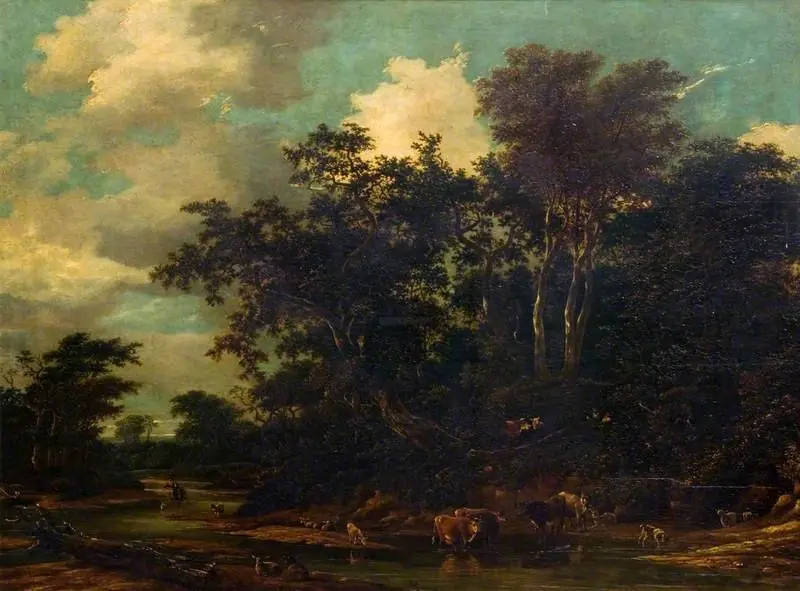 Woody Landscape with Cattle and a Stream
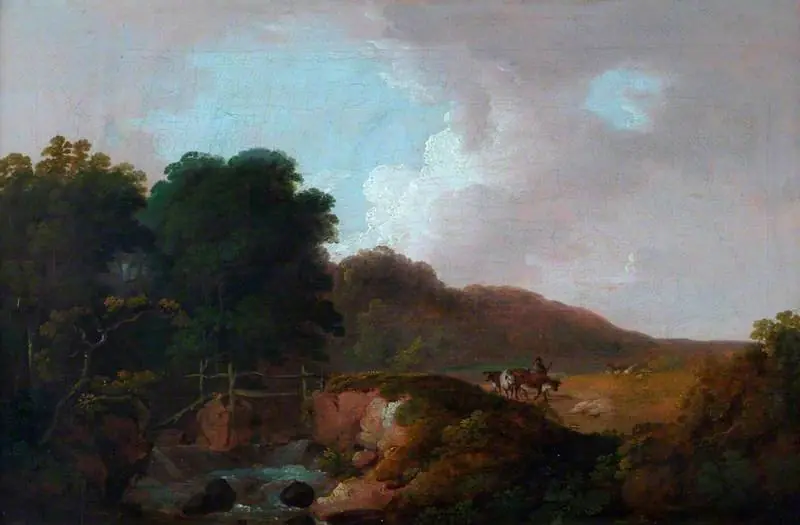 Landscape with a Rustic Bridge and a Stream
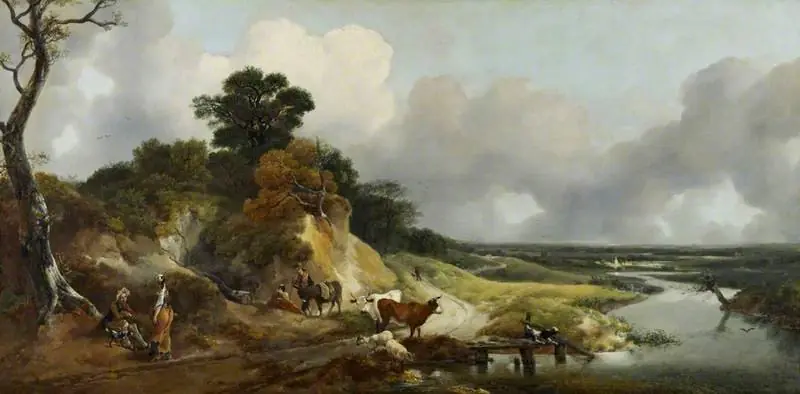 Landscape with a View of a Distant Village
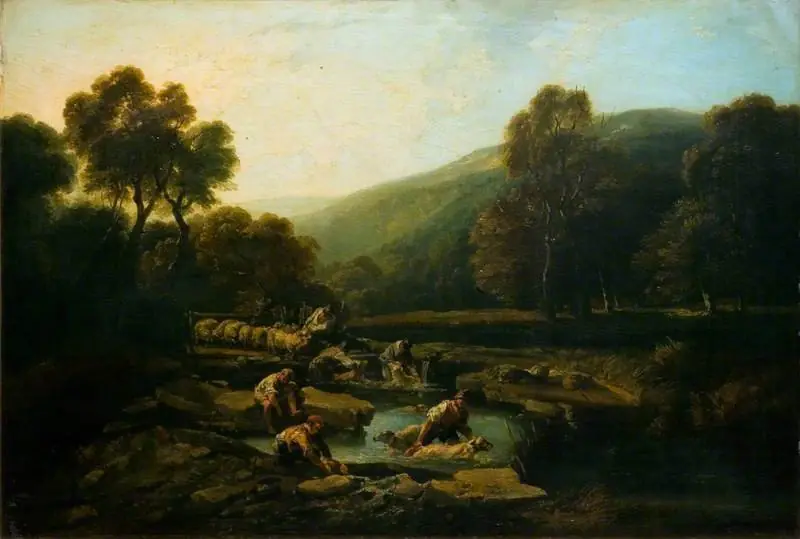 Sheep Washing
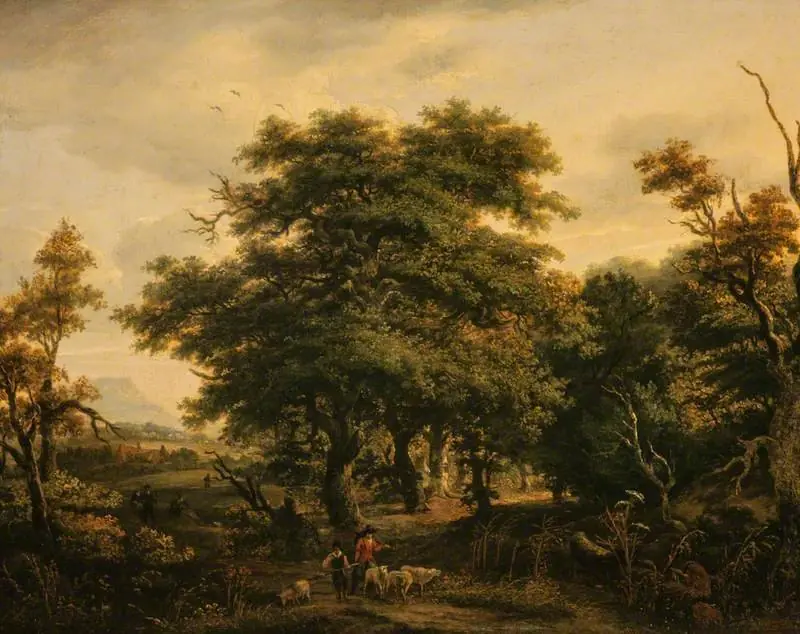 Woody Landscape with Figures and Sheep
 Landscape with a River and Horses by a Wooden Bridge
 Landscape with Cattle and Figures