Artwork
Design for a Wall with Two Doors and a Sculpture
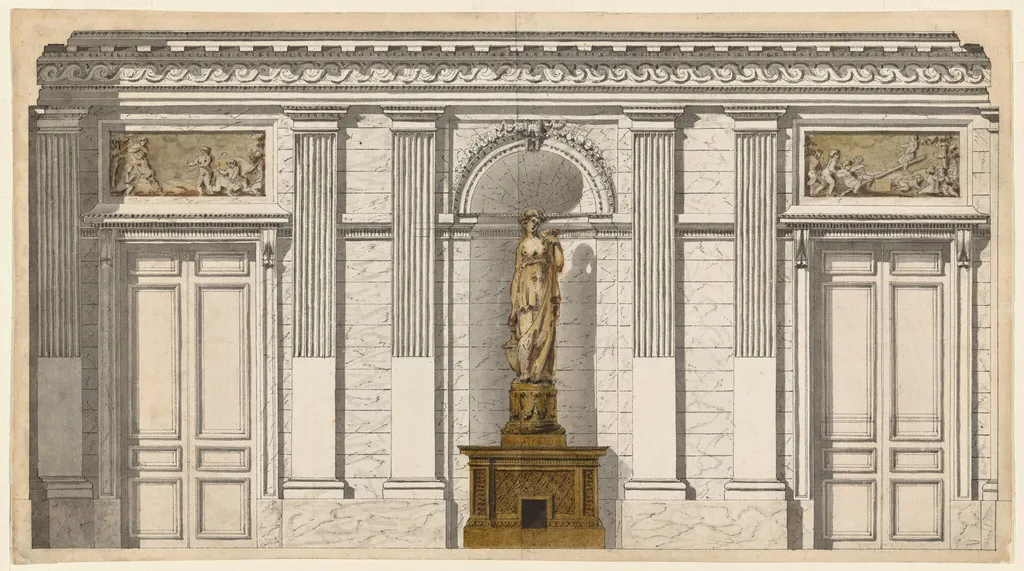
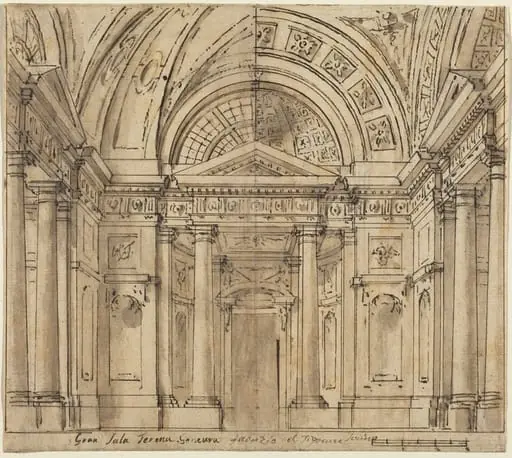
Design for a Wall with Two Doors and a Sculpture is a watercolor drawing by the Romanticist artist Henri Piètre. It dates from 1785 and is held in the collection of the National Gallery of Art.
About this work
Overview
This drawing, dated around 1785, is a design for an interior architectural feature by Henri Piètre.
This drawing, dated around 1785, is a design for an interior architectural feature by Henri Piètre. Executed in pen and black ink with gray wash and watercolor on two joined sheets, it presents a proposed wall composition featuring two doors and a central sculptural element. The work belongs to the National Gallery of Art in Washington, D.C., and reflects the period’s interest in classical revival design for domestic and public spaces.
Subject & Meaning
The composition centers on a classical female statue mounted on a pedestal, flanked by two tall, paneled doors. The statue, draped in a long robe, evokes ancient Greco-Roman ideals, suggesting themes of harmony and civic virtue. The surrounding architectural elements—columns, arches, and carved moldings—reinforce a sense of order and refinement. The arrangement implies a ceremonial or intellectual space, where art and architecture converge to elevate the viewer’s experience.
Technique & Style
Piètre employed ink for precise linear definition, gray wash for subtle tonal modeling, and watercolor to suggest the texture of marble and the softness of drapery. The two-sheet format allowed for a broad, symmetrical layout, with careful attention to proportional balance. The rendering is detailed yet restrained, favoring clarity over ornamentation, typical of neoclassical design drawings that prioritized structural logic and aesthetic discipline.
History & Provenance
Created circa 1785, the drawing likely served as a proposal for a private residence or public building during the height of neoclassicism in France. It entered the National Gallery of Art’s collection through established acquisition channels, though its specific commission and original location remain undocumented. Its preservation suggests it was valued as a study of architectural design rather than a finished decorative work.
Context
In the late 18th century, French designers increasingly turned to antiquity for inspiration, seeking to replace Rococo excess with rational forms. Piètre’s drawing aligns with this movement, echoing the work of architects like Soufflot and Ledoux. Such designs were often circulated among patrons and craftsmen as templates for interior decoration, reflecting a broader cultural shift toward classical ideals in domestic architecture.
Legacy
Though Henri Piètre is not widely known today, this drawing exemplifies the role of lesser-known designers in shaping neoclassical interiors. It contributes to the understanding of how architectural ideas were communicated through preparatory drawings, bridging theoretical design and practical execution. The work remains a quiet but significant record of aesthetic priorities in pre-revolutionary France.
Artist & collection

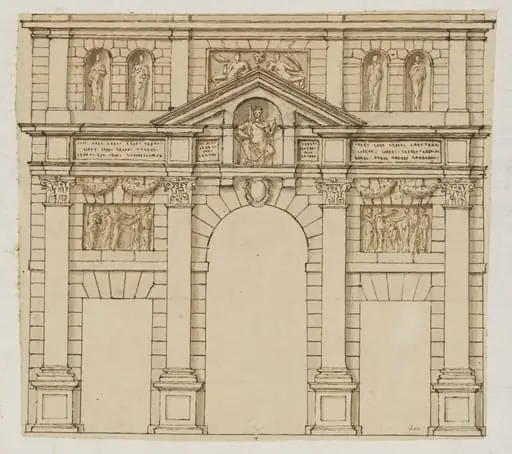 Study for a gateway
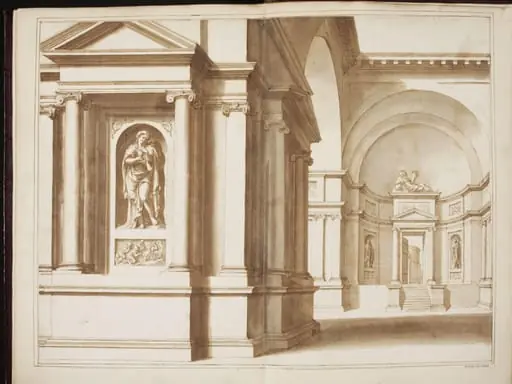 Interior of a Palazzo with Classical Sculptures in Niches and above a Door
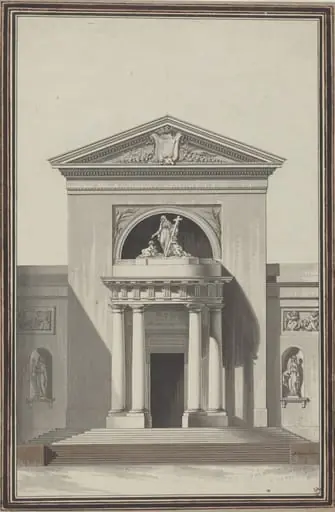 Facade for a Church with a Sculpture Representing Faith
 Design for an Altar
 Cross Section of the Salon of the Palazzo Spinola, Genoa
 A Classical Temple
 Fireplaces and Other Interior Decorations
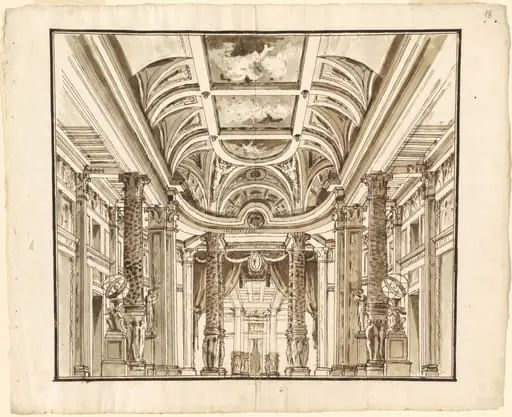 Fantasy of a Great Hall with Basketweave Columns
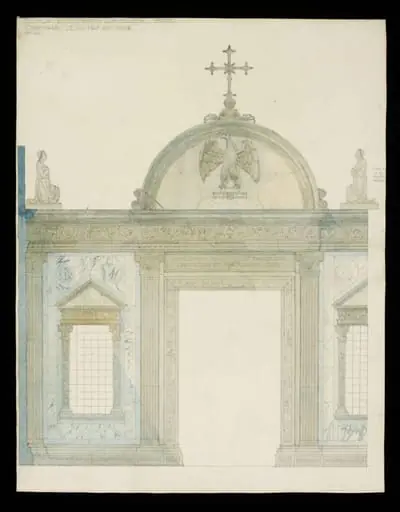 Untitled
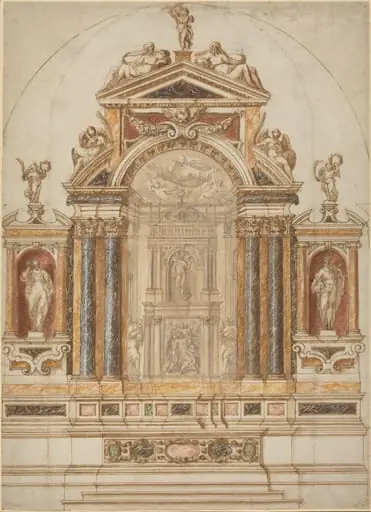 An Elaborate Altar of Colored Marble Ornamented with Sculptures
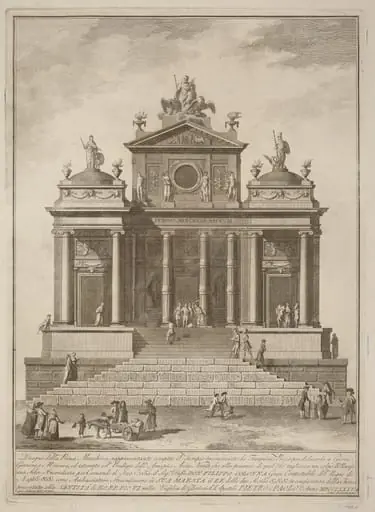 The Prima Macchina for the Chinea of 1785: The Temple of Jupiter Begun by Tarquinius Priscus with the Marvel of Accius Naevius
 Design for Entrance to a Hall