Artwork
Coroação da Virgem Maria
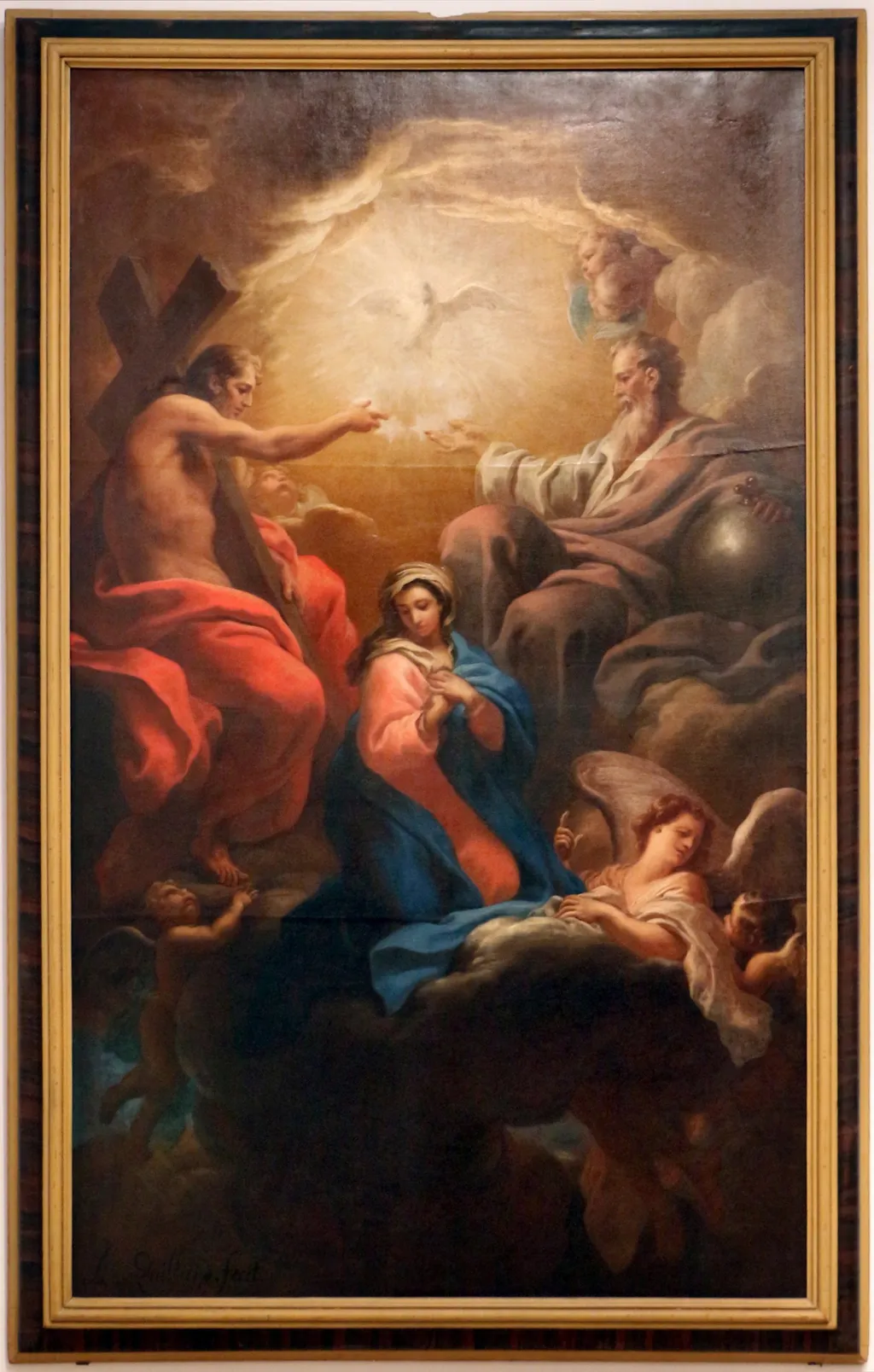
Coroação da Virgem Maria is an unspecified painting by the Rococo painting artist Pierre-Antoine Quillard. It dates from 1730 and is held in the collection of the National Museum of Ancient Art.
About this work
Overview
The work reflects the Rococo aesthetic with its delicate forms and luminous palette.
Painted in 1730 by the French artist Pierre-Antoine Quillard, this religious composition was created during his time in Portugal, where he worked as a portraitist and engraver. The work reflects the Rococo aesthetic with its delicate forms and luminous palette. It is now part of the collection at the National Museum of Ancient Art in Lisbon, representing Quillard’s brief but significant presence in Portuguese artistic circles before his death in 1733.
Subject & Meaning
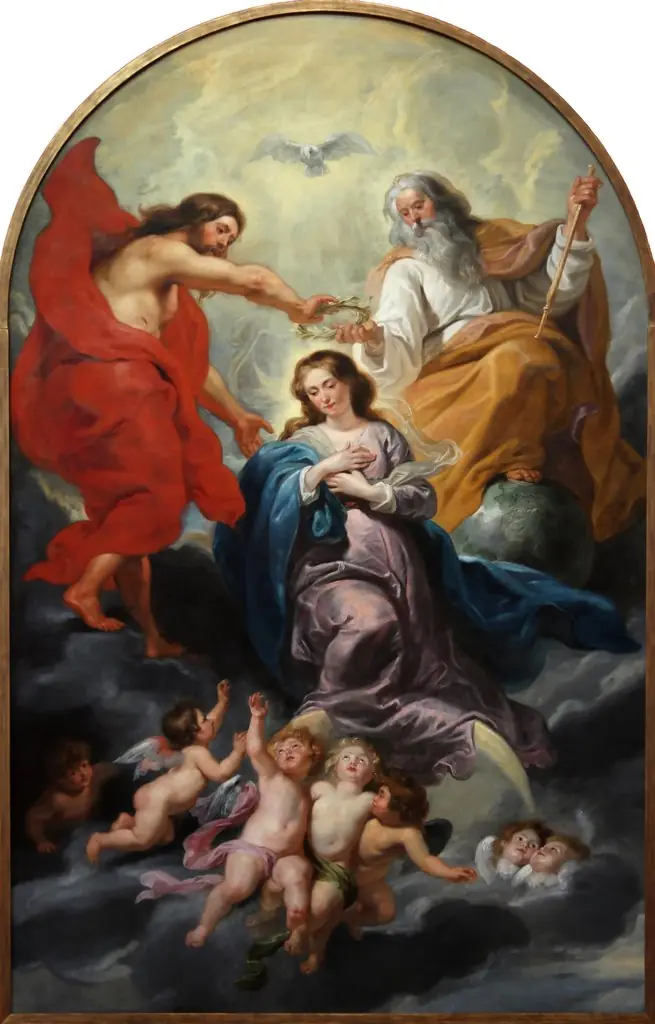
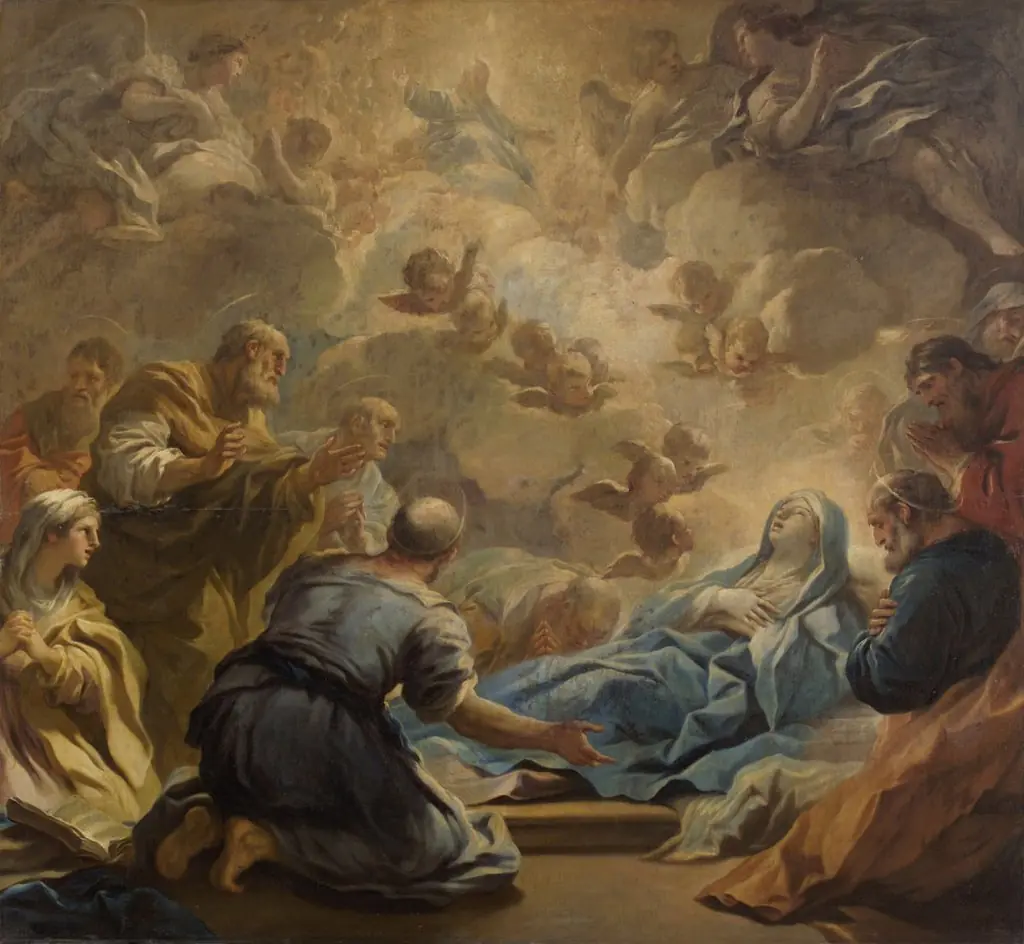
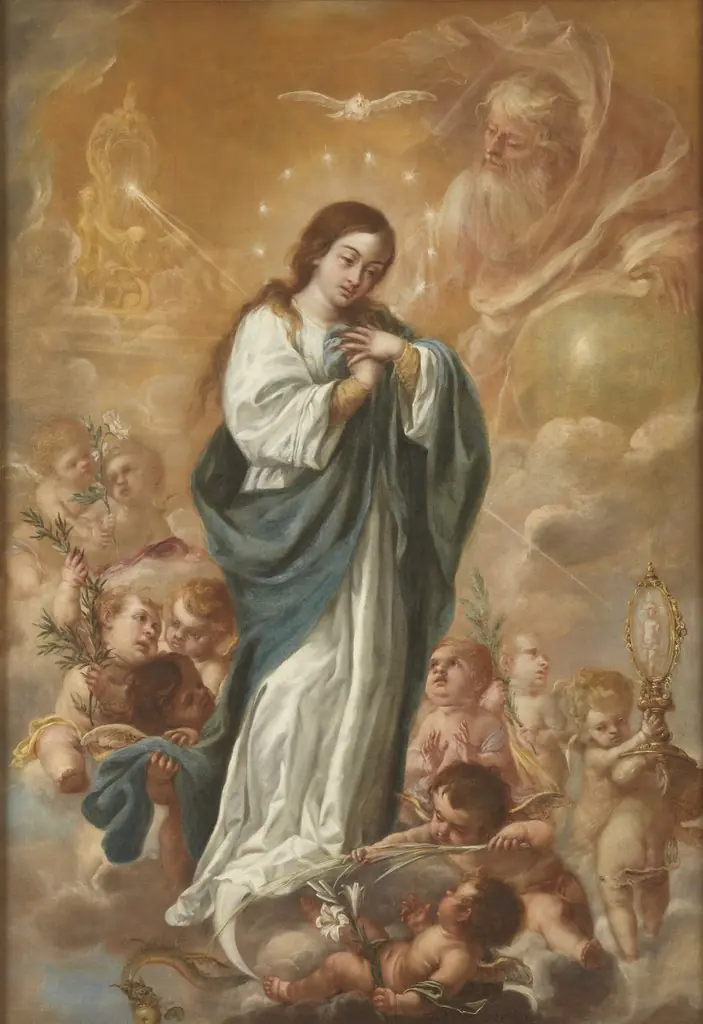
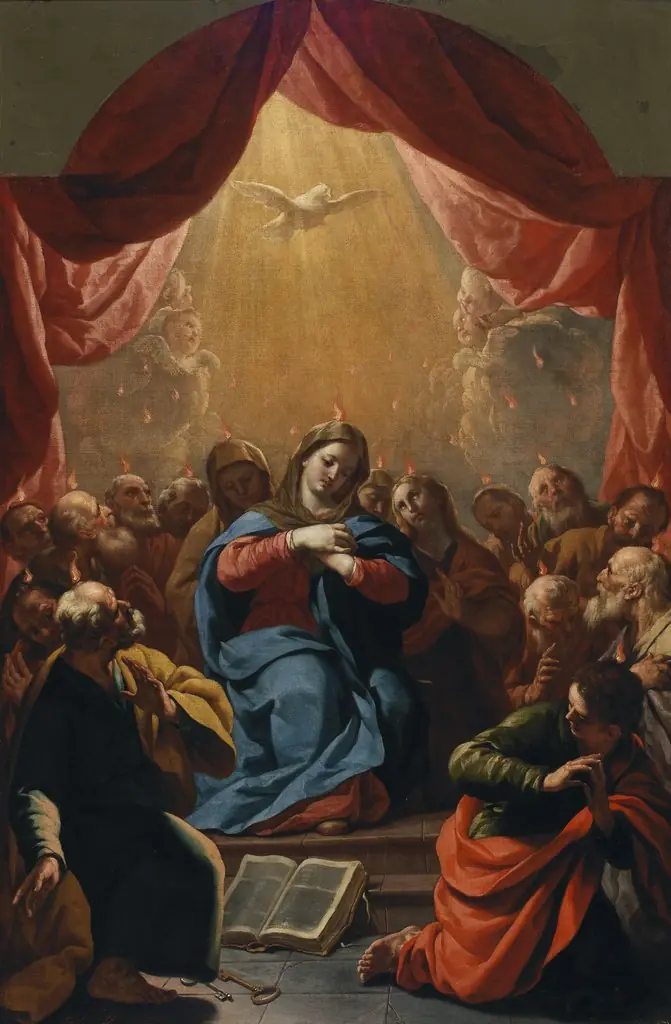
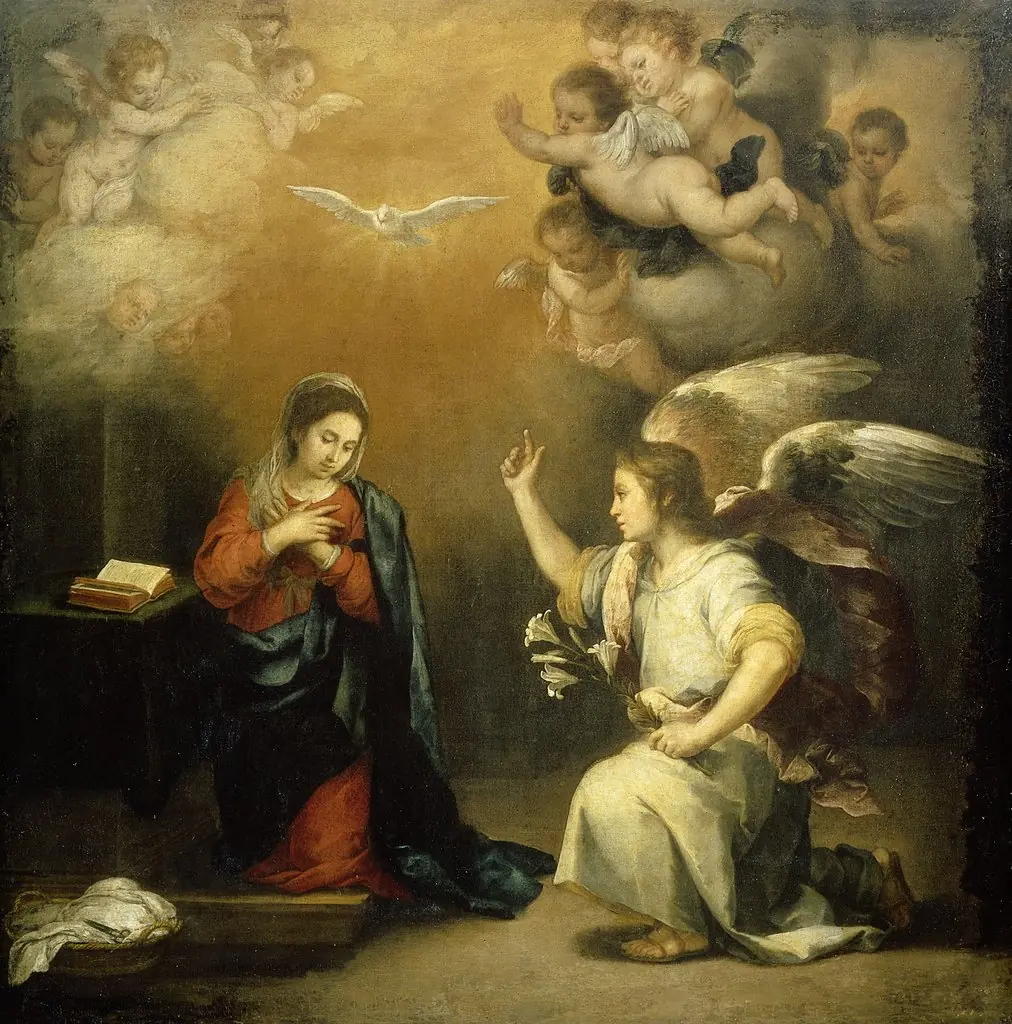
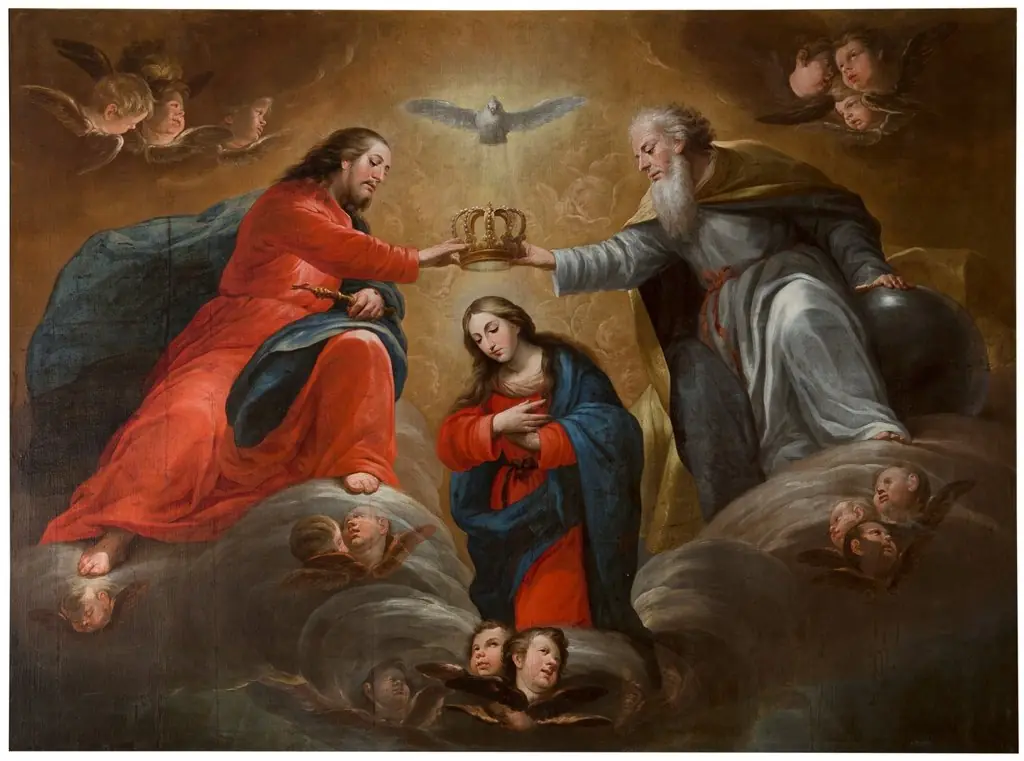
The painting illustrates the Coronation of the Virgin Mary, a traditional Christian theme in which Christ and God the Father place a crown upon Mary’s head, affirming her heavenly honor. Mary, seated in quiet devotion, embodies humility and grace, while the divine figures above convey authority and benevolence. The surrounding angels and celestial clouds reinforce the sacred nature of the moment, emphasizing spiritual elevation rather than earthly power.
Technique & Style
Quillard employs soft brushwork and a warm, golden background to create a sense of ethereal light, characteristic of Rococo religious art. The figures are rendered with gentle contours and refined detail, particularly in the folds of robes and the delicate rendering of angelic faces. The composition is balanced yet intimate, avoiding dramatic tension in favor of serene harmony, with a focus on tender expression and luminous color transitions.
History & Provenance
Created during Quillard’s years in Portugal, the painting entered the collection of the National Museum of Ancient Art, where it has remained since the museum’s early holdings were assembled. Though Quillard’s output in Portugal was limited due to his early death, this work stands as one of the few surviving religious commissions from his time there, offering insight into the cross-cultural artistic exchanges of the early 18th century.
Context
In early 18th-century Portugal, religious imagery remained central to artistic patronage, especially under the influence of the Catholic Church and royal commissions. Quillard, trained in France, adapted his style to local devotional tastes, blending French Rococo elegance with Portuguese spiritual sensibilities. His work reflects the broader European trend of softening religious iconography to evoke emotional reverence rather than doctrinal rigor.
Legacy
Though Quillard’s career was short and largely confined to Portugal, this painting endures as a quiet example of transnational artistic influence. It illustrates how French stylistic elements were absorbed into Iberian religious art without overtly displacing local traditions. The work contributes to understanding the mobility of artists and the adaptability of iconographic themes across 18th-century Europe.
Artist & collection
Artist
Pierre-Antoine Quillard, (; c. 1700 – 25 November 1733) was a French portrait painter and engraver who worked in Portugal.