Artwork
Rape of Europa
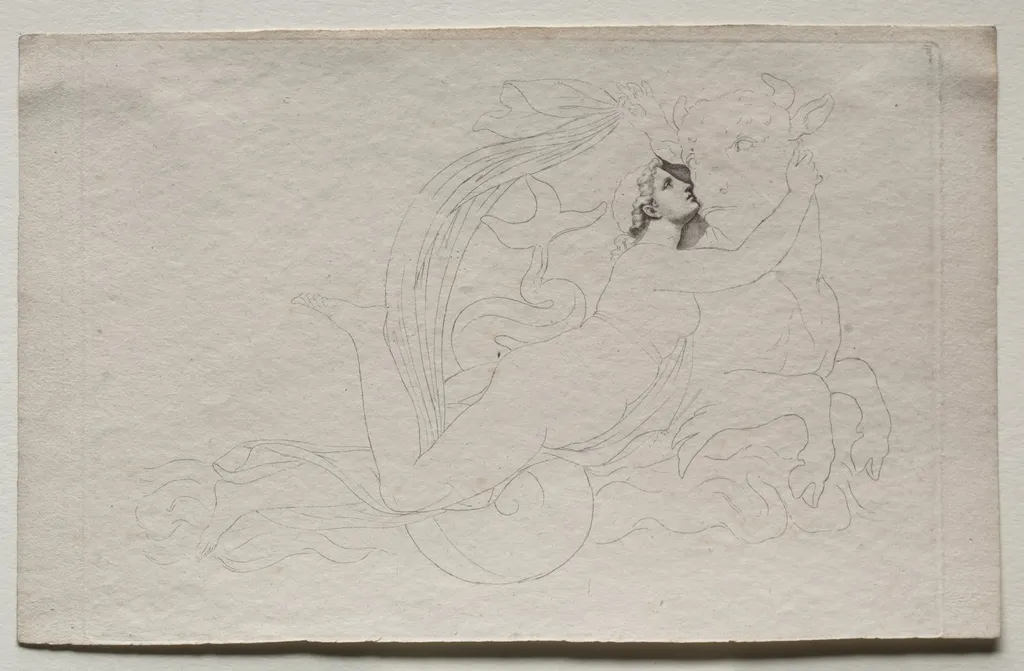
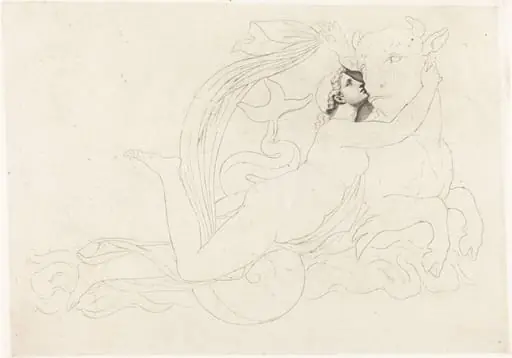
Rape of Europa is a print by the Romanticist artist Pierre Paul Prud'hon. It dates from 1800 and is held in the collection of the Cleveland Museum of Art.
About this work
Overview
The drawing’s fluid lines and atmospheric shading reveal his mastery as a draftsman, distinguishing it from more rigid academic treatments of the same subject.
Pierre-Paul Prud'hon produced this drawing around 1800, during a period when his work bridged Neoclassical precision and emerging Romantic sensibilities. Though primarily known for portraits and allegories, including those of Empress Josephine, this piece reflects his engagement with classical myth. The drawing’s fluid lines and atmospheric shading reveal his mastery as a draftsman, distinguishing it from more rigid academic treatments of the same subject.
Subject & Meaning
The scene illustrates the myth of Europa, a Phoenician princess abducted by Zeus, who had taken the form of a gentle bull. Rather than emphasizing violence, Prud'hon portrays Europa in a state of serene surrender, her body arched backward as if in quiet contemplation. The bull’s calm momentum and the absence of struggle suggest a transformational journey, aligning the myth with themes of fate and divine intervention rather than coercion.
Technique & Style
Prud'hon employed soft, continuous contours and subtle tonal gradations to model form without heavy outlines. The bull’s musculature is rendered with swift, assured strokes, while Europa’s flowing hair and drapery echo the movement of water, enhancing the sense of weightlessness. The contrast between the bull’s dynamic energy and Europa’s stillness creates a lyrical tension, characteristic of Prud'hon’s approach to movement and emotion in drawing.
History & Provenance
The work dates from the early 1800s, a time when Prud'hon’s studio increasingly involved his collaborator Constance Mayer. Their close artistic partnership has led to ongoing scholarly debate over authorship of certain pieces from this period. While this drawing is generally attributed to Prud'hon, the influence of Mayer’s hand—particularly in the delicate rendering of the figure—remains a subject of analysis among historians.
Context
In early 19th-century France, mythological subjects were reinterpreted through a lens that valued emotional nuance over rigid idealism. Prud'hon’s treatment of Europa aligns with a broader shift toward Romanticism, where inner states and atmospheric effects took precedence over classical rigidity. His work, though rooted in academic tradition, anticipated the expressive freedom later embraced by artists like Géricault and Delacroix.
Legacy
Prud'hon’s drawing contributed to a redefinition of mythological narrative in drawing, emphasizing psychological depth over spectacle. His influence extended to younger Romantic artists who adopted his tonal delicacy and emphasis on mood. Though less celebrated than his paintings, this work exemplifies his enduring impact on the expressive potential of the drawn line in French art of the period.
Artist & collection
Artist
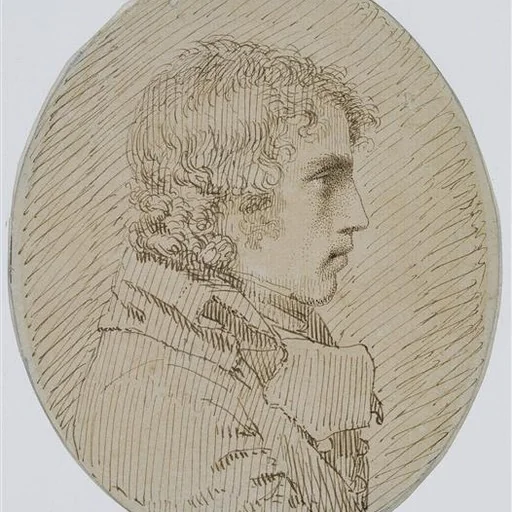
Pierre-Paul Prud'hon (French pronunciation: , 4 April 1758 – 16 February 16, 1823) was a French Neo-classical painter and draughtsman best known in his own time for his allegorical paintings and portraits, now for his drawings.

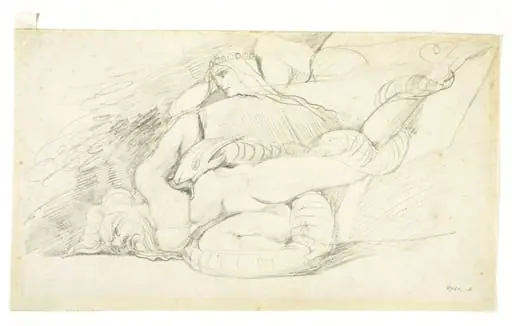 A woman gazing at the prostate body of a man, around which a serpent is coiled
 First Group of Arcadian Goats
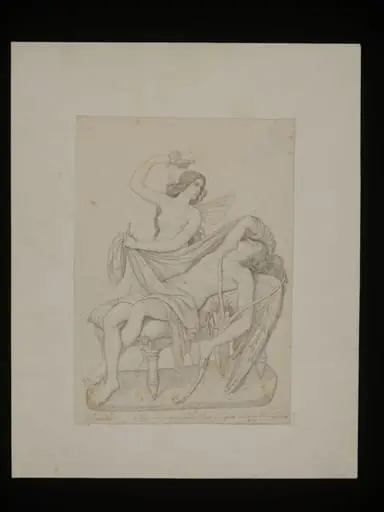 Cupid and Psyche
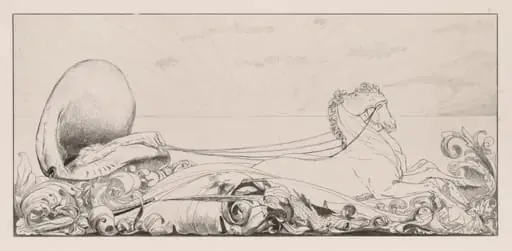 A Glove: Triumph
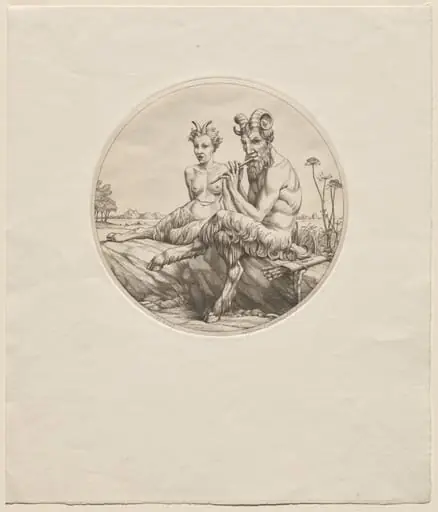 Two Satyrs
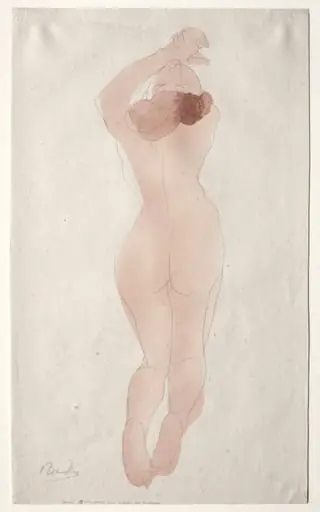 Caresse - moi danc, chéri
 Two Women's Heads
 The serpent caressing Eve
 The death of the strong, wicked man
 An Angel Teaching a Daughter of Men the Secrets of Sin
 Kneeling, Small (Kniende, klein)
 The Rape of Europa