Artwork
Christ carrying the cross
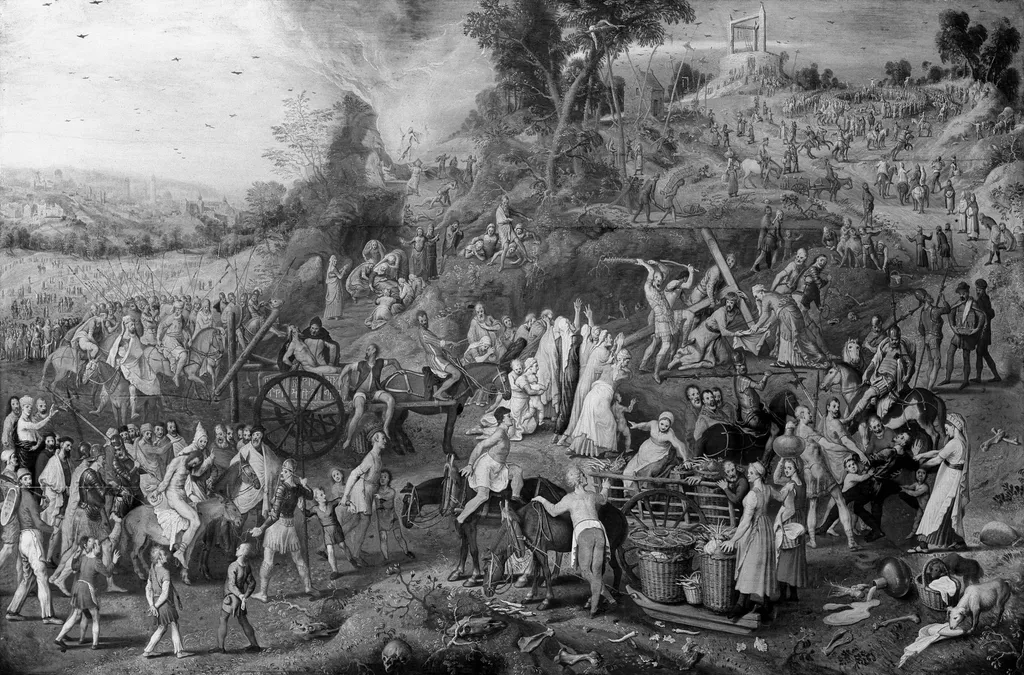
Christ carrying the cross is a paint painting by the Early Baroque Italian artist Pieter Aertsen. It dates from 1552 and is held in the collection of the Gemäldegalerie Berlin.
About this work
Overview
The painting resides in the Gemäldegalerie, Berlin, and stands as an early example of Northern European religious imagery infused with secular observation.
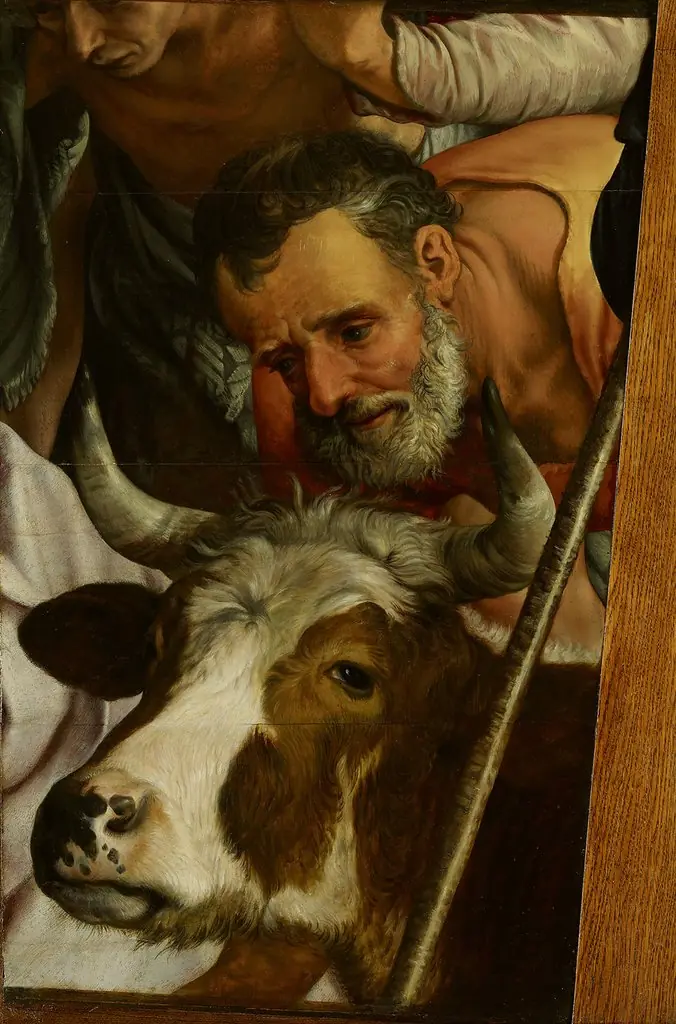
Painted in 1552 by Pieter Aertsen, this work depicts Christ bearing the cross through a bustling urban environment. Executed in oil on panel, it merges religious narrative with detailed everyday life, reflecting Aertsen’s distinctive approach to sacred subjects. The painting resides in the Gemäldegalerie, Berlin, and stands as an early example of Northern European religious imagery infused with secular observation.
Subject & Meaning
The scene centers on Christ’s procession, surrounded by a diverse crowd of onlookers, some indifferent, others visibly moved. Rather than isolating the sacred figure, Aertsen embeds him within a chaotic public space, emphasizing the human context of suffering. The inclusion of ordinary figures—merchants, laborers, bystanders—suggests a moral reflection on collective responsibility and spiritual blindness.
Technique & Style
Aertsen employs chiaroscuro to model forms and heighten emotional tension, particularly around Christ’s figure. The composition is densely populated, with figures arranged in layered planes that draw the eye toward the central procession. Detailed rendering of clothing, architecture, and landscape reflects Northern Renaissance precision, while the scale of the crowd subverts traditional devotional focus.
History & Provenance
Created during Aertsen’s time in Antwerp, the painting entered the Berlin collection in the 19th century. Its early attribution to the Italian Baroque is incorrect; it belongs firmly to the Northern tradition. The work was likely commissioned for private devotion, though its scale and complexity suggest it was also intended for public contemplation within a collector’s setting.
Context
In mid-16th century Northern Europe, religious imagery increasingly incorporated everyday life as a means of moral instruction. Aertsen’s approach diverged from Italian altarpieces by foregrounding mundane details—market stalls, street vendors, architectural fragments—making the sacred feel immediate and present within the viewer’s world.
Legacy
Aertsen’s integration of genre elements into religious scenes influenced later Dutch painters, including his nephew Joachim Beuckelaer. While not widely copied in his lifetime, his method of embedding sacred narratives within bustling, realistic environments became a model for moralizing art in the Low Countries, shifting focus from idealized holiness to human experience.
Own this work as a print
Artist & collection
Artist
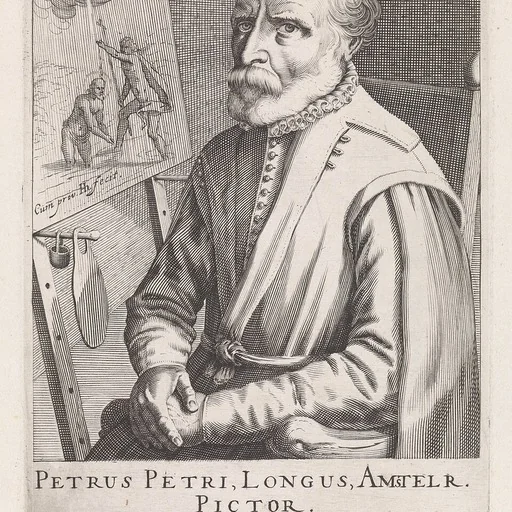
Pieter Aertsen (1508 in Amsterdam – 2 June 1575 in Amsterdam), called Lange Piet ("Tall Pete") because of his height, was a Dutch painter in the style of Northern Mannerism.

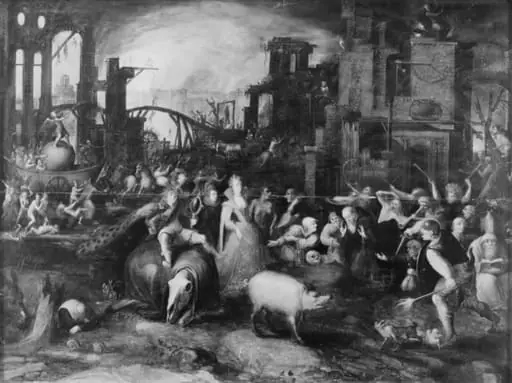 The Temptation of St Anthony
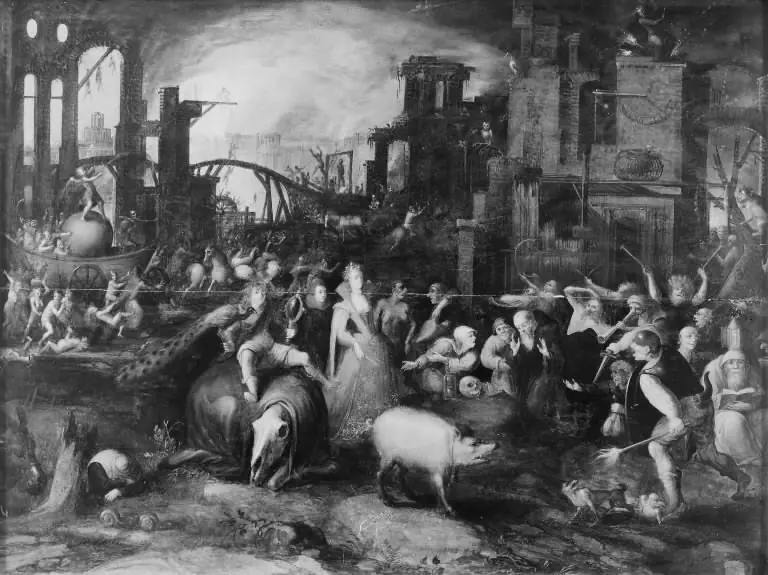 The Temptation of St Anthony
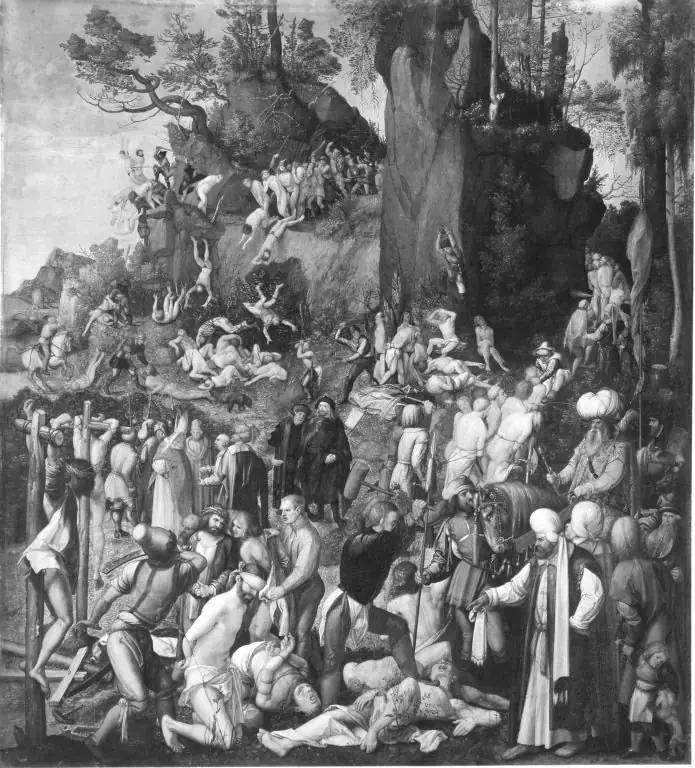 Martyrdom of the Ten Thousand (copy after the original from 1508 in Vienna)
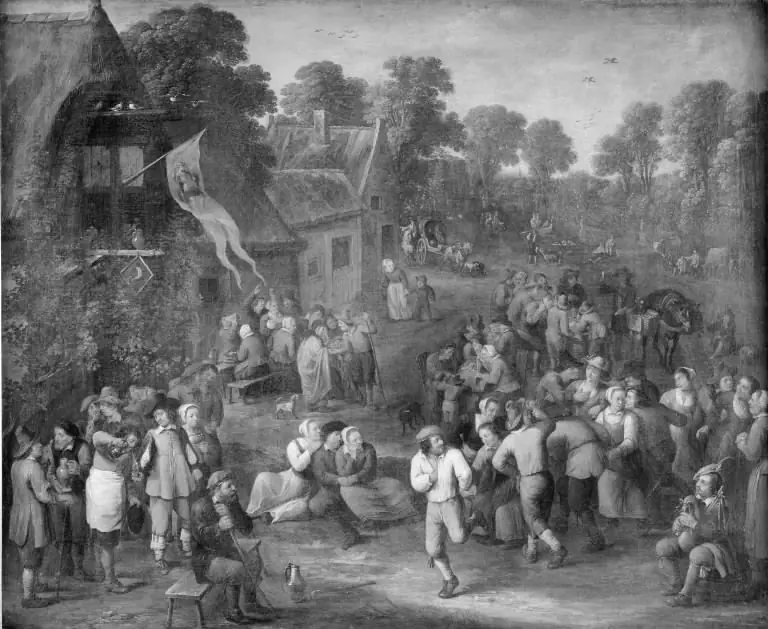 Rustic Feast
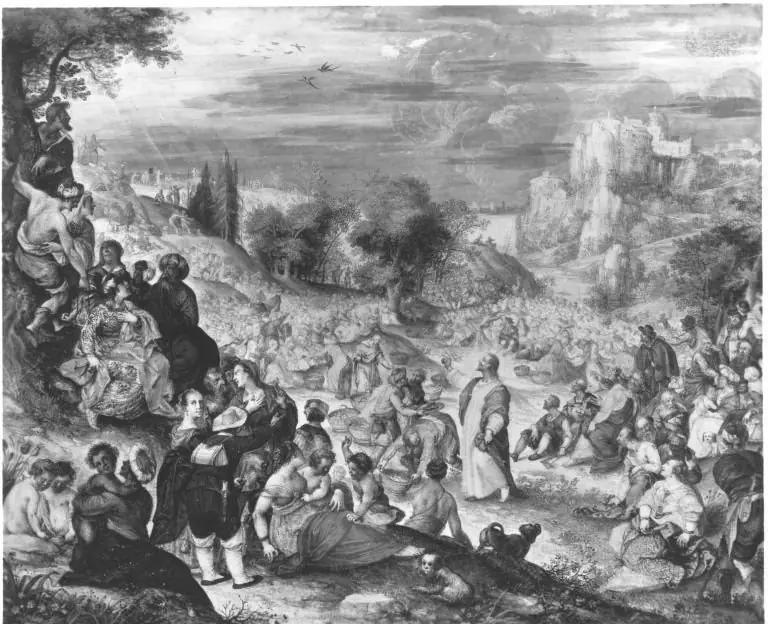 Speisung der Fünftausend
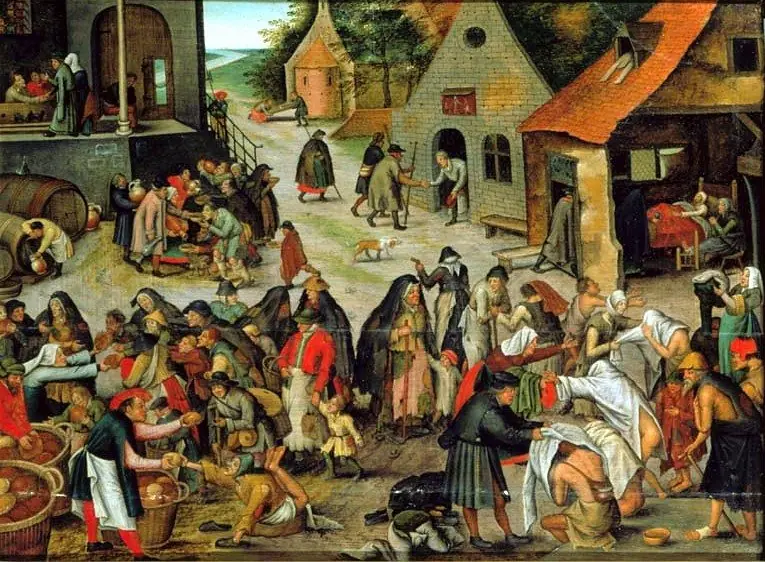 The Seven Acts of Mercy by Pieter Brueghel the Younger
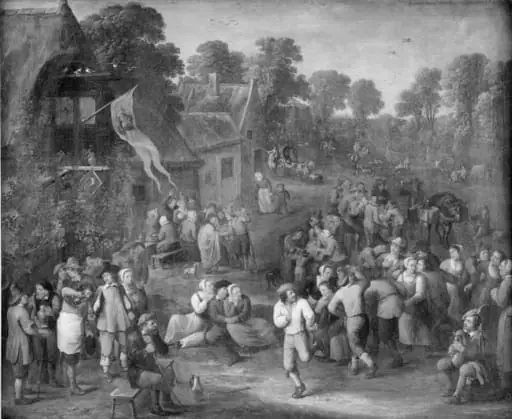 Rustic Feast
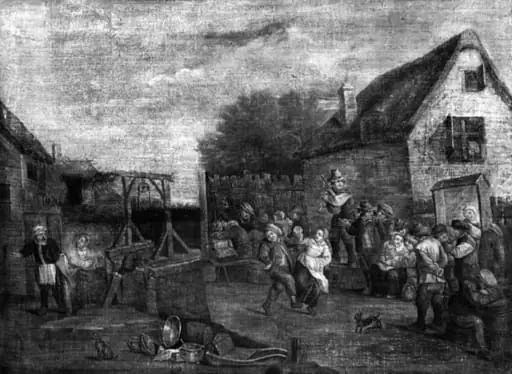 Dans i det frie
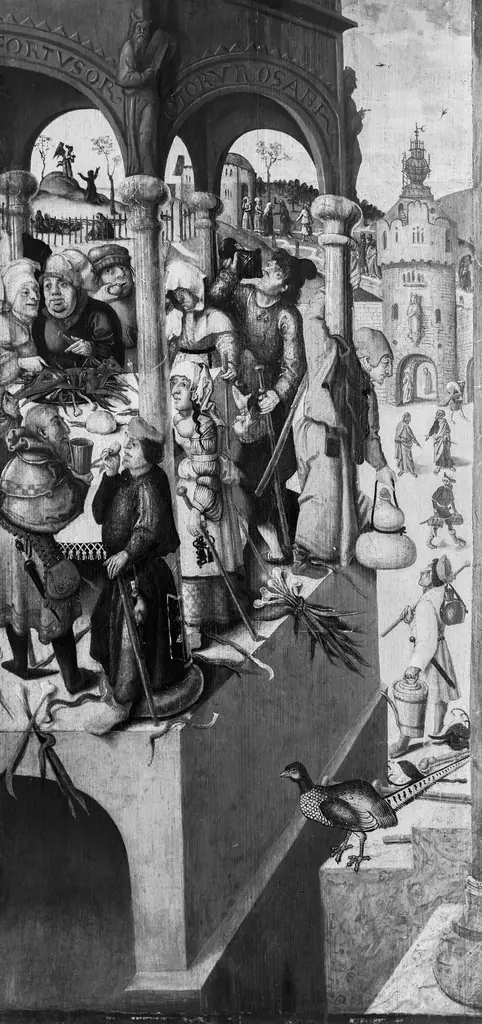 The passover meal
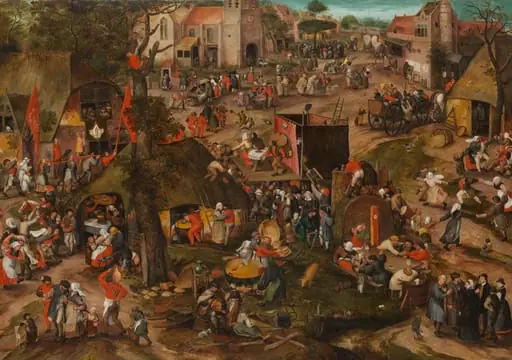 A Flemish Kermis with a Performance of the Farce ‘Een cluyte van Plaeyerwater’
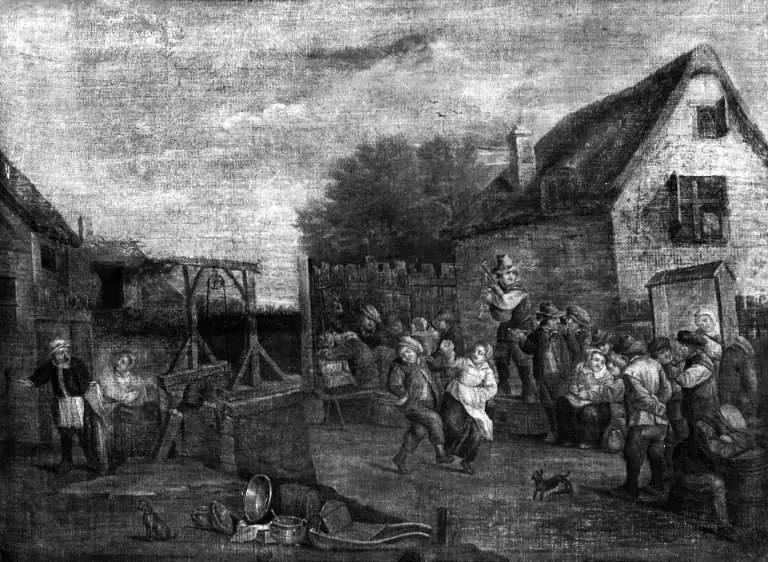 Dans i det frie
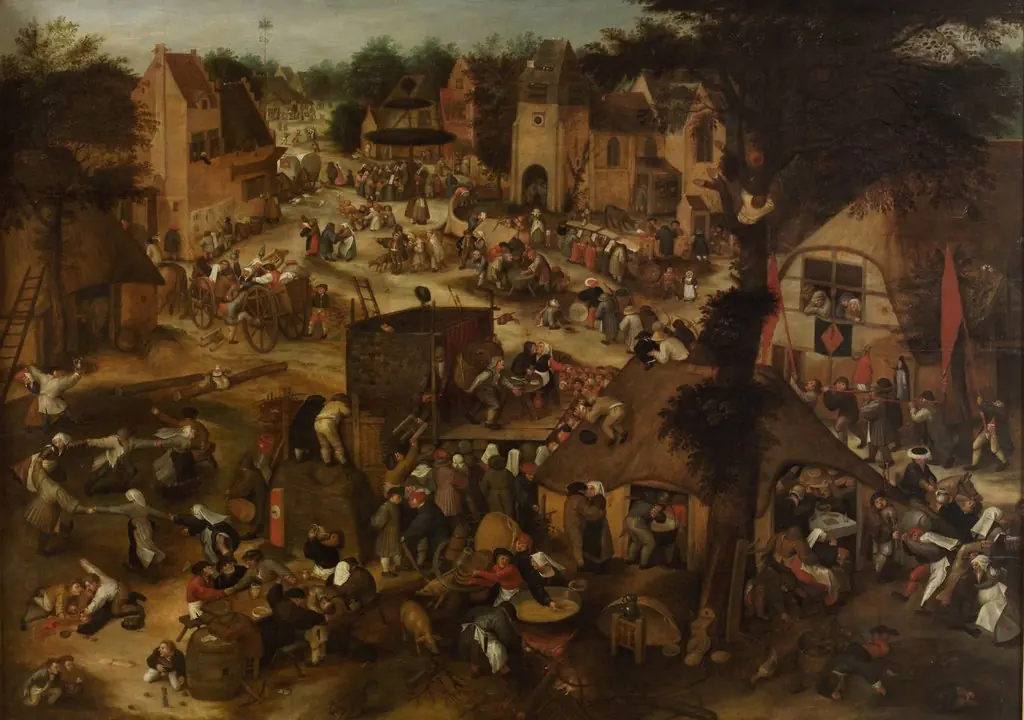 Performance of the farce 'Een Cluyte van Plaeyerwater' (A Clod from Plaeyerwater) at a Flemish Kermis