Artwork
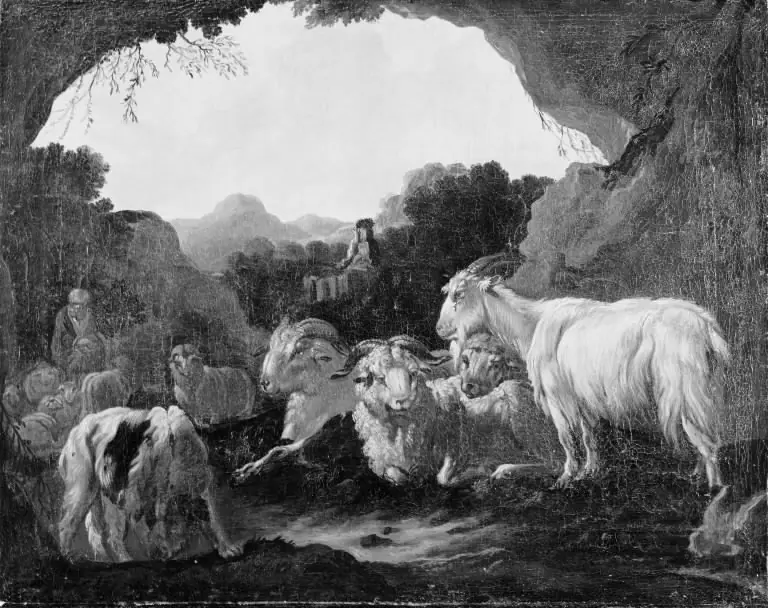
Shepherd and animals in a landscape
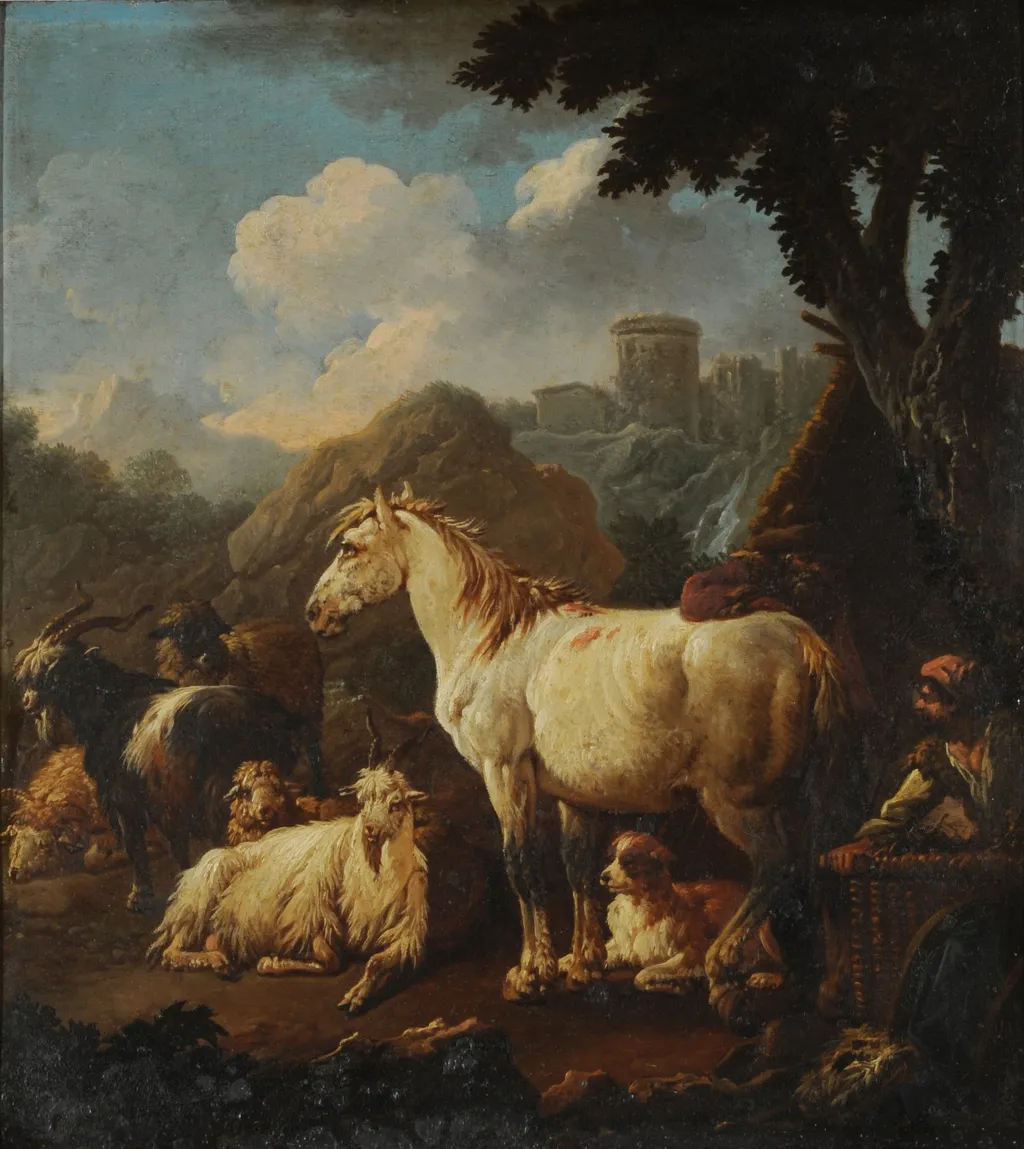
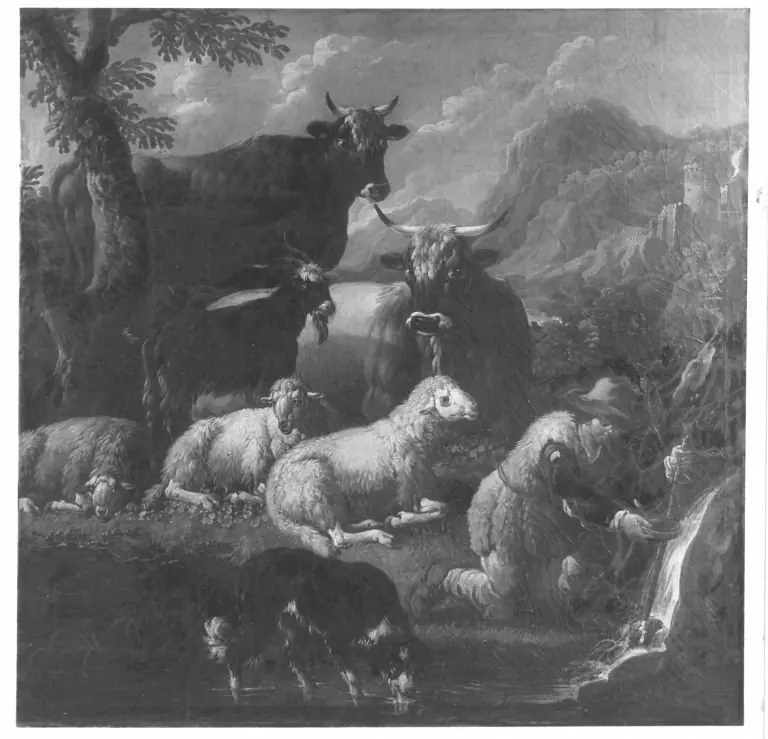
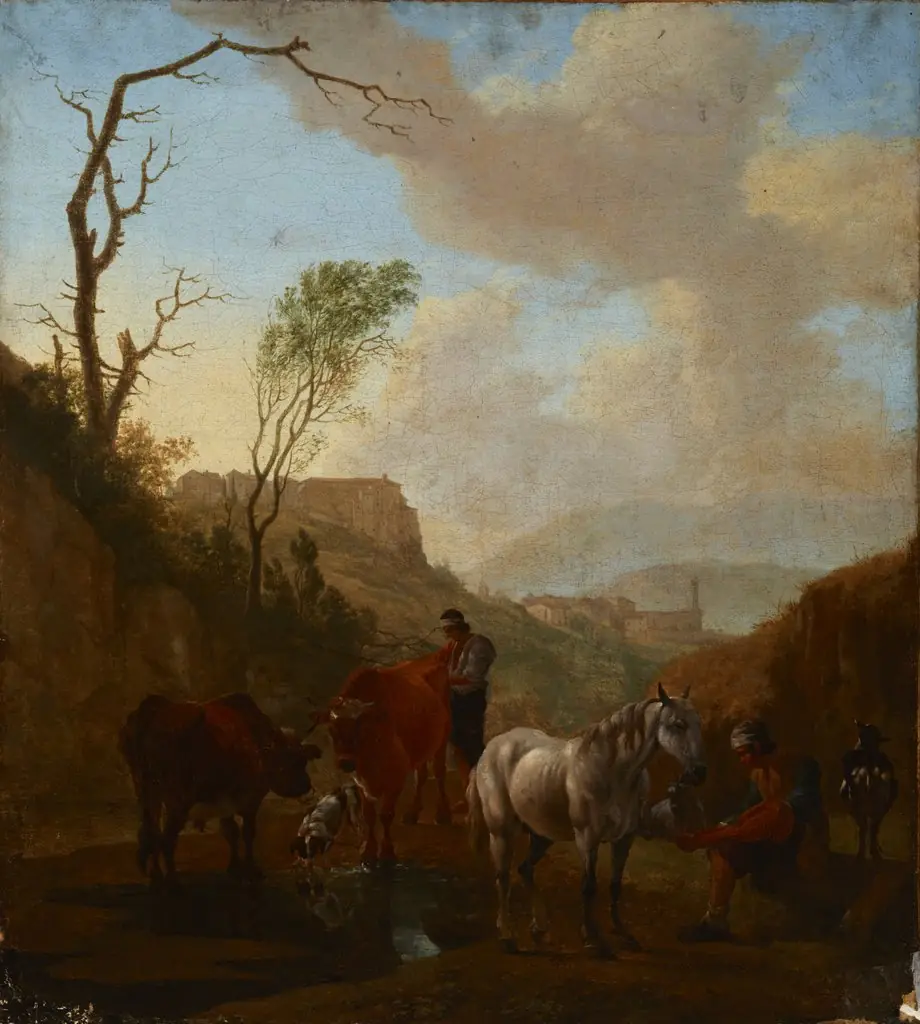
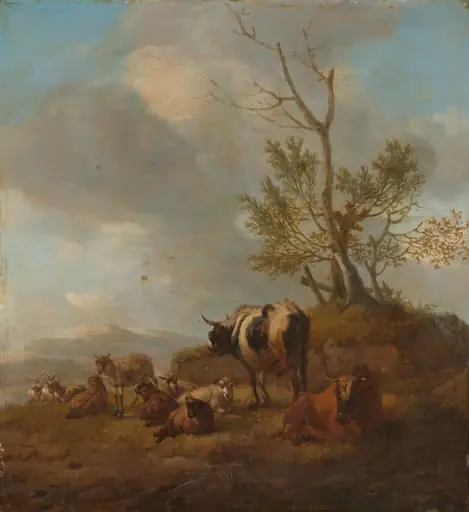
Shepherd and animals in a landscape is an oil painting by the Flemish Baroque painting artist Philipp Peter Roos. It dates from 1650 and is held in the collection of the National Museum of Fine Arts, Argentina.
About this work
Overview
Executed with meticulous attention to natural detail, it portrays a shepherd at rest amid a group of livestock.
This small copper panel painting, attributed to Philipp Peter Roos, dates to around 1650 and exemplifies the quiet rural imagery favored in Baroque landscape traditions. Executed with meticulous attention to natural detail, it portrays a shepherd at rest amid a group of livestock. The work reflects Roos’s early style before his move to Rome, where he later adopted the name Rosa di Tivoli. It is currently held in the National Museum of Fine Arts in Buenos Aires.
Subject & Meaning
The scene centers on a solitary shepherd seated on a stone, his gaze directed beyond the frame, suggesting contemplation or vigilance. Surrounding him are goats, sheep, and a horse, each turned in a different direction, evoking a sense of spontaneous, unposed life. The absence of human activity beyond the shepherd emphasizes solitude and harmony with nature, aligning with pastoral ideals common in 17th-century European art.
Technique & Style
Painted on copper, the surface allows for fine detail and smooth gradations of tone. Roos employs a restrained palette of earthy browns and muted greens, enhancing the naturalism of the landscape. Textures are rendered with precision—woolly fleece, rough rock, and leafy foliage—while the soft, diffused light suggests late afternoon. The composition avoids dramatic tension, favoring calm observation over narrative.
History & Provenance
Philipp Peter Roos, born in Germany, began his career in northern Europe before relocating to Italy around 1677. This painting predates his Roman period, indicating it was made during his formative years, likely in the Netherlands or Germany. Its presence in Buenos Aires suggests 19th- or early 20th-century acquisition by a collector or institution interested in Northern European Baroque works, though its specific path to Argentina remains undocumented.
Context
In mid-17th-century Europe, pastoral scenes were popular among collectors seeking tranquil, idealized views of rural life. Roos’s work aligns with Flemish and Dutch traditions that emphasized observational realism over mythological or religious themes. Though he later became known for Italianate landscapes and animal studies in Rome, this early piece reveals his grounding in northern European conventions of naturalism and quiet composition.
Legacy
Roos’s early works like this one demonstrate his technical skill and sensitivity to animal anatomy and landscape atmosphere. While he gained greater recognition in Italy under the name Rosa di Tivoli, this painting remains a quiet testament to his formative years. It contributes to understanding the transnational flow of artistic styles in the Baroque era, bridging northern realism with southern light and topography.
Own this work as a print
Artist & collection
Artist
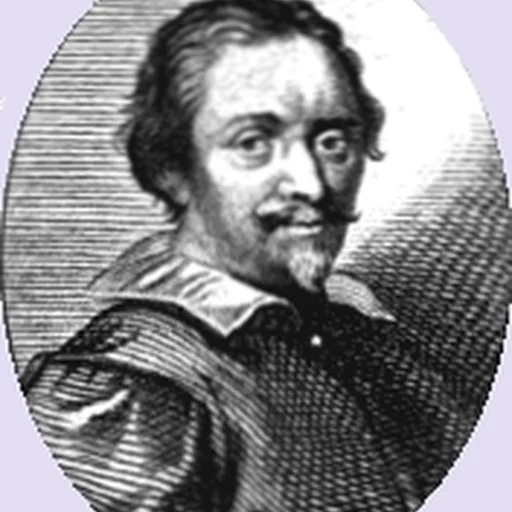
Philipp Peter Roos (later surnamed Rosa di Tivoli; 1655–1706) was a German Baroque painter, active in and near Rome from 1677 onward.

Museum
National Museum of Fine Arts, Argentina
Continue through works from the same source collection.