Artwork
Giovanni Battista Piranesi
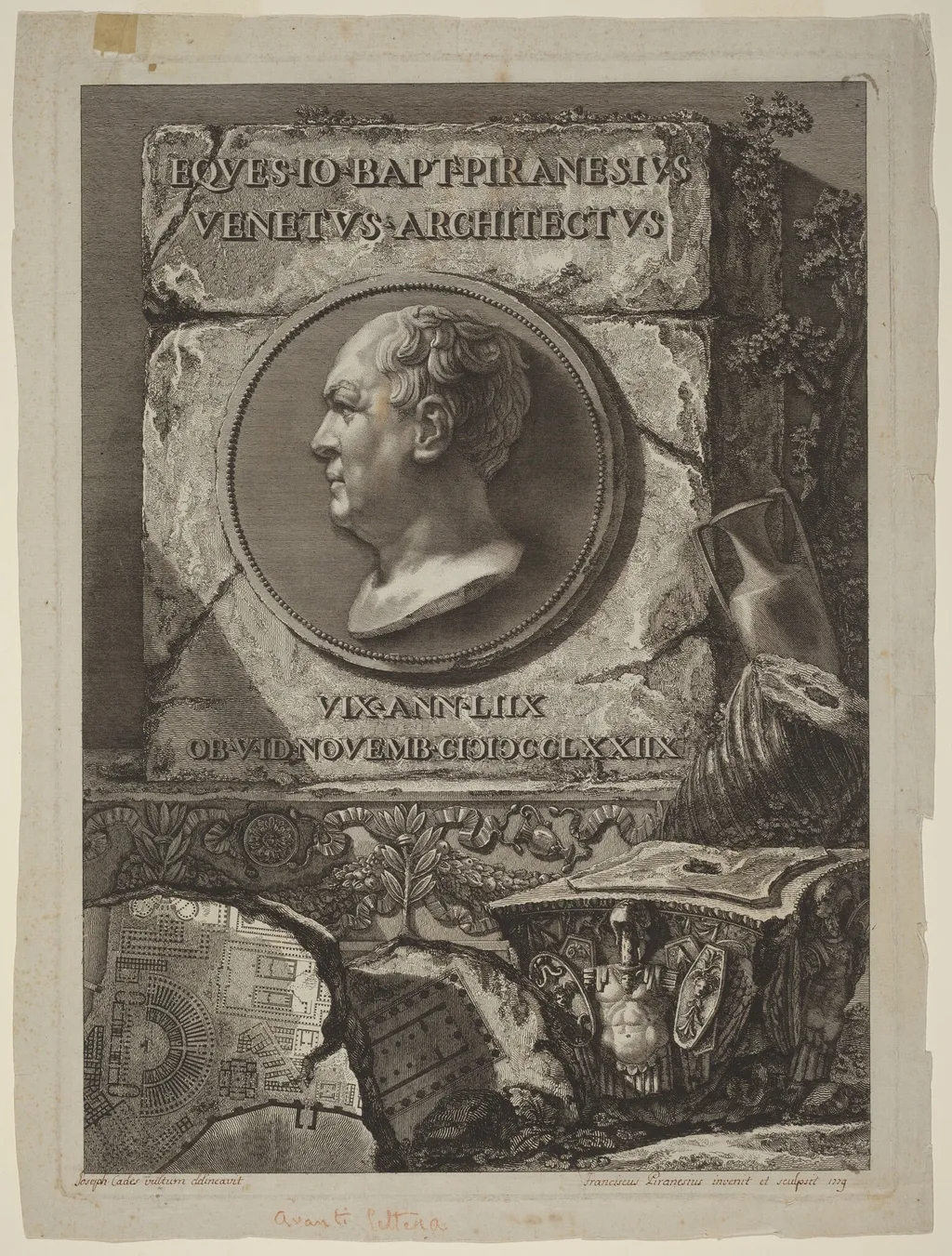
Giovanni Battista Piranesi is an ink print by the Romanticist artist Francesco Piranesi. It dates from 1779 and is held in the collection of the National Gallery of Art.
About this work
Overview
Created in 1779 by Francesco Piranesi, this work is an etching that functions as a commemorative print. It presents a circular stone relief depicting a male head, framed by Latin inscription identifying the subject as a "Venetian architect" and providing his age and year of death. The composition is dense, with additional motifs filling the lower half of the image.
Subject & Meaning
The central relief suggests a funerary monument for an architect, reinforced by the presence of a rolled architectural plan, a broken column, and a skull—traditional symbols of professional identity, unfinished work, and mortality. The Latin caption "Venetus Architectus" explicitly links the deceased to Venice’s building tradition.
Technique & Style
Executed as an etching, the image relies on incised lines on a metal plate, allowing for fine, crisp detailing. The artist employs a busy, linear network of hatching and cross‑hatching to render texture and depth, characteristic of late‑18th‑century printmaking that emphasized precision and ornamental complexity.
History & Provenance
The print is attributed to Francesco Piranesi, a member of the Piranesi family known for architectural and antiquarian subjects. Produced in the final decade of his career, it reflects the period’s interest in memorializing architects through graphic media, though specific ownership records beyond its initial issue remain limited.
Artist & collection


 H Beard Print Collection
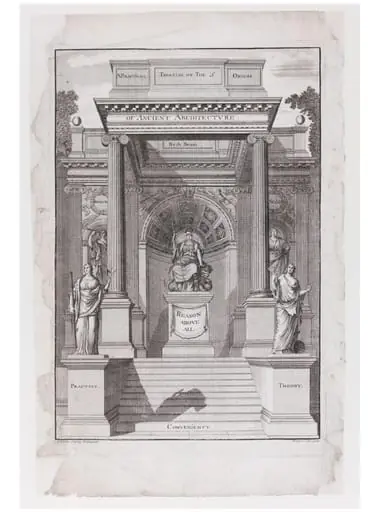 A Practical Treatise on the Five Orders of Ancient Architecture
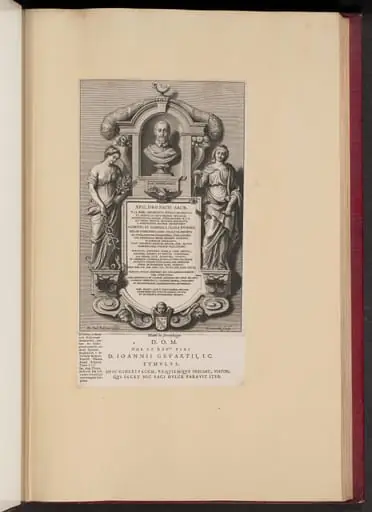 Epitaph of Claude Jean Gevaert
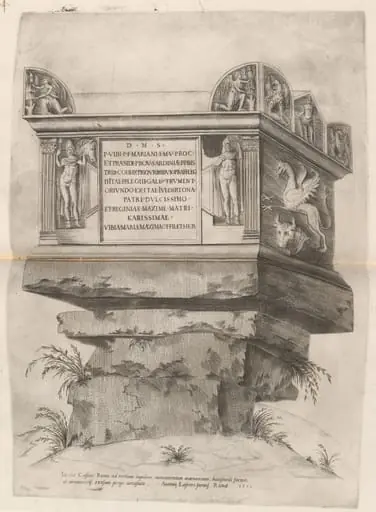 Tomb of Nero
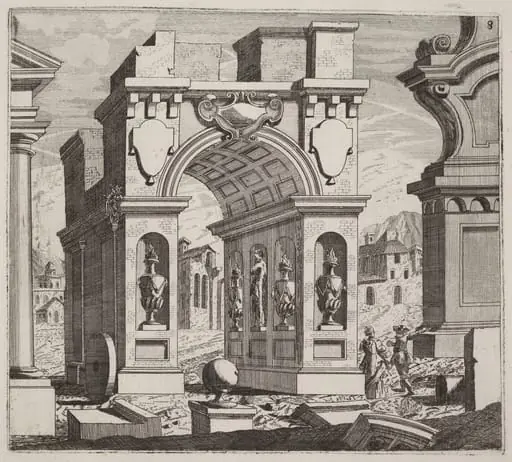 Architectural Fantasy with a Triumphal Arch
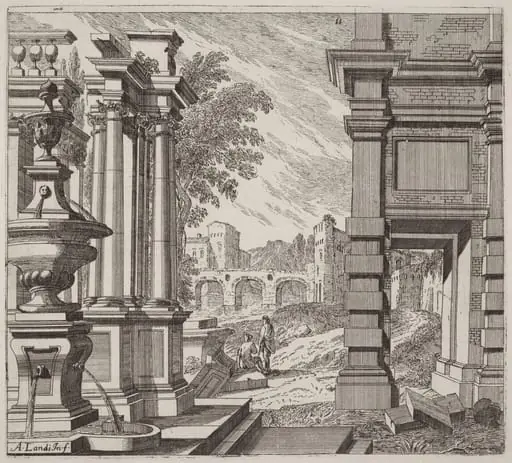 Architectural Fantasy with a Fountain, Classical Ruins, and a Bridge
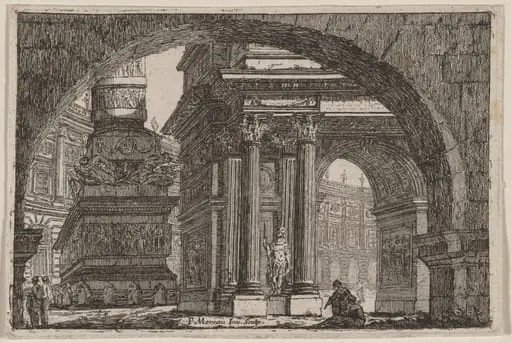 Ancient Forum Seen Beneath an Arch
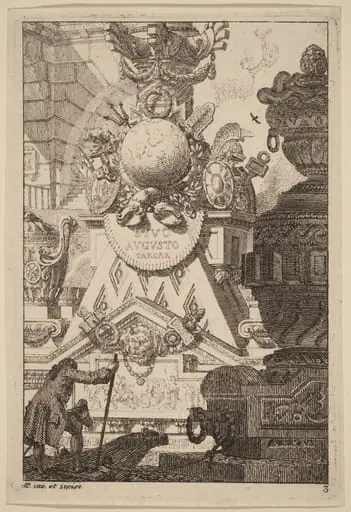 Fantasy of an Antique Trophy to Augustus
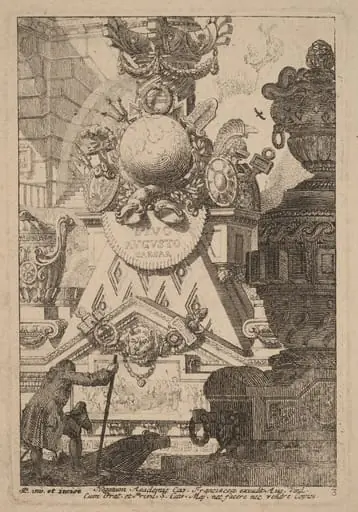 Fantasy of an Antique Trophy to Augustus
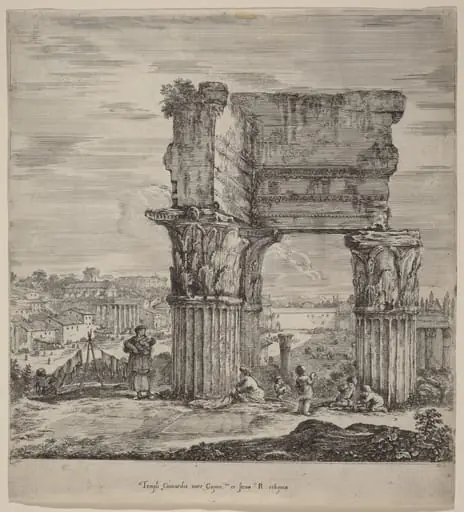 Temple of Concord and Roman Forum