Artwork
Spaccato interno della Basilica di S. Paolo fuori delle Mura
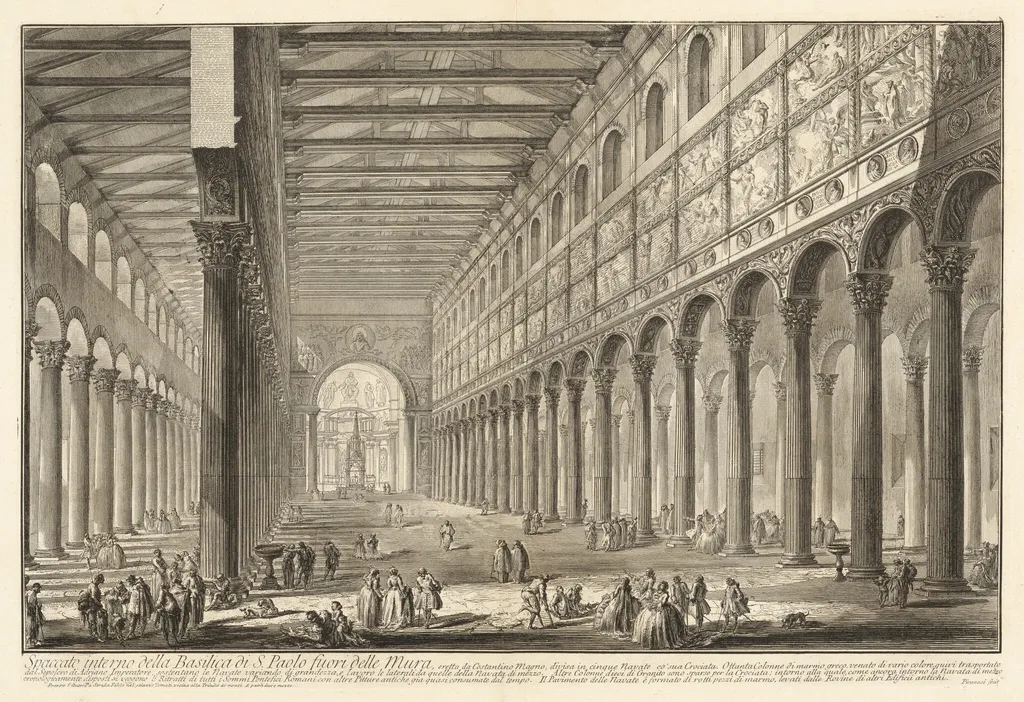
Spaccato interno della Basilica di S. Paolo fuori delle Mura is an ink print by the Baroque artist Giovanni Battista Piranesi. It dates from 1748 and is held in the collection of the National Gallery of Art.
About this work
Overview
Created around 1748, this etching by Giovanni Battista Piranesi captures the interior of the Basilica of Saint Paul Outside the Walls in Rome.
Created around 1748, this etching by Giovanni Battista Piranesi captures the interior of the Basilica of Saint Paul Outside the Walls in Rome. As part of his broader documentation of Roman architecture, Piranesi used precise linework to convey spatial depth and structural grandeur. The work belongs to a series of architectural views that reflect his dual role as artist and antiquarian, blending observation with technical mastery in printmaking.
Subject & Meaning
The etching presents the vast nave of the basilica, emphasizing its longitudinal axis and repetitive arcades. Figures scattered throughout the space suggest daily activity, grounding the monumental architecture in human scale. Rather than idealizing the structure, Piranesi records its physical presence with documentary intent, highlighting the interplay between sacred space and lived experience in post-medieval Rome.
Technique & Style
Piranesi employed etching to achieve fine detail and tonal variation, using incised lines to define columns, vaults, and decorative elements. Light is rendered through strategic contrasts, with bright areas emerging from side openings to illuminate stone surfaces and carved reliefs. The composition’s perspectival rigor and attention to texture reflect his training in architectural draftsmanship and his interest in the materiality of ancient structures.
History & Provenance
This print was produced during Piranesi’s early years in Rome, when he was developing his reputation through architectural studies. It predates his more fantastical Carceri series and aligns with his efforts to record Rome’s monuments before further decay. The work circulated among Grand Tour travelers and scholars, contributing to the 18th-century revival of interest in classical architecture and Roman antiquities.
Context
In mid-18th century Rome, there was growing scholarly and artistic interest in preserving and interpreting ancient sites. Piranesi’s etchings responded to this climate, offering detailed records that served both academic and aesthetic purposes. His work stood apart from idealized Renaissance depictions by emphasizing the weight, wear, and scale of actual ruins and ecclesiastical buildings.
Legacy
Piranesi’s architectural prints, including this one, influenced generations of architects and artists by demonstrating how printmaking could convey spatial complexity and historical presence. His method of combining precise draftsmanship with dramatic lighting became a model for later topographical and archaeological illustration, shaping how the built heritage of antiquity was visually understood.
Artist & collection
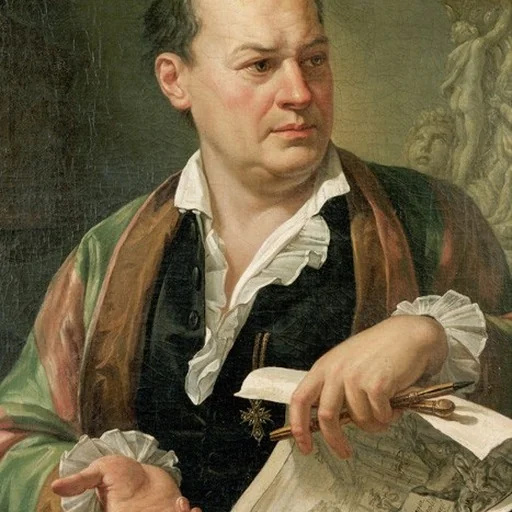
Artist
Giovanni Battista (or Giambattista) Piranesi (Italian pronunciation: ; also known as simply Piranesi; 4 October 1720 – 9 November 1778) was an Italian classical archaeologist, architect, and artist, famous for his…

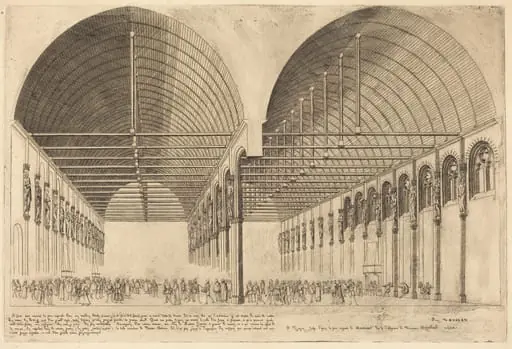 La salle des pas-perdus à l'ancien Palais-de-Justice, Paris (The Antechamber of the Palace of Justice, Paris)
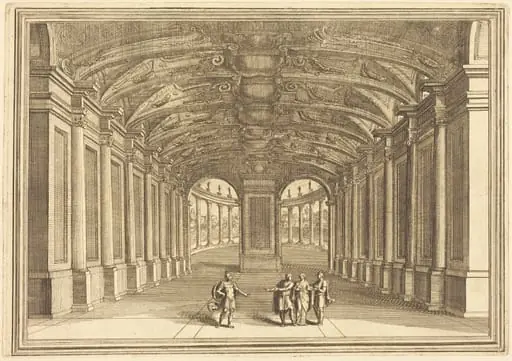 Il Greco in Troia: Plate 10
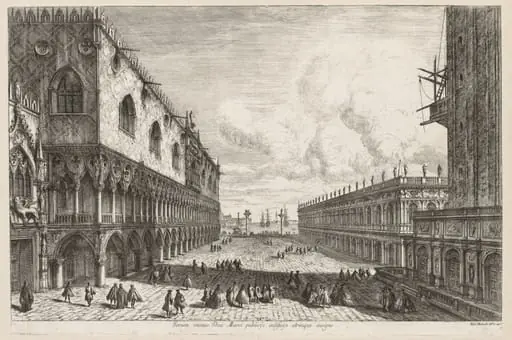 Views of Venice: The Piazzetta
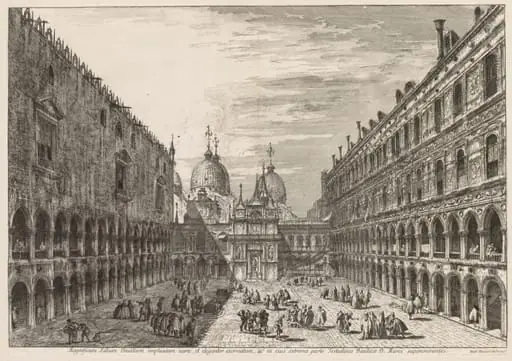 Views of Venice: The Courtyard of the Ducal Palace
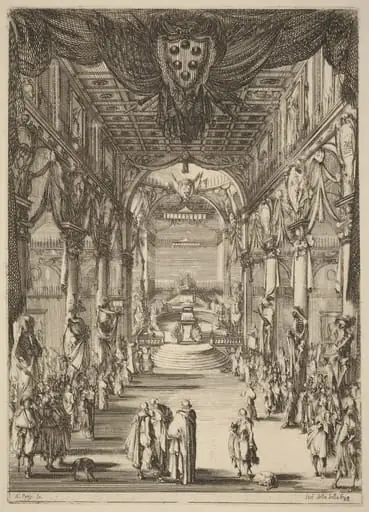 Funeral of Prince Francesco de Medici
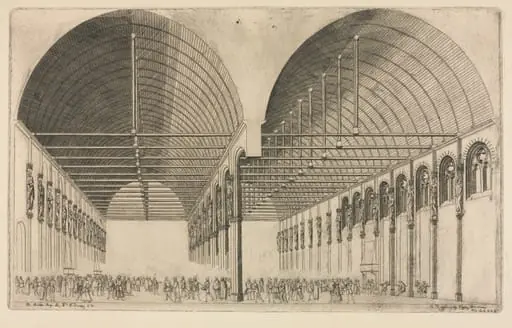 The Antechamber of the Palace of Justice, Paris
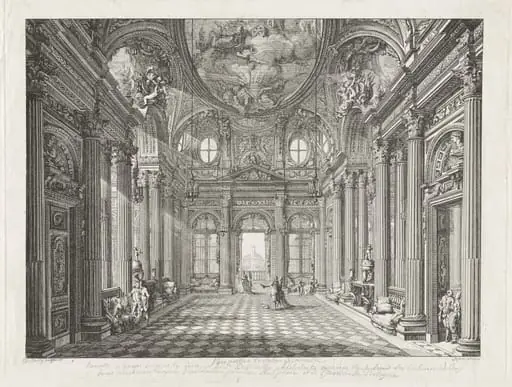 Perspectival View of the Salon of the Palazzo Spinola, Genoa
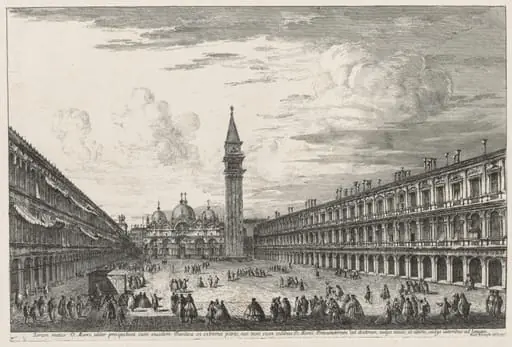 Views of Venice: Piazzo S. Marco
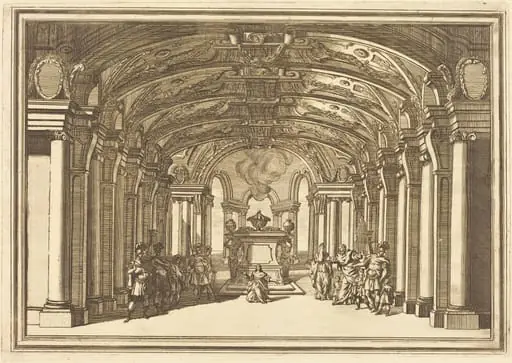 Il Greco in Troia: Plate 8
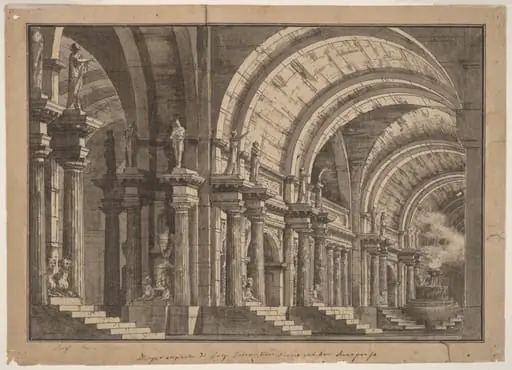 A Monumental Vaulted Hall with a Smoking Altar
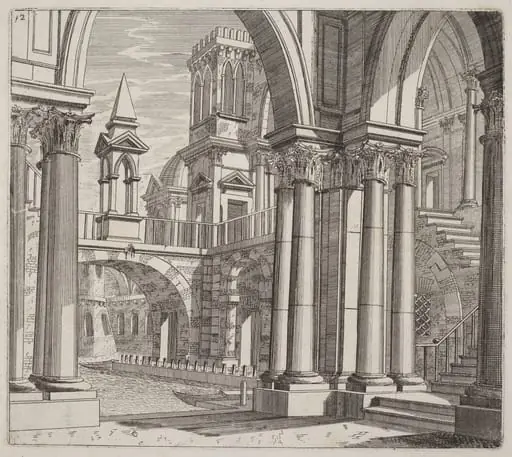 Architectural Fantasy with Buildings, Stairways, and Portals beside a Canal
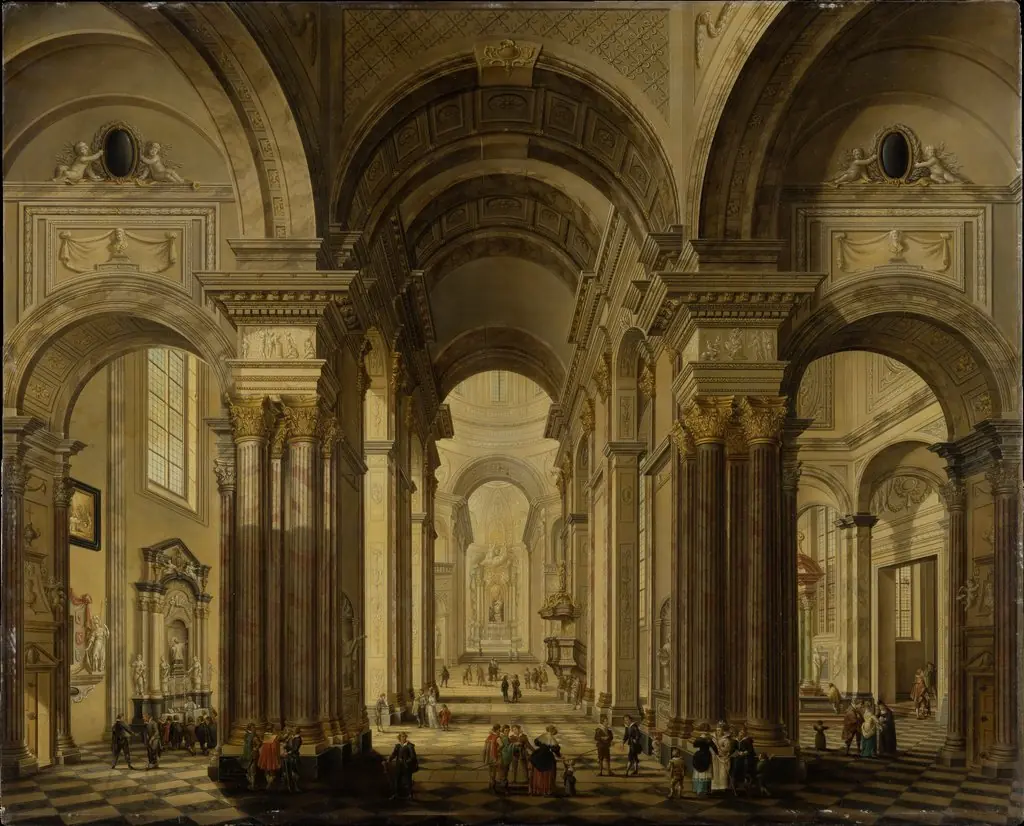 Interior of a Baroque Church