Artwork
The Antechamber of the Palace of Justice, Paris
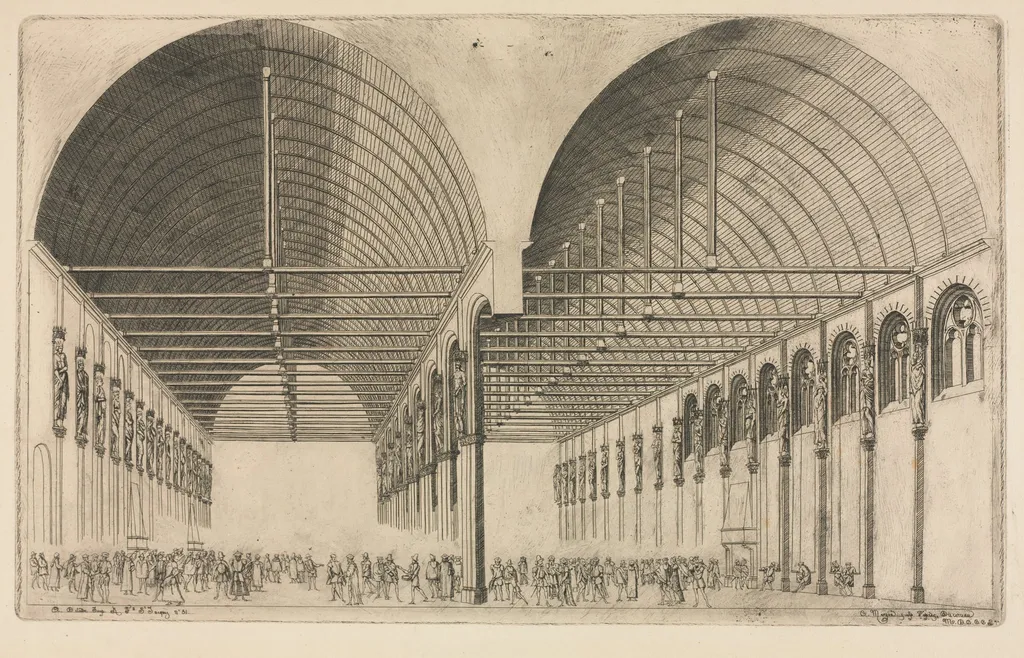
The Antechamber of the Palace of Justice, Paris is a print by the Impressionist artist Charles Meryon. It dates from 1855 and is held in the collection of the Cleveland Museum of Art.
About this work
Overview
Charles Meryon’s 1855 etching, *The Antechamber of the Palace of Justice, Paris*, presents a spacious interior of a monumental civic building. Rendered in black‑and‑white, the image captures a long, vaulted hall lined with arches and columns, its stone surfaces illuminated by light from distant windows.
Subject & Meaning
The composition focuses on the architectural grandeur of the justice palace, populated only by diminutive figures moving in orderly rows across the floor. Their small scale emphasizes the dominance of the built environment, suggesting the anonymity of individuals within institutional space.
Technique & Style
Meryon employed precise, incisive lines and strong chiaroscuro to model depth, allowing the arches to recede into darkness while the floor reflects a muted glow. His exclusive use of etching—necessitated by his colour‑blindness—produces a stark, atmospheric quality characteristic of his Gothic‑inflected vision of Paris.
History & Provenance
Created during the mid‑nineteenth century, the work reflects Meryon’s mature period as France’s leading etcher, despite his limited fame outside francophone circles. The print has circulated among collectors of 19th‑century French graphic art and remains a key example of his oeuvre.
Context
Meryon’s focus on urban architecture aligns with the Realist interest in everyday public spaces, yet his treatment retains a romantic, almost haunting tone. The Palace of Justice, a symbol of state authority, was a frequent subject for artists documenting the transformation of Paris under Haussmann.
Artist & collection
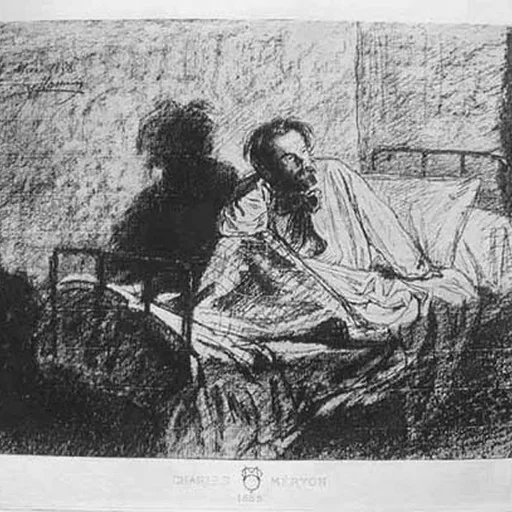
Artist
Charles Meryon (sometimes Méryon, 23 November 1821 – 14 February 1868) was a French artist who worked almost entirely in etching, as he had colour blindness.

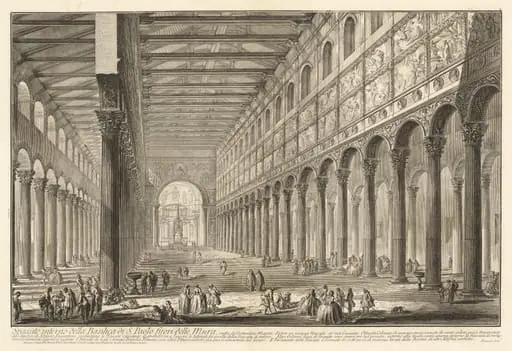 Spaccato interno della Basilica di S. Paolo fuori delle Mura
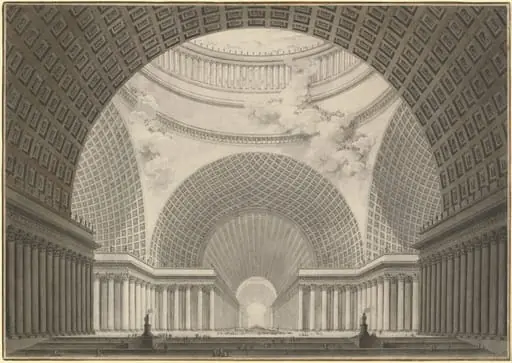 Perspective View of the Interior of a Metropolitan Church
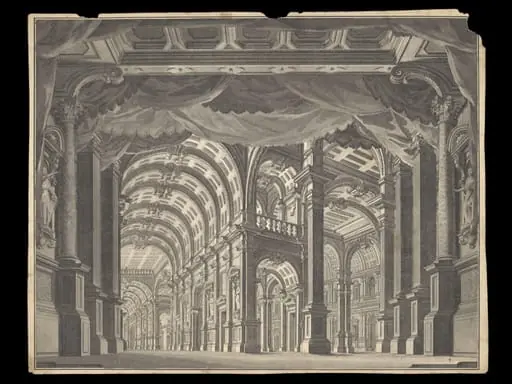 H Beard Print Collection
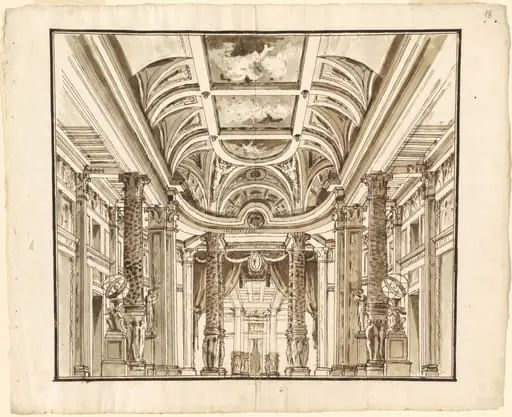 Fantasy of a Great Hall with Basketweave Columns
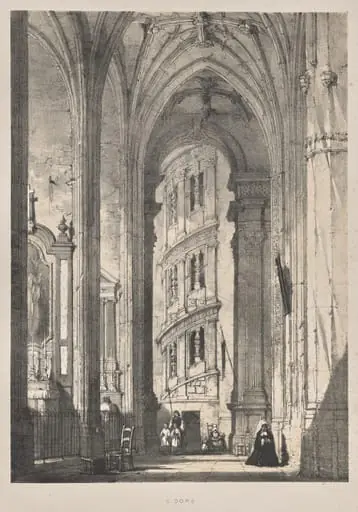 Architecture of the Middle Ages: Church of St. Gisors, Interior
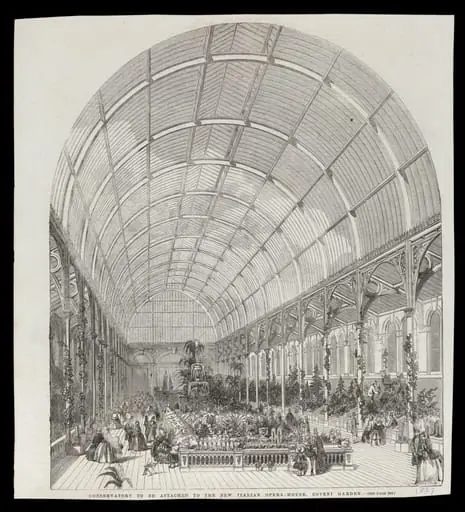 H Beard Print Collection
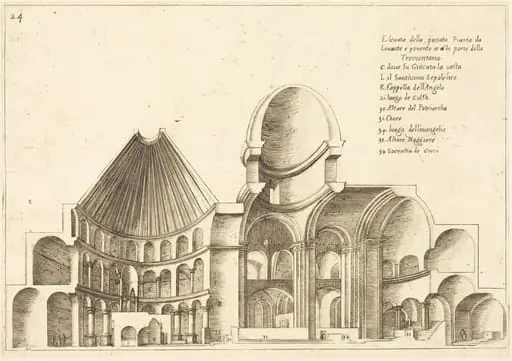 Cross-Section of the Church of the Holy Sepulchre
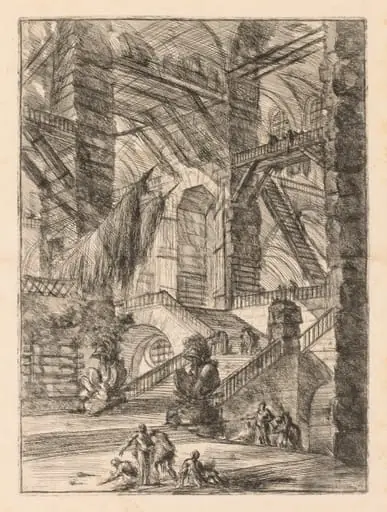 The Prisons: A Vast Interior with Trophies
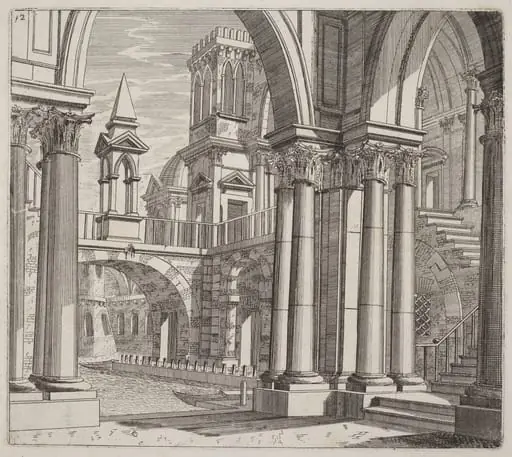 Architectural Fantasy with Buildings, Stairways, and Portals beside a Canal
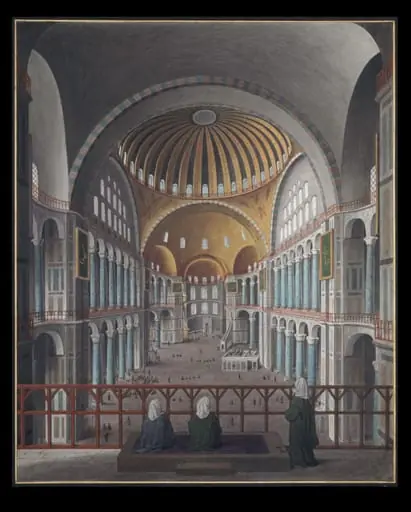 The interior of the Mosque of Aya Sofya, Istanbul
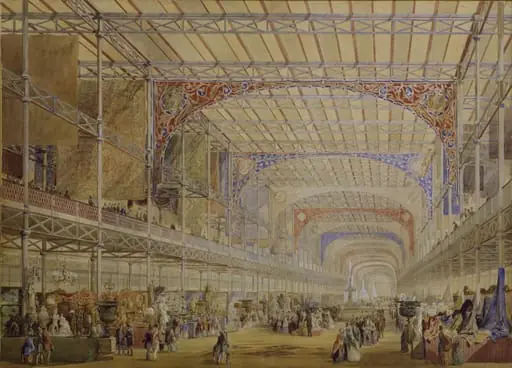 Interior of the Crystal Palace
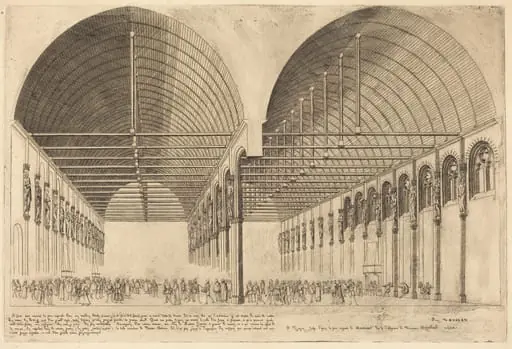 La salle des pas-perdus à l'ancien Palais-de-Justice, Paris (The Antechamber of the Palace of Justice, Paris)