Artwork
The Grand Piazza
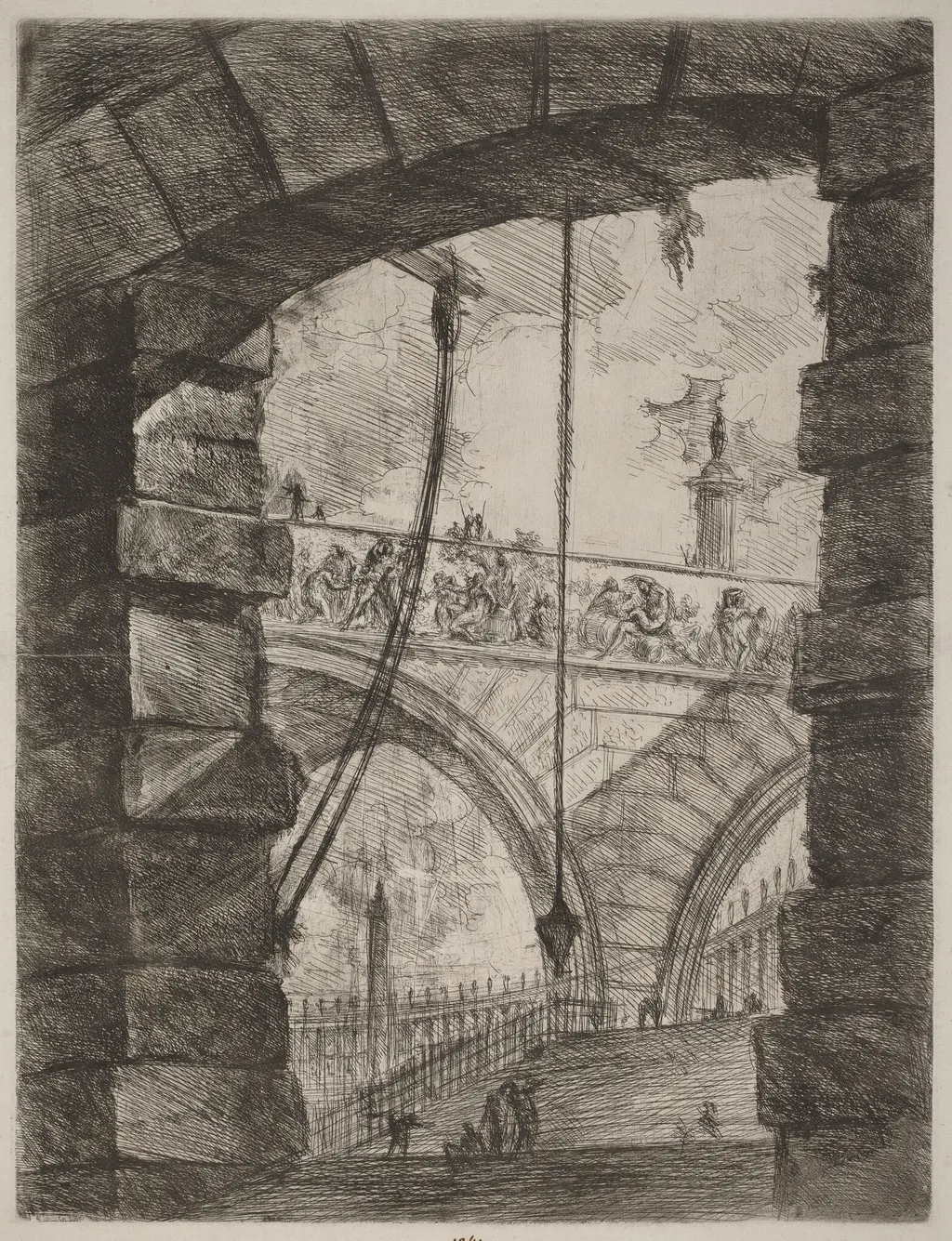
The Grand Piazza is an ink print by the Romanticist artist Giovanni Battista Piranesi. It dates from 1754 and is held in the collection of the National Gallery of Art.
About this work
Overview
Created in 1754, *The Grand Piazza* is an etching and engraving by Giovanni Battista Piranesi, enhanced with sulphur tint and burnishing. Though rooted in classical architectural study, the scene is not a documented Roman site but an invented space. It merges archaeological precision with imaginative reconstruction, presenting a vast, decaying urban enclosure that feels both familiar and surreal.
Subject & Meaning
The absence of a clear light source deepens the mystery, transforming the square into a psychological landscape where ruin and memory coexist.
The image portrays an expansive, ruined piazza dominated by fractured arches and leaning walls, evoking the passage of time and the fragility of monumental structures. Tiny human figures—on foot and horseback—move through the space, underscoring its abandonment yet continued use. The absence of a clear light source deepens the mystery, transforming the square into a psychological landscape where ruin and memory coexist.
Technique & Style
Piranesi employed etching and engraving to render intricate textures—rough stone, crumbling mortar, and weathered surfaces—while sulphur tint added atmospheric depth and shadow. Burnishing softened certain areas to suggest reflected light or worn stone. The dense, overlapping lines create a sense of spatial complexity, guiding the eye through a labyrinthine composition that blurs the boundary between real architecture and imagined ruin.
History & Provenance
Produced during Piranesi’s early years in Rome, the print was part of a series exploring architectural grandeur and decay. It circulated among European collectors and scholars drawn to his reimagined antiquities. Though not part of his famous *Carceri* series, it shares their thematic preoccupation with monumental ruin and spatial ambiguity, reflecting his growing reputation as a visual interpreter of Rome’s layered past.
Context
In mid-18th-century Europe, fascination with classical antiquity fueled archaeological study and artistic revival. Piranesi, trained as an architect, responded not only to actual ruins but to the romantic ideal of decay. *The Grand Piazza* reflects this tension—between scholarly accuracy and poetic invention—offering viewers a vision of Rome that was as much emotional as it was topographical.
Legacy
The print contributed to Piranesi’s influence on Neoclassical and Romantic aesthetics, inspiring architects and artists to treat ruins not as relics but as evocative spaces. His technique of layering texture and shadow to convey psychological weight became a model for later printmakers. *The Grand Piazza* endures as a quiet meditation on time, memory, and the enduring presence of the past in the built environment.
Artist & collection

Artist
Giovanni Battista (or Giambattista) Piranesi (Italian pronunciation: ; also known as simply Piranesi; 4 October 1720 – 9 November 1778) was an Italian classical archaeologist, architect, and artist, famous for his…


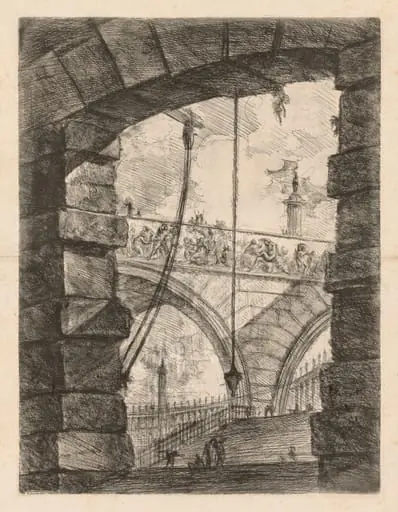 The Prisons: A Lofty Arch with a Frieze
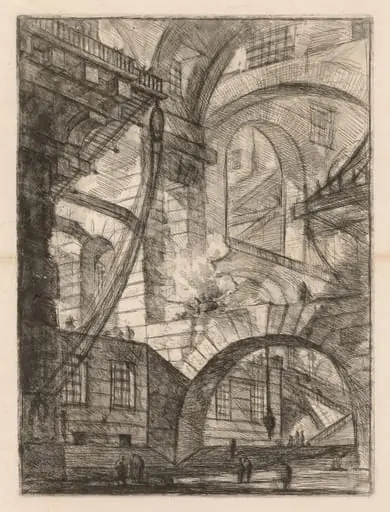 The Prisons: A Perspective of Arches with a Smoking Fire
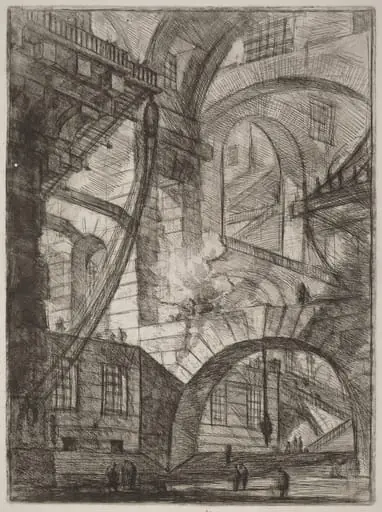 The Smoking Fire
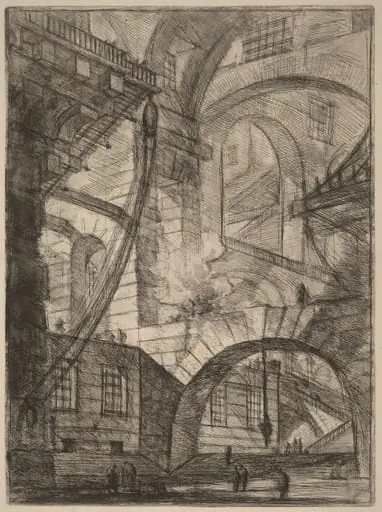 The Smoking Fire
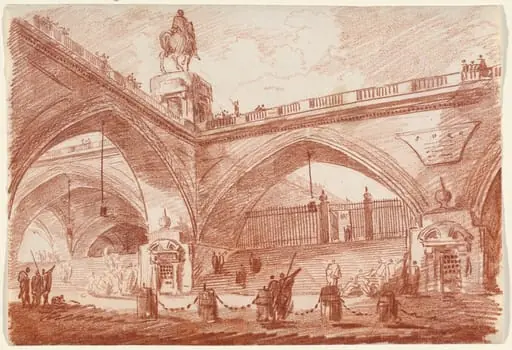 Architectural Fantasy with a Triumphal Bridge
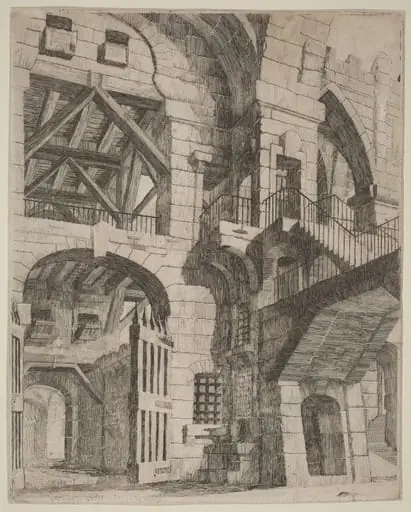 An Imaginary Prison
![Grosvenor Bridge [by Thomas Harrison], Chester, by Causer](https://artifactworldgallery.com/img/causer--grosvenor-bridge-by-thomas-harrison-chester--d0b18622d870bf40-w320.webp) Grosvenor Bridge [by Thomas Harrison], Chester
Grosvenor Bridge [by Thomas Harrison], Chester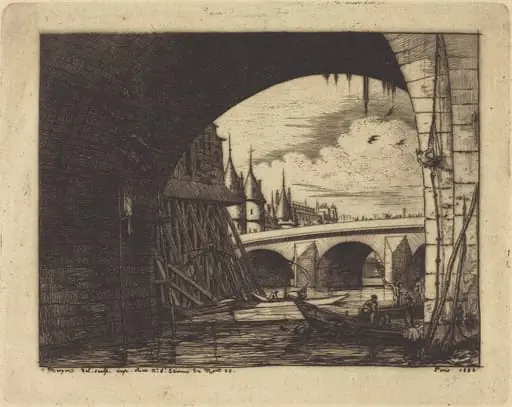 L'arche du Pont Notre-Dame, Paris (An Arch of the Notre-Dame Bridge, Paris)
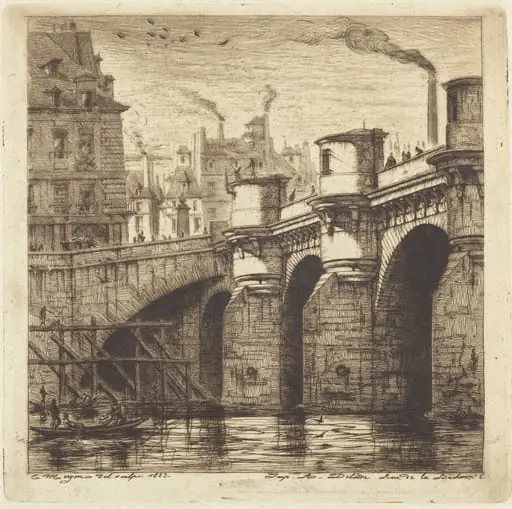 Le Pont-Neuf, Paris
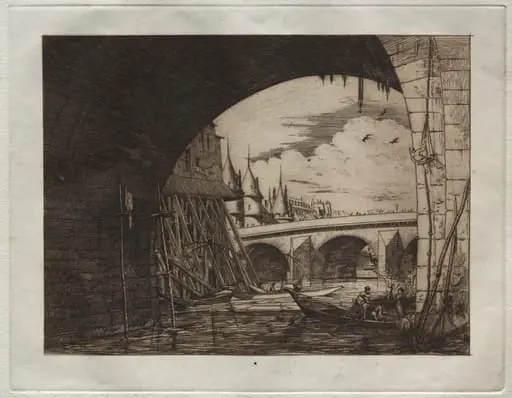 L'Arch du Pont Notre Dame