Artwork
Title Plate
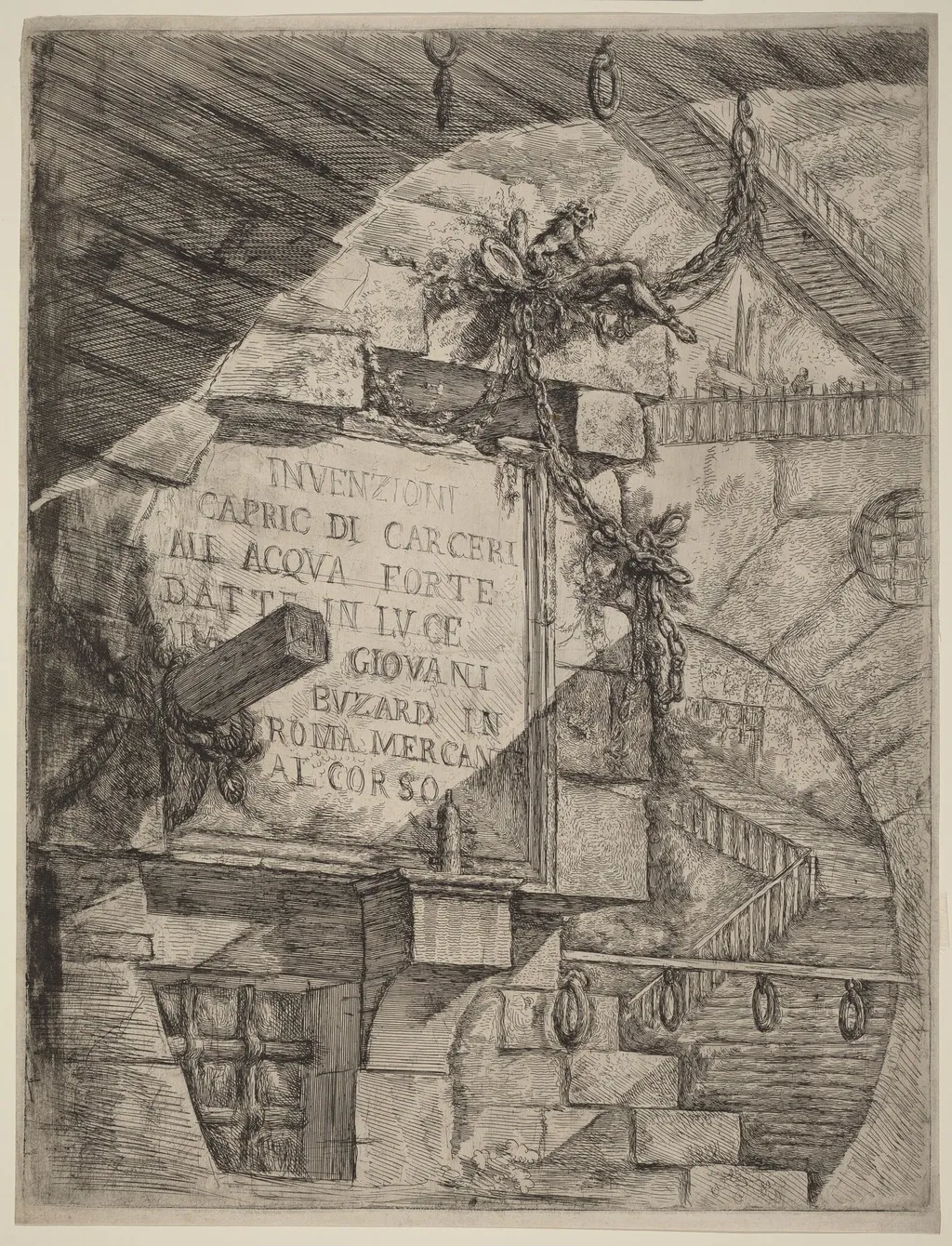
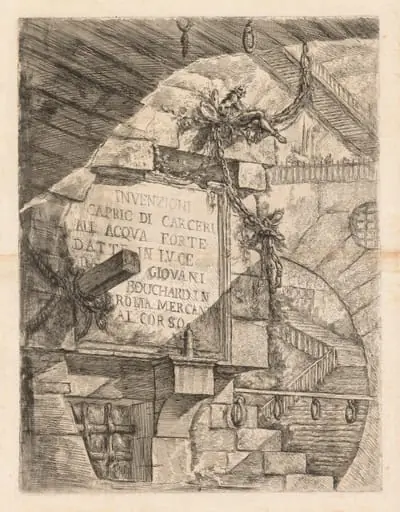
Title Plate is an ink print by the Baroque artist Giovanni Battista Piranesi. It dates from 1750 and is held in the collection of the National Gallery of Art.
About this work
Overview
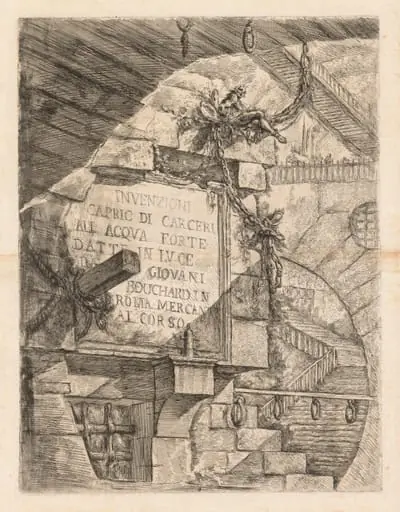
Created in 1750, the work titled *Title Plate* is a print that combines etching, engraving, and a sulphur tint—or open bite—technique. It depicts a stone slab affixed to a wall, bound by a rope, with a seated figure atop it, and bears an Italian inscription that functions as a dedication or memorial.
Subject & Meaning
The image centers on a stone plate, suggesting a commemorative or ceremonial purpose. The presence of a rope and a figure perched on the slab emphasizes its physicality, while the Italian text invites viewers to consider the inscription’s content as a marker of memory or honor within a classical context.
Technique & Style
Piranesi employed a blend of etching and engraving, enriching the line work with a sulphur tint that creates subtle tonal variations. This method, sometimes described as an open bite, yields a textured surface and a sense of depth, aligning the piece with the intricate, dramatic aesthetics characteristic of late Baroque printmaking.
History & Provenance
The print originates from Giovanni Battista Piranesi, an 18th‑century Venetian scholar known for his architectural studies and imaginative series such as *Carceri d’invenzione*. While the plate’s specific ownership trail is not detailed, it forms part of Piranesi’s broader oeuvre that documented classical motifs through meticulous print techniques.
Artist & collection
Artist
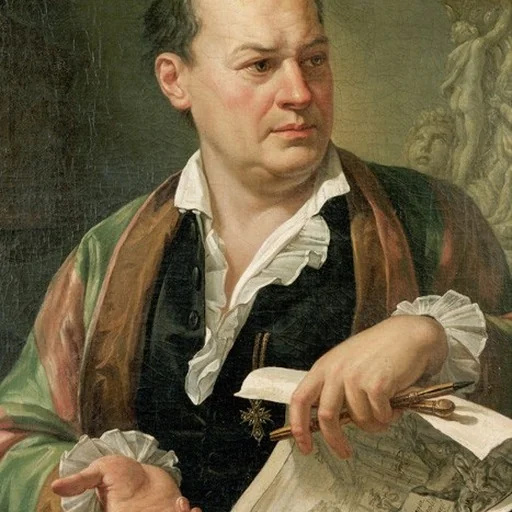
Giovanni Battista (or Giambattista) Piranesi (Italian pronunciation: ; also known as simply Piranesi; 4 October 1720 – 9 November 1778) was an Italian classical archaeologist, architect, and artist, famous for his…

 The Prisons: Title Page -- Interior of a Prison
 The Prisons
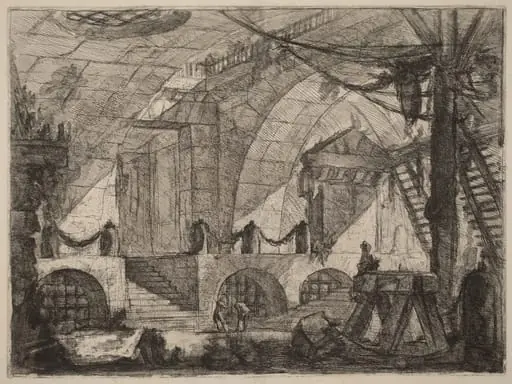 The Sawhorse
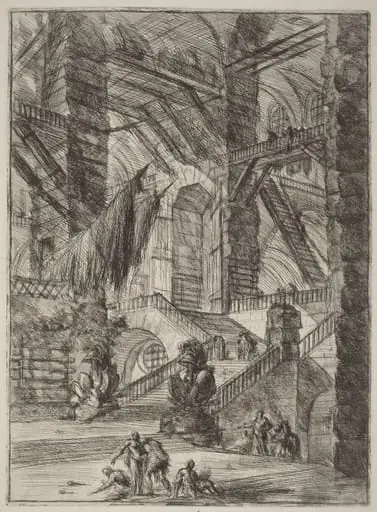 The Staircase with Trophies
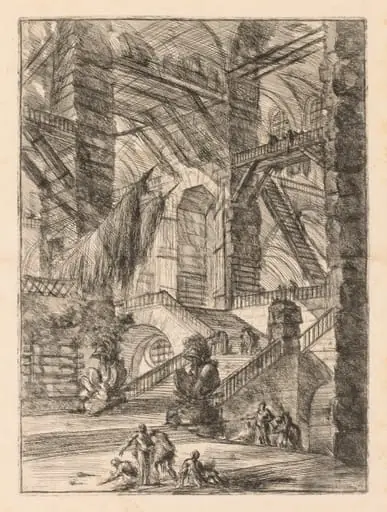 The Prisons: A Vast Interior with Trophies
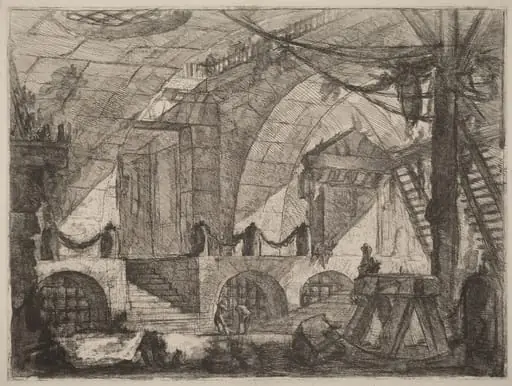 The Sawhorse
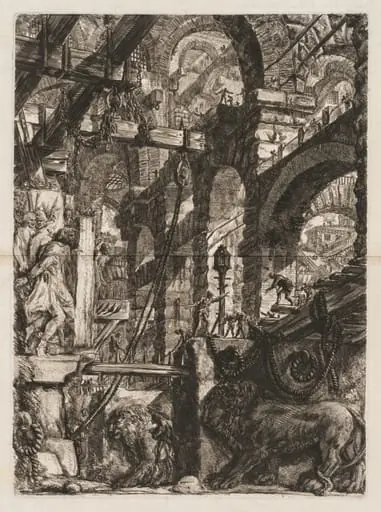 The Prisons: A Perspective of Roman Arches, with Two Lions Carved in Relief on Stone Slabs in the Foreground
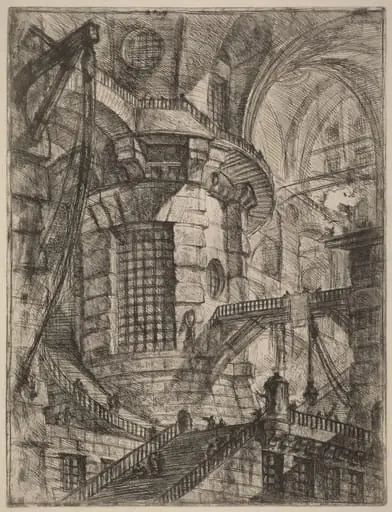 The Round Tower
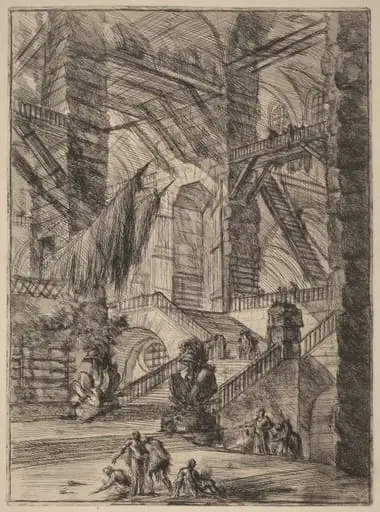 The Staircase with Trophies
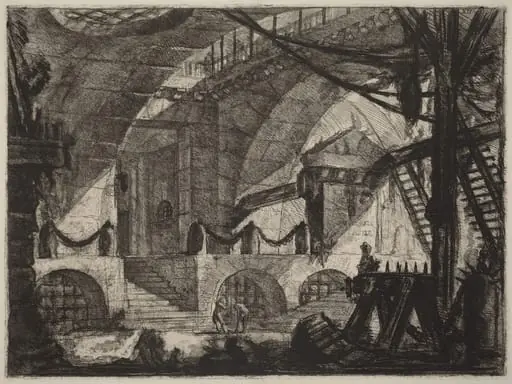 The Sawhorse