Artwork
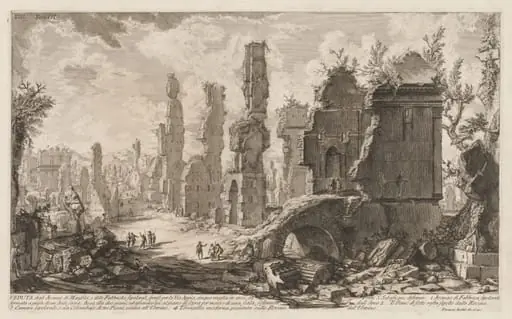
Veduta ... delle Terme di Tito
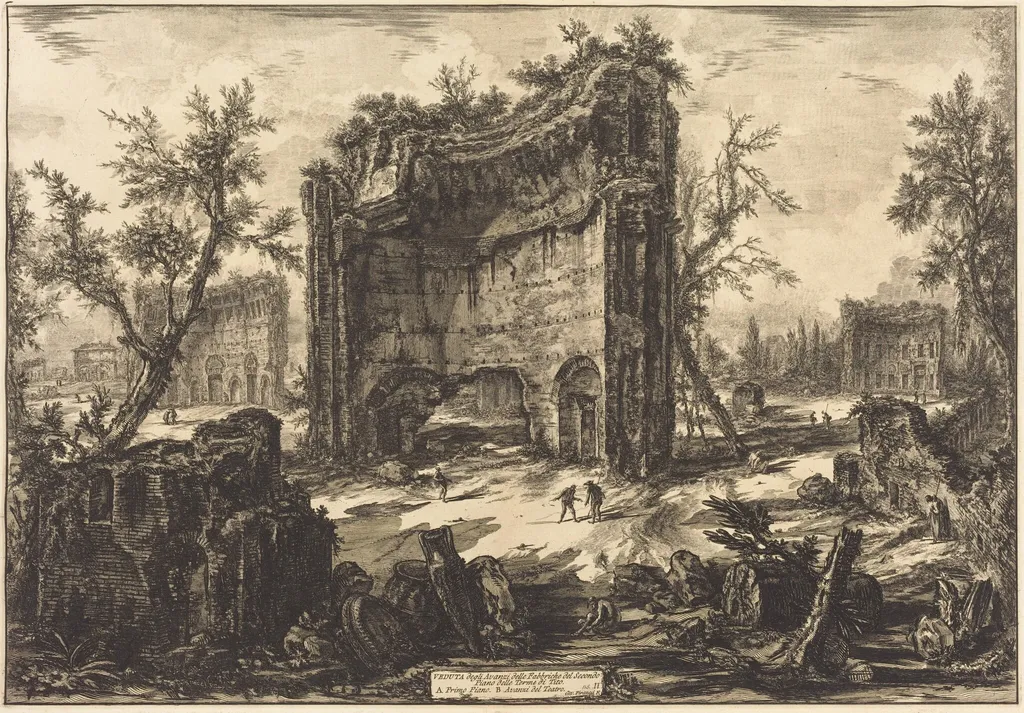
Veduta ... delle Terme di Tito is an ink print by the Romanticist artist Giovanni Battista Piranesi. It dates from 1776 and is held in the collection of the National Gallery of Art.
About this work
Overview
Executed on laid paper, it belongs to a series of topographical prints produced during the later phase of his career.
Created in 1776, this etching by Giovanni Battista Piranesi captures the ruins of the Baths of Titus in Rome. Executed on laid paper, it belongs to a series of topographical prints produced during the later phase of his career. Unlike mere architectural records, these works blend observed detail with compositional invention, positioning Piranesi at the intersection of archaeology and imaginative representation.
Subject & Meaning
The scene depicts the fragmented remains of the ancient imperial baths, their massive stonework looming over a narrow, shadowed alley. Piranesi emphasizes decay not as mere documentation but as a narrative of time’s passage. The ruins become silent witnesses to imperial grandeur lost, evoking contemplation rather than nostalgia. The composition suggests a world where history is both present and inaccessible.
Technique & Style
Piranesi employed fine, incised lines to render texture and depth, using chiaroscuro to heighten spatial drama. He stacked and scaled architectural fragments to amplify their monumentality, bending perspective to intensify emotional impact. The contrast between sunlit stone and deep foreground shadows creates a theatrical atmosphere, transforming the site into a stage where light and ruin converse.
History & Provenance
The print emerged from Piranesi’s sustained engagement with Rome’s antiquities, following decades of study and publication. It was part of a broader effort to document and reinterpret Roman ruins for an international audience of travelers and scholars. While rooted in surveying, the work was circulated as an artistic object, collected across Europe for its blend of precision and poetic license.
Context
In the late 18th century, interest in classical antiquity was intensifying across Europe, fueled by archaeological discoveries and Grand Tour travel. Piranesi’s prints responded to this demand, offering not just accurate depictions but emotionally charged interpretations. His work stood apart from dry topographical records, aligning instead with emerging Romantic sensibilities toward ruins and memory.
Legacy
Piranesi’s approach influenced generations of architects and artists who saw in his etchings a model for merging factual observation with expressive form. His dramatized ruins became a visual language for contemplating history’s weight. Though his methods were sometimes criticized for inaccuracy, his ability to evoke atmosphere ensured his prints remained influential long after his death.
Artist & collection

Artist
Giovanni Battista (or Giambattista) Piranesi (Italian pronunciation: ; also known as simply Piranesi; 4 October 1720 – 9 November 1778) was an Italian classical archaeologist, architect, and artist, famous for his…

 Antiquities of Rome: The Appian Way
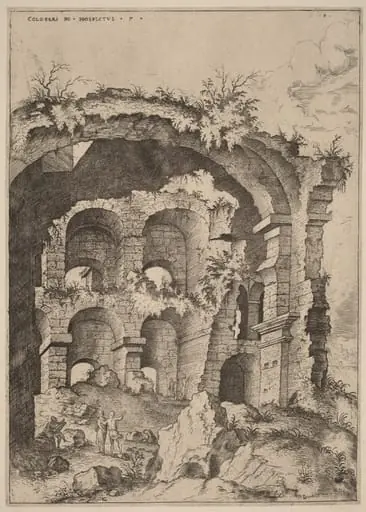 Seventh View of the Colosseum
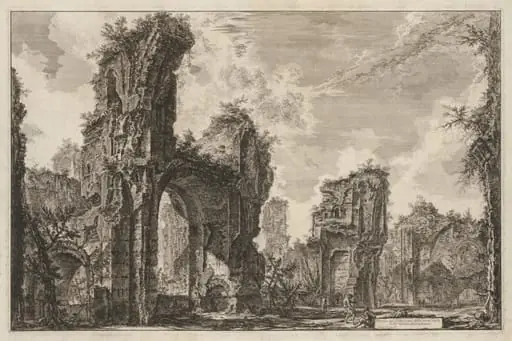 Views of Rome: Rovine del Sisto o sia della gran sala delle Terme Antoniniane
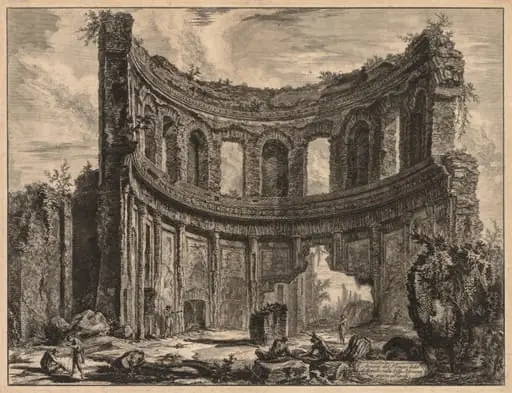 Views of Rome: Remains of the Temple of Apollo near Hadrian's Villa
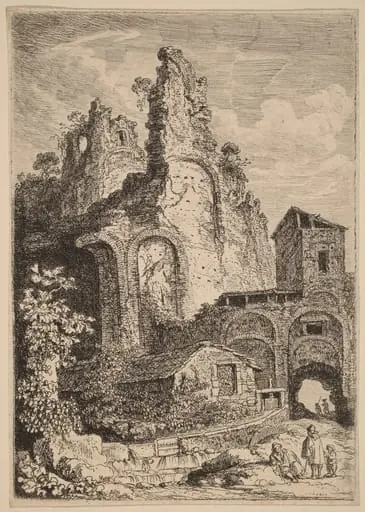 The Old Palace at Tivoli
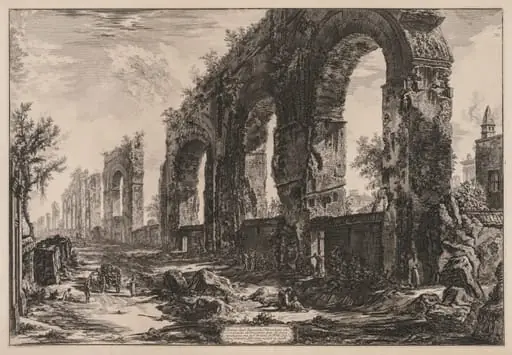 Views of Rome: The Aquaduct of Nero
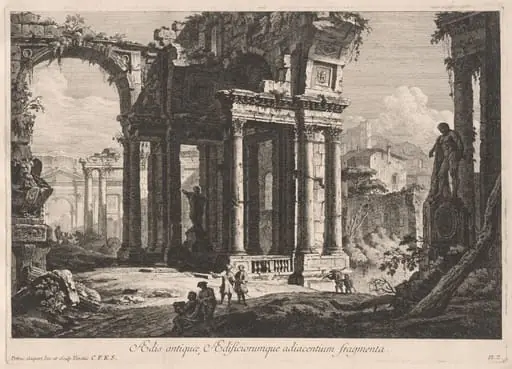 AEdis antiquae, AEdificiorumque adiacentium fragmenta
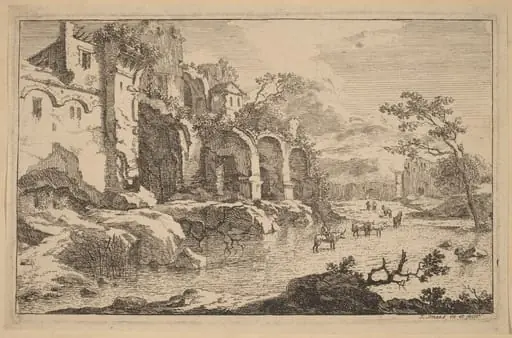 Building in Ruins at the Side of a River
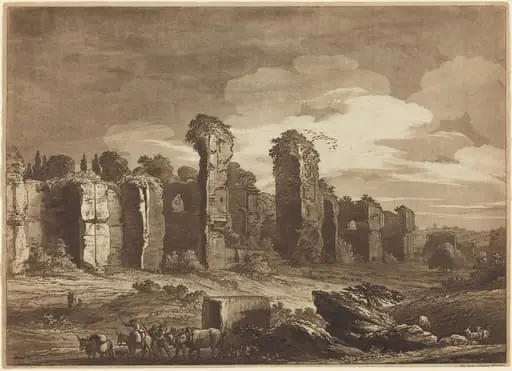 View of the Remains of Caracalla's Baths, Taken from the Jesuits Gardens at Rome
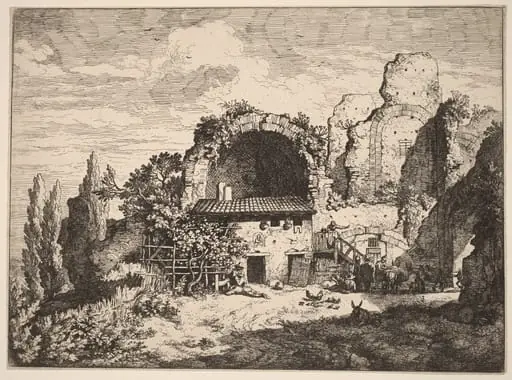 The Muleteers' Inn
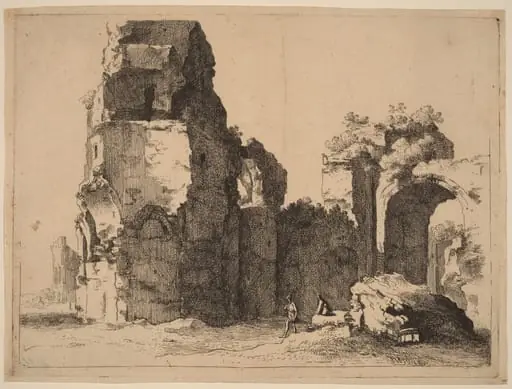 Ruins
Ruins