Artwork
A Woman Wearing a Straw Hat [Madame de Pompadour?]
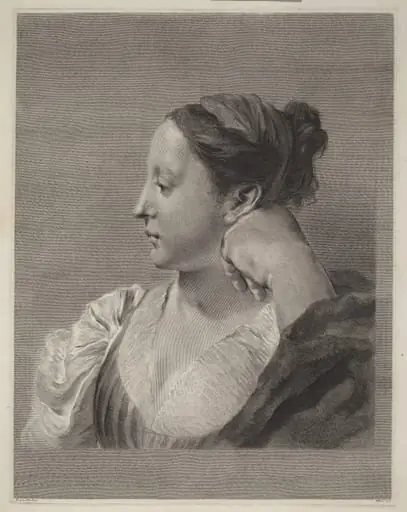
![A Woman Wearing a Straw Hat [Madame de Pompadour?], by Marco Alvise Pitteri, ink, 1774](https://artifactworldgallery.com/img/marco-alvise-pitteri--a-woman-wearing-a-straw-hat-madame-de-pompadour--a8849525097954a5-w1024.webp)
A Woman Wearing a Straw Hat [Madame de Pompadour?] is an ink print by the Romanticist artist Marco Alvise Pitteri. It dates from 1774 and is held in the collection of the National Gallery of Art.
About this work
Overview
The work is a proof impression, suggesting it was pulled during the printing process to assess progress.
This black-and-white engraving, produced by Marco Alvise Pitteri in 1774, depicts a woman in formal attire, rendered through precise incised lines on laid paper. Though once tentatively linked to Madame de Pompadour, the identity remains unconfirmed. The work is a proof impression, suggesting it was pulled during the printing process to assess progress. It resides in the National Gallery of Art, Washington, as part of its print collection.
Subject & Meaning
The figure faces the viewer with a composed expression and a faint smile, conveying quiet dignity rather than theatricality. Her elaborate white wig, straw hat decorated with blossoms, and lace-trimmed dress reflect aristocratic fashion of the late 18th century. The absence of overt symbols or narrative context invites focus on personal presence rather than social status, suggesting an intimate portrait rather than a ceremonial image.
Technique & Style
Pitteri employed engraving, a method involving incising lines into a metal plate with a burin. Fine, controlled strokes model the texture of her wig, the weave of her hat, and the soft folds of lace. The tonal gradations emerge from line density rather than shading, characteristic of the medium. The proof state reveals subtle adjustments, offering insight into the artist’s process before final printing.
History & Provenance
Created in 1774, the engraving was likely made for private circulation or as a study for broader distribution. Its status as a proof indicates it was not part of a commercial edition. The work entered the National Gallery of Art’s collection through established print acquisitions, though its earlier ownership history remains undocumented beyond the artist’s workshop.
Context
In the 1770s, engraved portraits of aristocratic women were common in Europe, often circulated as visual tokens or decorative prints. Pitteri, active in Venice, worked within a tradition of reproductive engraving, translating painted likenesses into print. This piece reflects the era’s fascination with refined portraiture, even as the Rococo style began yielding to more restrained Neoclassical ideals.
Legacy
Though not widely reproduced or studied, the engraving survives as a quiet example of late 18th-century printmaking craftsmanship. It contributes to understanding how aristocratic identity was visually mediated in print form, beyond major commissions. Its preservation in a major public collection ensures continued access for scholars examining the intersection of portraiture and print culture in Enlightenment Europe.
Artist & collection


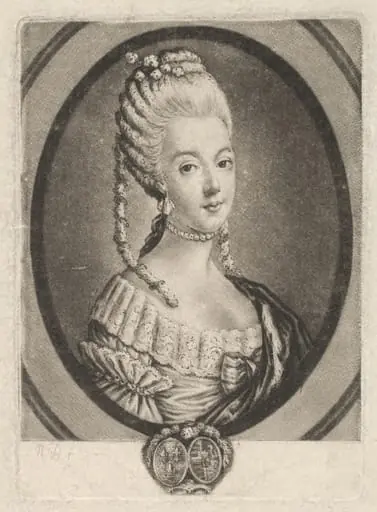 Marie-Antoinette
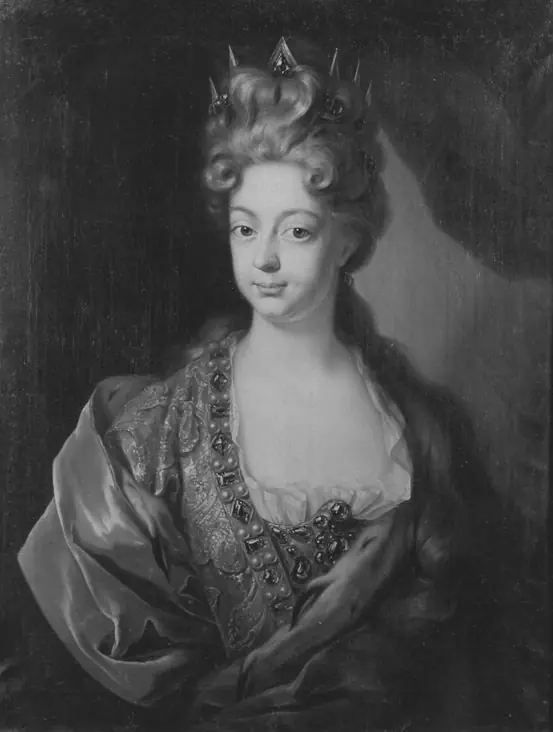 Portrait of Wilhelmine Amalie of Braunschweig-Lüneburg
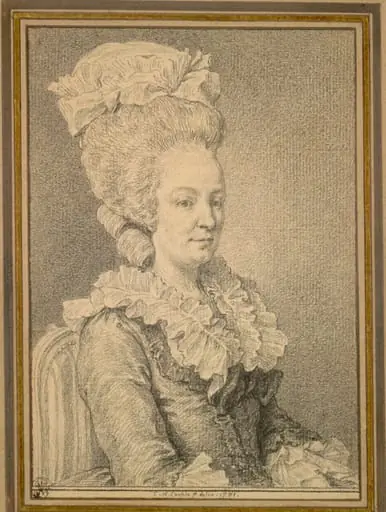 Half-length Portrait of a Seated Woman
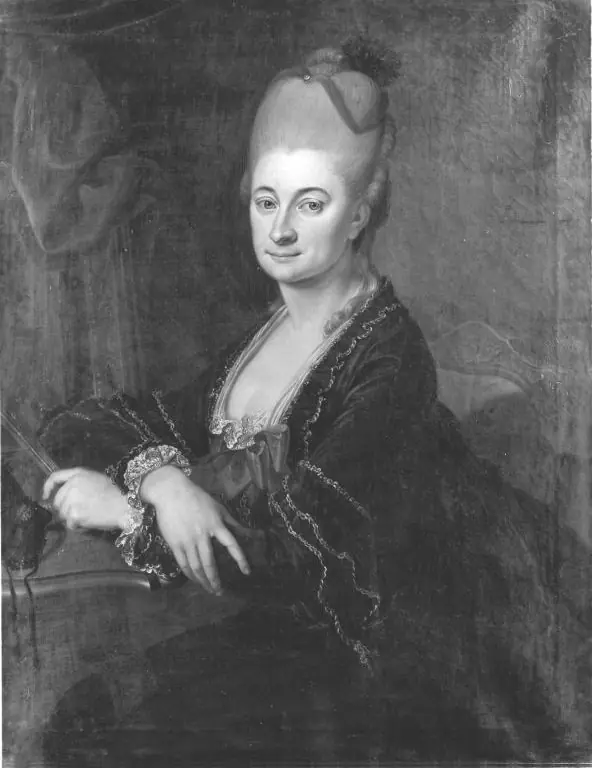 Maria Amalia of Zweibrücken-Birkenfeld
 Dronning Sophie Magdalene
 Portrait of a Woman
 Maria Klementyna Sobieska
 Frau Gottfried von Herder
 Bildnis der Gemahlin des Hofmedailleurs Franz Aandreas Schega
 Prinsesse Sofie Hedevig ?
 Bildnis der Maria Amalie Auguste
 Dronning Louise, Frederik IV's første dronning