Artwork
Arteries of Great Britain: The Tyne
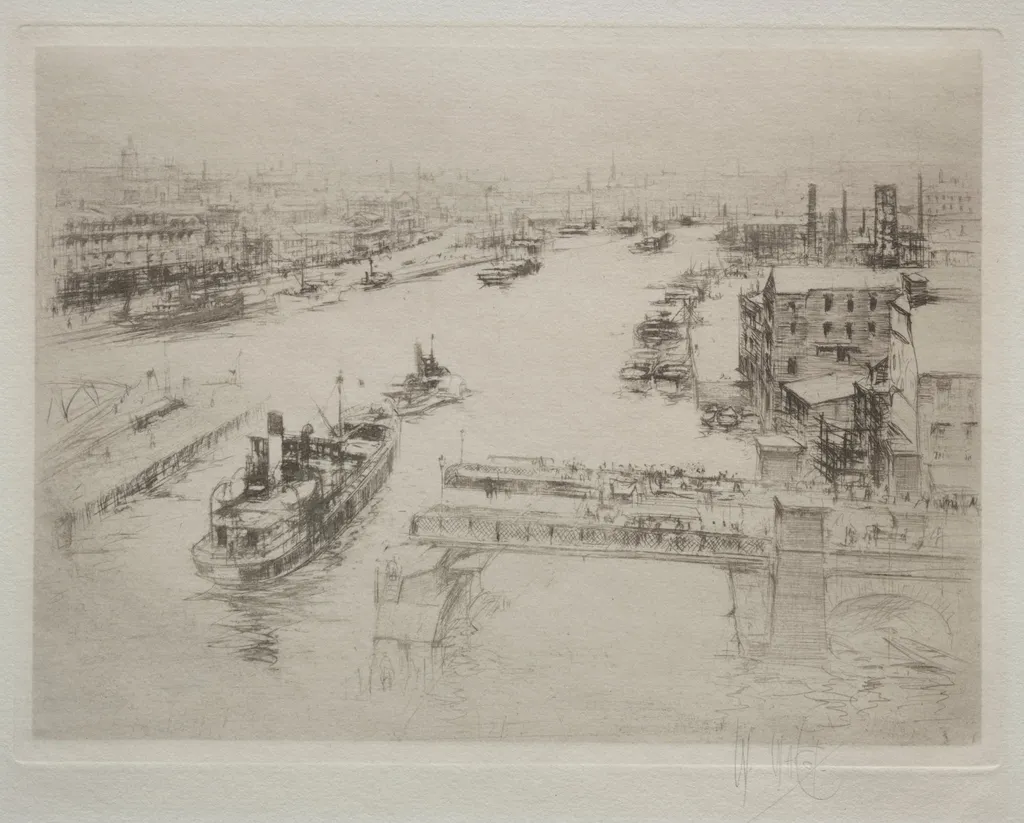
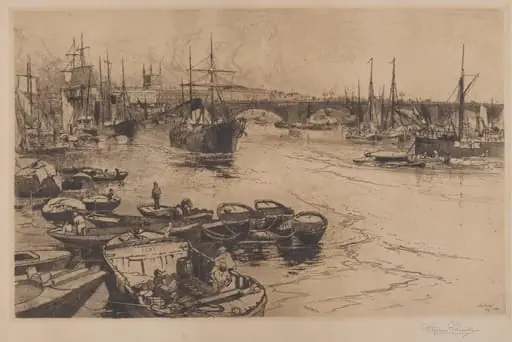
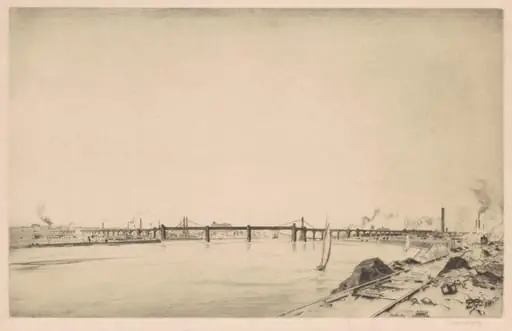
Arteries of Great Britain: The Tyne is a print by William Walcot. It dates from 1922 and is held in the collection of the Cleveland Museum of Art.
About this work
Overview
Created in 1922 by William Walcot, this print is part of a series documenting industrial waterways across Britain. It portrays the River Tyne as a central artery of urban life, capturing the interplay of commerce, infrastructure, and natural flow. The work is held in the collection of The Cleveland Museum of Art, where it contributes to early 20th-century British printmaking.
Subject & Meaning
The absence of human figures emphasizes the machinery and structures that sustain the city, framing the river as an enduring, silent engine of urban existence.
The scene centers on the Tyne River, lined with working vessels and a substantial bridge, suggesting the river’s role in transport and industry. The arrangement of boats—large in the foreground, smaller in the distance—implies movement and economic activity. The absence of human figures emphasizes the machinery and structures that sustain the city, framing the river as an enduring, silent engine of urban existence.
Technique & Style
Walcot employs a muted grayscale palette to evoke atmospheric depth and structural weight. Chiaroscuro modeling defines the forms of boats and bridge piers, lending volume through subtle gradations of light and shadow. The precision of line and tonal contrast reflects etching techniques common in architectural prints of the period, prioritizing clarity over decorative flourish.
History & Provenance
The print was produced during a period of heightened interest in documenting Britain’s industrial landscape. It entered the Cleveland Museum of Art’s collection in the mid-20th century, likely through acquisition of British prints focused on urban and maritime themes. Its preservation reflects institutional interest in regional industrial documentation from the interwar years.
Context
In the early 1920s, British artists and printmakers increasingly turned to industrial subjects as symbols of national identity. The Tyne, a major shipbuilding and coal-exporting river, was emblematic of this era’s economic pulse. Walcot’s work aligns with contemporaries who sought to record the physical infrastructure underpinning modern Britain, often with restrained, observational precision.
Legacy
Though not widely exhibited today, the print remains a representative example of interwar British topographical printmaking. Its quiet documentation of industrial waterways offers insight into how artists engaged with the changing landscape of Britain’s working cities, preserving a visual record of infrastructure before widespread postwar transformation.
Artist & collection

Artist
William Walcot RE was a Russian-Scottish architect, graphic artist and etcher, notable as a architect of refined Art Nouveau in Moscow, Russia.

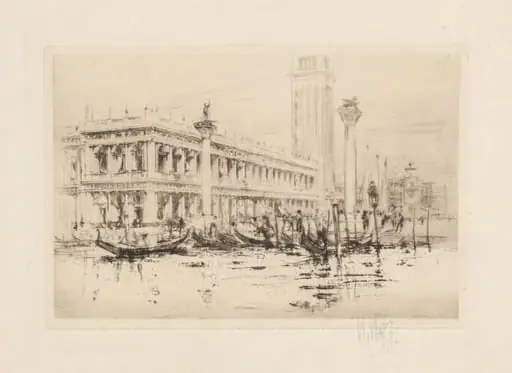 The Venice Set: The Library of St. Mark’s
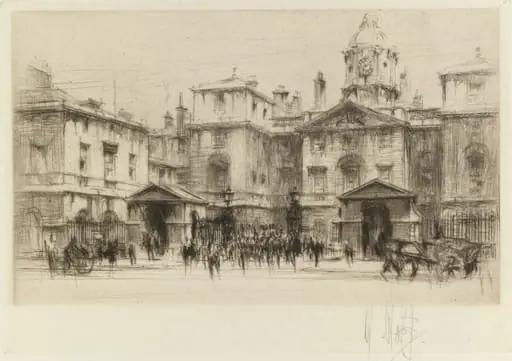 London Set: Horseguards
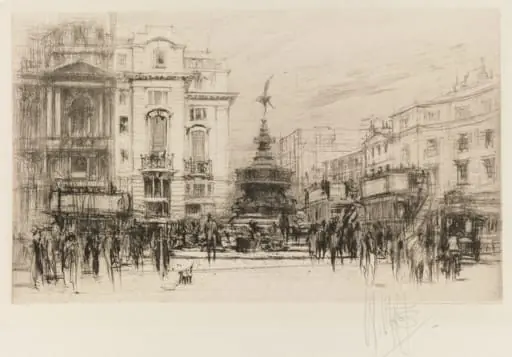 London Set: Piccadilly Circus (with Criterion Theatre)
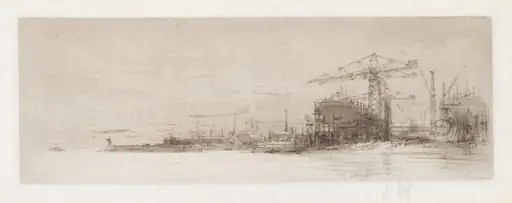 The Clyde from the series The Arteries of Great Britain
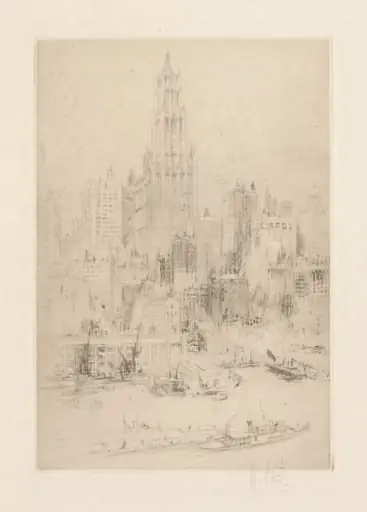 Downtown Manhattan from the East River, with the Woolworth Building
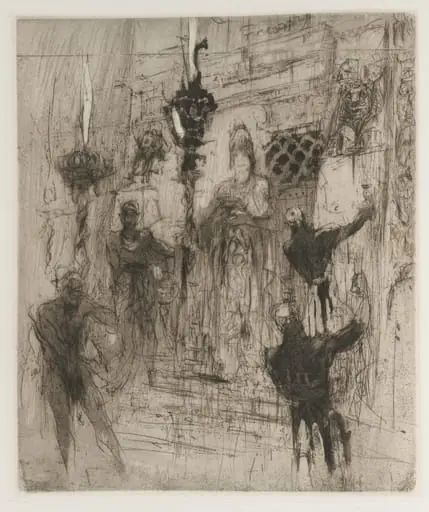 Herodias
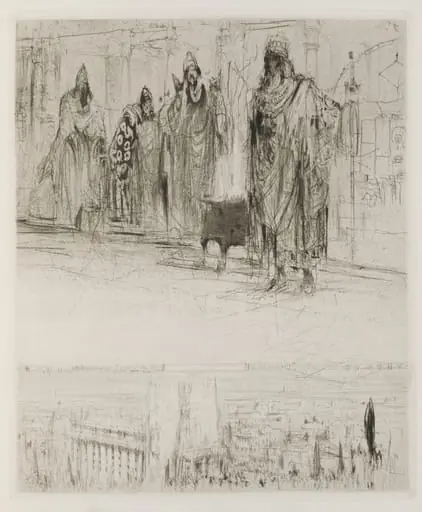 Herodias: Page 13, The tetrarch was awaited by several Galileans, the master of scribes, the chief of the land steward, the manager of the salt mines, and a Jew from Babylon commanding his troops on horse
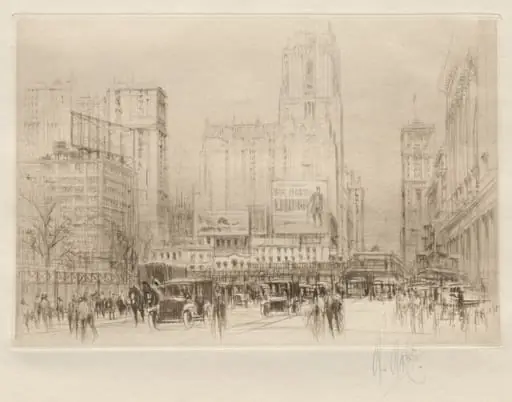 Forty-second Street NY