Artwork
Sf. Nicolae și Învierea lui Iisus, cu 24 scene de praznic
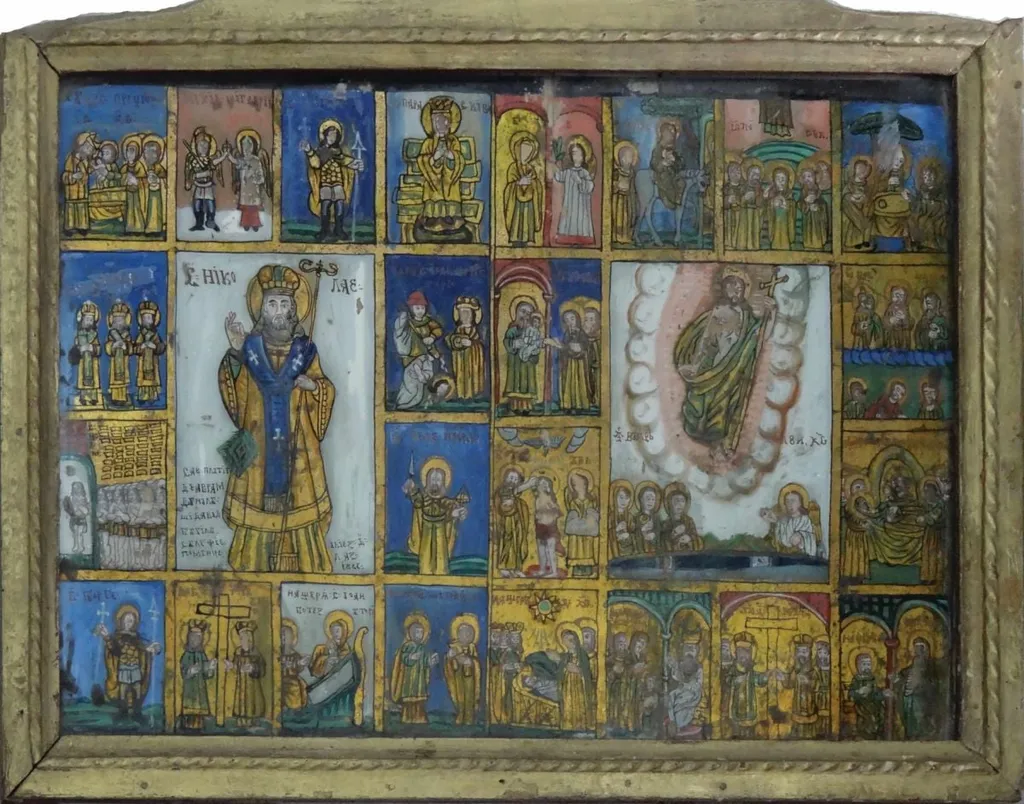
Sf. Nicolae și Învierea lui Iisus, cu 24 scene de praznic is a drawing by the Impressionist artist Ilie Poienaru. It dates from 1883 and is held in the collection of the Alba Iulia Orthodox Archdiocese.
About this work
Overview
The overall design functions as a visual liturgical calendar, condensing sacred stories into a single, cohesive panel intended for devotional contemplation.
Painted in 1883 by Ilie Poienaru, this work presents a structured arrangement of twenty-four small religious narratives centered on Saint Nicholas and the Resurrection of Christ. Executed in tempera or similar medium, the composition is organized in a grid format, each scene enclosed within a gilded frame. The overall design functions as a visual liturgical calendar, condensing sacred stories into a single, cohesive panel intended for devotional contemplation.
Subject & Meaning
The central panel depicts Christ emerging from the tomb, radiating light, while surrounding scenes illustrate key feast-day events from the Orthodox liturgical year. Saint Nicholas appears in multiple episodes, emphasizing his role as intercessor and protector. Each vignette captures a moment of divine intervention or sacred observance, reinforcing theological themes of resurrection, mercy, and divine order through repeated visual motifs of kneeling figures, halos, and sacred objects.
Technique & Style
The artist employs flat, unmodulated colors—deep blues, crimson, gold, and white—to define forms with clarity rather than depth. Figures are rendered in simplified, stylized silhouettes, with minimal shading or perspective. Gold borders separate each scene, enhancing their individuality while unifying the whole. This approach prioritizes legibility and symbolic clarity over naturalism, aligning with traditional ecclesiastical iconography rather than Western academic painting conventions.
History & Provenance
Created in 1883, the work entered the collection of the Museum of Ethnography, where it remains today. Its origin likely lies in a local church or private devotional setting in rural Romania, reflecting the enduring influence of Byzantine-inspired religious art in 19th-century Orthodox communities. The piece was not commissioned by a major institution but rather emerged from regional artistic practice, preserving folk interpretations of sacred narratives.
Context
In late 19th-century Romania, religious imagery continued to follow Byzantine models even as Western artistic trends gained ground in urban centers. This work represents a rural, vernacular response to liturgical needs, where visual storytelling served as both instruction and devotion. The grid format echoes medieval iconostases and illuminated manuscripts, bridging oral tradition with fixed visual forms accessible to largely illiterate congregations.
Legacy
The painting stands as a documented example of how Orthodox religious traditions were visually sustained in provincial Romania during a period of modernization. It preserves a mode of representation that prioritized spiritual symbolism over realism, offering insight into the aesthetic values of local communities. Today, it serves as a reference for scholars studying the persistence of pre-modern iconographic systems in Eastern European religious culture.
Artist & collection
Artist
Ilie Poienaru kept his life quieter than his bold ink lines. He drew saints and biblical scenes with a steady hand, using nothing but black and white to make halos glow and robes drape real. If you’ve ever stood in a…
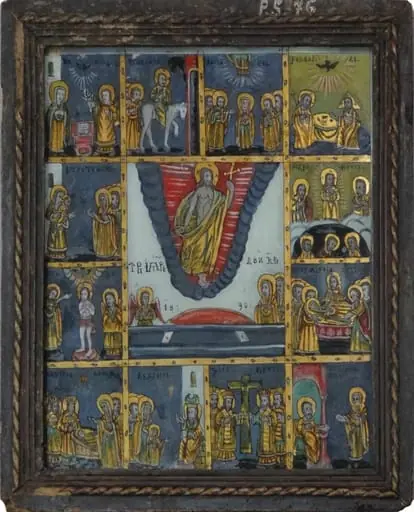 Învierea lui Iisus, cu 12 scene de praznic
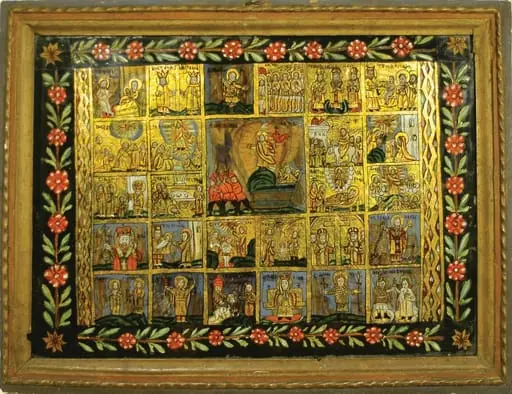 Învierea lui Iisus, cu 12 scene de praznic
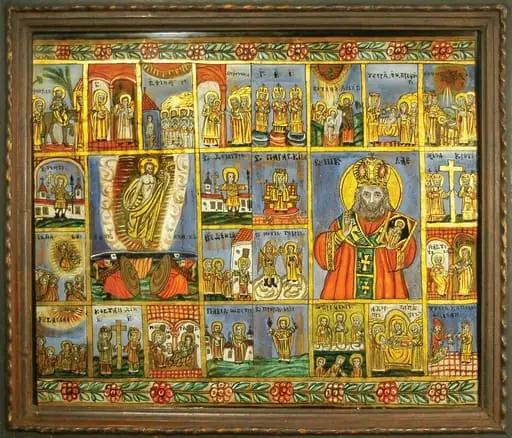 Învierea lui Iisus și Sf. Nicolae, cu 24 scene de praznic
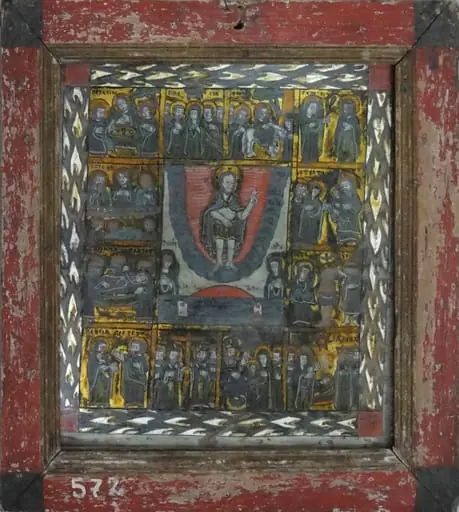 Învierea lui Iisus, cu 12 scene de praznic
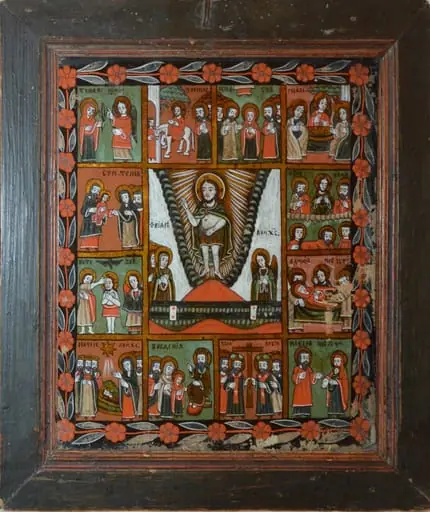 Învierea lui Iisus, cu 12 scene de praznic
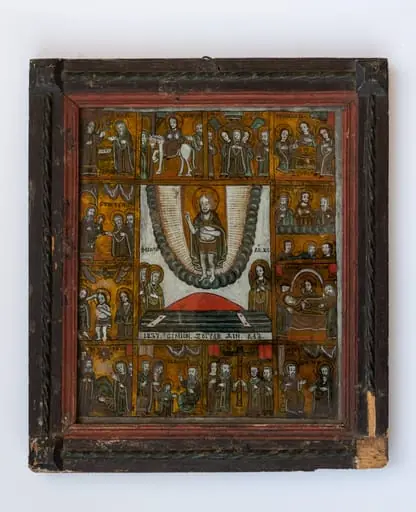 Învierea lui Isus încadrată de praznice
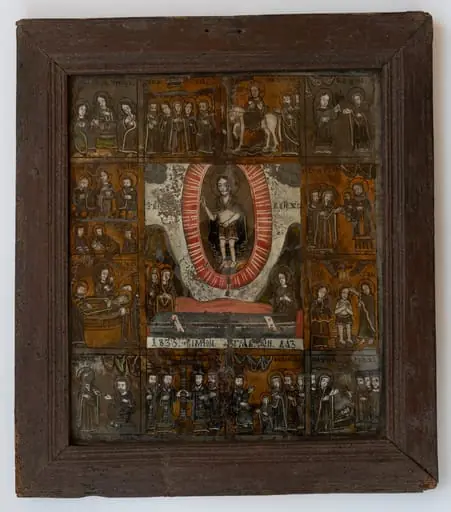 Învierea Domnului încadrată de praznice
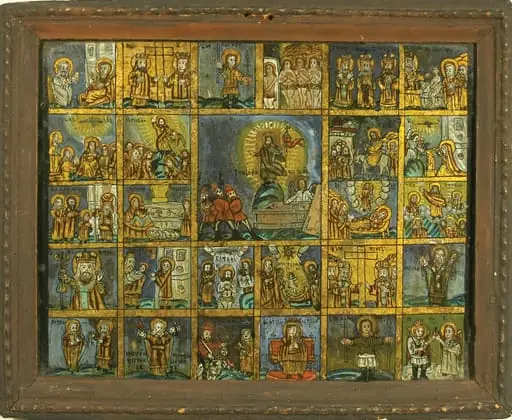 Învierea lui Iisus, cu 26 scene de praznic
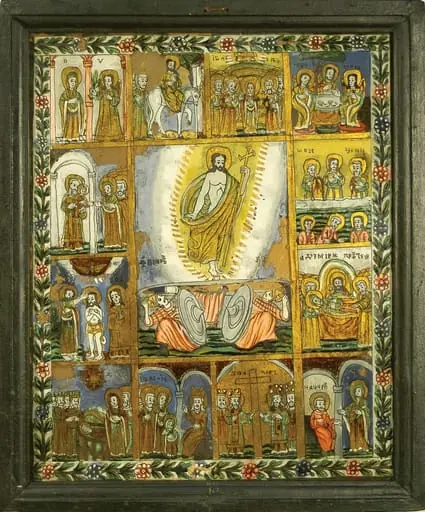 Învierea lui Iisus, cu 12 scene de praznic