Artwork
Învierea lui Isus încadrată de praznice
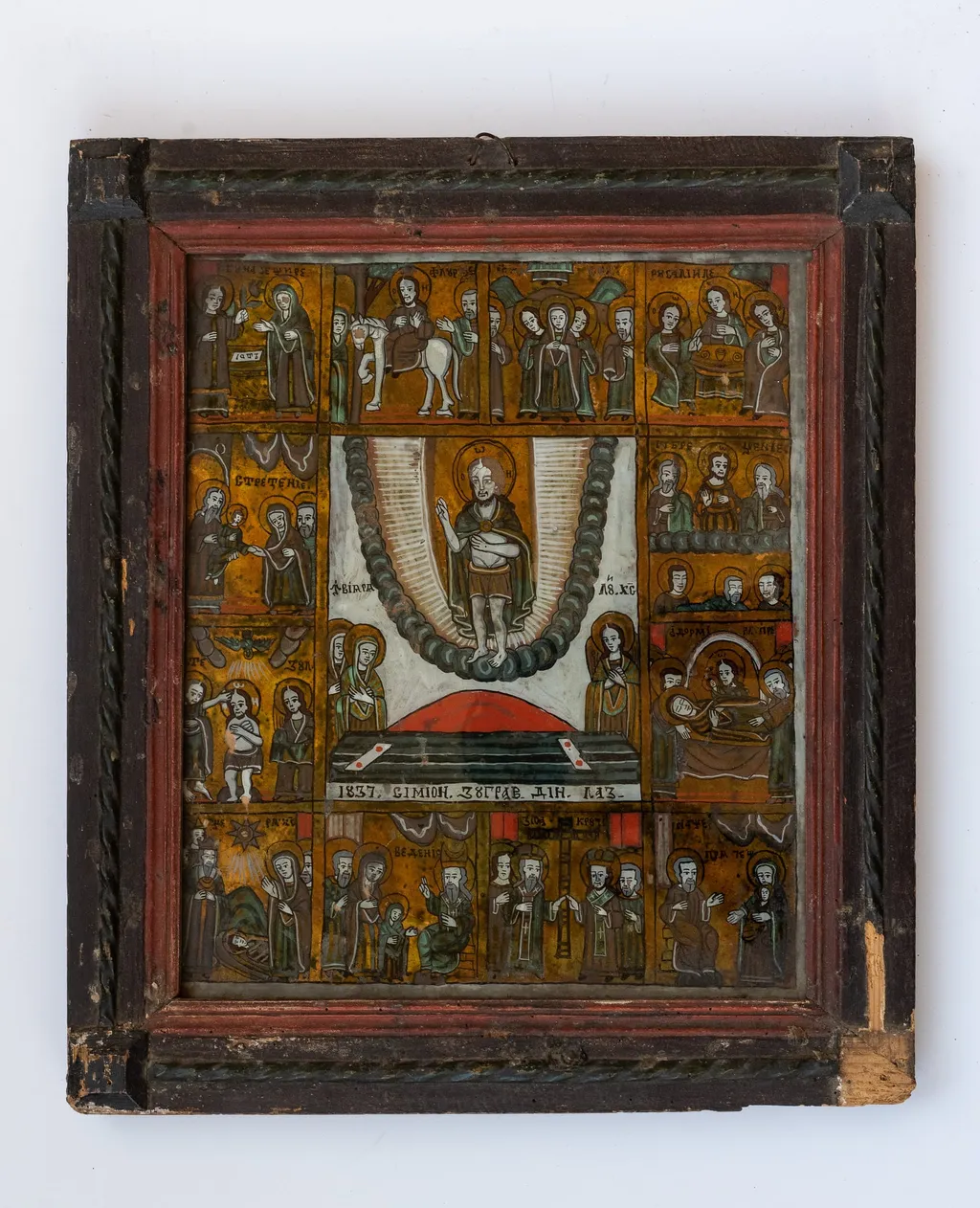
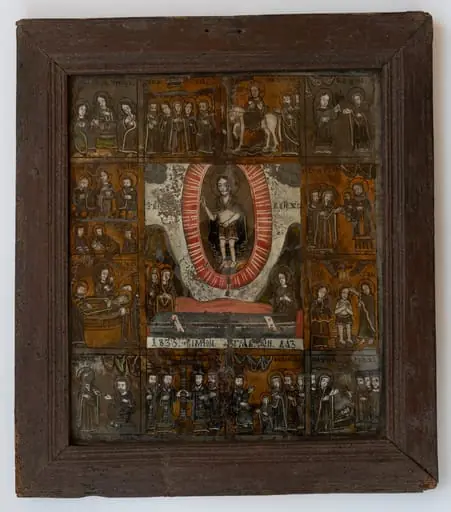
Învierea lui Isus încadrată de praznice is a drawing by the Romanticist artist Simion Poienaru. It dates from 1837 and is held in the collection of the National Museum of Transylvanian History.
About this work
Look up cross-hatching next to see how artists create depth with lines.
This drawing is packed into small boxes. Each box shows people in robes, some standing, some kneeling. Bright colors like gold and red stand out against duller browns. One figure floats above a red platform, surrounded by light. The edges look worn, like old wood.
The center figure is lifted up by ropes. The writing below is in another language. This was made in 1837 by one person.
Look up cross-hatching next to see how artists create depth with lines.
Overview
“Învierea lui Isus încadrată de praznice” is a drawing executed by Romanian artist Simion Poienaru in 1837. The work consists of a series of small, rectangular panels arranged together, each framed by a wooden border that shows signs of age. The composition depicts a group of robed figures, some standing, others kneeling, set against a muted brown background punctuated by vivid gold and red accents.
Subject & Meaning
The central scene portrays the resurrection of Jesus, with the Christ figure elevated above a red platform and surrounded by a luminous aura. Ropes appear to support his ascent, while surrounding participants react with gestures of reverence and awe. The inclusion of a foreign-language inscription beneath the image suggests a devotional or liturgical function, linking the visual narrative to contemporary religious practice.
Technique & Style
Poienaru employs fine cross‑hatching to model forms and convey depth, a common practice in early‑19th‑century draftsmanship. The contrast between the bright gold and red highlights and the subdued earth tones creates a visual hierarchy that draws the eye to the central figure. The drawing’s line work is precise, while the worn wooden edges hint at the piece’s age and handling.
History & Provenance
Created in 1837, the drawing reflects Poienaru’s engagement with ecclesiastical themes during a period of Romanian cultural revival. Although specific ownership records are scarce, the work’s material condition—evident in its weathered frames—indicates it has been preserved in a collection that values historic religious art. Its survival offers insight into the visual culture of the era.
Context
The piece belongs to a broader tradition of Romanian religious illustration that merged folk motifs with academic drawing techniques. In the 1830s, artists like Poienaru were instrumental in visualizing biblical narratives for a largely illiterate audience, using vivid colors and clear iconography to communicate theological concepts.
Artist & collection
Artist
Simion Poienaru liked to tuck little parties around his holy scenes—tiny figures dancing in the margins of Jesus’s resurrection, like uninvited guests who’d wandered in from a village wedding.

Museum
National Museum of Transylvanian History
Continue through works from the same source collection.
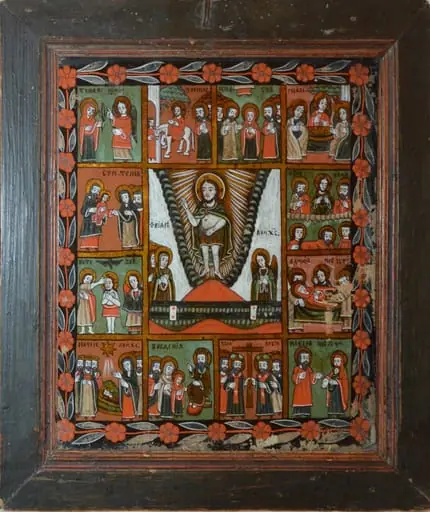
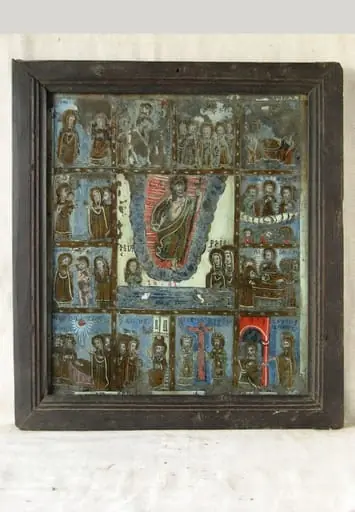 Prăznicar cu Învierea Mântuitorului Iisus Hristos
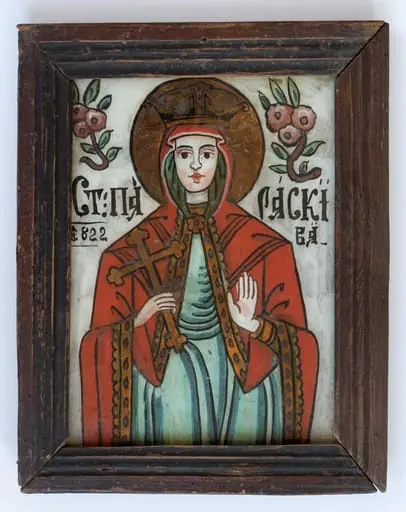
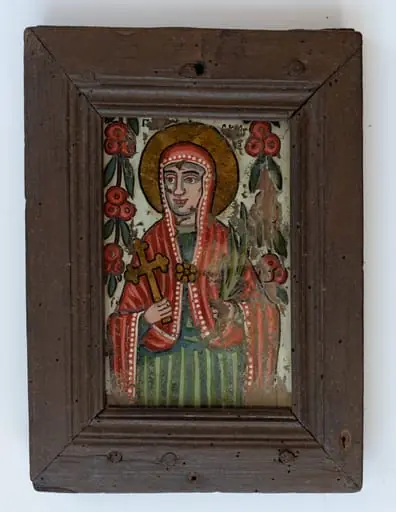
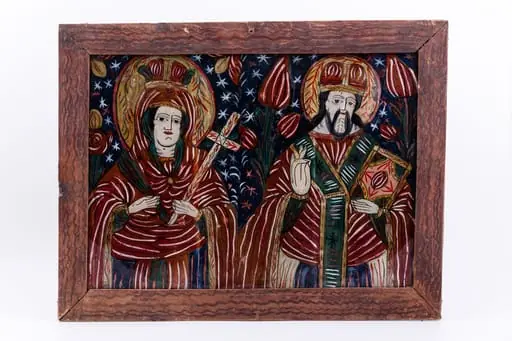 Icoana îi reprezintă pe Sfânta Mare Cuvioasă Parascheva de la Iași și pe Sfântul Ierarh Vasile cel Mare. Preacuvioasa este îmbrăcată în veșmânt roșu stacojiu-bordo-acajou, cu interiorul căptușit cu albastru și verde închis, ornat cu dungi albe subțiri. Peste maforionul roșu, sfânta cuvioasă are coroniță și aureolă. Mantia este prinsă la gât cu o fibulă aurie. În mâna dreaptă are un mănunchi de finic și în mâna stângă ține crucea. Alături de Sfânta Parascheva este Sfântul Ierarh Vasile cel Mare, îmbrăcat în veșminte liturgice arhierești cu felon-omofor roșu stacojiu, cu interiorul indigo închis, ornat cu striații albe fine, și cu epitrahil verde cu trei cruci negre. Cu mâna dreaptă Binecuvântează, iar în mâna stângă ține Sfânta Evanghelie închisă. Fondul icoanei este albastru ultramarin bleumarin închis înspre violet-indigo, cu elemente decorative fitomorfe și astrale albe și roșii. Cromatica este armonioasă, deși întunecată și rece: roșu stacojiu, bordo, acajou, albastru ultramarin bleumarin închis, violet-indigo, galben chihlimbar, brun, bej, verde de China, alb. Icoana este de Făgăraș și aparține Anei Deji.
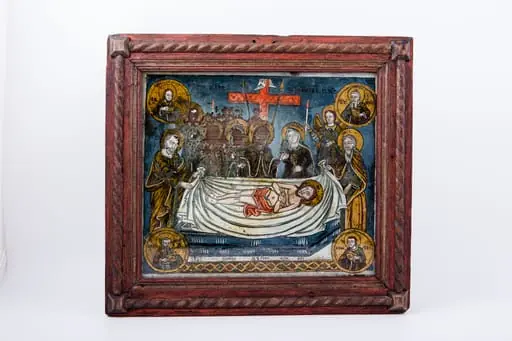 Trup și
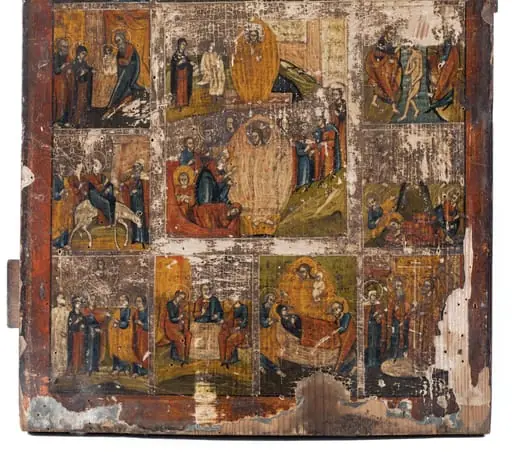 Scene biblice
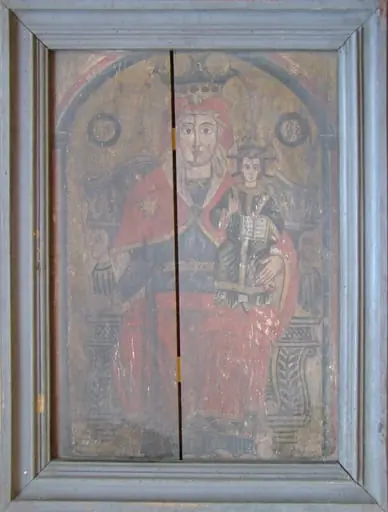
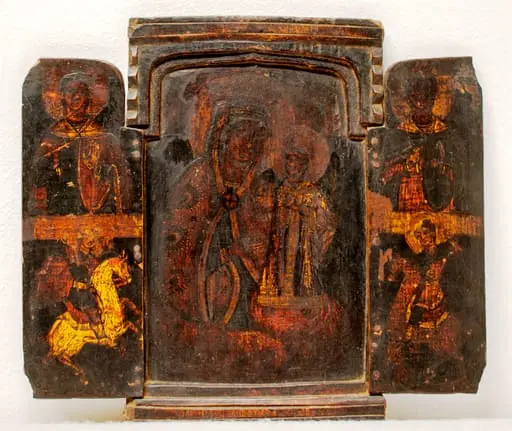 Pe panoul central este reprezentată Maica Domnului Hodighitria(Călăuzitoarea). Pruncul stă în picioare, amândoi fiind înveșmântați în straie împărătești. Maica ține Pruncul cu mâna stângă, cu dreapta arată către El. Voleul stâng, jumătatea inferioară - Sfântul Gheorghe călare pe cal alb. Înveșmântat în costum românesc de oștean medieval, mantie roșie. Calul cu picioarele din față ridicate, harnașament de culoare roșie. Deasupra e posibil să fie tot sfântul Gheorghe, în stânga ținând crucea, cu dreapta face gestul păcii, al liniștii.(prin analogie cu 34530). Simetric, pe latura dreaptă a tripticului se află jos, Sf. Dumitru, călare pe cal roșu, în poziție asemănătoare cu a SF. Gheorghe, iar sus probabil tot el, în altă ipostază iconografică(analogie) . Veșmintele au culorile inversate(tunica roșie -dreapta, albastru-stânga, mantie roșu -stânga, albastru - dreapta), la fel la sfinții războinici, probabil în legătură cu reprezentarea populară a timpului. Inițial, tripticul se închidea, dovadă inscripția care se continuă pe cele două uși. Ulterior a fost fixat cu cuie de fier, iar prinderea se făcea cu o sfoară legată de două cuie bătute pe cant.
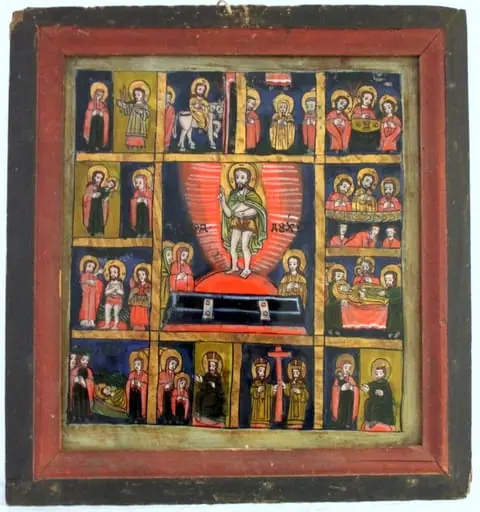 Prăznicar - Învierea
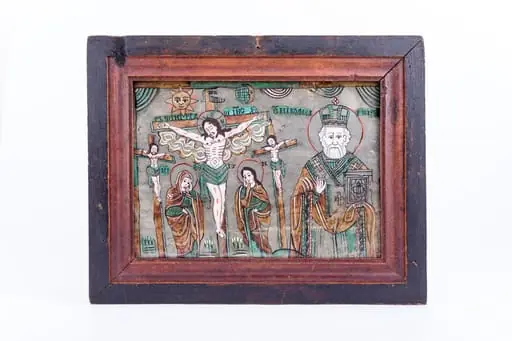 Mântuitorul Iisus Hristos, fiind răstignit pe Cruce, are în stânga pe ucenicul cel iubit, care a stat lipit de pieptul Învățătorului, la Cina cea de Taină, mai precis, pe Sfântul Apostol și Evanghelist Ioan Teologul, Evanghelistul Iubirii și în dreapta pe Maica Domnului Îndurerată, Jalnică și Plângătoare. Veșmintele Maicii Domnului sunt pământii-bronzii cu verde kaki. Sfântul Ioan este îmbrăcat în brun și kaki. Mântuitorul Iisus Hristos are o țesătură verde în jurul mijlocului și a coapselor și trupul îi este plin de răni sângerânde. În planul superior sunt simboluri astrale: soarele, deasupra Maicii Domnului, luna, deasupra Sfântului Ioan. În planul îndepărtat sun cei doi tâlhari răstigniți pe crucile lor. În cea de-a doua parte a icoanei este Sfântul Mare Ierarh Nicolae făcătorul de miuni și ocrotitor al copiilor. Ține în mâna stângă Sfânta Evanghelie închisă și cu dreapta Binecuvântează. Este unul dintre cei mai populari și iubiți sfinți, ocrotitor al caselor, familiilor și copiilor. Are barbă lungă, albă și mithră arhierească și aureolă. Este îmbrăcat în veșminte liturgice, de ierarh, sacos verde-brad, felon bronziu-kaki, epitrahil-patrafir gri-petrol cu patru cruci. Cromatica este armonioasă, dar foarte îngândurată și tristă: gri-petrol, verde-brad, kaki, brun închis, bronziu, roșu sângeriu, alb, negru. Inscripția din româno-chirilică se traduce Răstignirea Lui Iisus Hristos IC XC MP Maica Domnului Sf Nicolae. Icoana este de Laz, Valea Sebeșului, având două tematici iconografice.
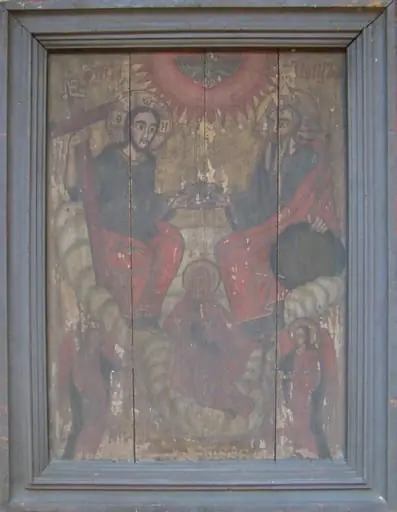
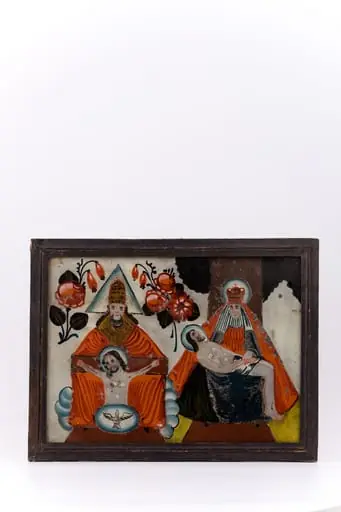 Icoana are o tematică iconografică foarte rară: în cea dintâi parte, este Sfânta Treime: Mântuitorul Iisus Hristos Răstignit pe brațele Lui Dumnezeu-Tatăl și ținut în veșmântul roșu al Pătimirii și Jertfei. Dumnezeu-Tatăl, Împărat al Cerurilor, are pe cap coroană și aureolă triunghiulară, reprezentând Sfânta Treime. Sfântul Duh este reprezentat prin porumbelul alb. Sfânta Treime are în registrul inferior o mandorlă de nouri rotunzi albi-albaștri și în registrul superior o ghirlandă din trandafiri și ramuri cu măceșe, simbolizând Grădina Raiului. În cea de-a doua parte, în dreapta, este Maica Domnului Împărăteasă ținând în brațe pe genunchi Trupul Mântuitorului Iisus Hristos, coborât de pe Cruce, plâns, jelit. Este asemenea unei Piete. Icoana este deosebită și foarte rară, prin compoziția tematică și viziunea iconografică greco-catolică. Fondul icoanei este alb-ivoriu-crem, în registrul superior și galben-solar, în registrul inferior. Cromatica este armonioasă: roșu vermillon-trandafiriu, brun-roșcat-acajou, galben-solar, albastru bleu-ciel, gri, alb , negru. Icoana este din Nordul Transilvaniei, Nicula.